
Corona, New York
Want to see how Corona compares to other top cities in New York? Explore all city regulations in New York. →
Corona, NY
Challenging To Investors
STR Regulations for Corona, New York
This guide distills New York City’s short‑term rental rules as they apply in Corona (Queens). NYC’s rules are citywide and therefore control in Corona. If any local overlay existed for Corona specifically, it would be noted here; none appears in the source materials. The rule summarized below took effect on March 5, 2023 and is enforced by the Mayor’s Office of Special Enforcement (OSE).
Note on interpretation: The City’s adopted rule implements Local Law 18 (2022). City Council materials and public testimony indicate legislative intent to allow small, primary‑residence hosting and to focus enforcement on illegal “hostels” and multiple‑listing operators. However, OSE’s current enforcement guidance prioritizes the strictest reading of the law—i.e., prohibiting most short‑term rentals of entire dwellings and permitting only very limited circumstances for primary‑residence hosting. You should assume OSE will enforce the strict interpretation unless or until further clarifications or carve‑outs are issued.
1) Overview and Direct Answer: Are Short‑Term Rentals Allowed in Corona, NY?
Short‑term rentals are legal in New York City only under narrowly defined conditions. As of March 5, 2023, NYC requires:
- Registration with the Mayor’s Office of Special Enforcement (OSE) before any hosting.
- Proof that the unit is the host’s primary residence for applicable categories of hosting.
- Compliance with the “two‑guest limit” where applicable and all safety and advertising rules.
- Booking services may only process transactions for listings that display a valid registration number.
- Operating an unregistered listing or processing bookings for an unregistered listing is prohibited and subject to penalties.
In practice:
- Many hosts cannot legally operate an entire‑home STR in NYC under the current rule. The OSE focus has been on eliminating units operating as de facto hotels and multi‑listing operators. Primary‑residence hosting with strict occupancy limits may be permissible depending on the situation, but OSE is interpreting the rules conservatively.
Bottom line for Corona investors: Yes, STRs are legally possible in NYC—but only if you meet NYC’s registration, primary‑residence, and occupancy requirements, and only if OSE approves your registration. If you cannot meet those tests (for example, you seek to rent a non‑primary residence or an entire home), the activity is not permitted.
Key references:
- Registration and Requirements for Short‑Term Rentals (NYC Rules), effective March 5, 2023: rules.cityofnewyork.us/rule/registration-and-requirements-for-short-term-rentals/
- Proposed rule text (for context and detail): rules.cityofnewyork.us/wp-content/uploads/2022/12/Proposed-Rules-Registration-and-Requirements-for-Short-Term-Rentals-Second-Notice-with-certifications.pdf
- Adopted rule text (official requirements): rules.cityofnewyork.us/wp-content/uploads/2022/12/FINAL-RULES-GOVERNING-REGISTRATION-AND-REQUIREMENTS-FOR-SHORT-TERM-RENTALS-1.pdf
- Public hearing materials (commentary/legislative context): rules.cityofnewyork.us/wp-content/uploads/2022/12/SHORT-TERM-RENTAL-PUBLIC-HEARINGS-TRANSCRIPTS-AND-CHATS.pdf
What do Airbnb hosts actually earn in Corona?
Corona hosts earn a median $26,464/year with $124 ADR and 83% occupancy.
Top performers pull in $36,031+ per year.
See the full Corona market breakdown2) How to Start a Short‑Term Rental Business in Corona, NY
Because NYC’s rules are citywide, the Corona process is the same as for any NYC neighborhood:
- Determine eligibility:
- Confirm that you are the lawful owner or tenant with the right to host.
- Determine if the unit is your primary residence. If it is not, operating a short‑term rental of the entire unit is prohibited under the adopted rule.
- If it is your primary residence, assess whether you can comply with any applicable “two‑guest limit,” and whether your property type and configuration meet safety and separation requirements.
- Register with OSE:
- Submit an application to the Mayor’s Office of Special Enforcement.
- Provide property details, host information, and a certification that the unit is your primary residence (where applicable).
- Set up compliance operations:
- Adopt safety measures consistent with OSE requirements (e.g., smoke/CO detectors, egress safety, etc.; the adopted rule references housing maintenance and fire prevention standards).
- Create recordkeeping processes for guest logs and monthly reporting to OSE.
- Ensure your listing always displays the registration number.
- Taxes and bookings:
- Collect and remit any applicable New York City and State taxes on short‑term rentals.
- Only list on platforms that will show your registration number and that block bookings for unregistered listings.
- Keep records and renew:
- Maintain guest logs for at least three years and be prepared for inspections.
- Renew registrations as required by OSE.
Given OSE’s conservative enforcement posture, you should obtain written confirmation from OSE that your proposed use is permitted before investing in renovations or marketing.
3) Required Documents, Permits, Licenses, and Guidelines
Required by NYC:
- OSE Registration:
- Application to the Mayor’s Office of Special Enforcement.
- Host contact and identification details.
- Property address, unit number, and building characteristics.
- Certification that the unit is the host’s primary residence (where applicable).
- Attestations that you will comply with safety and recordkeeping requirements.
- Ongoing compliance documentation:
- Guest registration/occupancy logs (at least three years’ retention).
- Monthly reporting to OSE as required (number of nights occupied, number of guests, and gross booking revenue).
- Proof of insurance may be requested by OSE (verify current requirements in the adopted rule).
- The listing must display the registration number at all times.
Suggested by industry best practice (not required by OSE but prudent):
- Insurance coverage appropriate for STR operations (e.g., host liability coverage).
- House rules and management protocols.
- Emergency contact information and local safety procedures.
Key NYC sources:
- Registration and Requirements for Short‑Term Rentals: rules.cityofnewyork.us/rule/registration-and-requirements-for-short-term-rentals/
- Final adopted rule text: rules.cityofnewyork.us/wp-content/uploads/2022/12/FINAL-RULES-GOVERNING-REGISTRATION-AND-REQUIREMENTS-FOR-SHORT-TERM-RENTALS-1.pdf
4) Regulations That Apply to Corona (NYC, Queens, NY State)
The rules summarized here apply citywide, including Corona.
A) NYC (Citywide) — Registration and Requirements for STRs
- Registration required:
- No hosting may occur until OSE registration is approved.
- Booking services may not process transactions for listings that do not display a valid registration number.
- Primary‑residence condition:
- The adopted rule ties most hosting permissions to primary‑residence status. Non‑primary units may not be used for short‑term rentals. OSE is interpreting this strictly at present.
- Occupancy and use limits:
- Where applicable, a strict “two‑guest limit” applies; additional occupancy restrictions may apply based on building type and local safety codes.
- Advertising and transparency:
- The listing must display the OSE registration number.
- Recordkeeping and reporting:
- Hosts must keep accurate guest logs for at least three years.
- Monthly reporting to OSE is required (nights occupied, number of guests, gross booking revenue).
- Safety and building standards:
- Hosts must comply with housing maintenance and fire prevention standards. The adopted rule references relevant NYC codes.
- Penalties and enforcement:
- Unregistered hosting and platform processing of unregistered listings are prohibited and subject to civil and potentially criminal enforcement. Penalties can be severe; the adopted rule contemplates fines and other sanctions.
B) Queens (County‑Specific)
- No separate county registration or license framework is presented in the source materials.
- Queens, as part of NYC, follows NYC’s citywide STR rules.
C) New York State
- New York tax law imposes a combined room occupancy tax on short‑term rentals:
- New York City: 14.75% (consisting of NYC MCTD tax plus State taxes).
- Hosts are responsible for collecting and remitting occupancy taxes.
- State regulations do not create a separate licensing regime for STRs beyond NYC’s system. The state tax obligation exists in addition to NYC registration and compliance.
5) Local Authority Contacts (STR Oversight and Assistance)
- Agency: Mayor’s Office of Special Enforcement (OSE) — Short‑Term Rental Unit
- Phone: 212‑693‑1100
- Email: [email protected]
- Mailing address: 1 Centre Street, 28th Floor, New York, NY 10007
- Website (Rules and Registration Guidance): rules.cityofnewyork.us/rule/registration-and-requirements-for-short-term-rentals/
6) Important Source Links
- NYC Rules — Registration and Requirements for Short‑Term Rentals (Adopted Rule Summary, Effective March 5, 2023): rules.cityofnewyork.us/rule/registration-and-requirements-for-short-term-rentals/
- Proposed Rule (Full Text): rules.cityofnewyork.us/wp-content/uploads/2022/12/Proposed-Rules-Registration-and-Requirements-for-Short-Term-Rentals-Second-Notice-with-certifications.pdf
- Adopted Rule (Full Text): rules.cityofnewyork.us/wp-content/uploads/2022/12/FINAL-RULES-GOVERNING-REGISTRATION-AND-REQUIREMENTS-FOR-SHORT-TERM-RENTALS-1.pdf
- Hearing Transcripts and Chats: rules.cityofnewyork.us/wp-content/uploads/2022/12/SHORT-TERM-RENTAL-PUBLIC-HEARINGS-TRANSCRIPTS-AND-CHATS.pdf
- NYC Rules Home: rules.cityofnewyork.us
Practical reminder for investors: NYC’s current enforcement posture greatly restricts whole‑unit STRs unless the unit is a host’s primary residence and all conditions (including any applicable two‑guest limit) are met. Verify your eligibility and secure OSE approval before proceeding; noncompliance can result in significant penalties and the loss of your ability to operate.
Next step
Found a property in Corona?
Paste any address and get estimated revenue, cash-on-cash return, and comparable STR performance in under 5 minutes. 3 free analyses per day.
Free brief
Get the free Corona STR Investment Brief
Revenue data, top neighborhoods, seasonal trends, and the key regulations for Corona, New York in one email.
Corona
Market Saturation Score
Photos of Corona


Overview of Corona
Corona is a densely populated, culturally rich neighborhood in the borough of Queens, part of New York City in Queens County, New York. Home to roughly 100,000 residents, it ranks among the most ethnically diverse communities in the country, with deep immigrant roots that shape its bustling commercial corridors and food scene. Best known as the home of the USTA Billie Jean King National Tennis Center and Citi Field, Corona serves as a lively gateway to Flushing Meadows-Corona Park and a wide swath of New York City attractions. It sits approximately eight miles east of midtown Manhattan, easily reached by subway from the city's commercial core.
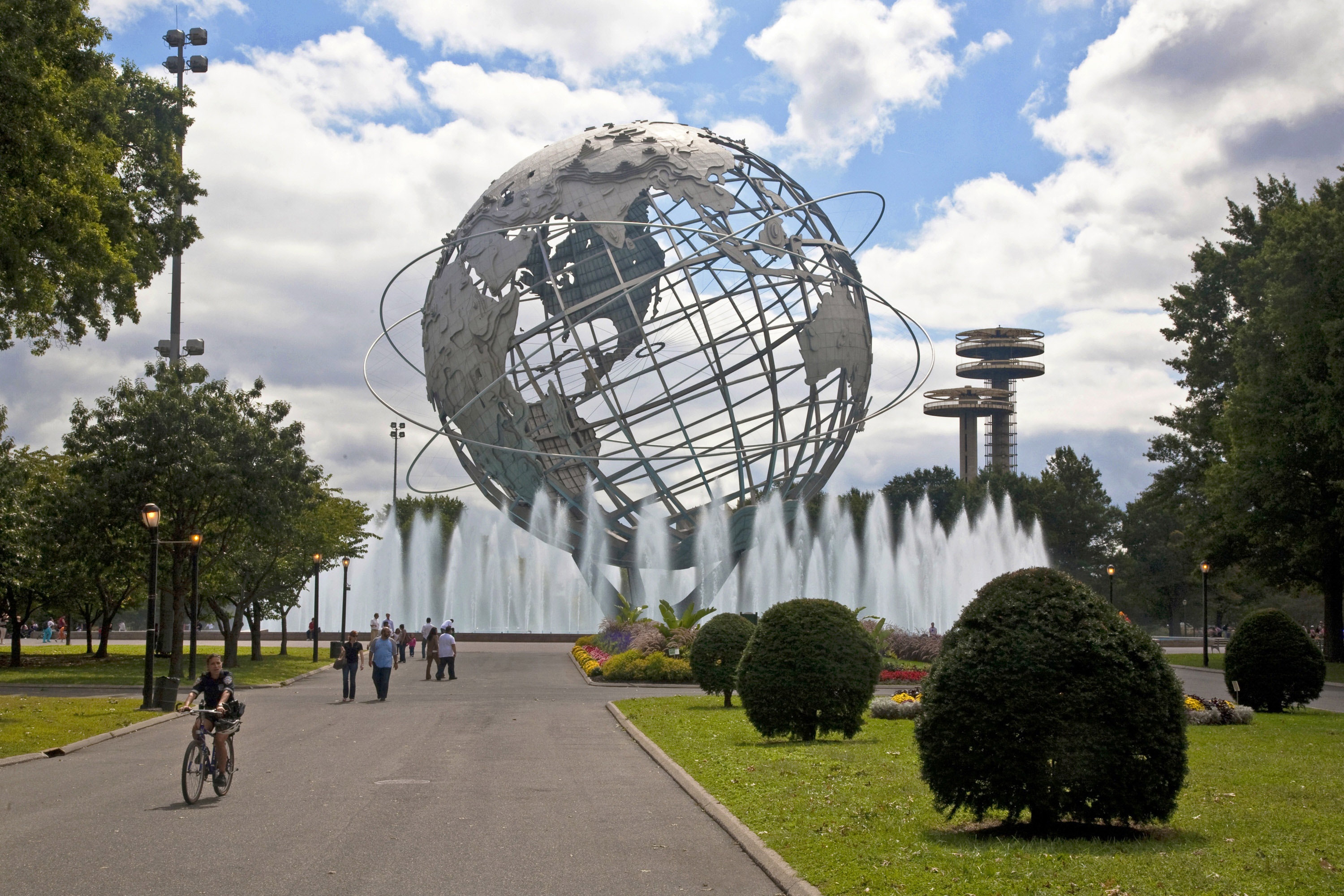
Flushing Meadows-Corona Park anchors the neighborhood and offers the single largest green space in Queens. The park was the centerpiece of both the 1939 and 1964 World's Fairs, and its iconic Unisphere globe remains a beloved symbol of the borough. Visitors come for baseball diamonds, paddle-boat lakes, the Queens Zoo, and broad walking paths, all just a few minutes' drive or subway ride from central Corona.
Within the park, the USTA Billie Jean King National Tennis Center hosts the US Open each year, drawing hundreds of thousands of tennis fans to Queens every August and September. Year-round the center offers public courts and tours of its major stadiums, making it a year-round draw for active travelers. The venue is a roughly five-minute drive from most points in Corona.
Just beyond the tennis center, Citi Field has been home to the New York Mets since 2009 and sits adjacent to the park's Meadow Lake. The ballpark's year-round calendar includes Mets games from spring through fall, a range of dining and gathering spaces, and a Jackie Robinson rotunda that nods to the neighborhood's deep baseball history.
Music lovers gravitate to the Louis Armstrong House Museum, the modest Corona home where the jazz legend lived with his wife Lucille for nearly three decades before his death in 1971. Now a designated National Historic Landmark, the museum preserves Armstrong's personal archives, trumpet, and home recording studio, and is about a ten-minute walk from the 111th Street subway station.
With a transit-connected location, a globally recognized roster of annual events, and a neighborhood character that feels distinctly local compared to Manhattan, Corona offers short-term-rental owners a strong base for serving sports tourists, music fans, and visitors who want an authentic Queens experience within easy reach of New York City's most famous sights.
Want to know if a property in Corona is a good investment?
Enter an address to get instant revenue potential and comps.