
Genoa, Nevada
Want to see how Genoa compares to other top cities in Nevada? Explore all city regulations in Nevada. →
Genoa, NV
Generally Investor Friendly
STR Regulations for Genoa, Nevada
Note: Genoa is a town within Douglas County. It does not appear to have a separate STR/VHR ordinance; therefore, Douglas County’s Vacation Home Rental (VHR) program applies to properties in Genoa. This guide focuses on county-level and state-level rules and processes that govern STRs in Genoa.
1) Are short-term rentals allowed in Genoa, NV?
Yes. Short-term rentals—referred to in Douglas County as Vacation Home Rentals (VHRs)—are permitted in Genoa, NV through Douglas County’s VHR program. VHRs are defined as properties rented on a short-term basis (28 days or less). Permits are required, and properties must comply with program rules, inspection requirements, and operating standards. A 2024 ordinance (Douglas County Code Title 20.622, Ordinance 2024-1635) governs VHRs in the county.
What do Airbnb hosts actually earn in Genoa?
Genoa hosts earn a median $11,417/year with $210 ADR and 18% occupancy.
Top performers pull in $14,852+ per year.
See the full Genoa market breakdown2) How to start a short-term rental (VHR) business in this market (Douglas County, including Genoa)
- Verify eligibility. Confirm your property is located within Douglas County (Genoa is within the county) and is suitable for short-term rental use.
- Select permit tier:
- Tier I: Primary residence (owner-occupied) short-term rental.
- Tier II: Non-primary residence short-term rental.
- Determine whether a special use permit is required. The VHR Advisory Board hears enforcement appeals and considers special use permits for Tier 3 VHR rentals.
- Prepare documentation. Review the STR Building Inspection Checklist and schedule required inspections.
- Apply for a VHR permit:
- New VHR permits: Follow the county’s permitting guidance and submit a complete application through Douglas County Community Development.
- Plan compliance:
- Comply with building, life-safety, parking, and neighborhood compatibility standards.
- Maintain local contact and operate responsively (including noise, trash, parking, and occupancy rules).
- Operating requirements:
- Maintain current permits and display or provide required STR information to guests.
- Renew permits as required; track key dates (e.g., Tier II application deadline is the 8th of each month).
- Collect taxes:
- Nevada lodging tax applies; see state-level notes below.
3) Required documents, permits, licenses, and guidelines
- VHR permit application (Tier I or Tier II)
- Tier I: Primary residence STR permit
- Tier II: Non-primary residence STR permit
- Special use permit (Tier 3, when applicable; reviewed by the VHR Advisory Board)
- Building inspection and compliance
- STR Building Inspection Checklist (Douglas County)
- STR Building Inspection instructions (Douglas County)
- Fee schedule and payment
- New STR fees effective December 1, 2024 (Washoe County fee schedule reference in the source; verify Douglas County’s current fees with the county)
- Applicable codes and ordinances
- Douglas County Code Title 20.622 VHR Ordinance 2024-1635
- Ongoing obligations
- Permit renewal process and documentation
- Operating standards, parking requirements, and neighborhood compatibility rules
4) Specific regulations for STRs in Genoa, Douglas County, and Nevada
- Genoa/Township applicability: Genoa properties follow Douglas County’s VHR rules (no separate town ordinance surfaced in the provided sources).
- Douglas County (applies to Genoa):
- VHRs are permitted in the Tahoe Township (and across the county) with a permitting process that began in 2005.
- VHRs are defined as rentals for 28 days or less.
- A two-tier permit system is in place (Tier I primary residence; Tier II non-primary residence).
- Special use permits for Tier 3 VHRs are heard by the VHR Advisory Board.
- Inspections and compliance checks are required; operating standards aim to balance visitor access with residents’ privacy and neighborhood quality.
- Tier II application intake standard day is the 8th of each month (next business day if it falls on a non-working day).
- State of Nevada:
- STRs are subject to Nevada’s transient lodging tax regime. Hosts must collect and remit applicable state and local lodging taxes.
- Nevada law includes notification and registration requirements for STR hosts and platforms (e.g., NRS Chapter 11B.430 registration; NRS Chapter 11B.440 notification/authorization requirements). Detailed guidance and definitions are set in Nevada’s STR statutes.
5) Contact information for the local authority (Douglas County)
- Community Development / Code Enforcement (VHR permitting and private parking complaints)
- Phone: (775) 782-6200, choose option 5 for Code Enforcement and VHRs
- Email: Use the Code Enforcement contact provided by Douglas County
- VHR hotline (for complaints): (775) 783-6027
- Nights and weekends: answered by a third-party answering service
- Douglas County Sheriff’s Office (non-emergency, including public parking/noise while offense is occurring): (775) 782-5126
- Mailing address (for applications and correspondence):
- Douglas County Community Development
- P.O. Box 218, Minden, NV 89423
- 1594 Esmeralda Ave., Minden, NV 89423
6) Source links (important)
- Douglas County VHR page and links to:
- Ordinance and permitting overview: www.douglascountynv.gov/government/departments/community_development/vacation_home_rentals
- VHR Ordinance (2024-1635) download: www.douglascountynv.gov/common/pages/DownloadFileByUrl.aspx?key=Saa9swlNqveUYCQRdoh9q6nHI4aw3oLFXiatih5MFm5SIGRV3cTmKuWcX%2f%2bel8qQwh2ceV0q8iKNsz52mT9Oz5X8MpJMUaxgXopGsO0fimm9EiFcmvaC6Utgv9XvNa2ZYC%2buVUaaZBRBn570fSbtJmfBpgnLWZjbkuVsmolx%2bxoMv64yoehriZmtoqOPM%2bwt9U1pPYBZXLNQaeeo3ElgU3oqRH%2fTKaqodqNjvIPdXfgxW%2fFL
- VHR FAQs: www.douglascountynv.gov/UserFiles/Servers/Server_12493019/File/VHR%20FAQ%20FINAL.jpg
- VHR map search (ArcGIS): douglasnvgis.maps.arcgis.com/apps/webappviewer/index.html?id=2d2becd62941413da23745a7cf235e5a
- VHR Advisory Board (meetings and agendas): douglascountynv.granicus.com/ViewPublisher.php?view_id=1
- STR Inspection materials (Checklist and How-To): Files referenced in the STR permit guide
- Washoe County (for fee schedule reference and STR processes generally): www.washoecounty.gov/csd/planning_and_development/short_term_rentals/index.php
- Nevada Legislative guide on STRs (overview of state law, definitions, and tax/registration requirements): www.leg.state.nv.us/Division/Research/Documents/ShortTermRentals.pdf
Notes and recommendations:
- Verify the current Douglas County fee schedule and any recent updates with Community Development before applying.
- Check zoning and property-specific restrictions (e.g., HOA or CC&R limitations) that may apply even if the county permits VHRs.
- Confirm inspection scheduling and requirements, as they are essential to obtaining and maintaining the permit.
- For properties near Lake Tahoe or in special districts, local fire and safety standards may add additional requirements.
Next step
Found a property in Genoa?
Paste any address and get estimated revenue, cash-on-cash return, and comparable STR performance in under 5 minutes. 3 free analyses per day.
Free brief
Get the free Genoa STR Investment Brief
Revenue data, top neighborhoods, seasonal trends, and the key regulations for Genoa, Nevada in one email.
Genoa
Market Saturation Score
Photos of Genoa


Overview of Genoa
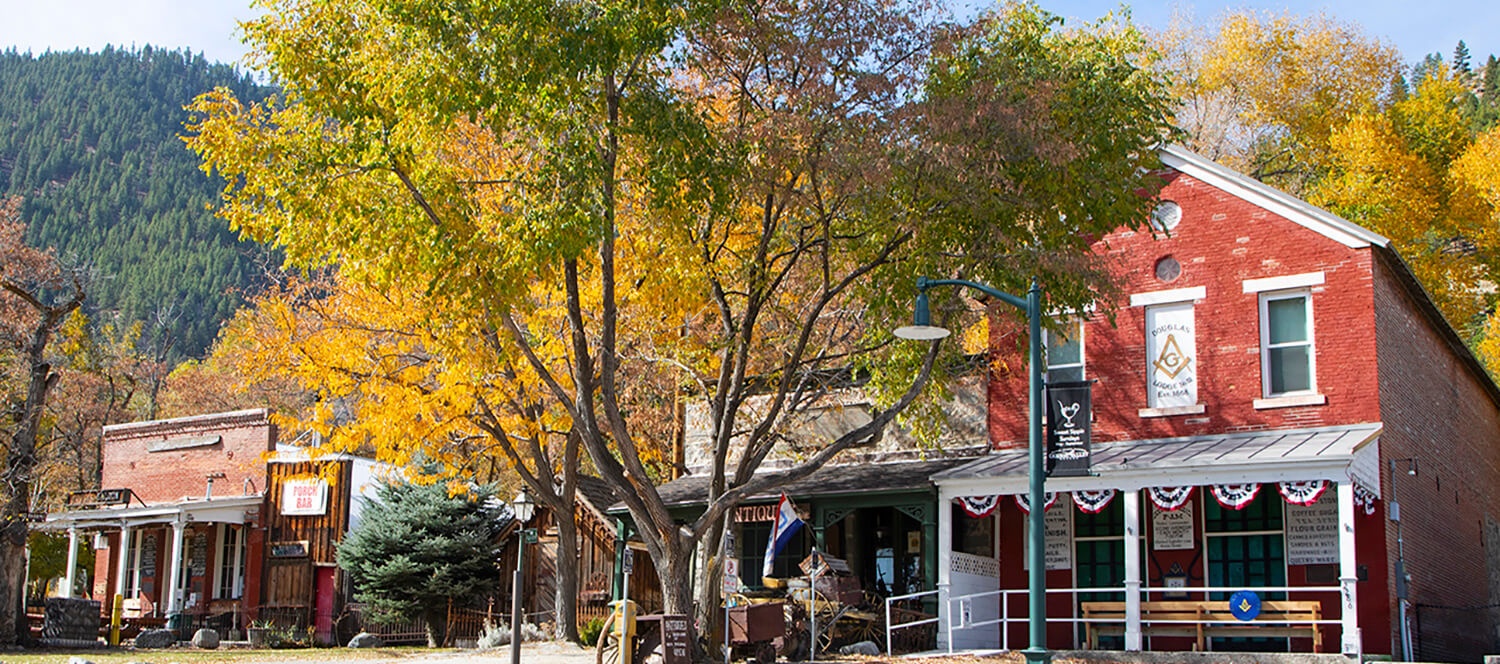
Genoa is a tiny unincorporated community in Douglas County, Nevada, with a population of only a few hundred residents. Tucked into the eastern edge of the Carson Valley at the foot of the Sierra Nevada, it carries the distinction of being the oldest permanent settlement in the state of Nevada, founded in 1851 as a trading post along the Carson River. Today it reads less as a town and more as a well-preserved slice of frontier history, with antique storefronts, wood-plank sidewalks, and a slow rural pace that contrasts sharply with the bustle of the nearby resort areas. Genoa sits roughly forty-five miles south of Reno and only a handful of miles southeast of Carson City, the state capital, making it a quiet outpost within easy reach of the region's main hubs.
The heart of the community is Mormon Station State Historic Park, a small park that marks the site of the first non-Native American trading post in what would become Nevada. The reconstructed adobe stockade and visitor center tell the story of the Mormon pioneers who wintered here in 1849–50 on their way to the California goldfields, and the park draws a steady stream of history-minded visitors throughout the year. It is essentially the anchor of the town and easily walkable from anywhere in Genoa.
Just over the ridge to the east, perhaps fifteen to twenty minutes by car over Spooner Summit, lies Lake Tahoe, one of the largest and deepest alpine lakes in North America. The Nevada side of the basin offers a string of well-known resort communities and state parks, and Genoa's elevation and proximity make it a convenient, lower-key base for visitors who want lake access without paying South Shore or Incline Village prices. The area around town is also popular for outdoor recreation, with the Carson River winding through the valley below and the eastern Sierra providing hiking, mountain biking, horseback riding, and backcountry skiing within a short drive.
A few minutes north, Carson City functions as the regional service center, with the Nevada State Museum, the state capitol complex, and a denser strip of restaurants, casinos, and shopping. Travelers based in Genoa often pop up to Carson for groceries, dinner, or a half-day of sightseeing, and the Nevada State Railroad Museum in the southern part of the city is a popular family stop. Nearby Minden and Gardnerville round out the Carson Valley's small-town offerings and add a few more dining and event options just minutes away.
For short-term rental owners, Genoa occupies an unusual niche: genuine historic character, dramatic Sierra scenery, and quick access to both Lake Tahoe and the state capital, all without the higher nightly rates of the lake itself. The combination of small-town atmosphere, year-round outdoor appeal, and proximity to two of northern Nevada's biggest draws makes it a thoughtfully positioned base for travelers who want a quieter, more atmospheric place to stay.
Want to know if a property in Genoa is a good investment?
Enter an address to get instant revenue potential and comps.