
Deptford, New Jersey
Want to see how Deptford compares to other top cities in New Jersey? Explore all city regulations in New Jersey. →
Deptford, NJ
Challenging To Investors
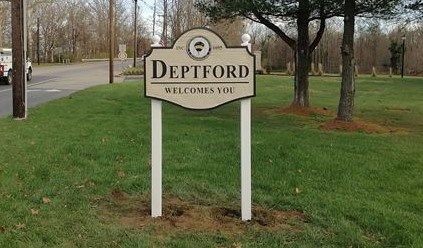
STR Regulations for Deptford, New Jersey
Overview: Are Short-Term Rentals Allowed in Deptford, NJ?
Based on the Deptford Township Unified Development Ordinance (UDO), short-term rentals (STRs)—commonly operating through platforms such as Airbnb or Vrbo—are not explicitly prohibited. The UDO regulates lodging uses via defined categories such as Boarding House, Hotel, Inn, and Motel. In practice, the viability of an STR in Deptford will depend on whether the property is located in a zoning district that permits lodging uses as a principal or accessory use, or whether the STR can operate within the bounds of a permitted use such as “dwelling” without triggering a change-of-use to a regulated lodging category. Given the absence of dedicated STR-specific licensing rules in the provided UDO, operators should treat STRs as subject to standard zoning compliance and any applicable state-level codes (e.g., NJ Uniform Fire Code; Life Safety; local building, health, and fire requirements). As a practical rule of thumb, renting a single-family home or apartment for fewer than 90 consecutive days to a single household typically avoids classification as a boarding house, hotel, inn, or motel, but you should confirm this interpretation with the local zoning officer.
Key conclusion: STRs are not expressly barred by the UDO. Whether you can operate depends on zoning use permissions and compliance with the UDO’s definitions and standards for lodging uses.
What do Airbnb hosts actually earn in Deptford?
Deptford hosts earn a median $32,630/year with $194 ADR and 71% occupancy.
Top performers pull in $49,729+ per year.
See the full Deptford market breakdownHow to Start a Short-Term Rental Business in This Market
- Confirm zoning eligibility: Determine whether the subject property is in a zoning district that expressly allows lodging uses (e.g., Hotel/Inn may be permitted in certain commercial districts; Boarding House may be allowed under conditional use standards in some residential districts). If you intend to operate an STR within a single-family home or small multifamily unit, ensure that the rental pattern does not convert the use into a boarding house or transient accommodation under the UDO definitions.
- Verify occupancy and building compliance: Confirm that the property’s design and egress meet life safety requirements for the intended occupancy, and that all applicable state codes are met.
- Obtain required permits: For any structural, mechanical, electrical, or plumbing changes, secure building and construction permits. Ensure fire and life safety compliance. If the operation changes the occupancy classification or triggers licensing as a lodging facility, follow the state and local processes for such facilities.
- Align with business and tax requirements: Register your business and collect/remit occupancy taxes where applicable (if you host paying guests, NJ’s Hotel/Motel Occupancy Fee generally applies; local municipalities may also levy an additional occupancy tax).
- Establish operations policies: Develop house rules for occupancy limits, quiet hours, parking, and trash management to minimize neighborhood impacts and reduce enforcement risk.
Required Documents, Permits, Licenses, and Guidelines
- Property documents: Deed or proof of ownership/leasehold interest; site plan or property survey if available.
- Zoning determination: Written confirmation or written zoning interpretation from the Township’s Zoning Officer or Planning Board staff indicating the permitted status of lodging or STR use at the subject address.
- Building and life safety permits: As applicable to renovation, egress, fire safety, and occupancy changes. Compliance with NJ Uniform Fire Code and Life Safety regulations for lodging uses.
- Business registration: State business registration (if operating as a formal entity); local business license if required.
- Insurance: Property and liability coverage appropriate for STR operations.
- Tax compliance: Registration to collect and remit NJ Hotel/Motel Occupancy Fee and any local occupancy taxes.
- Operational documentation: House rules, emergency procedures, maximum occupancy documentation, and records to demonstrate compliance with rental duration limits and non-conversion to a boarding house/hotel.
Specific Regulations for Short-Term Rentals: City, County, and State
- City (Deptford Township): The UDO regulates lodging via definitions and district permissions. The most relevant defined uses are:
- Boarding House: A dwelling or part thereof in which lodging is provided by the owner or operator to two (2) or more boarders (a “boarder” is defined as an individual other than a family member who, for a consideration, is furnished sleeping accommodations and may be furnished meals or other services).
- Hotel: A lodging facility with overnight accommodations for transient guests, with guest rooms accessed from interior corridors, a public lobby with guest services 24 hours per day, full-time on-site management, ancillary uses, and a minimum of 30 guest rooms.
- Inn: A lodging facility for transient guests, with guest rooms accessed via interior corridors, a public lobby, full-time on-site management, and no more than 30 guest rooms.
- Motel: A lodging facility for transient guests with direct external access to rooms without passing through a lobby or internal corridor.
- Dwelling/Housekeeping Unit: A structure designed for year-round occupancy by one housekeeping unit; conversions that change the use to lodging categories may trigger zoning approvals.
- General Prohibited Uses (Article V): Listings do not include STRs; however, operators must ensure STR operations do not fall within prohibited use categories.
- Parking: Off-Street Parking and Circulation standards apply to lodging uses; ensure the site plan and layout meet UDO requirements for the proposed use.
- Zoning districts: Lodging uses may be permitted or conditional in certain commercial districts. In residential districts, “boarding house” can be a conditional use subject to standards; ensure compliance with those district-specific provisions and with conditional use approval processes.
- County (Gloucester County): No county-specific STR licensing or operational rules are provided. Operators should follow state and municipal requirements.
- State (New Jersey): STR operations must comply with NJ Uniform Fire Code and Life Safety rules applicable to lodging uses, including egress, fire alarms, sprinkler systems, smoke detectors, carbon monoxide detectors, and emergency planning as applicable. If the operation qualifies as a hotel/inn/boarding house or similar regulated accommodation under state law, additional state approvals/licensing may be required. Operators who host paying guests are generally required to collect and remit the NJ Hotel/Motel Occupancy Fee (9.625% as of the latest published rates), and many municipalities also assess a local occupancy tax. Income is subject to state and federal income tax.
Contact Information (Local Authority in Charge of STR/Zoning)
- Deptford Township Zoning Officer: (856) 845-4000
- Township Clerk: (856) 845-4000
- Municipal Building Address: 1011 Cooper Street, Deptford, NJ 08096
- Website: www.deptford-nj.org/
Source Pages (Links)
- Deptford Township Unified Development Ordinance (UDO): www.deptford-nj.org/filestorage/34747/34759/34775/34863/UDO_Deptford_Township.pdf
Notes for investors:
- Because STRs are not explicitly defined or prohibited in the UDO, early coordination with the Zoning Officer is essential to confirm permitted use status in the target district and to avoid an unintended conversion to a regulated lodging use.
- Where lodging uses are contemplated, use the district provisions and conditional use procedures. Where STRs are proposed in residential districts, ensure the rental structure remains within the bounds of “dwelling” and “housekeeping unit” definitions to avoid triggering Boarding House or Hotel/Inn classifications.
- Align all plans and operations with UDO parking, site design, and general standards, and with state fire and life safety requirements.
Next step
Found a property in Deptford?
Paste any address and get estimated revenue, cash-on-cash return, and comparable STR performance in under 5 minutes. 3 free analyses per day.
Free brief
Get the free Deptford STR Investment Brief
Revenue data, top neighborhoods, seasonal trends, and the key regulations for Deptford, New Jersey in one email.
Deptford
Market Saturation Score
Photos of Deptford


Overview of Deptford
Deptford Township sits in Gloucester County in southern New Jersey, just across the Delaware River from Philadelphia. With a population of roughly 32,000 residents, it functions as a busy suburban community within the Philadelphia metropolitan area and acts as a convenient gateway to both the city and the Jersey Shore. The township lies approximately eight to ten miles southeast of Center City Philadelphia, an easy drive via the Walt Whitman Bridge or the Benjamin Franklin Bridge, making it a practical base for visitors who want a quieter, more affordable stay with quick access to urban amenities.
The Deptford Mall is the township's most prominent retail hub, drawing visitors from across the region with a wide range of national retailers, dining options, and an indoor shopping environment that stays comfortable year-round. Located right off Route 42 and the North-South Freeway, it is just minutes from anywhere in the township and serves as a popular meeting spot for both locals and out-of-towners exploring South Jersey. The mall's central location makes it a frequent stop for travelers heading between Philadelphia and the shore.
Just across the river, Independence National Historical Park in Philadelphia offers a deep dive into early American history, with Independence Hall, the Liberty Bell, and surrounding historic structures in Old City. The drive from Deptford to the park typically takes about twenty to twenty-five minutes, depending on traffic, and visitors can also reach the historic district by transit from nearby stations. For anyone interested in American founding-era sites, this is one of the country's most significant collections of historic landmarks.
A short drive north brings guests to the Camden Waterfront, home to the Adventure Aquarium and the Battleship New Jersey Museum. The aquarium features one of the largest collections of sharks in the Northeast and offers hands-on exhibits that appeal to families, while the docked battleship allows visitors to tour a decorated World War II vessel. Both attractions are roughly fifteen minutes from Deptford and pair well with a day trip across the river.
For those looking toward the coast, Deptford sits within an hour's drive of several Jersey Shore destinations, including the boardwalks and beaches of Ocean City, Margate, and the Atlantic City area. The route south via the Atlantic City Expressway makes day trips or overnight excursions to the shore straightforward, giving visitors the option to combine a Philadelphia-area stay with time on the Atlantic coast.
Deptford's appeal as a short-term rental base comes from its balance of suburban comfort, retail convenience, and strategic location between two major draws: the historic attractions of Philadelphia and the beaches of the Jersey Shore. Its accessibility by both car and transit, plus its proximity to Philadelphia International Airport, makes it a practical landing spot for travelers who want to experience multiple sides of the region without committing to a downtown hotel.
Want to know if a property in Deptford is a good investment?
Enter an address to get instant revenue potential and comps.