
Cando, North Dakota
Want to see how Cando compares to other top cities in North Dakota? Explore all city regulations in North Dakota. →
Cando, ND
Generally Investor Friendly
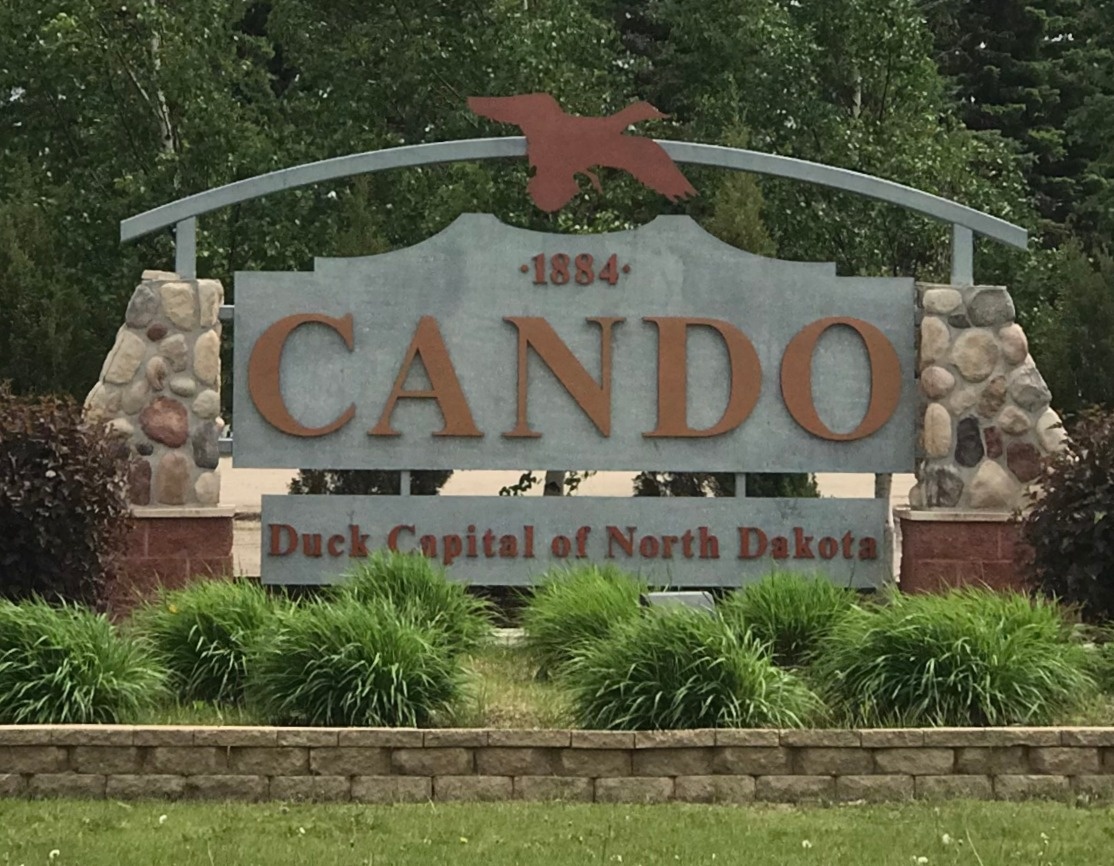
STR Regulations for Cando, North Dakota
Overview: Are Short-Term Rentals Allowed in Cando, ND?
Yes. Short-term rentals (STRs) are allowed in Cando, ND. There is no statewide prohibition on short-term rentals. The property must comply with the North Dakota State Building Code (effective January 1, 2023) and any locally adopted codes and ordinances. Property owners must ensure that the dwelling meets applicable building, electrical, plumbing, mechanical, fuel gas, energy, and fire/life-safety standards. If the property is served by a local building program, the jurisdiction’s administration and enforcement rules will apply in addition to state requirements.
What do Airbnb hosts actually earn in Cando?
Cando hosts earn a median $17,546/year with $128 ADR and 54% occupancy.
Top performers pull in $20,250+ per year.
See the full Cando market breakdownHow to Start a Short-Term Rental Business in Cando, ND
Short-term rentals are treated as residential dwelling units. If you are acquiring or modifying an existing residential property, you will generally follow these steps:
-
Verify zoning and local rules (city/county). Confirm the use is permitted at the property location. If Cando or Walsh County has adopted zoning or nuisance ordinances, confirm that short-term rentals are permitted, or obtain any required approvals.
-
Ensure the structure meets the North Dakota State Building Code (effective January 1, 2023). If building work is required (e.g., interior changes, new or altered mechanical systems, new egress windows, insulation/energy upgrades, electrical/plumbing modifications), submit plans and obtain building permits through the code enforcement agency having jurisdiction. When no local jurisdiction is elected to enforce, state agencies are responsible for plan review and compliance inspections.
-
Coordinate permitting with applicable trades:
- Electrical work must meet the ND Wiring Standards administered by the State Electrical Board.
- Plumbing work must meet the ND State Plumbing Code administered by the State Plumbing Board.
- Mechanical and fuel gas systems must meet the 2021 IMC and IFGC as adopted by the state and referenced in the ND State Building Code.
-
Verify life-safety systems:
- Smoke alarms and carbon monoxide alarms installed per applicable code requirements.
- Emergency egress (e.g., basement bedrooms must meet emergency escape and rescue opening requirements).
- Guardrails and handrails for stairs/open-sided surfaces as required.
- For two-family dwellings (duplexes), confirm separation between dwelling units meets fire-resistance rating requirements, with permitted reductions if equipped with automatic sprinklers.
-
Confirm special use or safety items:
- Rental of one or more rooms within a single-family home: typically treated as Group R-3 (single-family) occupancy.
- Conversion to multiple unit short-term rental (more than two units) in a structure not designed as a multiple dwelling requires formal review for occupancy classification (likely Group R-2) and may require significant life-safety upgrades and code compliance beyond base building requirements.
-
Insurance and business registration:
- Secure appropriate insurance coverage for a STR.
- Complete any required state business registration and local licenses as applicable to short-term rentals (e.g., sales tax, local lodging taxes—verify at the state and local level).
-
Ongoing compliance:
- Maintain annual inspection requirements where required by local enforcement agency.
- Keep documentation of permits, inspections, and certifications.
Required Documents, Permits, Licenses, and Guidelines
At a minimum, the following documents and approvals may be required depending on scope of work and local policies:
- Building Permit Application and approved construction documents (if renovations or new construction occur). Plans must reference the 2021 I-Codes as amended by the ND State Building Code (effective 2023) and incorporate ND Electrical/Plumbing codes by substitution.
- Trade Permits and Approvals:
- Electrical permit (if electrical changes/modifications occur), complying with ND Wiring Standards.
- Plumbing permit (if plumbing changes/modifications occur), complying with ND State Plumbing Code.
- Mechanical and Fuel Gas permits (if HVAC, ductwork, or gas piping is altered), complying with 2021 IMC and IFGC as adopted and amended.
- Code Compliance Inspections:
- Framing/structural, rough-ins (electrical/plumbing/mechanical), insulation/energy (IECC/IRC Chapter 11), and final inspections per local administration.
- Life-Safety Items:
- Smoke and carbon monoxide alarm placement documentation.
- Emergency escape and rescue opening (egress window) compliance for sleeping rooms in basements or below grade.
- Guardrail and handrail compliance for stairs and open-sided surfaces.
- Occupancy Determination:
- Documentation indicating occupancy classification (Group R-3 for single-family or duplex; Group R-2 for multi-unit short-term rentals)—may require formal code interpretation.
- Zoning/Nuisance/Fire Prevention:
- Any local zoning, nuisance, or fire code ordinances adopted by Cando or Walsh County (verify locally).
- Business Registration:
- State business registration and local licenses/taxes as applicable.
- Documentation Retention:
- Permit records, inspection reports, and certifications should be retained on-site or with the owner/operator for compliance audits and future buyers.
Note: If the project involves modular/prebuilt homes or manufactured homes, additional state requirements apply (e.g., third-party inspection, compliance with manufactured home installation standards).
Specific Regulations for Short-Term Rentals (Cando, Walsh County, North Dakota)
State Building Code (Effective Jan 1, 2023):
- The ND State Building Code consists of the 2021 International Building Code (IBC), International Residential Code (IRC), International Mechanical Code (IMC), International Fuel Gas Code (IFGC), International Energy Conservation Code (IECC), and International Existing Building Code (IEBC).
- Where the International Codes reference electrical or plumbing codes, the ND State Wiring Standards and ND State Plumbing Code apply in place of the ICC-referenced codes.
- Administrative Rule (Article 108, Chapter 108-01) governs scope and adoption. Jurisdictions that elect to administer/enforce building codes adopt the state code and may amend it to suit local needs.
Relevant STR Building/Life-Safety Requirements (selected highlights):
- Dwelling Unit Separation (Duplexes):
- Two-family dwellings must separate units by wall/floor assemblies with at least 1-hour fire-resistance rating; reductions to 1/2 hour permitted with automatic sprinklers installed per code.
- Garage Separation:
- Doors between a garage and a sleeping room are not allowed. Openings between garage and residence must have solid wood or steel doors (≥1 3/8 inches thick), or 20-minute fire-rated doors.
- Carbon Monoxide Alarms:
- Required outside sleeping areas and on each level. Additional requirements apply where fuel-burning appliances are in bedrooms or attached bathrooms.
- Emergency Escape and Rescue Openings (Egress Windows):
- Sill height ≤44 inches above floor; exceptions may allow 48 inches below grade. Window wells deeper than 44 inches require ladders/steps or platforms with specific dimensions.
- Stair/Guard Requirements:
- Riser height max 8 inches; tread depth minimum 9 inches; guards required for open-sided walking surfaces >30 inches above grade.
- Egress Door Landing Heights:
- At the required egress door, landings or finished floors must be ≤1.5 inches below the threshold (with specific exceptions).
- Energy Code Compliance:
- Choose either 2021 IRC Chapter 11 (as amended) or 2021 IECC (as amended) to meet energy efficiency requirements. State amendments specify U-factors and R-value requirements by climate zone.
- Accessible Entrances:
- New buildings >7,500 sq ft in certain occupancy categories must include an automatic or power-assisted door at the primary public entrance; see ADA standards included in state code.
Local Adoption and Enforcement:
- Cities, townships, and counties that elect to enforce building codes must adopt the ND State Building Code; they may amend it to meet local needs. If Cando or Walsh County has adopted local administration, the local fee schedules and enforcement procedures apply. If no local adoption exists, state agencies oversee compliance for state buildings and schools; local governments not adopting still ensure projects comply with the state building code.
Exemptions and Special Provisions:
- Certain buildings are exempt from the state building code (e.g., unheated/uncooled structures, structures below energy-use thresholds, certain historic/pioneer buildings, agricultural buildings not used for human habitation or public use).
- Temporary work camp housing and modular/prebuilt structures have special inspection and installation rules.
- The state building code may not require fire sprinklers in single-family dwellings or residential buildings with no more than two dwelling units.
Note: The ND State Building Code does not adopt the International Property Maintenance Code or International Fire Code; those may be adopted separately by cities/counties. Verify whether Cando or Walsh County has adopted any such codes locally.
Contact Information (Local and State Agencies)
Because STR compliance often involves multiple disciplines, owners should contact the jurisdiction and relevant state agencies. Confirm Cando and Walsh County building administration before submitting plans or permits.
- City of Cando (Towner County)
- Address: 502 4th Ave, Cando, ND 58324
- Phone: (701) 968-3333
- Email: Not publicly provided in the source set. Inquire via phone.
- Walsh County (Regional Partner in Local Services for Towner County; building services vary by jurisdiction)
- Walsh County Courthouse, 600 Cooper Ave, Grafton, ND 58237
- Phone: (701) 352-5000
- Email: Not publicly provided in the source set. Inquire via phone.
- North Dakota Department of Commerce — Division of Community Services (State Building Code Administration)
- 1600 East Century Avenue, Suite 6, Bismarck, ND 58503
- Phone: (701) 328-5300
- Website: commerce.nd.gov (refer to “Community Services” and “Building Codes”)
- North Dakota State Fire Marshal’s Office
- Phone: Contact via ND Department of Commerce (701) 328-5555
- Note: IFC may be adopted locally; confirm with city/county.
- North Dakota State Electrical Board (Electrical Permits and Wiring Standards)
- Phone: (701) 328-4636
- North Dakota State Plumbing Board (Plumbing Code)
- Phone: (701) 328-3457
Before submitting plans, call the city and county to confirm:
- Whether Cando has a local building code program and how to obtain permits.
- Whether any local zoning or nuisance ordinances affect STRs.
- Whether the International Fire Code or Property Maintenance Code has been adopted locally.
Source Links
- North Dakota State Building Code (Effective Jan 1, 2023) — PDF:
This guide focuses on compliance at the state level, as there are no Cando- or Walsh County-specific short-term rental regulations provided in the source set. Verify locally adopted codes and any local STR-specific requirements with the city and county.
Next step
Found a property in Cando?
Paste any address and get estimated revenue, cash-on-cash return, and comparable STR performance in under 5 minutes. 3 free analyses per day.
Free brief
Get the free Cando STR Investment Brief
Revenue data, top neighborhoods, seasonal trends, and the key regulations for Cando, North Dakota in one email.
Cando
Market Saturation Score
Photos of Cando
Overview of Cando
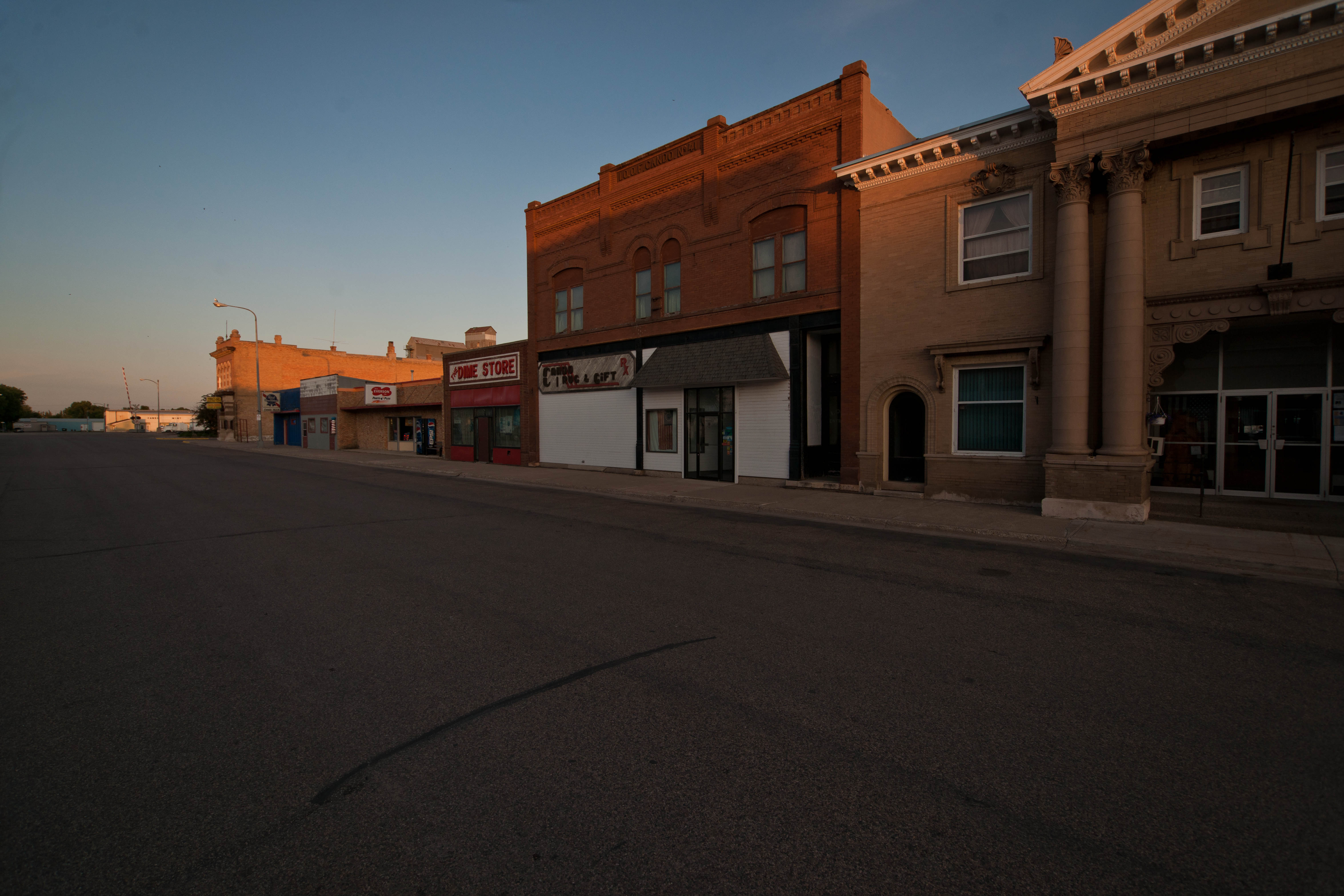
Cando is a small prairie community in north-central North Dakota, serving as the county seat of Towner County. With a population of roughly 1,100 residents, the town has the unhurried, close-knit character typical of the northern Great Plains, where grain farms, quiet residential streets, and wide horizons define daily life. It functions as a regional service center for surrounding agricultural land and is best known as a convenient base for travelers exploring the Devils Lake region, one of North Dakota's most popular outdoor recreation destinations. Cando sits about 130 miles northwest of Grand Forks and roughly 100 miles northeast of Minot, placing it firmly within reach of the state's larger hubs while retaining its small-town feel.
The area's marquee draw is Devils Lake, a large natural lake located about 35 miles south of Cando, or roughly a 40-minute drive. The lake is part of one of the most productive freshwater fisheries in the Upper Midwest, and it has earned a strong reputation among walleye and perch anglers from across the region. Beyond fishing, the lake's perimeter offers boating, wildlife viewing, and access to public recreation areas where visitors can experience the open-water scenery and big-sky vistas that define this part of North Dakota. Visitors coming to Cando for a fishing trip often find the town a calmer, more affordable alternative to staying directly on the lake.
Just off the southern shore of Devils Lake lies Grahams Island State Park, approximately 45 minutes from Cando. The park features campgrounds, a marina, swimming areas, and hiking trails, making it a popular summer gathering point for families and outdoor enthusiasts. It offers one of the more developed ways to enjoy the lake, with amenities that complement the wilder, more expansive shoreline elsewhere around the basin.
Cando also sits within the broader Prairie Pothole Region, a landscape of glacially formed wetlands that draws birders, hunters, and nature photographers throughout the year. The surrounding countryside offers ample opportunities for waterfowl hunting in season, as well as sightings of deer, pheasants, and a wide variety of migratory species. Small game and upland bird hunters frequently pass through the area each fall, contributing to a steady seasonal rhythm of visitors.
For prospective short-term rental owners, Cando offers a quiet but strategic location within a region that generates genuine travel demand. Its proximity to Devils Lake, its position along routes connecting Minot and Grand Forks, and its small-town character combine to make it a practical and inviting base for anglers, hunters, and road-trippers exploring north-central North Dakota.
Want to know if a property in Cando is a good investment?
Enter an address to get instant revenue potential and comps.