
Mount Gilead, North Carolina
Want to see how Mount Gilead compares to other top cities in North Carolina? Explore all city regulations in North Carolina. →
Mount Gilead, NC
Challenging To Investors
STR Regulations for Mount Gilead, North Carolina
Note on scope: This guide is based strictly on the Town of Mount Gilead Zoning Ordinances (June 2023) and the town’s public website content provided. No additional URLs were fetched.
Overview: Are Short-Term Rentals Allowed in Mount Gilead, NC?
Short-term rentals are allowed in Mount Gilead, but not as home‑share platforms (e.g., a typical “entire home” listing on Airbnb). The Town allows lodging uses through specific zoning categories: Bed and Breakfast Establishments, boarding/rooming houses, and traditional lodging (Hotel/Motel). These uses require zoning approval (and in many cases a Special Use Permit, SUP) and must comply with dimensional, design, and performance standards.
Key takeaways:
- Traditional home‑share “entire home” STRs are not recognized uses in the zoning ordinance and are not allowed.
- Bed and Breakfast Establishments are allowed in:
- Residential districts by SUP with specific occupancy caps (see “Specific Regulations” below).
- Office/Institutional (OI) by zoning permit with conditions.
- Central Business (CB), General Business (GB), Neighborhood Business (NB), Industrial (I), and Lakeside Development Conditional (LD‑CD) districts by zoning permit with conditions.
- Boarding or Rooming Houses are allowed in:
- Residential districts by zoning permit with conditions (max 3 boarders).
- Residential districts by zoning permit with conditions (max 4–6 boarders).
- Central Business (CB) district by zoning permit with conditions (4–6 boarders).
- Hotels/Motels are allowed in CB, GB, NB, I, and LD‑CD districts by zoning permit (no SUP required).
- State-level rules for NC STRs (e.g., registration, safety, taxes) may still apply, but the Town does not publish an STR‑specific local registration ordinance in these materials.
Bottom line: If your plan is a true home‑share (rent your home for nights with no operator onsite), Mount Gilead does not currently permit that model. To operate an STR‑style business, use one of the lodging types recognized in the zoning code.
What do Airbnb hosts actually earn in Mount Gilead?
Mount Gilead hosts earn a median $24,382/year with $198 ADR and 50% occupancy.
Top performers pull in $37,116+ per year.
See the full Mount Gilead market breakdownHow to Start a Short-Term Rental Business in This Market
- Confirm feasibility through zoning
- Identify your subject property’s zoning district and check whether lodging use is permitted and whether SUP is required (see “Specific Regulations”).
- Use the official zoning map to confirm the district. Links to the map and forms are provided in “Links to Source Pages.”
- Determine the correct lodging use
- Bed and Breakfast (B&B): Operator lives on-site, limited rooms, serves breakfast. Requires SUP in residential districts; allowed by zoning permit with conditions in OI and commercial/industrial/lakeside districts.
- Boarding/Rooming House: Longer stays permitted but usually not transient lodging; subject to occupancy caps and SUP in residential districts; allowed in CB with conditions for 4–6 boarders.
- Hotel/Motel: Traditional lodging in commercial/industrial/lakeside districts; typically allowed by zoning permit (no SUP), with design/performance standards.
- Secure the required approvals
- Submit the Zoning Permit Application (or SUP application where applicable) to the Zoning Administrator.
- If a SUP is required, the Board of Commissioners will review and decide after a public hearing; see timelines and vesting rules in the ordinance (Article 2).
- Plan review and building permits will be required for any structural changes, egress/fire safety, or change of use, subject to the NC Building Code and town review.
- Complete state and tax compliance
- State of NC: Observe any applicable STR registration, fire safety, and tax obligations (e.g., Sales and Use Tax on lodging). State statutes typically govern health and safety standards for lodging.
- Local taxes: Confirm whether town/county occupancy taxes apply for B&Bs/hotels; property taxes apply to all lodging uses. Contact the town and Montgomery County tax offices for specifics.
- Operate according to approvals and codes
- Operate strictly within the approved occupancy and use parameters.
- Maintain compliance with dimensional requirements, parking, and design standards.
- Monitor any zoning amendments or SUP conditions; violations can trigger enforcement or revocation of approvals.
Required Documents, Permits, Licenses, and Guidelines
Local approvals
- Zoning Permit Application
- Required for all lodging uses (even when SUP is also required).
- Includes plan submittal (site plan, floor plans, parking analysis).
- Issued by the Zoning Administrator.
- Special Use Permit (SUP) application (as required by district)
- Required for B&Bs in all residential districts.
- Required for boarding/rooming houses in residential districts (3 boarders or 4–6 boarders).
- Reviewed by the Board of Commissioners at a public hearing; binding conditions may be applied.
- Building Permit (as applicable)
- Required for interior renovations, egress/fire code upgrades, structural changes, or any work regulated by the NC Building Code.
- Certificate of Occupancy (CO)
- Issued after inspections confirm the use meets zoning conditions and code requirements.
- Business registration and taxes
- Confirm need for a town business registration (not shown in ordinance).
- Address Sales and Use Tax (lodging), occupancy tax, and property tax with state and county authorities.
Guides and standards to consult
- Zoning Ordinance (June 21, 2023): dimensional standards, permitted uses, SUP procedures, and nonconformities.
- Design Standards (Article 6): building presentation, access, parking, loading, and neighborhood compatibility.
- Nonconformities (Article 3): continuation, expansion limits, and changes of use.
Specific Regulations for Short-Term Rentals in Mount Gilead
Permitted lodging uses and approval paths
-
Bed and Breakfast Establishments
- Residential districts (R‑A, R‑15, R‑15M, R‑8, R‑6): Special Use Permit (SUP) from Board of Commissioners; typical conditions include owner‑occupancy, room caps, parking, and compatibility with neighborhood character.
- Office/Institutional (OI): Zoning Permit with conditions.
- Central Business (CB), General Business (GB), Neighborhood Business (NB), Industrial (I), Lakeside Development Conditional (LD‑CD): Zoning Permit with conditions.
-
Boarding or Rooming House for up to 3 boarders
- Residential districts (R‑A, R‑15, R‑15M, R‑8, R‑6): Zoning Permit with conditions (Section 9.14).
-
Boarding or Rooming House for 4–6 boarders
- Residential districts (R‑A, R‑15, R‑15M, R‑8, R‑6): Zoning Permit with conditions (Section 9.14).
- Central Business (CB): Zoning Permit with conditions (Section 9.14).
-
Hotel/Motel
- CB, GB, NB, I, LD‑CD: Zoning Permit (no SUP indicated).
- LD‑CD: subject to the specific uses and conditions approved with the lakeside development plan.
Permitted districts (summary)
- Bed and Breakfast: R‑A, R‑15, R‑15M, R‑8, R‑6 (SUP); OI, CB, GB, NB, I, LD‑CD (by zoning permit with conditions).
- Boarding/Rooming (3): R‑A, R‑15, R‑15M, R‑8, R‑6 (by zoning permit with conditions).
- Boarding/Rooming (4–6): R‑A, R‑15, R‑15M, R‑8, R‑6 and CB (by zoning permit with conditions).
- Hotel/Motel: CB, GB, NB, I, LD‑CD (by zoning permit).
Dimensional standards (selected lodging uses)
- Dimensional requirements are governed by the zoning district (see Section 4.4 and Table 1).
- Typical residential districts: R‑15 (e.g., minimum lot area 15,000–20,000 sf depending on utilities; lot width ~100 ft; front setbacks ~35 ft; side ~12–22 ft; rear ~30 ft; max height 35 ft; additional area required for accessory units or additional dwellings). Requirements can be increased by the Montgomery County Health Department.
- Commercial/industrial districts: see Table 2 for lot size, setbacks, and height standards. CB has no minimum lot area; NB minimum 10,000 sf; GB 20,000 sf; I 43,560 sf.
Design standards (Article 6)
- Building presentation and façade orientation to streets; screening for non‑residential building sides; treatment of facades facing arterial/collector streets.
- Access and parking: shared driveways encouraged; safe loading/unloading layouts; primary pedestrian access from the street in OI and commercial districts.
- Parking: LOD must provide adequate off‑street parking per district standards and design rules.
Performance standards (Article 5)
- Noise and vibration limits measured at the property line.
- Setbacks and yard standards apply; accessory structure limits; swimming pool safety and enclosure requirements (fencing, gate hardware).
- Visibility at intersections (corner lots in residential districts) must be preserved.
Vested development rights and timelines (Article 2)
- SUP/site‑specific vesting confers a vested right for 3 years; multiphase developments (≥100 acres) have 7 years from initial phase approval.
- Permit choice: applicants may elect which version of a development regulation applies at the time of decision if changes occur during review.
Nonconformities (Article 3)
- Lodging uses that were established prior to code changes may continue subject to limits on expansion, structural alterations, and abandonment (180 days). Moving nonconforming structures must bring them into compliance.
State-Level Regulations That May Apply in North Carolina
- Statewide statutes regulate lodging safety and taxation (e.g., fire/safety requirements, Sales and Use Tax on lodging, local occupancy taxes). If you operate a B&B, motel, or boarding house, you must comply with state requirements even if the town’s zoning approval is in place.
- If the town adopts a future local STR registration/occupancy program separate from zoning, it would be posted on the town website. Investors should verify current requirements before investment.
Contact Information for Local Authority in Charge of STRs
Town of Mount Gilead
- Phone: 910‑439‑5111
- Email: info@mtgileadnc.com
- Mailing address: Available via the Contact page on the town website
- Town Hall Hours: Monday–Friday, 8:00 AM–5:00 PM
- Department/role: Zoning Administrator (handles zoning permits); Board of Commissioners (SUP approvals)
Links to Source Pages (Important)
-
Zoning Ordinances landing page and permit/application materials: mtgileadnc.com/zoning-ordinances/
-
Official Zoning Map (interactive): maps.ptrc.org/portal/apps/webappviewer/index.html?id=ed007fe701ba40ce8979700ff79c19f3
-
Zoning Permit Application (PDF): mtgileadnc.com/wp-content/uploads/2023/06/Zoning-Permit-Application.pdf
-
Zoning Ordinance PDF (June 21, 2023): mtgileadnc.com/wp-content/uploads/2023/06/MtG_ZoningOrdinance-Updated-June-21^LJ-2023-MDH.pdf
Practical compliance checklist for investors
- Verify zoning district and allowed lodging use with the Zoning Administrator.
- Select the correct lodging category (B&B, boarding/rooming, hotel/motel).
- Prepare and submit Zoning Permit Application; file SUP where required.
- Complete plan reviews, building permits, and inspections; obtain CO.
- Comply with occupancy caps, parking, signage, and design standards.
- Register for and collect state/local lodging taxes; confirm business registration requirements.
- Monitor SUP conditions and any zoning/code updates; maintain records for inspections.
Next step
Found a property in Mount Gilead?
Paste any address and get estimated revenue, cash-on-cash return, and comparable STR performance in under 5 minutes. 3 free analyses per day.
Free brief
Get the free Mount Gilead STR Investment Brief
Revenue data, top neighborhoods, seasonal trends, and the key regulations for Mount Gilead, North Carolina in one email.
Mount Gilead
Market Saturation Score
Photos of Mount Gilead


Overview of Mount Gilead
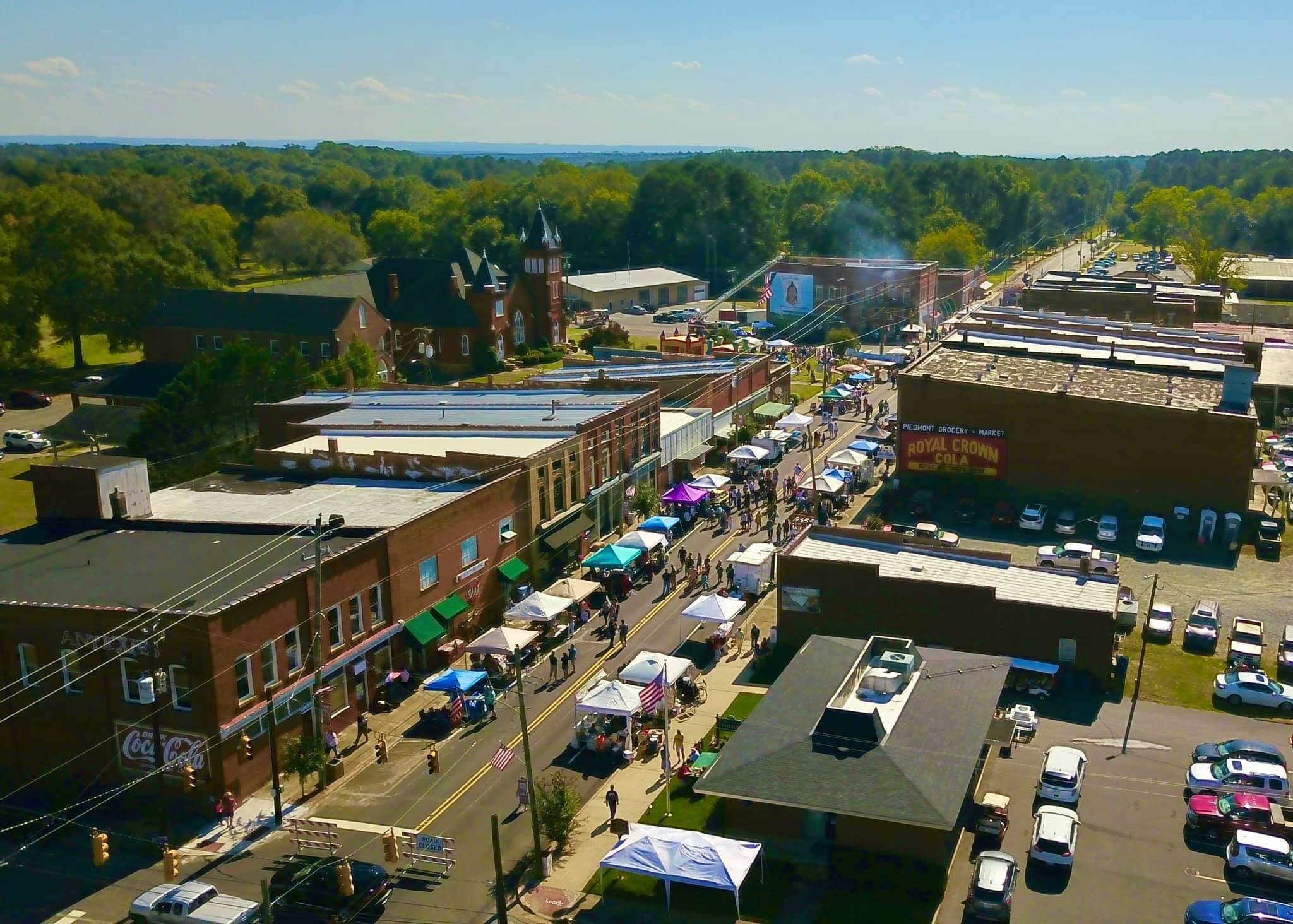
Mount Gilead is a small town in Montgomery County, North Carolina, with a population of roughly 1,200 residents. Tucked into the rolling Piedmont between the Yadkin and Uwharrie rivers, it carries a quiet, traditional small-town character defined by tree-lined streets, locally owned shops, and a slower pace of life. The town serves as a relaxed gateway to the Uwharrie Lakes region and the surrounding national forest, appealing to travelers who want to pair outdoor recreation with small-town charm. It sits approximately 60 miles east of Charlotte, putting the amenities of a major metro area within roughly an hour's drive without sacrificing the rural feel that defines the area.
Just east of town, Morrow Mountain State Park is one of the area's marquee draws, reached by a short drive of roughly 15 to 20 minutes from Mount Gilead's center. The park climbs into the Uwharrie foothills above the Yadkin River and offers miles of hiking trails, riverside picnicking, a historic gold-mining trace, and a small lake. Its combination of accessible day-use facilities and panoramic views makes it a favorite for families and casual visitors exploring the region.
Surrounding Mount Gilead in nearly every direction, the Uwharrie National Forest covers more than 50,000 acres of wooded hills, creeks, and trails. The forest is well known for its off-highway vehicle trails, which draw riders from across the Southeast, as well as for traditional hiking, camping, and fishing. Visitors who base themselves in Mount Gilead can reach trailheads, primitive campsites, and put-in points for the Yadkin within a short drive, making the town a natural jumping-off point for multi-day outdoor trips.
A few miles north of town, Lake Tillery stretches along the Yadkin River and forms the centerpiece of summer recreation in the region. The reservoir is popular for boating, swimming, water skiing, and lakeside cabin getaways, with several public access points and small marinas scattered along its shoreline. The lake's quiet coves and inlets provide a complementary experience to the more rugged Uwharrie trails, balancing the area's outdoor offerings with classic water-based leisure.
Mount Gilead's appeal as a short-term rental base lies in this balance of small-town character and varied outdoor recreation. Guests can spend mornings on Uwharrie hiking or OHV trails, afternoons on the water at Lake Tillery, and evenings back in a quiet neighborhood within roughly an hour of Charlotte's restaurants, airports, and urban attractions. That mix of accessibility, affordability, and natural amenities makes the town a quietly compelling option for vacation rental investors looking beyond North Carolina's more heavily trafficked destinations.
Want to know if a property in Mount Gilead is a good investment?
Enter an address to get instant revenue potential and comps.