
Morganton, North Carolina
Want to see how Morganton compares to other top cities in North Carolina? Explore all city regulations in North Carolina. →
Morganton, NC
Generally Investor Friendly
STR Regulations for Morganton, North Carolina
Overview: Are Short-Term Rentals Allowed in Morganton, NC?
Yes—short-term rentals (STRs) are allowed in Morganton, North Carolina. Under the City of Morganton Zoning Ordinance, short‑term rentals are treated as residential uses that are permissible in districts where residential occupancy is permitted, subject to the same zoning standards that apply to any residential use (e.g., principal use, setbacks, parking, and compatibility). At the county level, Burke County removed its short‑term rental ordinance in March 2023, eliminating a separate local permit and compliance regime that previously existed. In short: operate where zoning allows residential use, meet general residential standards, and comply with North Carolina’s state‑level rules. City and state overlays (fire/safety, taxes, housing code) continue to apply. [3]
What this means in practice:
- You can operate an STR (whole‑home or hosted) in a zoning district that allows residential uses.
- There is no citywide STR permit or registration scheme in Morganton.
- There is no countywide STR permit in Burke County (the ordinance was repealed).
- State rules—including safety requirements, tax obligations, and the Vacation Rental Act—still govern STR operations in North Carolina.
What do Airbnb hosts actually earn in Morganton?
Morganton hosts earn a median $24,243/year with $126 ADR and 69% occupancy.
Top performers pull in $32,059+ per year.
See the full Morganton market breakdownHow to Start a Short-Term Rental Business in Morganton
A disciplined launch sequence reduces risk and accelerates revenue. Use the following step‑by‑step approach:
-
Site selection and zoning verification
- Confirm that your property sits in a zoning district where residential occupancy and short-term rental use are permitted. Use the City GIS Zoning Map to verify district, overlays, and base standards. [2]
- For properties near Valdese (adjacent town within Burke County), verify zoning through the Town of Valdese Unified Development Ordinance (UDO) and Planning & Zoning, as rules can differ by municipality. [5]
-
Private restrictions and HOA review
- Obtain recorded covenants, HOA bylaws, and any amendments. Even if zoning allows STRs, private restrictions can prohibit rentals or limit occupancy, parking, and signage. [5]
-
Business and insurance setup
- Secure appropriate insurance coverage. Homeowner policies often exclude business activity; consider an STR endorsement, landlord policy, or commercial coverage. Platform protections are not substitutes for proper insurance. [5]
- Obtain a federal EIN if you don’t already have one.
-
Safety and habitability compliance
- Install and maintain required smoke alarms and carbon monoxide detectors per North Carolina statutes and local amendments. Keep documentation (models, locations, test logs). [7]
- Conduct a pre‑opening safety audit (fire extinguisher, clear egress, safe stairs/rails, first‑aid kit, emergency lighting as applicable).
-
Tax setup
- North Carolina sales tax generally applies to stays under 90 days. If you accept direct bookings, register, collect, and remit state sales tax. If you rely solely on marketplaces that remit for you, confirm they are doing so for Morganton properties. [6]
- Occupancy tax: North Carolina law authorizes counties to levy room occupancy tax. Confirm whether Burke County has adopted an occupancy tax and the current rate by contacting Burke County Finance. [4][9]
-
Operations planning
- Draft a guest agreement incorporating city/state regulations on noise, waste, and parking. Provide house rules, check‑in/out logistics, and local contact details.
- Establish cleaning, maintenance, and guest communication protocols. Build a playbook for after‑hours issues and emergency response.
-
Pricing, listing, and channel strategy
- Use market data to set competitive rates and adjust for seasonality, events, and proximity to attractions (e.g., Lake James, downtown). Validate realistic occupancy and daily rate expectations with current market conditions. [1]
- If delegating operations to a manager, clearly define service scope, response times, and reporting standards.
Required Documents, Permits, Licenses, and Guidelines
- Zoning approval: Confirm zoning district allows residential use and STR operation; there is no separate city STR permit in Morganton. [2][3]
- Private approvals: HOA approval or confirmation of no STR prohibition under recorded covenants; include any limits on parking, occupancy, and signage. [5]
- Safety compliance:
- Smoke alarms and carbon monoxide detectors installed and maintained per North Carolina statutes and local amendments. Maintain installation and test records. [7]
- Business license and registration:
- No citywide STR registration or license is required in Morganton as of the county ordinance repeal. Verify any business license requirements with the City of Morganton Finance Department if you conduct direct transactions that could trigger a general business tax. [3]
- Insurance:
- Obtain STR/landlord/commercial coverage in writing. Platform protection is not equivalent to proper insurance. [5]
- Tax compliance:
- State sales tax for stays under 90 days. If you accept direct bookings, register, collect, and remit; if you rely on marketplaces, confirm they collect and remit on your behalf. [6]
- County occupancy tax, if applicable: Confirm Burke County’s status and rate. [4][9]
- Vacation Rental Act requirements (state):
- Written guest agreement with statutorily prescribed notice and specified provisions. [8]
- Trust accounts at a federally insured depository institution for rent, deposits, and fees. [8]
- Local contact within 50 miles when an occupant is staying; lodging operator or authorized agent must be available to respond to issues. [8]
Operational guidelines:
- Provide guests with city/state rules on noise, waste, and parking in your listing and house manual; include enforcement references.
- Comply with all residential performance standards in the Morganton Zoning Ordinance (e.g., parking, signage, nonconformities). [2]
City, County, and State Regulations (Specific to Morganton/Burke County)
City of Morganton ( Zoning Ordinance )
- Zoning districts and permitted uses define whether STRs are allowed; STRs are treated as residential uses and must comply with the district’s residential standards. [2]
- Development and performance standards (Article 4) include general residential requirements for parking, signage, and compatibility; consult these when converting or operating an STR. [2]
- No citywide STR permit or registration exists after Burke County repealed its ordinance; still follow zoning, safety, and general code requirements. [3]
Burke County
- The county removed its short‑term rental ordinance in March 2023. There is no countywide STR permit or separate compliance program. State and city rules continue to apply. [3]
State of North Carolina
- Vacation Rental Act (NC Gen Stat 42A): requires written guest agreements with prescribed notices, trust accounts for guest funds, and a local contact within 50 miles during guest stays. [8]
- Fire and safety: North Carolina statutes (e.g., Chapter 143) govern smoke alarms and related safety requirements in rental dwellings; keep installation/testing documentation on file. [7]
- Taxation:
- Sales tax applies to most stays under 90 days; if you take direct bookings, you must register and remit. Marketplaces may collect and remit for you. [6]
- Occupancy tax: counties can adopt room occupancy tax under G.S. 153A‑155; confirm Burke County’s current status and rate with the County Finance Office. [4][9]
- Legal context: The Schroeder v. Wilmington decision (UNC SOG analysis) limits overly broad local registration/inspection schemes for STRs; cities may regulate STRs as a land use and enforce operational standards consistent with state law. [5]
Contact Information (Local Authority in Charge of STRs)
-
City of Morganton Planning & Zoning (zoning verification, permitted uses, development standards)
- Phone: (828) 437‑8273
- Website: Morganton Planning & Zoning (see References)
- Use the City GIS Zoning Map to confirm district, overlays, and base standards. [2]
-
Burke County Finance Office (county occupancy tax, if applicable)
- Website and contact details in References
- Confirm whether Burke County has adopted a room occupancy tax and the current rate. [4][9]
-
Town of Valdese Planning & Zoning (for properties near Valdese)
- Website and contact details in References
- Verify local zoning and UDO rules that may apply to nearby properties. [5]
Links to Source Pages (Important)
- City GIS Zoning Map (Morganton): gis.morgantonnc.gov/zoning [2]
- City of Morganton Zoning Ordinance: online.encodeplus.com/regs/morganton-nc/doc-viewer.aspx?secid=86 [2]
- Burke County repeals STR ordinance (News Herald): morganton.com/news/local/burke-commissioners-get-rid-of-ordinance-on-short-term-rentals/article_a41c8408-c823-11ed-aec1-3b581116014e.html [3]
- Burke Board drops STR language from zoning code (The Paper): www.thepaper.media/news/board-drops-short-term-rental-language-from-zoning-code/article_8a7896e0-ca99-5375-9770-068c5330ad45.html [10]
- NC statutes – County room occupancy tax authority (G.S. 153A‑155): ftp.ncleg.gov/EnactedLegislation/Statutes/HTML/BySection/Chapter_153A/GS_153A-155.html [4]
- North Carolina STR tax guide (Avalara): www.avalara.com/mylodgetax/en/resources/vacation-rental-tax-guides/north-carolina.html [6]
- North Carolina statutes – Building and fire provisions (Chapter 143): house.ncleg.gov/EnactedLegislation/Statutes/HTML/ByChapter/Chapter_143.html [7]
- North Carolina Vacation Rental Act summary (UNC SOG blog): canons.sog.unc.edu/2022/04/short-term-rental-regulations-after-schroeder/ [8]
- Burke County Register of Deeds (recorded covenants and plats): www.deeds.com/recorder/north-carolina/burke/ [11]
- Town of Valdese Planning & Zoning: www.townofvaldese.com/planning-zoning/ [5]
- Burke County session law authorizing occupancy tax (if applicable): www.ncleg.net/EnactedLegislation/SessionLaws/HTML/1989-1990/SL1989-422.html [12]
Notes:
- This guide reflects current public information as of 2025. Because state and local rules can change, confirm any detail—especially tax rates and occupancy tax adoption—with the local authority before you launch. [1][2][3][4][9]
Next step
Found a property in Morganton?
Paste any address and get estimated revenue, cash-on-cash return, and comparable STR performance in under 5 minutes. 3 free analyses per day.
Free brief
Get the free Morganton STR Investment Brief
Revenue data, top neighborhoods, seasonal trends, and the key regulations for Morganton, North Carolina in one email.
Morganton
Market Saturation Score
Photos of Morganton


Overview of Morganton
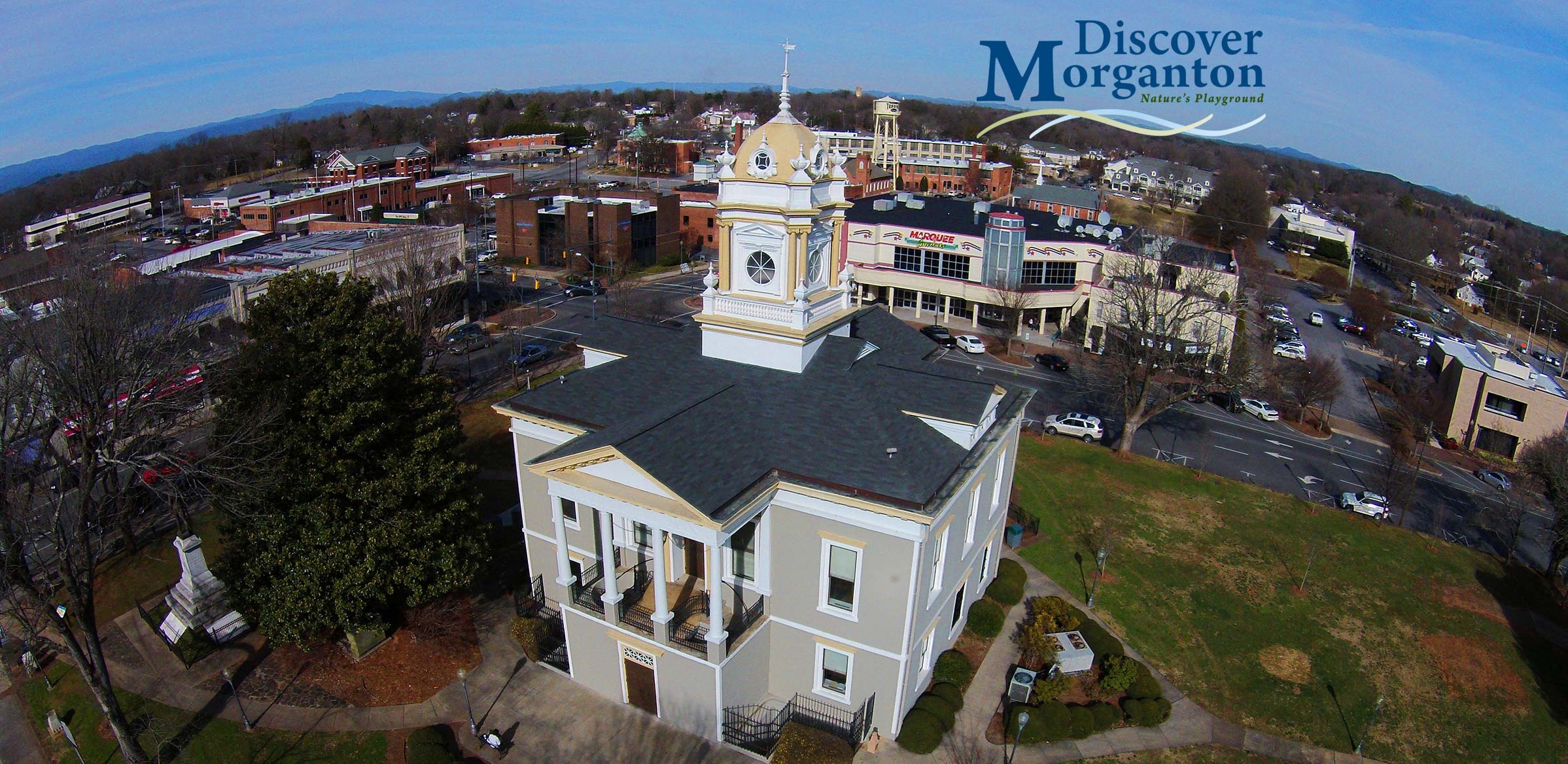
Morganton is a small city in western North Carolina that serves as the county seat of Burke County, with a population of roughly 17,500 residents. Set in the foothills of the Blue Ridge Mountains, the city has the feel of a traditional Southern mill town paired with easy access to some of the most scenic outdoor landscapes in the eastern United States. It functions as a convenient gateway to a string of state parks, lakes, and mountain attractions, and lies about 60 miles east of Asheville along Interstate 40, with Charlotte roughly 75 miles to the southeast.
A short drive west of Morganton brings visitors to Lake James State Park, which wraps the southern shore of a roughly 6,500-acre reservoir straddling the Burke and McDowell county line. The park offers campgrounds, swimming beaches, paddling on the lake, and miles of hiking and mountain biking trails through mixed hardwood forest, with the prominent Linville Mountains rising along its far side. It sits about 15 to 20 minutes from downtown Morganton and is a major draw for guests who want water-based recreation without leaving the county.
To the south of the city, South Mountains State Park is one of the larger protected areas in the region, encompassing nearly 19,000 acres of rugged ridges, creeks, and hardwood coves. The park features more than 40 miles of trails, several waterfalls including the multi-tiered High Shoals Falls, and terrain that ranges from gentle stream walks to strenuous climbs along remote ridgelines. The main entrance is roughly 25 to 30 minutes from Morganton, making it an easy day trip for hikers, horseback riders, and anyone drawn to quieter, less crowded wilderness.
Just up the road from Lake James, Linville Caverns offer a different kind of mountain experience. These limestone caves have been open to visitors for generations and remain one of the few publicly accessible caverns in North Carolina, with guided tours that wind through cool, illuminated passages and explain the geology of the surrounding Pisgah and Linville ranges. The caverns are about 30 minutes north of Morganton and pair naturally with a Lake James visit on the same day.
Morganton's blend of small-town character, walkable historic downtown, and proximity to three of western North Carolina's most rewarding outdoor destinations makes it a practical base for short-term rentals. Visitors can spend a day paddling, hiking, or exploring caves, then return to a quieter main-street setting with locally owned restaurants, breweries, and shops. The combination of accessibility from both Charlotte and Asheville, plus year-round appeal across hiking, fall foliage, and warm-weather lake seasons, gives the area a steady rhythm of travel demand that suits well-located rental properties.
Want to know if a property in Morganton is a good investment?
Enter an address to get instant revenue potential and comps.