
Lincolnton, North Carolina
Want to see how Lincolnton compares to other top cities in North Carolina? Explore all city regulations in North Carolina. →
Lincolnton, NC
Challenging To Investors
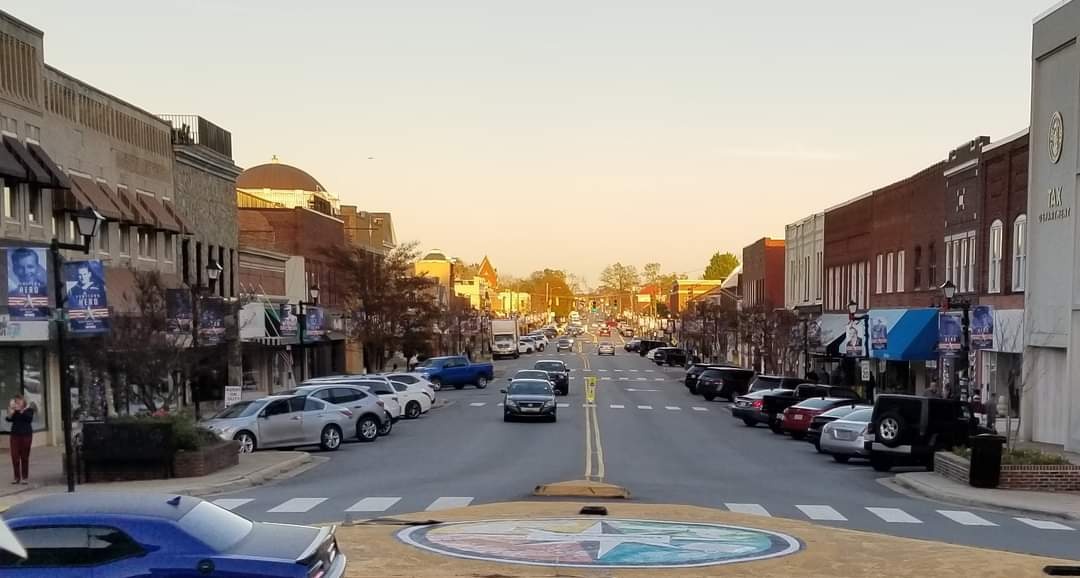
STR Regulations for Lincolnton, North Carolina
Overview: Are short-term rentals allowed in Lincolnton/Lincoln County?
- Bottom line up front: Yes—short-term rentals (STRs) are allowed in Lincoln County (which includes the City of Lincolnton’s extraterritorial area and county lands), subject to zoning and the use standards in the Lincoln County Unified Development Ordinance (UDO). The UDO lists “Short-term Rental” as a permitted use in all zoning districts where residential and/or lodging uses are permitted, and it defines “Short-term Rental” as a residential use for overnight lodging for fewer than 25 days per rental period with occupancy limited to the entire structure (no room-by-room rentals).
- The Lincoln County Planning & Inspections Department is the local authority that interprets zoning, issues zoning permits, and enforces land-use standards for STRs.
- Note: In 2023 the County considered an amendment (UDO #2023‑4) to add “Short-term Rental” to the Use Table and to codify specific use standards. The document you provided shows the use in the table and the standards in §4.2.15, but also reflects that the amendment was “Tabled” at the 10/2/2023 hearing. Confirm whether those standards are currently in effect by contacting Planning & Inspections.
Sources: Lincoln County UDO (Use Table and §4.2.15; Definitions at §12.3); Lincoln County “Pending Applications” page for UDO #2023‑4 status.
What do Airbnb hosts actually earn in Lincolnton?
Lincolnton hosts earn a median $25,688/year with $122 ADR and 64% occupancy.
Top performers pull in $31,493+ per year.
See the full Lincolnton market breakdownHow to start a short-term rental in this market
A disciplined approach reduces permitting risk and protects asset value. Follow this sequence:
- Confirm zoning and land-use eligibility
- Verify the subject property is in a zoning district where “residential” and/or “lodging” uses are permitted. The UDO’s Use Table lists “Short-term Rental” as permitted (P) across numerous districts when residential or lodging uses are allowed. If your parcel is within the City of Lincolnton’s limits or has an extraterritorial jurisdiction (ETJ), confirm the city’s requirements as well; city and county rules may differ.
- Identify and satisfy permit requirements
- Zoning Permit: The operator must be issued a zoning permit prior to commencement (and within 90 days of enactment if a new ordinance is adopted). Plan to budget application time and renewal cycles.
- Building/Life-Safety: Comply with all applicable local, state, and federal laws related to fire and safety, including smoke and carbon monoxide detection equipment. Confirm any additional inspection requirements with the Planning & Inspections Department.
- Structure the business to comply with state law
- North Carolina Vacation Rental Act: Use a written agreement that includes the statutorily prescribed notice and required provisions; handle rents, fees, and security deposits as the Act mandates; maintain the premises in a fit and habitable condition; and ensure tenants use the premises in a clean and safe manner. Prepare eviction grounds/processes consistent with the Act.
- Taxes: Set up and remit state and local occupancy taxes and sales taxes as required. Coordinate with the N.C. Department of Revenue and the Lincoln County Tax Collector/Finance office for occupancy tax.
- Design the property to meet use standards
- Occupancy: Rent the entire structure; do not rent individual rooms.
- Parking: Provide one space per bedroom, up to two per unit; one additional space for an accessory dwelling unit; use garage, driveway, or designated spaces.
- Solid Waste: Arrange collection service; post collection dates/instructions in the dwelling; ensure trash fits the receptacles; ensure pickup at least weekly and as needed.
- Events: In residential zoning districts, do not allow pre‑planned special events or large gatherings (e.g., weddings, corporate retreats).
- Advertising: Do not use exterior advertising signage.
- Vet HOA/POA covenants
- Many lakefront and subdivision covenants restrict short-term rentals. Obtain and review governing documents and confirm whether STRs are permitted, and if so, under what conditions. Where covenants are silent or ambiguous, expect disputes; case law in North Carolina requires clear covenant language to restrict STRs and disfavors retroactive restrictions.
- Implement an operating playbook
- Guest screening, house rules, quiet hours, parking management, trash and recycling schedules, neighbor communications, incident reporting, and emergency procedures. Maintain records to demonstrate compliance and good-neighbor practices.
- Register, renew, and monitor
- After issuance, maintain the zoning permit and renew as required; monitor county text amendments and public hearings (Planning Board/Board of Commissioners) for any changes to standards or new permit/renewal requirements.
Required documents, permits, licenses, and guidelines
What you will likely need before hosting:
- Zoning Permit (Lincoln County Planning & Inspections). Confirm current application forms and fees.
- Proof of solid waste collection service (arranged and documented).
- Safety compliance documentation (smoke/CO detectors; any required inspections).
- North Carolina Vacation Rental Act-compliant written rental agreement with statutorily required notice and provisions.
- Tax registrations and filings: N.C. sales/withholding and local occupancy tax (coordinate with the county finance/tax collector’s office).
- Insurance appropriate for short-term rental operations (general liability; property).
- HOA/POA approval, if applicable, or written confirmation that STRs are permitted under the covenants.
Ongoing compliance:
- Annual or periodic zoning permit renewal (confirm current cycle/fee).
- Posting of solid waste collection instructions inside the dwelling.
- Maintenance of safety systems and documentation.
- Tax remittances on schedule.
Specific regulations: city, county, and state
City of Lincolnton
- The materials provided do not include City of Lincolnton-specific STR ordinances. If your property lies within city limits or ETJ, you must consult the city’s planning/zoning department to determine any city-level requirements (zoning, permitting, business licenses/registration, taxes). Treat the city’s requirements as potentially separate from the county’s.
Lincoln County (UDO standards that apply when STRs are operated)
- Allowed where residential and/or lodging uses are permitted; “Short-term Rental” appears as a permitted use in the UDO Use Table across many districts.
- Per UDO §4.2.15 (specific use standards for Short‑term Rentals):
- One STR per parcel.
- No exterior advertising signage.
- In residential districts, no pre‑planned special events or large gatherings.
- Parking: 1 space per bedroom, up to 2 spaces per unit; +1 for an accessory dwelling unit; use garage, driveway, or designated spaces.
- Solid waste: service required; weekly pickup at minimum; post collection instructions inside the dwelling; trash must fit receptacles.
- Life-safety and taxes: comply with applicable laws; maintain smoke/CO detection; pay occupancy and other taxes.
- Zoning Permit: required before operation; transitional 90‑day window to obtain permit after enactment of new standards.
- Definitions (§12.3): “Short‑term Rental” = residential use for overnight lodging for fewer than 25 days per rental period; renters occupy the entire structure; individual rooms may not be rented.
- Important: The UDO document you provided shows §4.2.15 and the Use Table entries, but the Pending Applications page lists UDO #2023‑4 (which proposed adding STR to the Use Table and codifying standards) as “Tabled” on 10/2/2023. Verify with Planning & Inspections whether §4.2.15 is currently in effect or whether only the Use Table classification is in force.
State of North Carolina
- Vacation Rental Act (NC Gen. Stat. Chapter 42A): Applies broadly to “vacation rentals,” defined as the rental of residential property for fewer than 90 days when the renter has another permanent residence. The Act prescribes:
- Written agreement with required notice and terms.
- Handling of rents, fees, and security deposits.
- Landlord duty to maintain fit and habitable premises; tenant duty to use premises in a clean and safe manner.
- Eviction grounds and processes specific to vacation rentals.
- Judicial precedents shaping local regulation:
- Schroeder v. City of Wilmington (2022): Local registration requirements for STRs are generally invalid under state law.
- Frazier v. Town of Blowing Rock (2022): STR operations may constitute valid nonconforming uses, potentially “grandfathered” if they predate new regulations.
- Russell v. Donaldson (2012); Mileview LLC v. The Reserve II at Sugar Mountain Condominium Owners’ Association (2024); Miesch v. Ocean Dunes Homeowners Association (1995): These cases impact how HOAs/POAs can restrict or impose fees on STRs via covenants; restrictive language must be clear and not exceed the purpose of the original declaration.
Enforcement and policy direction
- As of the materials provided, Lincoln County commissioners and the Planning Board were actively studying STRs and set up a stakeholder task force. Public comment was sharply divided between neighborhood impacts and industry concerns. Political sentiment favored allowing STRs with standards while limiting new permits in some discussions. Investors should monitor meetings and agendas for any ordinance changes.
Contact information (phone, email, website)
-
Lincoln County Planning & Inspections Department
- Address: 115 W. Main St., Lincolnton, NC 28092
- Phone: (704) 736‑8440
- Website: www.lincolncounty.org (Planning & Inspections; Zoning/Pending Applications)
- Contact person noted in documents: Joshua L. Grant, Manager
-
Lincoln County Government (general)
- Address: 353 N. Generals Blvd., Lincolnton, NC 28092
- Mailing: PO Box 738, Lincolnton, NC 28093‑0738
- Website: www.lincolncounty.org
Note: For properties inside the City of Lincolnton or its ETJ, also contact the City of Lincolnton Planning/Zoning for city-specific requirements.
Source pages (links)
- UDO amendment and standards (Lincoln County Planning & Inspections application packet; includes Use Table, §4.2.15 standards, and §12.3 definitions): www.lincolncountync.gov/DocumentCenter/View/21323
- Pending Applications (status of UDO #2023‑4): www.lincolncountync.gov/371/Pending-Applications
- News coverage of county workshop and policy discussion (Lake Norman Publications): www.lakenormanpublications.com/articles/lincoln-county-board-explores-issue-of-regional-interest-short-term-rentals/
- Public hearing coverage (Lincoln Times News): www.lincolntimesnews.com/news/monday-s-commissioner-s-meeting-sees-packed-house-over-short-term-rentals/article_0c5ec4ba-62eb-11ee-95e4-d3ded283a0c1.html
- North Carolina Vacation Rental Act overview and legal context (Envisage Law): envisage.law/short-term-rental-regulation-in-north-carolina/
Investor takeaways and immediate next steps
- Confirm the current status of §4.2.15 with Planning & Inspections; ask whether a zoning permit is required now and what the renewal cycle is.
- Structure operations to meet or exceed the standards in §4.2.15 (parking, trash, no exterior signage, no large events), which reduce neighborhood friction and future compliance risk.
- If the
Next step
Found a property in Lincolnton?
Paste any address and get estimated revenue, cash-on-cash return, and comparable STR performance in under 5 minutes. 3 free analyses per day.
Free brief
Get the free Lincolnton STR Investment Brief
Revenue data, top neighborhoods, seasonal trends, and the key regulations for Lincolnton, North Carolina in one email.
Lincolnton
Market Saturation Score
Photos of Lincolnton



Overview of Lincolnton
Lincolnton is a small city in western North Carolina, serving as the county seat of Lincoln County. With a population of approximately 11,000 residents, it carries the unhurried charm of a Piedmont-era courthouse town while sitting within easy reach of the state's largest urban center. The community is best known for its historic downtown square and as a quiet gateway to Lake Norman, the Catawba River, and the rolling countryside between Charlotte and the foothills. Charlotte lies roughly 35 miles to the southeast, an easy drive of about 45 minutes via US-321 and I-85.
Just east of Lincolnton, Lake Norman spreads across more than 32,000 acres as North Carolina's largest manmade reservoir. Created in the 1960s by Duke Energy along the Catawba River, the lake draws visitors for sailing, fishing, paddleboarding, and lakeside dining, with public access points, marinas, and waterfront parks scattered around its roughly 520 miles of shoreline. The closest ramps and lake communities sit only about 20 minutes from downtown Lincolnton, making day trips straightforward for short-term guests.
South of the city, Crowders Mountain State Park offers a dramatic change of scenery, with two prominent quartzite ridgelines rising sharply above the surrounding Piedmont farmland. The park features roughly 20 miles of hiking trails, including climbs to Crowders Mountain and The Pinnacle, both of which reward visitors with sweeping views toward Charlotte and, on clear days, the distant Blue Ridge. The main park entrance is about a 30-minute drive from Lincolnton and pairs well with a day spent exploring the region's natural side.
Lincolnton's own historic downtown centers on a well-preserved courthouse square, where locally owned shops, restaurants, and the Lincoln Cultural Center anchor a small but active arts scene. Antique stores, coffee shops, and seasonal festivals give the area a community feel that contrasts with the busier commercial corridors a short drive east. For guests willing to venture a bit further, the Schiele Museum of Natural History in nearby Gastonia offers exhibits on regional wildlife and a re-created Catawba Indian village, and the Charlotte Motor Speedway in Concord hosts major NASCAR events within roughly an hour's drive.
The combination of small-town character, quick access to Lake Norman and Crowders Mountain, and proximity to Charlotte's airport and amenities makes Lincolnton a versatile base for short-term rental guests. Travelers can spend their mornings hiking or boating and their evenings strolling a quiet downtown square, all while remaining within an hour of one of the Southeast's largest cities and the wide range of attractions it offers.
Want to know if a property in Lincolnton is a good investment?
Enter an address to get instant revenue potential and comps.