
Lansing, North Carolina
Want to see how Lansing compares to other top cities in North Carolina? Explore all city regulations in North Carolina. →
Lansing, NC
Very Investor Friendly
STR Regulations for Lansing, North Carolina
Overview: Are STRs allowed in Lansing, NC?
Yes. Short-term rentals (STRs) are allowed in the Town of Lansing, North Carolina. There is no municipal zoning ordinance, subdivision regulation, or extraterritorial jurisdiction enforced by the Town as of the most recent publicly available Lansing planning documents. As a result, properties may be operated as STRs (e.g., whole-home or room rentals offered via Airbnb, VRBO, etc.) without city-specific zoning or permitting requirements. This is distinct from neighboring municipalities such as West Jefferson and Jefferson, which have their own land-use controls. The allowance in Lansing is subject to all applicable state and county requirements and general public health/safety laws.
Important context: In March 2020, as a temporary, COVID-19–related measure, the Town of Lansing (with West Jefferson) was included in an Ashe County State of Emergency amendment that restricted STRs (leases under 60 days) for non-essential travel. That emergency restriction has since been lifted and does not represent permanent local zoning.
What do Airbnb hosts actually earn in Lansing?
Lansing hosts earn a median $30,029/year with $210 ADR and 47% occupancy.
Top performers pull in $38,840+ per year.
See the full Lansing market breakdownHow to start a short-term rental business in Lansing
- Validate zoning status before listing
- Confirm with the Town Clerk that no new municipal STR-specific zoning, permitting, or licensing rules have been adopted since the 2019 Land Use Plan.
- If neighbors object, do not assume any zoning prohibition; without zoning, municipal action is unlikely absent a nuisance or public health issue.
- Set up your business structure
- Choose a legal entity (LLC or sole proprietorship) and register with the NC Secretary of State if forming an LLC.
- Obtain a federal EIN from the IRS for tax filings and banking.
- Comply with North Carolina tax obligations
- Sales and Use Tax: If you rent lodging, you must register, collect, and remit North Carolina sales tax (state rate 4.75%). Register with the NCDOR for a Sales & Use Tax account (You can register online at the NCDOR website; see references).
- Local and County Taxes: Some North Carolina jurisdictions levy an Occupancy Tax on lodging. Ashe County currently does not appear to levy a countywide occupancy tax. However, you should verify with the Ashe County Tax Administrator or the NCDOR because jurisdictions sometimes change local tax regimes. If your guest booking platform (Airbnb, VRBO) collects state sales tax on your behalf, confirm that this aligns with your NCDOR account obligations and your local tax landscape.
- If the property is used as a primary residence and you occasionally rent space, the North Carolina Revenue may classify it as “furnished rental” rather than lodging; consult NCDOR for whether sales tax applies to your model.
- Insurance and risk management
- Standard homeowner’s policies often exclude or limit short-term rental activity. Obtain a policy or endorsement that covers commercial short-term rental exposures (liability, property, loss of income, guest damage).
- Consider requiring guest screening and security deposits. Ensure interior safety (working smoke and CO detectors, fire extinguishers, posted egress routes).
- Property standards and neighbor relations
- Maintain the property to all applicable state building, fire, and safety codes. Ensure safe egress, electrical, gas, and structural systems.
- Use quiet hours and clear house rules to minimize disturbance and reduce nuisance complaints.
- Marketing and platform compliance
- Comply with platform listing requirements. If the platform collects/remits sales tax in North Carolina, ensure your listing and accounting match NCDOR rules.
- Local government touchpoints
- Contact the Town Clerk for general municipal questions, permit status, and any ongoing policy discussions about short-term rentals.
- For county-level issues (e.g., stormwater/floodplain permitting, building code questions), coordinate with Ashe County. The Town uses the NC State Building Code for construction; any redevelopment may require county building permits.
Required documents, permits, licenses, and guidelines
Municipal (Town of Lansing)
- Permits/Licenses: None currently required for STRs. The Town has no zoning or subdivision regulations. Confirm with the Town Clerk that no STR-specific municipal rules have been adopted.
- Business Registration: No municipal business license is required unless the Town adopts one in the future.
- Compliance Focus: Health, safety, nuisance abatement (ordinance addressing overgrown vegetation, accumulation of junk, fire damage, hazardous waste). Municipal enforcement is limited to these nuisance ordinances, not STR zoning.
Ashe County (jurisdiction where Lansing is located)
- Building Permits: Issued by Ashe County according to the North Carolina State Building Code. Substantial renovations, structural changes, change of use, or new construction may require permits.
- Floodplain and Stormwater:
- Flood Damage Prevention Ordinance: The County administers FEMA floodplain requirements (Special Flood Hazard Areas) under its Flood Damage Prevention Ordinance. Before development or significant alteration in flood zones, compliance is required. The Land Use Plan references this ordinance; see the reference list for source.
- Grading/Stormwater: North Carolina DEQ requires a permit for construction, grading, or clearing activities that disturb one acre or more. Less than one acre within Lansing typically does not trigger DEQ stormwater permitting, but local floodplain rules still apply.
- Subdivision Regulations: Apply only in unincorporated areas of the County; Lansing itself has no subdivision regulations.
State of North Carolina
- Sales & Use Tax Registration: Required to collect/remit sales tax on taxable transactions (lodging). Register with NCDOR.
- Building/Safety: Follow the NC State Building Code and fire safety standards for any renovation or change-of-use work.
- Zoning Authority: Municipalities derive zoning authority from North Carolina General Statutes Article 19 (G.S. 160A). Lansing has no current zoning; future zoning actions would be publicly noticed and adopted through the municipal process.
Platform (Airbnb/VRBO) and Agreements
- Platform account and listing documentation.
- If the platform collects state sales tax on your behalf, ensure your tax records reconcile with your NCDOR filings.
- Keep guest agreements, house rules, and screening documentation.
Specific regulations for STRs: Lansing, Ashe County, and North Carolina
Town of Lansing
- Status: No zoning and no STR-specific ordinances or permits as of the latest available documents.
- Nuisance Ordinance: Town enforces abatement of overgrown vegetation, junk accumulation, hazardous waste, and fire-damaged structures. STRs must avoid creating public nuisances.
- Historical Note (COVID-19): Temporary 2020 ban on STRs (leases under 60 days) as part of an Ashe County emergency order to slow nonessential travel; restriction applied to Lansing and West Jefferson but not Jefferson and has since been lifted.
Ashe County
- Flood Damage Prevention: FEMA Special Flood Hazard Areas are regulated. Development must comply with County floodplain standards.
- Building Code: County issues permits under the NC State Building Code. Any redevelopment or change-of-use may require permitting.
- Stormwater/Grading: DEQ one-acre trigger for stormwater permitting applies regardless of municipal limits. Note: Grading or disturbance below one acre within Lansing is not subject to DEQ stormwater standards, but floodplain compliance remains necessary.
- County STR Policy: No STR-specific regulation identified in the public documents reviewed. General land-use controls apply if zoning existed (none currently in the Town).
State of North Carolina
- Sales & Use Tax on Lodging: A state sales tax applies to lodging transactions. Register, collect, and remit with the NCDOR. Confirm with the NCDOR whether your STR model is classified as “lodging” or “furnished rental.”
- Zoning Enablement: Municipalities may adopt zoning under G.S. 160A Article 19. The State does not prohibit STRs, but it enables local governments to regulate land use. Investors should watch for future municipal or county proposals.
Contact information (local authority in charge of STRs)
Town of Lansing (municipal questions; verify any STR zoning/permit changes)
- Address: Town of Lansing, 144 S. Shady Lane, Lansing, NC 28643
- Phone: (336) 384-3500
- Email: Not publicly listed in the provided documents. Contact the Town Clerk at the Town Hall.
- Website: Lansing NC Official Site (lansingnc.us) — see references
Ashe County (building, floodplain, and county-level administration)
- Ashe County Manager’s Office: (336) 219-0161
- Ashe County Tax Administrator: (336) 846-5521
- Ashe County Website: ashecountync.gov — see references
North Carolina Department of Revenue (NCDOR)
- Sales & Use Tax Registration and Guidance: Visit the NCDOR website — see references
Links to source pages
- Lansing Land Use Plan 2019 (Town of Lansing): www.lansingnc.us/sites/default/files/2019-land-use-plan-final.pdf
- Article: Town manager: Jefferson not included in new short-term rental restrictions (COVID restrictions context): www.ashepostandtimes.com/news_alerts/town-manager-jefferson-not-included-in-new-short-term-rental-restrictions/article_9e7a6f97-c4d3-5266-a1a1-615dfb3c9195.html
- Lansing NC Official Site: www.lansingnc.us
- Ashe County Official Site: www.ashecountync.gov
- North Carolina Department of Revenue (Sales & Use Tax Registration): www.ncdor.gov
Practical takeaways for STR investors
- Lansing currently permits short-term rentals without municipal zoning or permits; compliance centers on state sales tax, county building/floodplain rules, and nuisance standards.
- Verify with the Town Clerk before investing to confirm no new STR-specific ordinances have been adopted.
- Coordinate any renovations with Ashe County building permits and ensure floodplain compliance if your property lies in a Special Flood Hazard Area.
- Maintain comprehensive insurance, follow building and fire safety standards, and manage guest behavior to prevent nuisance complaints.
- Watch for future local discussions about short-term rentals; while none are documented in the provided materials, policy can evolve quickly.
Next step
Found a property in Lansing?
Paste any address and get estimated revenue, cash-on-cash return, and comparable STR performance in under 5 minutes. 3 free analyses per day.
Free brief
Get the free Lansing STR Investment Brief
Revenue data, top neighborhoods, seasonal trends, and the key regulations for Lansing, North Carolina in one email.
Lansing
Market Saturation Score
Photos of Lansing


Overview of Lansing
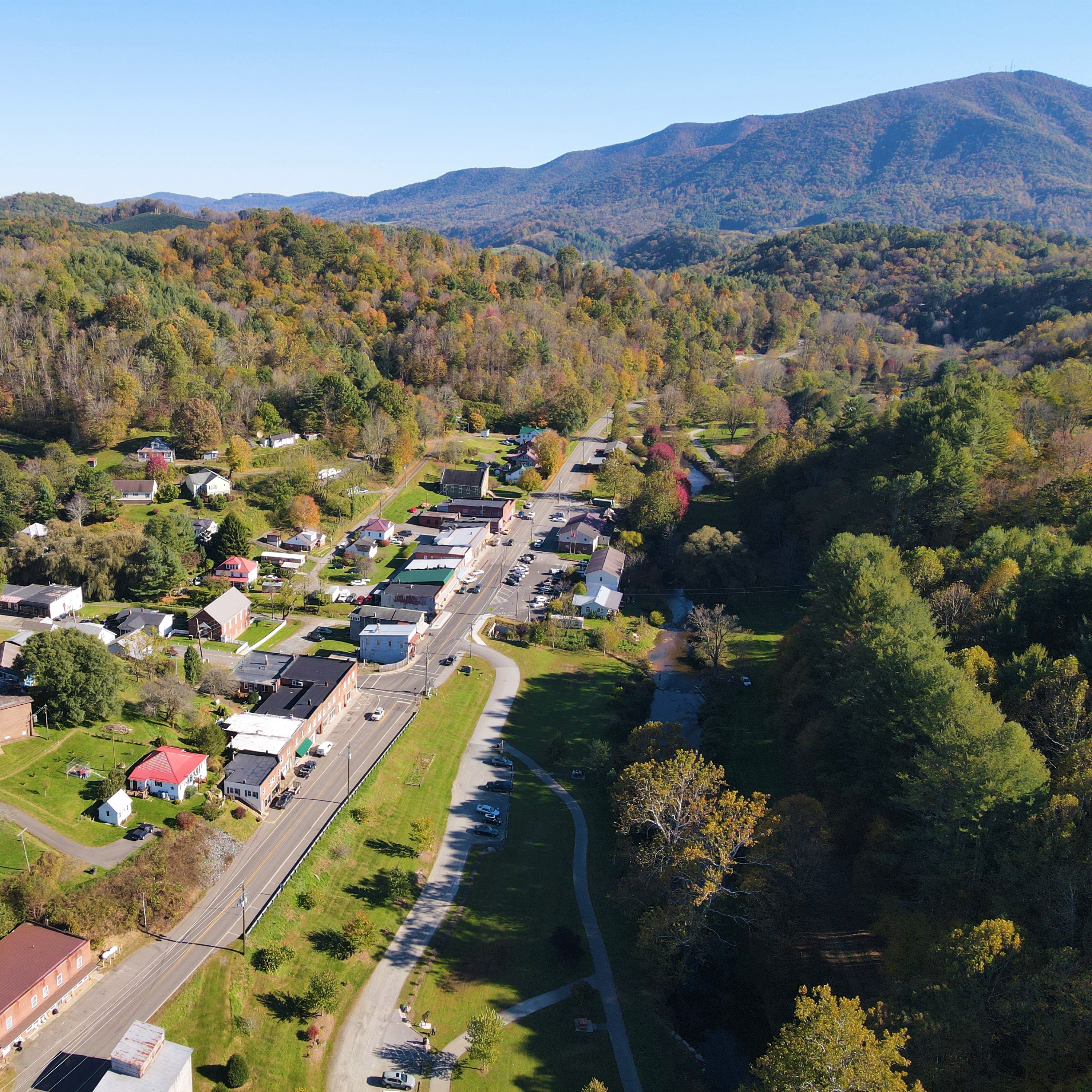
Lansing is a small community tucked into the Blue Ridge Mountains of northwestern North Carolina, in Ashe County. The surrounding county is home to roughly 27,000 residents, with Lansing itself being a quiet, rural settlement of a few hundred people. Set in the heart of the High Country, the community has a peaceful, traditional Appalachian character, with mountain views, rolling farmland, and a slower pace of life that draws visitors looking for an escape into nature. Lansing is best known for its proximity to the New River, one of the oldest rivers in the world, and it serves as a gateway to the wider Ashe County and High Country region. The nearest sizable city is Winston-Salem, located roughly 100 miles to the east, while Boone lies about 45 minutes to the south and Charlotte is approximately three hours southeast.
The New River is the area's marquee natural attraction, flowing north through Lansing on its long journey toward the Ohio River valley. Locally the New River is a popular destination for tubing, canoeing, kayaking, and fishing, with public access points and outfitters scattered along its banks. Its calm, gentle stretch near Lansing makes it especially welcoming to families and beginners, and the broad wooded corridor along its banks offers plenty of space for riverside picnics and slow afternoons.
A short drive south brings visitors to Mount Jefferson State Natural Area, a state park that crowns a prominent peak rising to more than 4,600 feet just outside West Jefferson, the Ashe County seat. The park offers a paved road to a summit overlook with sweeping views of the Blue Ridge and a system of hiking trails that range from short strolls through rhododendron and laurel to more demanding routes up the mountain's ridgeline.
The town of West Jefferson, roughly ten minutes from Lansing, anchors the region with a walkable downtown known for its independent art galleries, antique shops, and locally owned restaurants. The community's small arts scene has earned it a reputation as one of the more charming small-town destinations in the North Carolina mountains, and the surrounding back roads lead to a scattering of vineyards, farms, and roadside produce stands that reflect the area's agricultural roots.
Lansing's combination of small-town character, mountain scenery, and outdoor recreation makes it a compelling base for a short-term rental. Visitors can spend their days paddling the New River, hiking nearby state parks, exploring the galleries of West Jefferson, or driving scenic byways deeper into the Blue Ridge, and return each evening to a quiet mountain community that feels a world away from the busier resort towns to the south.
Want to know if a property in Lansing is a good investment?
Enter an address to get instant revenue potential and comps.