
Hatteras, North Carolina
Want to see how Hatteras compares to other top cities in North Carolina? Explore all city regulations in North Carolina. →
Hatteras, NC
Generally Investor Friendly
Local STR Agent
Local STR Agent
STR Regulations for Hatteras, North Carolina
Overview: Are STRs allowed in Hatteras, NC?
Yes. Short-term rentals are allowed in Hatteras, North Carolina. Hatteras sits in unincorporated Dare County and is part of the Cape Hatteras area, which maintains a business-friendly approach to vacation rentals. The Outer Banks region, and Cape Hatteras specifically, have long relied on STRs as a backbone of the local economy. The regulatory environment is defined largely by North Carolina state law and Dare County rules, with no additional village-level ban or restrictive Hatteras-specific licensing scheme. As of 2025, the Outer Banks and Cape Hatteras do not broadly restrict STRs; the focus is primarily on state-level Vacation Rental Act compliance, safety and health standards, and tax collection/remittance.
How to start a short-term rental business in this market
- Market research and property selection
- Decide target guest profile (fishing, surfing, families, kiteboarding) and preferred locations (oceanfront vs soundside; village-specific features like Rodanthe/Waves/Salvo, Avon, Buxton, Frisco, Hatteras).
- Inventory analysis: analyze comps for amenities (pools/hot tubs, game rooms), sleeping capacity, and seasonality (peak summer; strong spring/fall fishing; winter holiday demand).
- Evaluate hurricane risk, insurance costs, and potential property management needs.
- Financial planning and risk management
- Budget for specialized coastal insurance (windstorm, flood), potential hurricane/evacuation coverage, and higher maintenance costs due to salt air and storms.
- Plan for higher property management fees (often 25–30% of gross rentals for full-service local firms).
- Map expected tax burden to ensure margin.
- Legal and tax setup
- Decide ownership structure (individual vs LLC). Register with the NC Secretary of State if using a corporation/LLC.
- Apply for any necessary tax accounts depending on how you operate:
- NC Department of Revenue (sales tax if not collected by platforms; registration required).
- Dare County occupancy tax filing (for county-collected occupancy taxes).
- If using platforms like Airbnb that collect and remit some taxes, confirm scope of coverage; direct bookings require owner collections and filings.
- Property setup and compliance
- Safety: install/maintain smoke and carbon monoxide detectors, fire extinguishers, emergency exit signage, hurricane evacuation route info posted.
- Health: ensure septic capacity aligns with intended occupancy and bedroom count; maintain records.
- Parking and occupancy plans: confirm parking capacity and communicate limits (e.g., standard limit one vehicle per bedroom up to five).
- Create compliant written rental agreements under the NC Vacation Rental Act.
- Marketing and operations
- Choose local property manager vs self-management; local firms can handle guest arrivals, maintenance, hurricane responses, and local compliance.
- Professional photography; list on Airbnb/Vrbo and/or direct; incorporate shoulder-season event calendars (fishing tournaments, kiteboarding).
- Build a guest operations playbook (check-in instructions, ORV permits if applicable, trash/recycling schedules, conservation practices, emergency procedures).
Required documents, permits, licenses, and guidelines
State-level documents and requirements
- NC Vacation Rental Act (NCVRA) compliance:
- Written rental agreement required for each stay; include terms, cancellation policy, property rules, and disclosures.
- Trust account required for holding guest deposits at a federally insured institution; keep deposit funds separate from operating accounts.
- North Carolina Department of Revenue registration:
- Required if you collect/ remit state sales taxes for direct bookings or if a platform does not remit on your behalf.
- Expect sales and occupancy taxes to apply to short-term lodging. Filing is typically monthly via the NC DOR portal.
- Optional business registration:
- Register with the NC Secretary of State if forming an LLC/corporation (not required for individual owners).
County-level and local requirements
- No Dare County STR permit/license is required to operate a vacation rental.
- Building permits are required for construction or renovations; plan in advance with the Dare County Planning Department.
- Local property management company policies (if using a PM) often include standard operating procedures (check-in, check-out, linens, parking, pet policy, safety, trash/recycling schedules, keyless entry). Follow your PM’s process to ensure consistent compliance.
Health and safety standards
- Septic capacity must be appropriate for the bedroom count and intended occupancy; maintain records of inspections and pumping.
- Safety equipment and posting requirements:
- Smoke detectors in each bedroom and common areas.
- Carbon monoxide detectors near sleeping areas if fuel-burning appliances exist.
- Fire extinguisher on each level; clearly marked emergency exits and evacuation routes.
- Hurricane evacuation plans and local hazard disclosures posted.
Specific regulations by level
City-level (Hatteras)
- Hatteras is within unincorporated Dare County; there is no separate municipal STR license or ban.
- County ordinances and common community policies apply: parking limits, quiet hours (often 11 p.m.–7 a.m.), pet rules in rental properties, and trash/recycling schedules by village.
- Local property managers typically enforce standard policies (check-in after 6:00 p.m., check-out before 10:00 a.m., linens packages, occupancy tied to septic capacity).
County-level (Dare County)
- No STR permit or annual license is required.
- Occupancy tax: 6% on gross rental receipts, subject to exemptions:
- Not applicable if the property is rented fewer than 15 days in a calendar year.
- Not applicable for stays of 90 or more consecutive days.
- Parking limits: standard occupancy guideline is one vehicle per bedroom, with a maximum of five vehicles at most properties.
- Septic occupancy standard: two occupants per bedroom (state health rule). Over-occupancy or septic misuse can trigger enforcement.
- Trash and recycling: bi-weekly collection; schedules vary by village. Some areas provide black cans for roadside pickup; recycling is managed through county drop-off sites.
State-level (North Carolina)
- Vacation Rental Act (NCVRA) sets key requirements:
- Written rental agreement mandatory.
- Trust account required for deposits.
- Distinct provisions for disbursement of rent prior to tenancy and expedited eviction processes.
- Sales and accommodations taxes:
- State sales tax applies to short-term lodging.
- State accommodation tax applies, in addition to local taxes (e.g., county occupancy taxes).
- Combined with local taxes, the total lodging tax rate for Cape Hatteras can approach the mid-teens on gross receipts.
- Local option sales taxes may apply (e.g., an additional 2% county sales tax).
- Platforms such as Airbnb may collect and remit certain state and local taxes automatically; verify platform scope and register with the state if you handle filings directly.
Cape Hatteras National Seashore (NPS) considerations
- Private properties are not subject to NPS rental regulations; the National Park Service manages public seashore areas.
- Beach driving for guests requires separate ORV permits (annual and 10-day options available).
- Beach fire permits may be required; follow seasonal restrictions.
Safety and inspection regime
- No annual STR safety inspection requirement.
- Inspections occur if building permits are pulled or in response to complaints (over-occupancy, noise, sanitation).
- Expect self-certification for safety measures (detectors, extinguishers, posted emergency info) and proactive maintenance.
Compliance and enforcement
- Primary enforcement focuses on tax remittance, health/septic capacity, parking, noise, and trash violations.
- Penalties can include fines and, in severe or repeated cases, legal action. Regular occupancy, parking, and noise management reduce risk.
- Keep detailed records of all tax collections, filings, and safety documentation to streamline any audit or inquiry.
Taxes at a glance
- North Carolina: state sales and accommodation taxes apply to short-term lodging.
- Dare County: 6% occupancy tax (with exemptions for low-rental-volume properties and long-term stays), plus any local option sales taxes.
- Platform collection: Airbnb may collect/remit certain state/local taxes; confirm coverage. If you handle direct bookings, you must collect, file, and remit taxes monthly.
- Combined lodging tax rate on the Outer Banks, especially Cape Hatteras, can be approximately 15.75% of gross rental receipts, depending on specific state, county, and local tax layers.
Contact information for local authorities
-
Dare County Tax Department
- General: (252) 475-5940
- Occupancy Tax: (252) 475-5960
- Address: 954 Marshall C. Collins Dr., Manteo, NC 27954
- Website: darenc.gov/departments/tax-department
-
Dare County Planning Department
- Phone: (252) 475-5815
- Building Permits: (252) 475-5820
- Hatteras Office: 47830 NC-12, Buxton, NC 27920
- Website: darenc.gov/departments/planning
-
North Carolina Department of Revenue
- Phone: (877) 252-3052
- Website: ncdor.gov
-
Cape Hatteras National Seashore (NPS)
- Phone: (252) 473-2111
- ORV Permits: (252) 475-9054
- Website: nps.gov/caha
Local property management companies (often handle compliance operations)
- Midgett Realty
- Main: (866) 348-8819
- Local: (252) 986-2841
- Website: midgettrealty.com
- Surf or Sound Realty
- Phone: (252) 987-1444
- Website: surfor soundrealty.com (as listed in provided content)
- Hatteras Realty
- Phone: (252) 995-5775
- Website: hatterasrealty.com (as listed in provided content)
Links to source pages
- North Carolina STR overview and statewide rules:
- Cape Hatteras STR regulatory guide and local context:
- Midgett Realty vacation rental policies (operational standards for Hatteras):
- Hatteras Cabanas — Vacation Rental Act page (NCVRA highlights):
Notes for investors
- Relative to other Outer Banks communities (e.g., Nags Head, Kill Devil Hills, Corolla/4x4 area), Cape Hatteras offers fewer regulatory barriers and an established rental ecosystem, making it a comparatively accessible market for STR investors.
- The Outer Banks’ tourism base (fishing, surfing, kiteboarding, family beach vacations) provides year-round opportunities, with shoulder seasons often strong due to tournaments and sporting events.
- Coastal risks (storms, erosion) and higher insurance costs are real considerations; experienced local property management can materially reduce operational friction, particularly during hurricanes and evacuations.
- Given North Carolina’s Vacation Rental Act and county tax structure, operators should prioritize legal documentation, tax compliance, septic capacity, parking plans, and safety measures to avoid penalties and maintain listings.
What do Airbnb hosts actually earn in Hatteras?
Hatteras hosts earn a median $31,840/year with $300 ADR and 62% occupancy.
Top performers pull in $50,995+ per year.
See the full Hatteras market breakdownNext step
Found a property in Hatteras?
Paste any address and get estimated revenue, cash-on-cash return, and comparable STR performance in under 5 minutes. 3 free analyses per day.
Free brief
Get the free Hatteras STR Investment Brief
Revenue data, top neighborhoods, seasonal trends, and the key regulations for Hatteras, North Carolina in one email.
Hatteras
Market Saturation Score
Photos of Hatteras


Overview of Hatteras
Hatteras is a small unincorporated fishing community on Hatteras Island in Dare County, North Carolina, part of the barrier-island chain known as the Outer Banks. With only a few hundred year-round residents, it retains a quiet, working-village character rooted in commercial and sport fishing, but it draws significant seasonal traffic as the southernmost road-accessible community on the Outer Banks. The village sits roughly a two-and-a-half-hour drive south of Norfolk, Virginia, and about five hours from Raleigh, the nearest major cities beyond the immediate region.
Just south of Hatteras Village in Buxton stands the Cape Hatteras Lighthouse, the tallest brick lighthouse in the United States and an iconic symbol of the Outer Banks. The climb up its many steps is a popular draw, as is the surrounding historic grounds and small visitor center. From Hatteras Village, the lighthouse is about a 25-minute drive down the island.
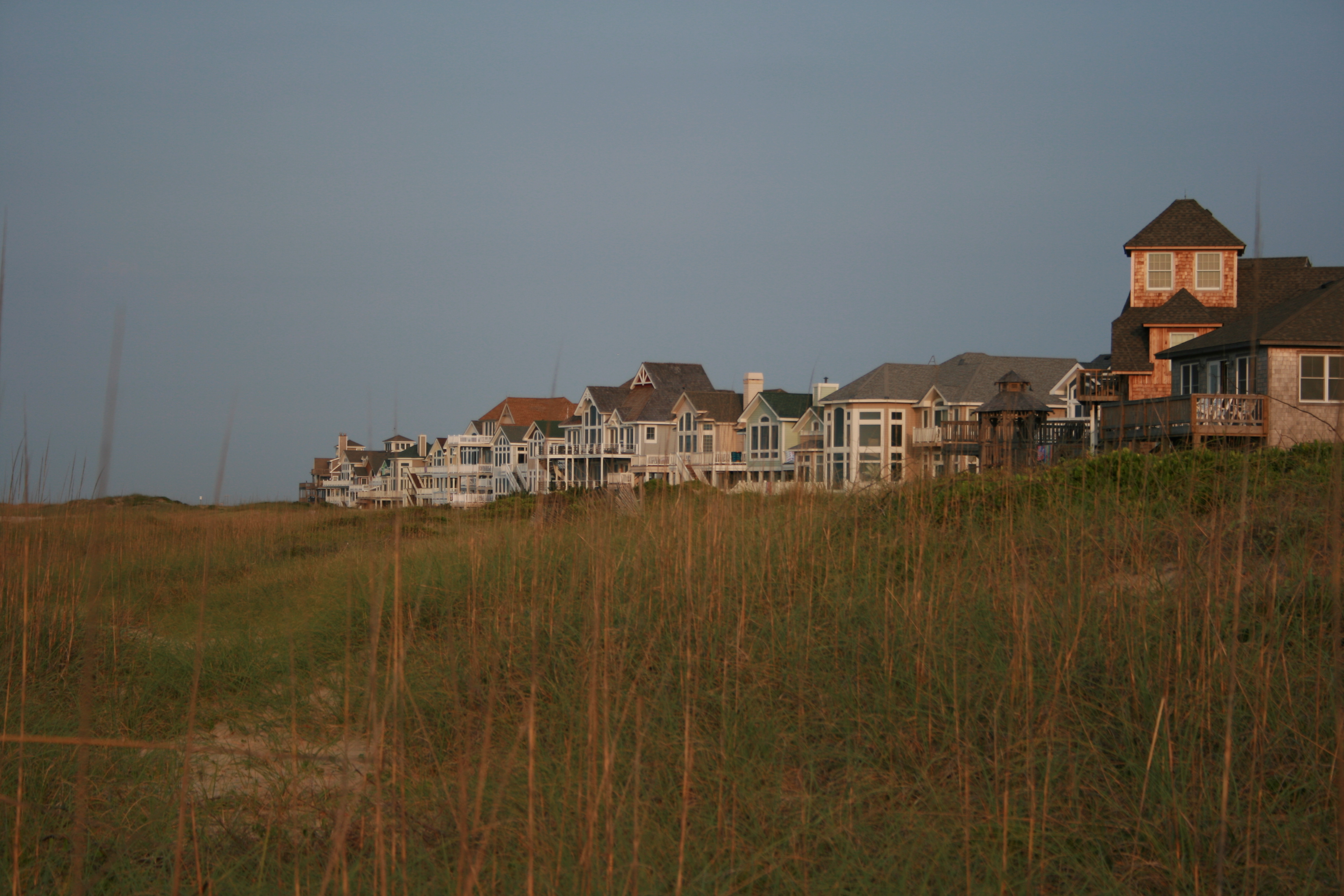
The Cape Hatteras National Seashore envelops the entire stretch of Hatteras Island, with the national seashore's beaches, dunes, and salt marshes making up the heart of the visitor experience. The area is widely known for excellent surf fishing, world-class kiteboarding and surfing, and miles of unspoiled shoreline, with campgrounds and beach access points scattered from the village south past Buxton and on toward Frisco. The seashore's long, often empty beaches are the primary draw for visitors.
A short drive to the heart of the village brings travelers to the ferry terminal for the free Hatteras–Ocracoke passenger ferry, which makes the run across Hatteras Inlet to Ocracoke Island in roughly 40 to 60 minutes. Ocracoke is famous for its laid-back village, its protected anchorage, and the historic Ocracoke Lighthouse, making it a popular day trip or overnight excursion for vacationers based in Hatteras.
Right in Hatteras Village, the Graveyard of the Atlantic Museum interprets the long history of shipwrecks and maritime commerce along the Outer Banks, with exhibits on the surrounding waters known for centuries of vessels lost in storms and war. The small museum is a useful rainy-day stop and a good primer on the region's seafaring past.
Hatteras makes a compelling base for a short-term rental precisely because it offers a quieter, more authentic Outer Banks experience while still placing visitors within easy reach of the marquee attractions of the national seashore and Ocracoke. The combination of unspoiled beaches, world-class fishing, a small village atmosphere, and its position as the jumping-off point for the Ocracoke ferry gives the area a distinctive identity within the rental market of the North Carolina coast.
Want to know if a property in Hatteras is a good investment?
Enter an address to get instant revenue potential and comps.