
Clayton, North Carolina
Want to see how Clayton compares to other top cities in North Carolina? Explore all city regulations in North Carolina. →
Clayton, NC
Challenging To Investors
STR Regulations for Clayton, North Carolina
However, I can still provide you with comprehensive information based on the North Carolina content you've provided, including state-level regulations and information about other NC cities that would apply to Clayton, NC investors.
Short-Term Rental Investment Guide: Clayton, North Carolina
Overview: Are Short-Term Rentals Allowed in Clayton, NC?
Yes, short-term rentals are allowed in North Carolina, including Clayton, NC. North Carolina is one of the few states that regulates short-term rentals at the state level through the Vacation Rental Act, while also allowing local municipalities to impose additional regulations. At the state level, STRs (referred to as "vacation rentals") are defined as residential property rentals for fewer than 90 days by someone who has a separate permanent residence to return to.
Important Note: Clayton, NC operates under Johnston County jurisdiction. The content you provided doesn't contain specific Clayton, NC ordinances, so investors should be aware that local regulations may exist at the municipal or county level.
What do Airbnb hosts actually earn in Clayton?
Clayton hosts earn a median $30,776/year with $155 ADR and 68% occupancy.
Top performers pull in $40,993+ per year.
See the full Clayton market breakdownHow to Start a Short-Term Rental Business in Clayton, NC Market
State-Level Requirements for NC STRs:
- Vacation Rental Agreement: You must provide guests with a written vacation rental agreement that outlines fees, rights, and obligations
- Trust Account: Establish a trust account in a federally insured institution to deposit rent, security deposits, and fees
- Compliance with Building Codes: Meet all applicable building, housing, elevator safety, and life safety codes
- Safety Equipment: Install smoke detectors and carbon monoxide alarms as required
- Property Maintenance: Keep the property in habitable condition with functioning utilities and appliances
Local Requirements (Clayton/Johnston County):
- Zoning Permits: Many NC cities require zoning permits for STR operations
- Business License: Some municipalities require local business licenses
- Local Contact: Designate a local contact person available 24/7
- Insurance: Maintain liability insurance specific to short-term rentals
Required Documents, Permits, Licenses, and Guidelines
Essential Documentation:
- Personal ID and Federal EIN
- Social Security Number or Individual Taxpayer Identification Number (ITIN)
- Proof of Ownership and Proof of Residence
- Liability Insurance policy with STR coverage
- Fire and Safety Inspection certificate
- Vacation Rental Agreement template
- Trust Account documentation
Permits and Licenses (Varies by Municipality):
- Short-Term Rental Zoning Permit (if required locally)
- Local Business License (if applicable)
- Occupancy Permit (if required)
- Fire Department Inspection approval
Application Requirements:
- Property address and detailed information
- Owner and agent contact information
- Maximum occupancy calculations
- Parking arrangements
- Emergency contact procedures
Specific Regulations for Short-Term Rentals
State of North Carolina Regulations:
- Maximum Rental Period: Under 90 days for vacation rental classification
- Written Agreement Required: Must provide signed rental agreements
- Trust Account Mandatory: All funds must be deposited in trust accounts
- Safety Standards: Smoke detectors, CO alarms, fire extinguishers required
- Building Code Compliance: Must meet all applicable codes
Municipal Regulations (Clayton, NC):
Note: Specific Clayton ordinances were not found in the provided content. Investors should contact:
- Clayton Town Hall
- Johnston County Planning Department
- NC Department of Justice for state guidance
Typical NC Municipal Requirements:
Based on other NC cities, expect requirements like:
- Occupancy limits (typically 2 people per bedroom plus 2 additional)
- Parking restrictions (often 1-2 vehicles per bedroom)
- No exterior advertising/signage
- No special events or large gatherings in residential areas
- Designated local contact person
- Annual permit renewal
- Compliance with noise ordinances
Taxes for NC Short-Term Rentals
Required Taxes:
- Occupancy Tax: County and local rates (typically 3-8% combined)
- Sales Tax: State, county, and local rates (approximately 7% combined)
- Income Tax: Federal and state income taxes on rental income
- Property Tax: Regular property tax assessments
Tax Remittance:
- Monthly Filing: Most jurisdictions require monthly occupancy tax remittance
- Platform Collection: Airbnb/VRBO may collect some taxes automatically
- Direct Booking Responsibility: Hosts handle taxes for direct bookings
Contact Information for Local Authority
Primary Contacts for STR Compliance:
North Carolina Department of Justice
- Consumer Protection Division
- Website: ncdoj.gov/protecting-consumers/travel/vacation-rentals
- Phone: (919) 716-6000
Clayton, NC (Municipal)
- Clayton Town Hall: (919) 553-1535
- Planning/Zoning Department: Contact through town hall
Johnston County
- Planning Department: (919) 989-5150
- Tax Administration: (919) 989-5200
- Website: johnstonnc.com
Links to Source Pages
Primary Sources:
- NC Vacation Rental Act: ncleg.gov/Laws/GeneralStatuteSections/Chapter42A
- NC Department of Justice: ncdoj.gov/protecting-consumers/travel/vacation-rentals
Helpful Resources:
- SummerOS STR Guide: gosummer.com/post/north-carolina-short-term-rental-laws
- Raleigh STR Guide: raleighrealty.com/blog/short-term-rental-laws-raleigh
Important Notes for Clayton, NC Investors:
- County Jurisdiction: Clayton operates under Johnston County regulations
- Local Research Required: Contact local authorities for current requirements
- Zoning Verification: Confirm STR allowances in specific zoning districts
- Insurance Verification: Ensure coverage meets local requirements
- Tax Registration: Register with appropriate tax authorities
Recommendation: Given the dynamic nature of STR regulations, investors should verify current requirements with both Clayton municipal authorities and Johnston County before proceeding with any STR investment.
This guide provides the framework for NC STR investing, but specific Clayton, NC requirements should be verified directly with local authorities before making investment decisions.
Next step
Found a property in Clayton?
Paste any address and get estimated revenue, cash-on-cash return, and comparable STR performance in under 5 minutes. 3 free analyses per day.
Free brief
Get the free Clayton STR Investment Brief
Revenue data, top neighborhoods, seasonal trends, and the key regulations for Clayton, North Carolina in one email.
Clayton
Market Saturation Score
Photos of Clayton

Overview of Clayton
Clayton sits in Johnston County in central North Carolina, on the southern edge of the greater Raleigh metropolitan area. The town has a population of roughly 25,000 residents and carries the easygoing character of a small Southern community that has grown up alongside one of the state's fastest-expanding regions. Known for its walkable historic downtown, its agricultural roots, and its position along the Neuse River, Clayton serves as both a quiet residential town and a convenient base for visitors exploring the Research Triangle. It lies about fifteen miles southeast of downtown Raleigh, well within an easy half-hour drive of the area's larger cultural and recreational offerings.
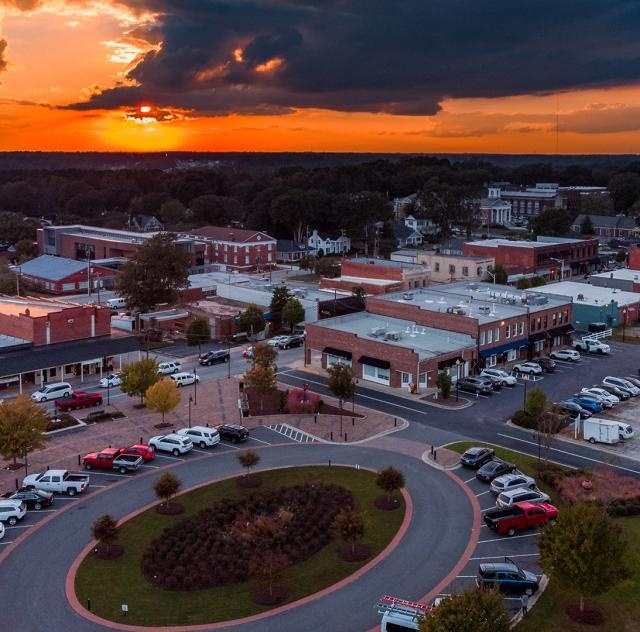
Downtown Clayton is the heart of the town's identity, a compact district of locally owned shops, restaurants, and taprooms set in preserved early-twentieth-century buildings. Seasonal festivals, including a long-running Harvest Festival, give the area a lively rhythm through much of the year. The Neuse River runs along the edge of downtown, and a paved riverwalk follows its banks, providing a pleasant setting for walking, jogging, and cycling just steps from the main streets.
About thirty minutes south of Clayton, Bentonville Battlefield State Historic Site preserves the largest Civil War engagement fought in North Carolina. Visitors can walk the grounds, tour the historic Harper House, and explore a museum that interprets the March 1865 campaign that culminated in the battle. It is one of Johnston County's most-visited heritage sites and a meaningful day trip for history-minded travelers.
Within a half-hour drive north, Raleigh opens up an entirely different set of experiences, including the North Carolina Museum of Natural Sciences, the State Capitol, and the dining and music scenes of the city. The wider Triangle region adds Duke University, the University of North Carolina at Chapel Hill, and the research campuses that anchor the area, all reachable as comfortable day excursions from a Clayton base.
Clayton makes a compelling base for short-term rental guests who want the feel of a small Southern town with quick access to a major metropolitan area. Visitors can spend the morning wandering a historic downtown, the afternoon on a Civil War battlefield or along a riverside trail, and the evening back in Raleigh for dinner and a show, all without changing accommodations. The combination of small-town character, riverfront green space, and proximity to the Research Triangle gives the area broad appeal for couples, families, and longer-stay travelers alike.
Want to know if a property in Clayton is a good investment?
Enter an address to get instant revenue potential and comps.