
Charlotte, North Carolina
Want to see how Charlotte compares to other top cities in North Carolina? Explore all city regulations in North Carolina. →
Charlotte, NC
Very Investor Friendly

STR Regulations for Charlotte, North Carolina
Overview: Are Short-Term Rentals Allowed?
Yes—short-term rentals are explicitly allowed in Charlotte, North Carolina. As of April 2022, the City of Charlotte removed all short-term rental (STR)–specific regulations from its Unified Development Ordinance (UDO), creating a permissive local regulatory environment. Operators must still comply with North Carolina’s Vacation Rental Act and general safety, building, and tax obligations at the state and county level. Both owner-occupied and non–owner-occupied STRs can operate legally in Charlotte.
What do Airbnb hosts actually earn in Charlotte?
Charlotte hosts earn a median $31,951/year with $168 ADR and 65% occupancy.
Top performers pull in $44,381+ per year.
See the full Charlotte market breakdownHow to Start a Short-Term Rental Business in Charlotte
Step-by-step to launch and operate a compliant short-term rental:
-
Verify zoning and property readiness
- Confirm your property is in a residential or commercial zone that allows lodging uses.
- Meet North Carolina building, housing, life-safety, and fire codes.
-
Understand local registration (voluntary)
- Register with the Charlotte-Mecklenburg Police Department rental registry (voluntary but recommended).
- Purpose: incident notifications, safety alerts, and community relations.
-
Business setup
- Obtain a Federal EIN.
- Open a business bank account.
- Establish a trust account at a federally insured depository institution (required under NC law for handling rent, fees, and deposits).
-
Insurance
- Secure short-term rental insurance with general liability coverage.
-
Legal documentation and records
- Prepare a written vacation rental agreement to be signed by guests, detailing fees, fund handling, and obligations (required under NC law).
- Establish guest record-keeping procedures (minimum three years per state law).
-
Tax setup
- Register to collect and remit Mecklenburg County room occupancy tax.
- Register to collect and remit North Carolina sales tax.
- Implement systems for timely filing and remittance.
-
Property preparation
- Install and maintain required safety equipment (smoke detectors, CO alarms).
- Ensure egress, life-safety, and habitability standards.
- Publish house rules and property information consistent with local ordinances and HOA/condo rules.
Required Documents, Permits, Licenses, and Guidelines
Key documents for compliant operations:
- Personal identification
- Federal EIN
- Proof of ownership (or lease/authorization if renting)
- Proof of residence (for the responsible party)
- General liability insurance documentation
- Trust account documentation (federally insured depository institution)
- Written vacation rental agreement (signed by all guests)
- Floor plan and occupancy information
- Property safety equipment verification
Permits and licensing:
- Charlotte does not require a specific STR zoning permit as of 2024.
- Property must meet general building/housing codes.
- Many North Carolina cities require local business licenses; if you operate within Charlotte city limits, verify the need for any business license requirements directly with the city—requirements can change.
State-mandated documentation and operational requirements (North Carolina Vacation Rental Act, Chapter 42A):
- Written vacation rental agreement detailing fees, fund handling, and rights/obligations
- Trust account for rent, fees, and deposits
- Maintain property in fit and habitable condition
- Ensure electrical, plumbing, sanitary, heating, and ventilating systems are in good working order
- Provide operable smoke detectors
- Provide a minimum of one carbon monoxide alarm per rental unit per level
- Maintain common areas in safe condition
- Keep guest records for at least three years
- Comply with elevator safety requirements where applicable
Specific Regulations for Short-Term Rentals
Charlotte (City):
- No STR-specific ordinance; general zoning, building, housing, life-safety, and fire codes apply.
- Noise, disorderly conduct, and general community standards apply via city ordinances.
- Compliance with HOA/condo rules and lease terms is essential.
Mecklenburg County (County):
- Room occupancy tax collection and remittance (8% combined rate).
- General building and code enforcement rules apply to all rentals.
- No separate STR permit requirement at county level; follow state codes and local ordinances.
North Carolina (State—Vacation Rental Act):
- STRs (vacation rentals) are defined as residential property rented for fewer than 90 days by someone with a permanent residence to which they intend to return.
- Excludes hotels/motels, rentals to business travelers, rentals to persons with no other primary residence, and nominal consideration stays.
- Operational requirements (summarized above under Required Documents).
Tax Obligations
- Room Occupancy Tax (Mecklenburg County): 8% (combined rate). Airbnb typically collects and remits this on behalf of hosts; confirm your obligations directly.
- Sales Tax (North Carolina): 7.25% (combined state, county, local). Airbnb also remits sales tax in Charlotte on behalf of hosts; verify details.
- Income Tax: Report STR income on federal and state returns.
- Property Tax: Standard property tax rates apply; no special STR property tax classification.
Record-keeping: Maintain accurate guest and financial records for at least three years.
Contact Information for Local Authorities
-
Charlotte-Mecklenburg Police Department (Rental Registry)
- Website: rentalregistration.charlottenc.gov/
- General information: charlottenc.gov/cmpd/Pages/default.aspx
-
City of Charlotte—Planning, Design & Development
-
City of Charlotte—General Services
-
Mecklenburg County—Tax Collections (Room Occupancy Tax)
-
Mecklenburg County—Code Enforcement
-
North Carolina Department of Revenue—Sales Tax on Rentals/Accommodations
Source Links
-
Charlotte UDO—Short-Term Rental Statement (April 2022)
-
Charlotte STR Regulations (overview and guidance)
-
Airbnb Help—Charlotte STR guidance (registration, codes, taxes)
-
NC Short-Term Rental Laws (statewide context; city-specific notes include Charlotte’s permissive stance)
-
Steadily—Airbnb & STR Laws in Charlotte (2025)
-
Mecklenburg County Room Occupancy Tax
-
Mecklenburg County Code Enforcement
-
Charlotte Code of Ordinances (Municode)
-
NC Department of Revenue—Rentals/Accommodations
Additional practical guidance for investors and managers:
- Always confirm any local business licensing requirements with the City of Charlotte (licensing rules can evolve).
- Coordinate with legal counsel for complex ownership structures (LLCs, trusts, condo/co-op).
- Monitor state legislative and court developments that may impact local authority to regulate STRs.
Next step
Found a property in Charlotte?
Paste any address and get estimated revenue, cash-on-cash return, and comparable STR performance in under 5 minutes. 3 free analyses per day.
Free brief
Get the free Charlotte STR Investment Brief
Revenue data, top neighborhoods, seasonal trends, and the key regulations for Charlotte, North Carolina in one email.
Charlotte
Market Saturation Score
Photos of Charlotte

Overview of Charlotte
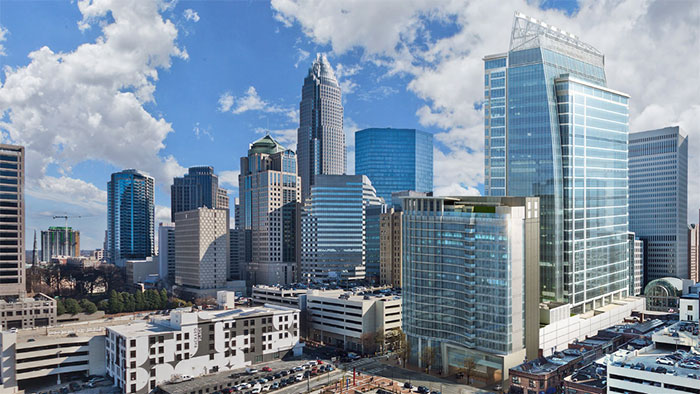
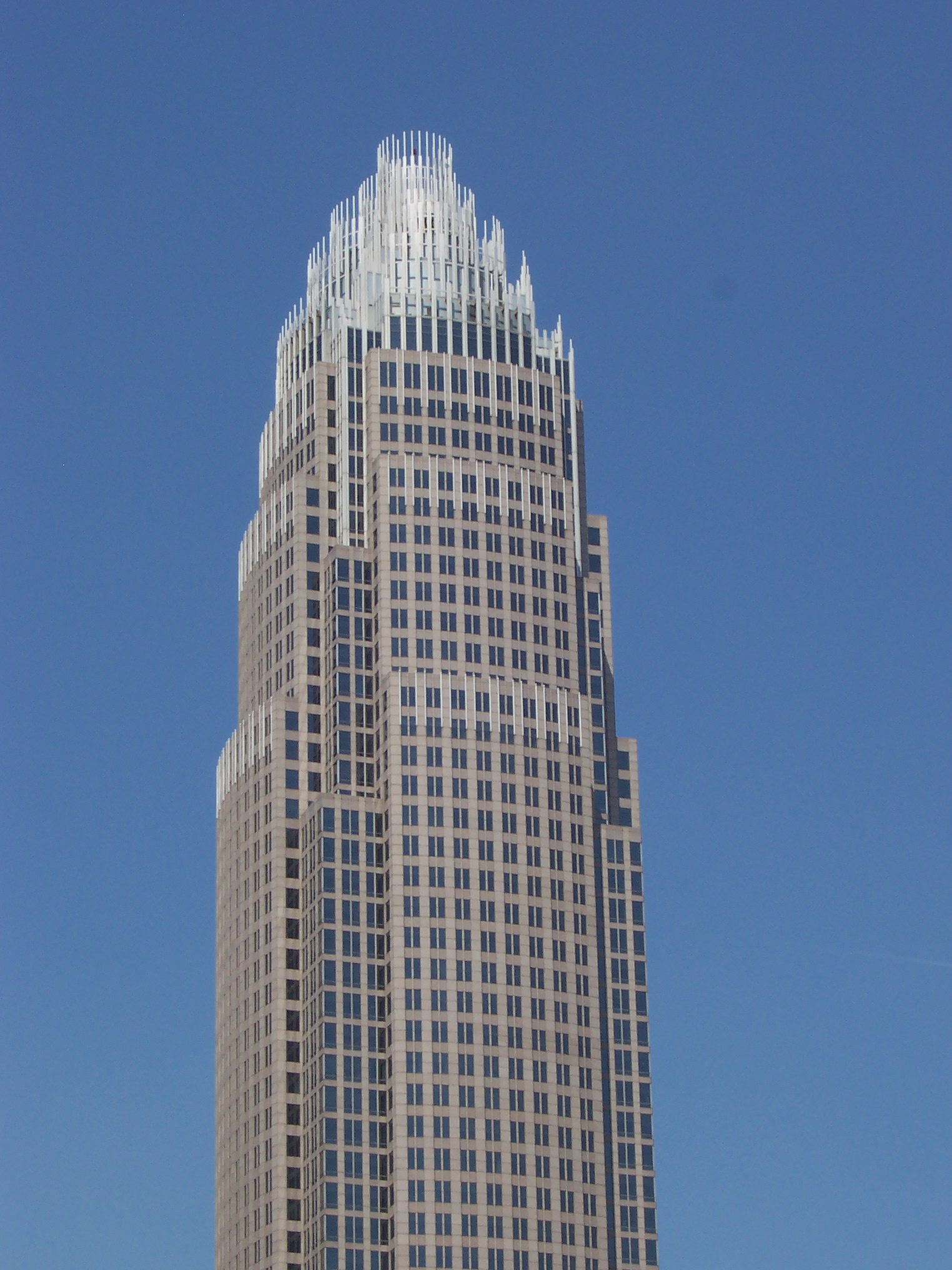
Charlotte, North Carolina, sits in Mecklenburg County and is the most populous city in the state, with a municipal population of approximately 880,000 and a metro area of more than 2.6 million. It serves as one of the country's leading financial centers, home to the headquarters of Bank of America and Truist, and is often described as the financial capital of the Southeast. The city has a fast-growing, modern character, blending a walkable uptown skyline with tree-lined neighborhoods, a celebrated culinary and craft beer scene, and professional sports across the NFL, NBA, MLS, and NASCAR. Located in the southwestern Piedmont, Charlotte lies roughly 90 minutes east of the Blue Ridge Mountains and within a few hours' drive of the Carolina coast, making it a natural base for travelers exploring the western Carolinas.
A marquee draw in the city itself is the NASCAR Hall of Fame, located in uptown Charlotte. The venue honors the heritage of stock car racing with interactive exhibits, historic vehicles, and a hall of inductees, making it a natural stop for racing fans visiting the region. Just across the state line in Fort Mill, South Carolina, Carowinds amusement park offers roller coasters, a water park, and family attractions roughly 20 minutes southwest of uptown Charlotte.
For outdoor recreation, the U.S. National Whitewater Center sits just west of the city on the Catawba River and offers whitewater rafting, kayaking, zip lines, and mountain biking across roughly 1,300 acres, with a year-round schedule of races and festivals. About 30 minutes north of uptown, Lake Norman is the largest man-made lake in North Carolina, popular for boating, fishing, and lakeside dining. To the west, Crowders Mountain State Park provides hiking, rock climbing, and summit views about 30 minutes from the city center, with two quartzite peaks rising above the surrounding Piedmont.
For a slower-paced visit, the Billy Graham Library, set on the grounds of the late evangelist's former home, includes a museum chronicling his life and ministry and is roughly 20 minutes southeast of uptown. Nearby, Discovery Place in uptown Charlotte offers hands-on science exhibits and an IMAX theater, appealing to families and curious travelers of all ages.
Charlotte makes a compelling base for short-term rentals thanks to its blend of big-city amenities and quick access to outdoor and cultural destinations. Visitors can spend a day exploring uptown museums and the NASCAR Hall of Fame, drive 20 to 30 minutes to a theme park, whitewater center, or state park, and return to a comfortable rental in the evening. With major league sports, a busy convention calendar, a strong corporate travel base, and easy road and air connections to the rest of the Southeast, Charlotte draws a steady mix of leisure and business travelers year-round.
Want to know if a property in Charlotte is a good investment?
Enter an address to get instant revenue potential and comps.