
Bakersville, North Carolina
Want to see how Bakersville compares to other top cities in North Carolina? Explore all city regulations in North Carolina. →
Bakersville, NC
Very Investor Friendly
STR Regulations for Bakersville, North Carolina
Executive overview: Short-term rentals are allowed in Bakersville, NC. The town does not have its own specific STR ordinance, so investors operate under North Carolina state law and Mitchell County regulations. The core obligations are: maintain the property to housing/safety standards, collect and remit North Carolina state sales tax (4.75%) and Mitchell County local sales tax (2.25%), and register for and collect/ remit Mitchell County occupancy tax (6%). Some platform-hosted listings (Airbnb, VRBO) handle state sales tax remittance on your behalf; local occupancy taxes usually remain the owner’s responsibility.
1) Overview of STR allowance and regulatory structure
-
Are STRs allowed?
- Yes. The Bakersville market (Mitchell County) has no city-specific short-term rental ordinance. Hosts must comply with state and county requirements.
- Bakersville’s STR profile is tied to the broader Mitchell County tourism base, with nearby outdoor attractions (Roan Mountain, Blue Ridge Parkway, Pisgah National Forest) supporting steady demand and peak periods during the rhododendron bloom and fall foliage seasons.
-
What governs STRs?
- North Carolina state law sets the baseline (e.g., taxation, consumer protection, and a prohibition on local governments requiring STR registration/permits that interfere with the state Vacation Rental Act framework).
- Mitchell County governs local sales tax administration and occupancy tax collection/remittance. County-level compliance is the practical focus for Bakersville-area operators.
-
Practical takeaway for investors:
- No city permit to obtain. Conduct due diligence on zoning, building/safety conditions, HOA or community restrictions, and confirm tax handling with your platforms.
What do Airbnb hosts actually earn in Bakersville?
Bakersville hosts earn a median $21,792/year with $168 ADR and 47% occupancy.
Top performers pull in $30,041+ per year.
See the full Bakersville market breakdown2) How to start a short-term rental business in this market
-
Market due diligence
- Assess seasonality and demand drivers (spring/summer hiking, fishing, Rhododendron Festival; strong fall foliage; quieter winter). Price and inventory should reflect these peaks and shoulder periods.
-
Property readiness and zoning
- Confirm STRs are a permitted use for your parcel. Properties within communities or HOAs may carry restrictions—review covenants and contact the association before listing.
- Ensure year-round access and winter readiness. Mountain properties can face snow/ice conditions; reliable driveway access and heating are operational necessities.
-
Safety and habitability
- Equip with working smoke detectors on each level and in each bedroom; carbon monoxide detectors near fuel-burning appliances and on each level; fire extinguisher(s); clearly posted emergency exit information; backup lighting/flashlights; well-maintained heating and cooling systems; adequate sanitation facilities.
-
Business setup
- Register with Mitchell County for occupancy tax and, if applicable, a general business license.
- Decide on booking channels: If you rely primarily on Airbnb/VRBO, confirm whether they collect/remit North Carolina state sales tax; they typically do not collect the county’s occupancy tax, so you must.
- Establish a monthly tax remittance process; set up recordkeeping for gross receipts, taxes collected, and remittances.
-
Listing strategy
- Leverage amenities that matter in Bakersville: mountain views, outdoor spaces with views of the Blue Ridge, fire pits, hiking proximity, and authentic local touches (rustic décor, locally sourced goods).
- Provide detailed guest guidance on access, winter conditions, local attractions (e.g., Rhododendron Festival, Roan Mountain, Pisgah National Forest), and emergency contacts.
-
Operations
- Build relationships with local cleaners and maintenance contractors who understand mountain-specific needs (freeze protection, wildlife-safe trash storage, steep driveway maintenance).
- Use dynamic pricing to match seasonality and monitor guest feedback closely to drive reviews and occupancy.
3) Required documents, permits, licenses, and guidelines
Essential compliance records and documentation:
- Written vacation rental agreement (per North Carolina Vacation Rental Act) for each booking, clearly stating rights/obligations, payment amounts, rental period, deposits, and required notices.
- Safety compliance records:
- Smoke detectors on each level and each bedroom; CO detectors near fuel-burning appliances and on each level; fire extinguisher(s); posted evacuation routes.
- Insurance:
- Liability coverage (minimum $1,000,000 recommended) with a vacation rental or landlord policy; consider coverage for natural hazards and loss of income.
- Property condition records:
- Documentation of habitability standards (heating/cooling, electrical safety, sanitation) and maintenance logs.
- Tax registrations and filings:
- NC state sales tax registration (if you collect directly; platforms like Airbnb/VRBO usually handle this).
- Mitchell County occupancy tax registration (annual).
- General business license (if required by Mitchell County for rental operations).
- Zoning and HOA documentation:
- County zoning confirmation showing STRs are permitted.
- HOA approval or compliance documentation if the property is within a community with covenants.
Monthly obligations:
- Collect/remit Mitchell County occupancy tax (6%) and any applicable local sales tax (Mitchell County 2.25%) if not collected/remitted by a platform.
- Maintain detailed records of gross receipts, taxes collected, and remittance dates (typically due by the 20th of the following month).
4) Regulations: City, county, and state
City (Bakersville)
- No city-specific short-term rental ordinance or local permitting requirements. STRs must meet general housing and safety standards, and owners must comply with tax obligations.
County (Mitchell County)
- State and local sales taxes:
- State sales tax: 4.75% (often collected/remitted by platforms for hosted listings; verify on your account).
- Local sales tax (Mitchell County): 2.25%.
- Occupancy tax:
- Rate: 6% of gross rental receipts (effective March 1, 2023).
- Due monthly; filing deadline typically by the 20th of the following month.
- Payments accepted by money order or check; remit to the Mitchell County Finance Office.
- Registration and contact:
- Registration and questions: Mitchell County Finance Office (828.688.2139, ext. 1397).
- Additional considerations:
- Property-specific zoning rules apply; confirm STRs are a permitted use.
- HOAs/private covenants can prohibit or restrict STRs even where county zoning allows.
State (North Carolina)
- Vacation Rental Act:
- Requires a written rental agreement for each stay.
- Properties must be maintained in a fit and habitable condition.
- Taxation:
- North Carolina state sales tax applies to rentals under 90 consecutive days.
- State law limits the ability of local governments to impose STR registration or permitting requirements beyond general business regulation.
Note: The general 4.75% state sales tax and 2.25% Mitchell County local sales tax totals 7.0%. Platform-hosted listings generally remit only state sales tax; you must register, collect, and remit county-level occupancy tax and any local sales tax not handled by the platform.
5) Contact information
Local authority in charge of occupancy tax and related STR matters:
- Mitchell County Finance Office
- Address: 26 Crimson Laurel Circle, Bakersville, NC 28705
- Phone: 828.688.2139, extension 1397
- Mitchell County Tourism Development Authority (TDA)
- Phone: 828.208.0769
- Email: TDA@mitchellcountync.gov
Note: For state sales tax registration and filings, contact the North Carolina Department of Revenue.
6) Links to source pages
Important sources informing this guide:
- www.gosummer.com/vacation-rental-management/bakersville-north-carolina
- www.mitchellcountync.gov/departments/tourism-development-authority/
- local.theoffersheet.com/legal/little-switzerland-nc/
- highcove.com/?page_id=3674
Additional context (not specific to Bakersville but useful for region):
Disclaimer: This guide is for informational purposes only and does not constitute legal or tax advice. Regulations can change; verify requirements with local authorities and consult legal/tax professionals before making investment decisions.
Next step
Found a property in Bakersville?
Paste any address and get estimated revenue, cash-on-cash return, and comparable STR performance in under 5 minutes. 3 free analyses per day.
Free brief
Get the free Bakersville STR Investment Brief
Revenue data, top neighborhoods, seasonal trends, and the key regulations for Bakersville, North Carolina in one email.
Bakersville
Market Saturation Score
Photos of Bakersville


Overview of Bakersville
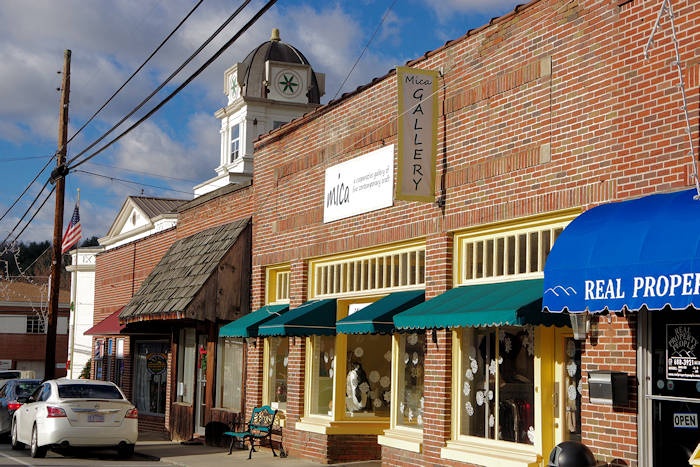
Bakersville is a small mountain town in western North Carolina, serving as the county seat of Mitchell County. With a population of roughly 450 residents, the town sits quietly in a high valley of the Blue Ridge Mountains, offering a slow-paced, traditional Appalachian character. It is best known as a gateway to outdoor recreation in the surrounding peaks and as the cultural anchor of a region long associated with mineral mining, particularly mica, and with craft traditions. The nearest major city is Asheville, located about 60 miles to the southwest, and the larger town of Spruce Pine lies just a few miles to the east.
A short drive north of Bakersville, along the crest of the Blue Ridge Parkway, visitors will find the Museum of North Carolina Minerals, a small but informative stop operated by the National Park Service at Gillespie Gap. The museum explores the geological history of the region and explains the mica, feldspar, and quartz mining that shaped the local economy for more than a century. It is a worthwhile orientation point for anyone curious about the mountains beyond their scenic surface, and it sits only about ten minutes from the center of town.
Just to the northeast, straddling the North Carolina–Tennessee state line, Roan Mountain rises to nearly 6,300 feet and is famous for its sweeping grassy balds and panoramic views. The state park on the Tennessee side offers campgrounds, hiking trails, and access to the Appalachian Trail, while the road leading to the summit begins within a short drive of Bakersville. In mid-June, the surrounding Rhododendron Gardens are a well-known destination for visitors hoping to see the famous Catawba rhododendrons in bloom.
A few miles south of Bakersville lies the community of Penland, home to the Penland School of Craft, one of the country's leading centers for studio craft education. The campus hosts workshops throughout the year in ceramics, glass, metals, woodworking, and textiles, and the surrounding studios and galleries give the area a creative, artisanal flavor that complements the region's mountain scenery.
Bakersville is a compelling base for short-term rentals because it combines genuine small-town quiet with ready access to some of the most scenic stretches of the southern Appalachians. Guests can spend their days hiking Roan Mountain, driving the Blue Ridge Parkway, exploring the mineral heritage of the region, or visiting Penland's craft studios, and still return in the evening to a peaceful, walkable mountain town well removed from the busier tourist corridors. For travelers who want Blue Ridge beauty without the crowds of Boone or Asheville, Bakersville offers an appealing balance of solitude and accessibility.
Want to know if a property in Bakersville is a good investment?
Enter an address to get instant revenue potential and comps.