
Asheboro, North Carolina
Want to see how Asheboro compares to other top cities in North Carolina? Explore all city regulations in North Carolina. →
Asheboro, NC
Generally Investor Friendly
STR Regulations for Asheboro, North Carolina
Overview: Are Short-Term Rentals Allowed in Asheboro, NC?
Direct answer: Yes. North Carolina allows short‑term rentals (referred to in state law as “vacation rentals”) provided the operator complies with the Vacation Rental Act and any applicable local requirements. The sources provided do not show any city‑specific short‑term rental ordinance for Asheboro or a separate Randolph County STR ordinance. Accordingly, investors operating in Asheboro should follow statewide North Carolina rules while monitoring the City of Asheboro and Randolph County for any future local regulations.
Note: Always confirm current local rules with the City of Asheboro and Randolph County; local regulations can change and may impose zoning, permitting, safety, or operational restrictions that apply in addition to state law.
What do Airbnb hosts actually earn in Asheboro?
Asheboro hosts earn a median $28,180/year with $142 ADR and 64% occupancy.
Top performers pull in $33,281+ per year.
See the full Asheboro market breakdownHow to Start a Short‑Term Rental Business in Asheboro, NC
Use the following sequence to launch an STR compliantly:
- Validate legal feasibility
- Confirm zoning allows transient lodging/STR use at the subject property.
- If the property is in a homeowners association or planned community, review CC&Rs for any prohibition or restrictions on STRs.
- Prepare documentation for state‑level compliance
- Draft a written vacation rental agreement that each guest signs; the agreement must clearly state daily fees, processing/cleaning fees, the manner of handling funds, and the respective rights/obligations of host and guest.
- Establish a trust account at a federally insured depository institution or authorized trust institution in North Carolina to deposit rents, security deposits, and related fees.
- Secure short‑term rental insurance with general liability coverage.
- Prepare for taxes
- Register to collect and remit occupancy taxes to Randolph County and the State of North Carolina.
- Register for sales tax and set up processes to collect/remit state and local sales tax on rentals.
- Establish bookkeeping and tax reporting for federal and state income taxes.
- Safety and habitability
- Install and maintain required safety equipment: operable smoke detectors and at least one carbon monoxide alarm per rental unit per level.
- Ensure the property meets applicable building, housing, elevator (if applicable), and maintenance standards.
- Operations
- Set maximum occupancy, parking availability, and guest rules aligned with state and local standards.
- Maintain guest records as required by state law and be prepared to post any local permit/registration number once local requirements are issued.
- Marketing
- Once authorized, list on platforms such as Airbnb or VRBO. If a local permit number is required in the future, include it on all advertisements and postings.
- Ongoing compliance
- Renew any local permits (if/when adopted), keep the vacation rental agreement and trust accounting current, and file taxes on schedule.
- Monitor City of Asheboro and Randolph County for any new zoning, safety, or tax rules affecting STRs.
Required Documents, Permits, Licenses, and Guidelines
Statewide requirements (North Carolina Vacation Rental Act):
- Written vacation rental agreement (guest must sign).
- Trust account in a North Carolina‑authorized, federally insured institution for all guest funds.
- General liability insurance appropriate for STR operations.
- Safety compliance: smoke detectors and carbon monoxide alarms per unit per level.
- Compliance with applicable building, housing, and elevator safety codes.
- Maintenance and habitability obligations for common areas and major systems.
- Recordkeeping for guests/tenants.
Local requirements (Asheboro/Randolph County):
- No city‑specific STR ordinance or county‑wide STR ordinance was found in the provided sources. If and when local rules are adopted, expect:
- Zoning permit/registration (often non‑transferable, may be owner‑specific).
- Annual renewal in some jurisdictions.
- Possible fee payment and inspection.
- Potential limitations on whole‑house rentals vs. homestays, maximum occupancy, and off‑street parking.
- Advertising rules (e.g., permit number on listings).
- Possibly different standards for unincorporated Randolph County vs. within the City of Asheboro.
Tax registrations (statewide):
- Sales tax: register with the North Carolina Department of Revenue to collect/remit state and local sales tax.
- Occupancy tax: register with Randolph County for room occupancy tax (county‑set rate; verify current rate with the county tax office).
- Income tax: STR income is taxable; maintain proper records for federal/state filings.
Insurance:
- Maintain short‑term rental insurance that includes liability coverage (commonly $1 million minimum per occurrence for many local ordinances).
Documentation checklist (operator file):
- Vacation rental agreement template (updated annually).
- Trust account documentation (bank or trust institution).
- Insurance declaration page(s).
- Guest ledger/records (per state requirements).
- Safety equipment installation/maintenance logs (smoke/CO detectors).
- Zoning confirmation (or permit if/when adopted).
- Tax registration confirmations (sales and occupancy tax).
- HOA/POA approval (if applicable).
Specific Regulations: City, County, and State
State of North Carolina (Vacation Rental Act, G.S. Chapter 42A)
- Definition: Rental of residential property for vacation, leisure, or recreation purposes for fewer than 90 days by a person who has a permanent residence elsewhere (excludes hotels/motels, business travel, and rentals to persons without another primary residence).
- Agreement requirement: Written, signed agreement that specifies fees and handling of funds and outlines rights/obligations.
- Trust account: Required to deposit all rents, security deposits, and fees.
- Safety/habitability:
- Operable smoke detectors.
- Minimum one carbon monoxide alarm per rental unit per level.
- Maintain common areas in safe condition.
- Maintain electrical, plumbing, sanitary, heating/ventilating systems and major appliances in good/safe working order.
- Code compliance: Building, housing, and (if applicable) elevator safety requirements apply.
City of Asheboro
- No city‑specific STR ordinance was identified in the provided sources. Monitor city communications for any future zoning permit requirements, safety standards, occupancy limits, parking rules, or advertising restrictions.
Randolph County
- No county‑wide STR regulation was identified in the provided sources. If the property is outside city limits (unincorporated county), confirm whether any county‑level restrictions apply and, in all cases, complete the tax registrations noted above.
Taxes Applicable to STRs in Asheboro
- Sales tax: State and local sales tax apply to short‑term rentals (the combined rate is typically around 7%; confirm current rate with the NC Department of Revenue).
- Occupancy (room) tax: County/local occupancy taxes apply; the combined rate in many North Carolina jurisdictions is commonly in the 6%–8% range. Verify Randolph County’s current rate and any local add‑on with the Randolph County tax office.
- Income tax: STR income is taxable at the federal level and for North Carolina; keep thorough records to support deductions and depreciation.
Contact Information
North Carolina Department of Revenue (sales tax registration and support)
- Website: www.ncdor.gov
- Phone: Not specified in provided sources
Randolph County (occupancy tax, general tax administration)
- Website: Not specified in provided sources
- Phone: Not specified in provided sources
City of Asheboro (zoning/permits, city hall)
- Website: Not specified in provided sources
- Phone: Not specified in provided sources
NC Department of Commerce (short‑term rental guidance reference)
- Website: www.nc.gov/agencies/department-of-commerce.html
- Phone: Not specified in provided sources
Source Pages
- North Carolina short‑term rental laws (statewide overview, Vacation Rental Act, tax context): www.gosummer.com/post/north-carolina-short-term-rental-laws
- Buncombe County STR context (state/city interplay; illustrative, not directly applicable to Asheboro): www.wunc.org/2024-01-31/short-term-rentals-in-buncombe-county-frequently-asked-questions
- Market performance data for Asheboro (presence of STR market): www.airdna.co/vacation-rental-data/app/us/north-carolina/asheboro/overview
Practical note: Since the provided sources do not identify City of Asheboro or Randolph County STR regulations, treat this as a compliance baseline under North Carolina state law. Before listing, verify whether the City of Asheboro or Randolph County have since adopted a local STR ordinance or zoning permit requirement. If you need local permit details, contact the City of Asheboro Planning/Zoning and the Randolph County Tax Office using the general contact points above.
Next step
Found a property in Asheboro?
Paste any address and get estimated revenue, cash-on-cash return, and comparable STR performance in under 5 minutes. 3 free analyses per day.
Free brief
Get the free Asheboro STR Investment Brief
Revenue data, top neighborhoods, seasonal trends, and the key regulations for Asheboro, North Carolina in one email.
Asheboro
Market Saturation Score
Photos of Asheboro

Overview of Asheboro
Asheboro is a small city in Randolph County in central North Carolina, with a population of roughly 25,000 residents. It serves as the county seat and carries a relaxed, working-class character that blends small-town Southern life with a surprising number of regional attractions. The city is best known as the home of the North Carolina Zoo and is often described as a gateway to the Uwharrie region and the Seagrove pottery country to its south. It sits about 30 miles south of Greensboro, the nearest major city, and roughly 75 miles west of Raleigh, placing it within easy reach of the larger Piedmont urban centers while retaining a quieter, more rural feel.
The marquee draw is the North Carolina Zoo, located just outside the city. As one of the largest natural-habitat zoos in the United States, it houses thousands of animals across African and North American exhibits set in wooded, walkable terrain. Because it is the centerpiece of the area, it tends to anchor demand for lodging in and around Asheboro, and it is roughly a ten- to fifteen-minute drive from the center of town.
Just south of Asheboro, the Seagrove area has long been recognized as one of the Southeast's most important pottery communities, with dozens of working studios and shops scattered along a roughly twenty-mile corridor. Visitors can meet potters, watch demonstrations, and purchase hand-thrown stoneware directly from the makers. The drive from Asheboro to the heart of the Seagrove pottery trail is approximately twenty-five to thirty minutes.
Further south, the Uwharrie National Forest offers a wide range of outdoor recreation, including hiking, mountain biking, horseback riding, camping, and paddling on Badin Lake and the surrounding waters. The forest covers about 50,000 acres of rolling, wooded terrain and represents a notable contrast to the flatter Piedmont farmland around Asheboro. The drive from town to the forest's main access areas is generally about forty to fifty minutes.
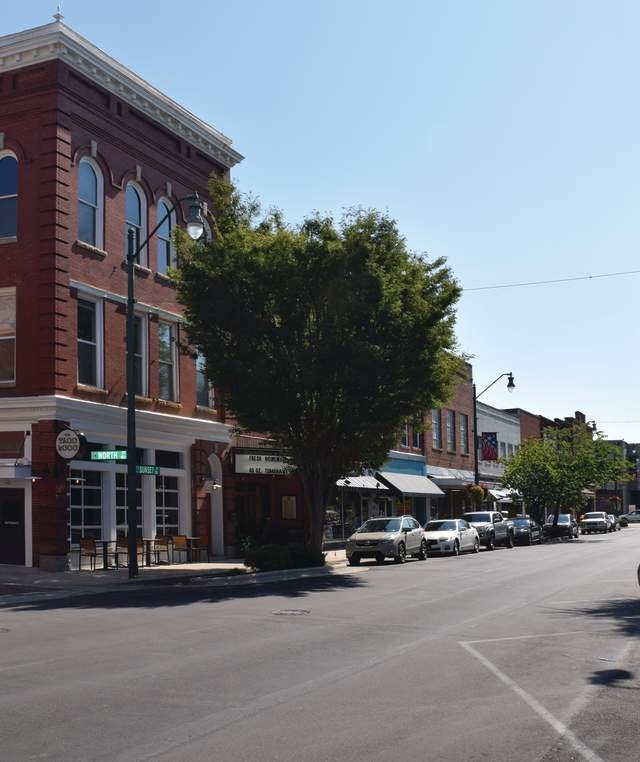
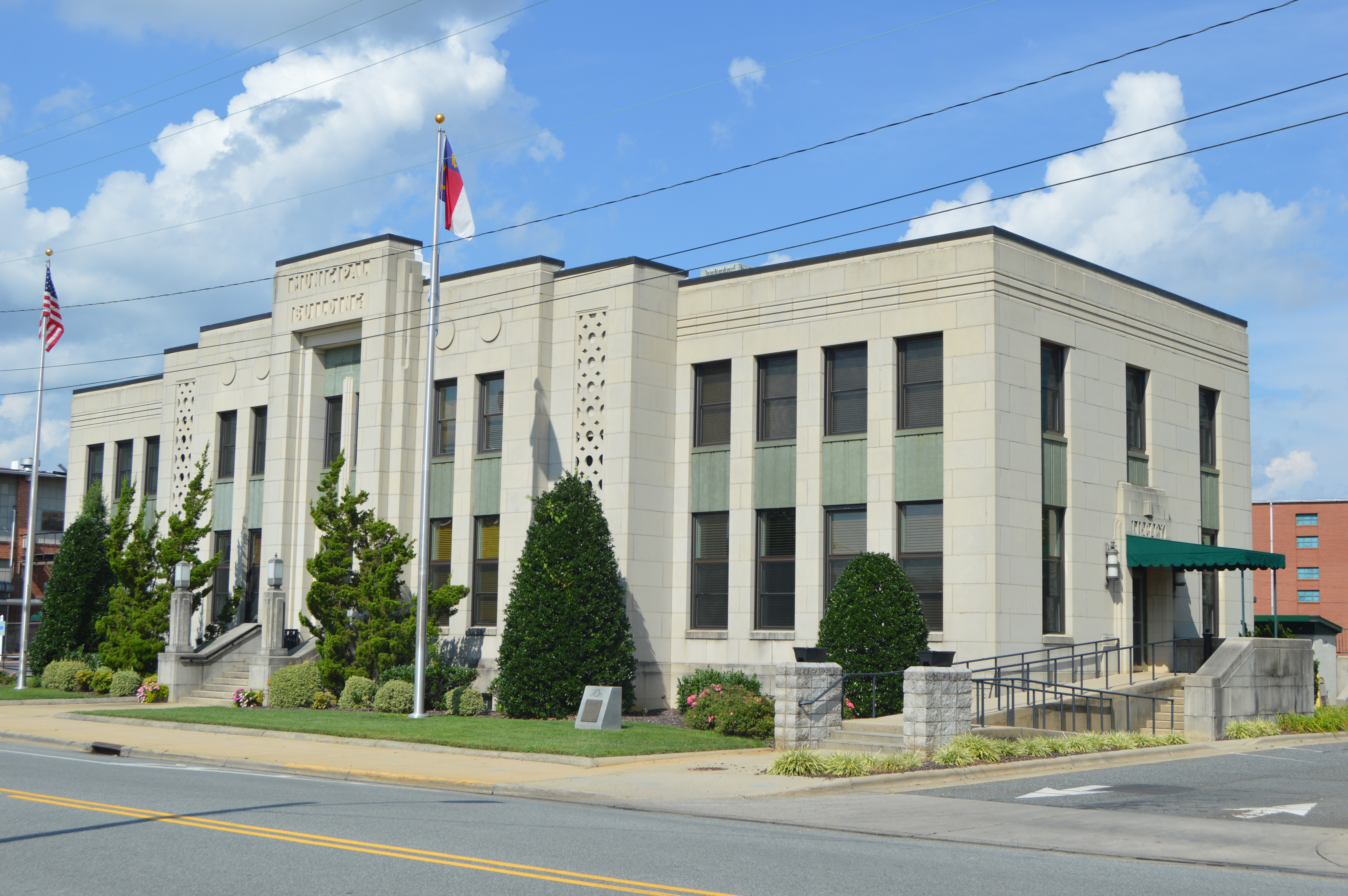
Downtown Asheboro has its own modest appeal, with a short stretch of local shops, restaurants, and a few small civic attractions clustered around the courthouse square. While compact, the district provides a walkable complement to the more expansive outdoor draws nearby and reflects the slower pace of this part of the North Carolina Piedmont.
Taken together, Asheboro offers short-term rental owners a compelling mix of a single dominant anchor attraction, a recognizable regional arts and craft tradition, and access to a national forest, all within a small, driveable geography. Its position between Greensboro and the Uwharries, combined with the year-round draw of the zoo, gives the city a steady flow of visitors looking for an affordable, family-friendly base in central North Carolina.
Want to know if a property in Asheboro is a good investment?
Enter an address to get instant revenue potential and comps.