
Saint Ignatius, Montana
Want to see how Saint Ignatius compares to other top cities in Montana? Explore all city regulations in Montana. →
Saint Ignatius, MT
Challenging To Investors
STR Regulations for Saint Ignatius, Montana
Short-term rentals (STRs) are allowed in St. Ignatius. The municipal zoning ordinance governs lodging uses via three relevant categories:
- HOTELS/MOTELS (six or more rooms) — Permitted by right in the Central Business District (CBD).
- BOARDING HOUSES (lodging/meals for five or more persons) — Permitted by right in the Medium Density Residential District (R-2); allowed as a Conditional Use in the Low Density Residential District (R-1) and in the CBD with conditions.
- DWELLING UNITS used for lodging — Legally possible where single- or multi-family residential use is permitted, subject to occupancy limits, parking, and general zoning standards (e.g., no changes to exterior appearance beyond permitted signage).
Zoning compliance, permits, and standard development standards (parking, signage, setbacks, height, floodplain, airport influence, fire hazards, and commercial-liquor proximity) apply. See the specific district and general requirement sections below for what is permitted, what requires a conditional use permit, and the operational standards you must follow.
Important: The ordinance excerpt provided does not contain any city-, county-, or state-specific statutes dedicated to “short-term rentals” (e.g., no registration, nightly-stay caps, or local lodging tax requirements). Hosts must comply with general zoning and any applicable state or local tax and business licensing regimes.
Zoning Status Summary by District
-
Central Business District (CBD)
- Hotels/motels: Permitted principal use.
- Boarding houses: Permitted principal use (if providing lodging and/or meals for five or more persons).
- Apartments above the first floor: Permitted.
- Off-street parking required (hotels/motels: 1 space per rental unit; boarding houses: 1 space per room for rent).
- Off-street loading required for commercial/industrial uses.
- Height limit: 45 feet; front setback: 8 feet; side yards: none required; rear yard: 10 feet.
- Lighting must be shielded to avoid casting direct light on adjacent residential uses or institutional uses providing human care.
- Signage allowed (Section 24 rules apply).
-
Medium Density Residential (R-2)
- Boarding houses: Permitted principal use.
- Multiple-family dwellings and apartments: Permitted.
- Manufactured home parks: Conditional use.
- Height limit: 30 feet (single-family), 40 feet (multi-family more than two units).
- Off-street parking: 1.5 spaces per multi-family dwelling unit; 2 spaces per single-family dwelling unit.
- Lot area standards: 7,000 sq ft minimum for single-family; 4,000 sq ft per unit for multi-family.
- Setbacks: 25-foot front; 10-foot side; 15-foot rear (or 3-foot rear where a garage is in the rear yard).
- Signs: Non-illuminated, 8 sq ft for residential uses; up to 16 sq ft for churches and schools, 10 feet from roadway.
-
Low Density Residential (R-1)
- Boarding houses: Conditional use (must obtain conditional use permit under Section 11).
- Single- and two-family dwellings: Permitted; apartments above the first floor allowed under CBD rules.
- Height limit: 30 feet; 25-foot front yard; 10-foot side yard; 15-foot rear yard (3 feet where garage is located within the rear yard).
- Off-street parking: 2 spaces per single-family dwelling; 1.5 per two-family dwelling unit.
- Home occupation rules (Section 18) apply if renting a portion of a dwelling; STRs operating as “lodging” with five or more lodgers typically shift the use category to “boarding house” and should follow the boarding-house provisions.
How to Start a Short-Term Rental Business in This Market
Follow these steps to establish a compliant STR operation in St. Ignatius:
-
Confirm Zoning and Use Category
- Map your parcel to determine whether it lies in CBD, R-1, or R-2.
- Determine whether your intended operation is:
- A hotel/motel (6+ rooms) → CBD only (by right).
- A boarding house (lodging/meals for five or more persons) → R-2 (by right); R-1 or CBD (conditional use).
- A dwelling unit offered for short stays → Possible where single- or multi-family residential use is permitted; ensure occupancy aligns with “family” definition (no more than five unrelated persons); avoid commercial features that would change the use classification.
-
Apply for Required Permits
- Zoning Permit: Required before using or occupying any building or structure, or before erection, placement, or alteration.
- Conditional Use Permit (CUP): Required for boarding houses in R-1 and for any home occupation not conforming to Section 18 conditions; see conditional use procedures below.
- Variance: Only if literal enforcement of setbacks, height, yard, parking, or loading standards creates unnecessary hardship; not for enabling prohibited uses.
-
Design and Construction Compliance
- Prepare plans drawn to scale showing lot dimensions, existing/proposed buildings and structures, use descriptions, number of families/dwelling units/rental units, and on-site conditions.
- Comply with building setbacks, lot area, height limits, off-street parking, and off-street loading (for commercial/industrial contexts).
- Address flood hazard areas, airport influence areas, fire hazards, and the 600-foot commercial-liquor proximity restriction for schools/churches as applicable.
-
Parking and Loading
- Provide required off-street parking per district and use type:
- Hotels/motels: 1 space per rental unit.
- Boarding houses: 1 space per room for rent.
- Single-family dwellings: 2 spaces per unit.
- Multi-family dwellings: 1.5 spaces per unit.
- Off-street loading: Required for commercial/industrial uses; CBD and General Industrial District (I) specify loading standards.
- Provide required off-street parking per district and use type:
-
Signage and Lighting
- Follow Section 24 for on-site and off-site signage; ensure lighting is shielded and does not cause glare or reflection into residential uses.
- Keep exterior appearance changes within permitted limits; no outdoor storage of equipment/materials associated with the lodging use.
-
Ongoing Operations
- Maintain compliance with approved plans and conditions.
- Monitor occupancy against the “family” limit unless operating as a boarding house or hotel/motel; be aware that transient-lodging operations with commercial features may require reclassification.
- Consider state-level lodging taxes and business licensing; not addressed in the provided ordinance excerpt.
Required Documents, Permits, Licenses, and Guidelines
-
Zoning Permit
- Application to the Zoning Administrator with plans showing lot dimensions, location and size of buildings/structures, uses, number of families/dwelling units/rental units, and other required information.
- Fee (schedule):
- Single-family residential: $25
- All other uses: $50
- Validity: One year from approval.
-
Conditional Use Permit (CUP) — Boarding Houses in R-1 and non-conforming Home Occupations
- Application submitted via the Zoning Administrator to the Zoning Commission.
- Required materials: Scaled plans, detailed use description, parking/loading arrangements, utilities compatibility, screening/buffering, signage plans, ingress/egress safety, and any additional items requested by the Zoning Administrator.
- Public notice: Published at least seven days prior to hearing; mailed notice to property owner or agent.
- Zoning Commission must make written finding that the use complies with specific conditions and does not adversely affect the character of the district.
- Fee: $200.
-
Variance — Board of Adjustment
- Application for variance specifying grounds (setbacks, yards, area, height/width, parking/loading).
- Public notice published at least seven days prior to hearing; mailed notice to the applicant.
- Variance granted only when special conditions exist that are peculiar to the property, not self-created, and granting will not confer special privilege or be contrary to public interest.
- Fees:
- Single-family residential: $25
- All other uses: $100
-
Zoning Amendment (if a change in district classification is desired)
- Application requires current scaled map and legal description; public hearings at Zoning Commission and Town Council; protest provisions apply if 20% of affected property owners object.
- Fee: $400
-
General Guidelines (apply across districts)
- Flood Hazard Areas: No buildings/structures within 100-year floodway; must conform to city/county floodplain management regulations.
- Airport Influence Areas: Height limits based on distance from runway ends.
- Visibility at Intersections: 50-foot sight triangle on corner lots.
- Fences/Walls/Hedges: Up to 6 feet in front yards; subject to visibility restrictions.
- Commercial Liquor Proximity: Bars/taverns not allowed within 600 feet on the same street of schools or places of worship (packaged alcohol sales excluded).
- Fire Hazards: Activities involving flammable/explosive materials must be enclosed with fencing, set back 100 feet from lot lines, and meet fire safety standards.
Specific Regulations by City/County/State
-
City of St. Ignatius
- STRs are governed under zoning categories and general requirements summarized above.
- Boarding houses permitted by right in R-2; conditional in R-1; hotels/motels permitted in CBD.
- Off-street parking and loading requirements (Section 22 and 23).
- Signage, height, yard, floodplain, airport, and fire hazard standards apply.
- Violations constitute a misdemeanor; fines up to $500 and/or imprisonment up to six months; each day of violation counts as a separate offense.
-
Lake County (if applicable)
- No county-specific STR regulations are included in the provided ordinance excerpt.
-
State of Montana
- No state-level statutes dedicated to STRs are included in the provided ordinance excerpt.
- Hosts should confirm compliance with any state lodging taxes, sales/use taxes, and business licensing requirements; these are not detailed in the provided zoning material.
Contact Information (Local Authority in Charge of STRs)
- Zoning Administrator
- Responsible for zoning permits, conditional use permits, inspections, and enforcement.
- Receives and processes applications; issues Zoning Permits; coordinates with the Zoning Commission and Board of Adjustment.
- Contact: Apply at City Hall (St. Ignatius Town Hall). The provided content does not list a direct phone number or email.
- Address: City Hall, Town of St. Ignatius, Montana (as indicated on the Official Zoning Map maintained at City Hall).
Notes for investors:
- Call City Hall to identify the current Zoning Administrator and obtain the application forms for Zoning Permits, Conditional Use Permits, and Variances.
- Request the Official Zoning Map to confirm your parcel’s district classification.
Source Pages and Links
- Zoning Ordinance of the Town of St. Ignatius (June 2000):
- Full ordinance document (PDF): www.lakemt.gov/DocumentCenter/View/535/Town-of-St-Ignatius-PDF
Key sections to consult for STR compliance:
- Article I (Sections 5, 7–13): Permits, definitions, administration, conditional uses, board of adjustment, amendments, fees, violations.
- Article II (Sections 17–27): Nonconformities, home occupations, flood hazards, supplemental regulations (visibility, fences, access), parking/loading, signs, screening/buffering, yard measurements, planned unit developments.
- Article III (Sections 29–32): District-specific rules — R-1, R-2, CBD, and Industrial District (I).
What do Airbnb hosts actually earn in Saint Ignatius?
Saint Ignatius hosts earn a median $19,549/year with $146 ADR and 50% occupancy.
Top performers pull in $27,626+ per year.
See the full Saint Ignatius market breakdownNext step
Found a property in Saint Ignatius?
Paste any address and get estimated revenue, cash-on-cash return, and comparable STR performance in under 5 minutes. 3 free analyses per day.
Free brief
Get the free Saint Ignatius STR Investment Brief
Revenue data, top neighborhoods, seasonal trends, and the key regulations for Saint Ignatius, Montana in one email.
Saint Ignatius
Market Saturation Score
Photos of Saint Ignatius


Overview of Saint Ignatius
Saint-Ignatius is a small town of roughly 700 residents nestled in the Mission Valley of Lake County in western Montana. The community sits within the Flathead Indian Reservation, home to the Confederated Salish and Kootenai Tribes, and carries a quiet, rural character shaped by its agricultural surroundings and Jesuit mission heritage. Known for its scenic setting at the foot of the Mission Mountains, Saint-Ignatius serves as a gateway to some of Montana's most striking landscapes, including Flathead Lake, the National Bison Range, and the southern approaches to Glacier National Park. The town lies approximately 55 miles north of Missoula, the nearest sizable city and a regional hub for travel, dining, and air service.
One of the closest and most popular natural draws is the National Bison Range, a wildlife refuge now cooperatively managed with the Confederated Salish and Kootenai Tribes. The range protects a herd of American bison along with elk, deer, bighorn sheep, and pronghorn across rolling grasslands, and visitors can typically drive a scenic loop through the refuge in under two hours. It sits roughly 20 minutes west of Saint-Ignatius along U.S. Highway 93.
To the north, Flathead Lake spreads across the valley as the largest natural freshwater lake west of the Mississippi. The lake's southern reaches, including Polson and the broader shoreline, are only about 15 to 20 minutes from Saint-Ignatius and offer boating, fishing, swimming, and working cherry orchards. The drive north toward Polson and Bigfork opens up the lake's full recreational appeal and connects travelers to additional small-town amenities.
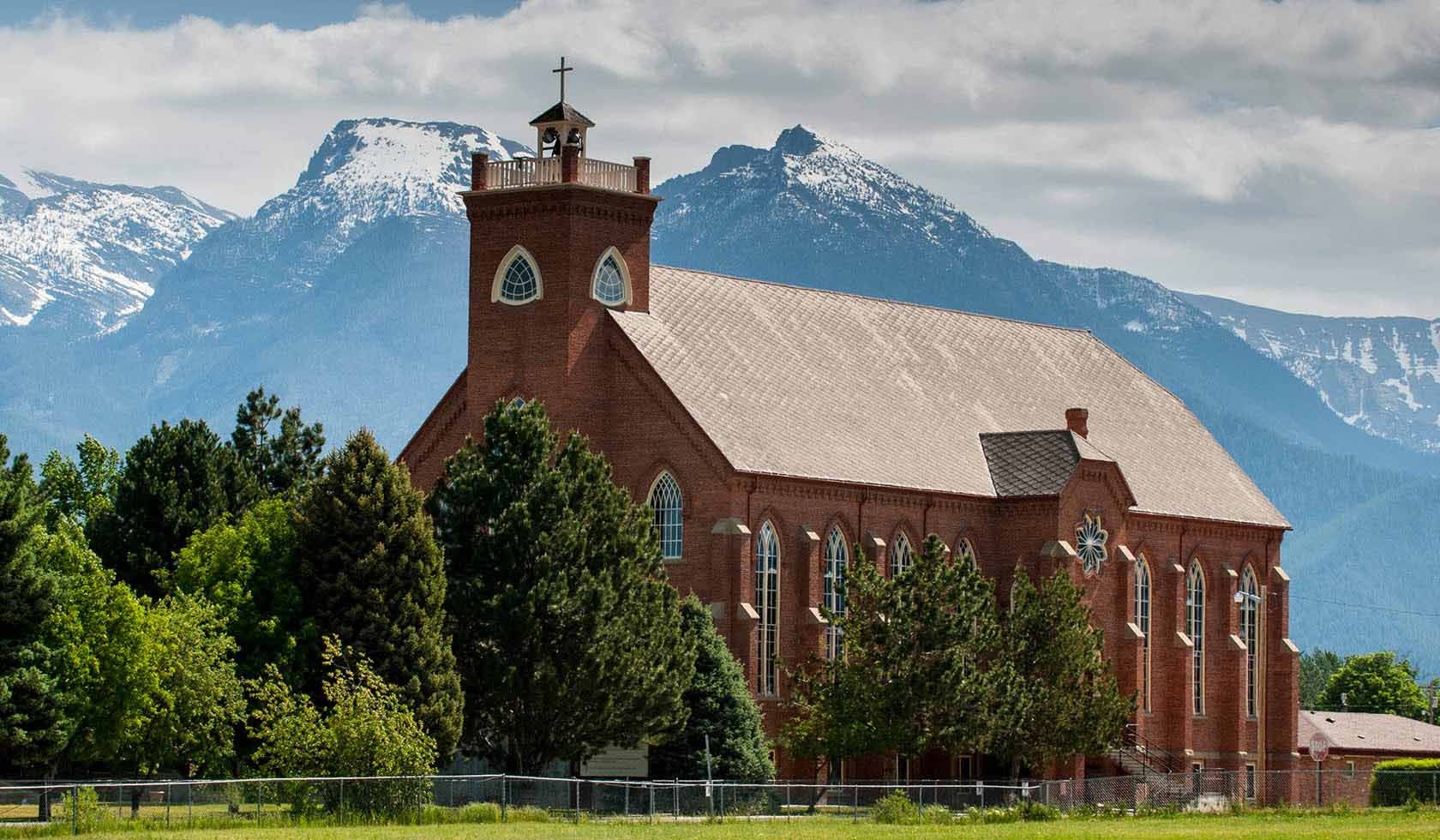
Rising immediately to the east of town, the Mission Mountains form a dramatic backdrop and anchor the Mission Mountains Tribal Wilderness and adjoining federal wilderness. The range offers hiking, alpine lakes, and rugged peaks, with trailheads accessible within roughly 30 to 45 minutes of Saint-Ignatius. The mountains give the town its defining visual identity and provide a constant reminder of the surrounding wild landscape.
Closer to town, the Ninepipe National Wildlife Refuge and its associated reservoir create a wetland complex popular with birdwatchers and photographers. Geese, herons, and a variety of shorebirds use the area seasonally, and the short drive from Saint-Ignatius makes it an easy stop for visitors interested in wildlife beyond the larger game species found at the Bison Range.
Saint-Ignatius is a compelling base for short-term rentals because it combines small-town Montana authenticity with direct access to an unusually rich mix of natural attractions. Guests can spend mornings watching bison graze, afternoons on the water at Flathead Lake, and evenings admiring alpenglow on the Missions, all while staying in a community that remains uncrowded, affordable, and authentically tied to the land. Its location between Missoula and Glacier National Park, paired with reservation-based cultural depth, gives the town year-round appeal that goes well beyond a typical roadside stop.
Want to know if a property in Saint Ignatius is a good investment?
Enter an address to get instant revenue potential and comps.