
Livingston, Montana
Want to see how Livingston compares to other top cities in Montana? Explore all city regulations in Montana. →
Livingston, MT
Generally Investor Friendly
STR Regulations for Livingston, Montana
Overview: Are short-term rentals allowed in Livingston, MT?
- At present (mid‑2025), short‑term rentals (STRs) are not expressly prohibited in the City of Livingston’s zoning code. However, the Livingston City Commission has moved to propose a regulatory framework to bring oversight, safety, and community considerations into balance with STR growth.
- The proposal would introduce a permitting system with an annual fee, a basic safety inspection, and a zoning allowance: STRs would be permitted in all zones except Light Industrial, Capital Facilities, and Planned Unit Developments.
- Two operator categories are contemplated:
- Type 1: Owner resides on the premises during rentals.
- Type 2: Owner does not live on the premises; a primary contact must be within a 45‑minute drive.
- Because these measures are proposed and not yet codified, investors should confirm final ordinance language, fee schedules, and inspection protocols before launch. For background, this initiative is part of a broader local “Housing Action Plan” and parking reform discussion in Livingston and Park County.
How to start a short-term rental business in this market Step 1: Understand current zoning status
- STRs are permitted under the proposed framework in all zones except Light Industrial, Capital Facilities, and Planned Unit Developments. If your property is not in one of those prohibited designations, it is likely eligible for a future permit. Confirm current zoning with the City Planning Department.
Step 2: Complete state-level requirements (Montana)
- Public Accommodation License (Montana Department of Public Health and Human Services, DPHHS)
- Required for STR operators offering lodging to the public.
- Demonstrates access to potable water, wastewater disposal, and hygienic amenities, with cleanliness and maintenance standards.
- Lodging Facility Sales and Use Tax Registration (Montana Department of Revenue)
- Required to collect and remit Montana lodging taxes and any local lodging taxes.
- Guest Registry
- Maintain a guest registry for a minimum of one year after each stay (this is a standard state-level practice; follow any specific data handling guidelines).
- Taxes
- Remit lodging taxes (state and applicable local taxes) and any sales/use tax obligations as prescribed.
Step 3: Comply with proposed city requirements
- Permit Application
- Apply for a City STR permit with the annual fee (amount to be set/finalized by the city).
- Safety Inspection
- A basic safety inspection will be required for all STRs prior to issuance and likely annually thereafter.
- Primary Contact and Distance
- For Type 2 operations, designate a primary contact within a 45‑minute drive.
- Zoning Compatibility
- Confirm STR use is allowed at the property address (not in Light Industrial, Capital Facilities, or Planned Unit Developments under the current proposal).
Step 4: Operations and good neighbor practices
- Guest Safety and Amenities
- Provide potable water, wastewater disposal, shower/laundry access, and maintain high cleanliness/maintenance standards.
- Parking and Community Considerations
- The city is also reviewing parking reforms in the Central Business District, including potential reductions to minimum parking requirements. Plan your parking and guest communications accordingly and monitor final CBD parking standards.
- Insurance
- Carry appropriate liability and property coverage suitable for commercial guest lodging (not typical homeowner’s insurance).
Step 5: Renewals and ongoing compliance
- Maintain permits, licenses, tax filings, inspections, and guest records; monitor updates from the city and state.
Required documents, permits, licenses, and guidelines State (Montana)
- Public Accommodation License (DPHHS)
- Demonstrates potable water, wastewater, hygiene amenities; cleanliness/maintenance.
- Lodging Facility Sales and Use Tax Registration (Montana Department of Revenue)
- Guest Registry (retained for at least one year after each stay)
- Lodging Tax Remittance (state and any local lodging taxes)
City (Livingston – proposed, verify final requirements)
- City STR Permit Application and Annual Fee
- Basic Safety Inspection (pre‑issuance; ongoing per city schedule)
- Zoning Confirmation (STRs allowed except in Light Industrial, Capital Facilities, PUDs)
- Operator Type Designation (Type 1: owner present; Type 2: primary contact within 45 minutes)
County (Park County – as applicable)
- Coordinate with county agencies if the property is outside city limits or if county health services/inspections are involved.
Specific regulations by jurisdiction City of Livingston (proposed; subject to change)
- Allowed STR types:
- Type 1: Owner‑occupied and present during rentals.
- Type 2: Not owner‑occupied; primary contact within a 45‑minute drive.
- Zoning allowance:
- Permitted in all zones except Light Industrial, Capital Facilities, and Planned Unit Developments.
- Safety and compliance:
- Basic safety inspection mandated for all STRs.
- Permit with annual fee (amount to be finalized).
- Parking context:
- City is examining reduced minimum parking requirements in the Central Business District; consider implications for guest parking and operational planning.
Park County
- As of the sources reviewed, county‑level STR regulations were not specified. If operating outside city limits, confirm whether county rules apply (often they mirror or defer to state rules for licensing and taxes).
State of Montana
- Licensing and taxes:
- Public Accommodation License (DPHHS) required for operating an STR.
- Lodging Facility Sales and Use Tax Registration (Montana DOR) required; lodging taxes must be collected/remitted, including local lodging taxes where applicable.
- Guest registry and health/safety:
- Maintain guest registry for at least one year.
- Provide potable water, wastewater disposal, hygienic amenities, and maintain high standards of cleanliness and maintenance.
- Municipal variation:
- Montana allows local governments to adopt additional rules. If final Livingston regulations differ from this proposal, follow city code.
Important note on variation: Montana municipalities (e.g., Bozeman and Missoula) have adopted stricter frameworks, including ban/restrictions on certain STR types in residential districts and additional requirements (registration, zoning, neighbor notifications, inspections, and advertising disclosures). Monitor Livingston’s final adoption to avoid conflicts.
Contact information (phone, email, website where available) City of Livingston (STR permitting and zoning)
- Website: city website appears to be livingstonmontana.org; confirm via city directory
- Phone: Not provided in the sources
- Email: Not provided in the sources
- Notes: Until a dedicated STR office is established, direct planning/permitting inquiries to the City Planning Department and the City Clerk’s office.
Montana Department of Public Health and Human Services (DPHHS) – Public Accommodation Licensing
- Website: mt.gov/dphhs (use DPHHS “Food, Lodging, and Pools” or “Licensure” sections)
- Phone: Not provided in the sources
- Notes: Public Accommodation License is required for STRs and may include health/safety inspections depending on license type.
Montana Department of Revenue (DOR) – Lodging Facility Sales and Use Tax
- Website: mt.gov/revenue (search “Lodging Facility Sales and Use Tax”)
- Phone: Not provided in the sources
- Notes: Register to collect/remit lodging taxes and obtain a tax ID; file per the DOR schedule.
Park County (if operating outside city limits; health/inspection coordination as applicable)
- Website: Not provided in the sources
- Phone: Not provided in the sources
- Email: Not provided in the sources
- Notes: If the property is in the county, coordinate with county health or planning for any additional requirements.
Links to source pages (if available)
- Livingston City Commission proposal discussion (June 2025): Livingston proposes short‑term rental regulations and parking reforms amid community concerns – citizenportal.ai/articles/5021373/Livingston-City/Park-County/Montana/Livingston-proposes-short-term-rental-regulations-and-parking-reforms-amid-community-concerns
- State‑level STR overview and Montana requirements: Proper Insurance – Airbnb Laws in Montana – www.proper.insure/regulations/airbnb-laws-montana/
- Park County Housing Action Plan (March 31, 2022): www.livingstonmontana.org/sites/default/files/fileattachments/city_planning_board/page/8295/2022_06_15_planning_board_agenda.pdf
Practical takeaways for investors
- STRs are likely allowed in Livingston under the proposed framework (subject to final adoption) and are currently permitted under zoning.
- Begin with state compliance: DPHHS Public Accommodation License and DOR lodging tax registration.
- Expect a city permit, basic safety inspection, annual fee, and zoning confirmation.
- If you operate Type 2, ensure a primary contact within a 45 minutes.
- Avoid prohibited zones (Light Industrial, Capital Facilities, Planned Unit Developments).
- Monitor the city’s final adoption of ordinance language, fee schedule, and inspection details, along with any CBD parking adjustments.
If you need, I can transform this into a downloadable PDF checklist or a single‑page compliance poster.
What do Airbnb hosts actually earn in Livingston?
Livingston hosts earn a median $36,488/year with $256 ADR and 59% occupancy.
Top performers pull in $60,095+ per year.
See the full Livingston market breakdownNext step
Found a property in Livingston?
Paste any address and get estimated revenue, cash-on-cash return, and comparable STR performance in under 5 minutes. 3 free analyses per day.
Free brief
Get the free Livingston STR Investment Brief
Revenue data, top neighborhoods, seasonal trends, and the key regulations for Livingston, Montana in one email.
Livingston
Market Saturation Score
Photos of Livingston


Overview of Livingston
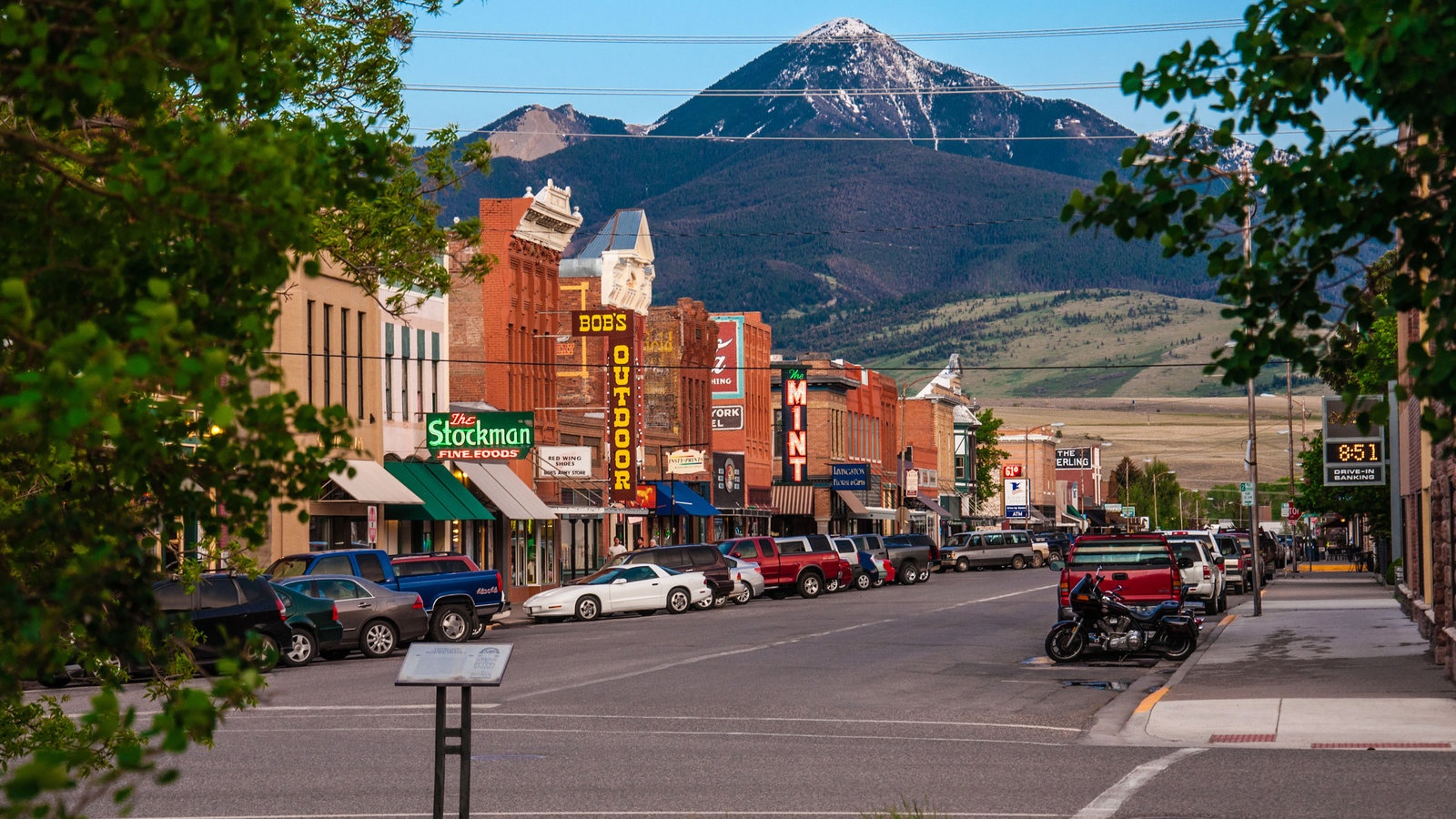
Livingston is a small, characterful town of roughly 8,000 residents set in Park County in southwestern Montana, where the Yellowstone River winds past a historic Main Street lined with old brick storefronts. With its art galleries, fly-fishing outfitters, and a creative community that has long attracted painters, writers, and musicians, the town carries an unhurried, slightly bohemian western character. It is best known as the northernmost gateway to Yellowstone National Park and as a hub for anglers, rafters, and travelers exploring Paradise Valley. The nearest major city is Bozeman, which lies about 30 miles to the west along Interstate 90, roughly a 35-minute drive.
About an hour's drive south of Livingston, the small community of Gardiner marks the historic Yellowstone National Park Roosevelt Arch and the park's North Entrance, making Livingston a natural base for visitors who want to spend their days watching wildlife, hiking, and exploring geyser basins without the crowds that gather around the park's West and South entrances. The scenic route through Paradise Valley along the Yellowstone River is itself a draw, with the Absaroka Range rising to the east and the Gallatin Range to the west, and the Lamar Valley inside the park is considered one of the best places in North America to see wolves and large herds of bison.
A short distance further into Paradise Valley, near the community of Pray, Chico Hot Springs has been welcoming travelers for more than a century with its naturally heated outdoor pools, a rustic lodge, and a calendar of live music. The resort sits about 30 miles south of Livingston, a drive of roughly 40 minutes, and offers visitors a relaxed way to soak after a day of hiking, fishing, or skiing.
Back in town, Livingston's historic downtown is anchored by the Murray Hotel, a 1904 landmark that has hosted ranchers, traveling performers, and Hollywood crews over the decades, and by the Livingston Depot Center, a former Northern Pacific railroad stop that now houses a small museum of regional history. The Yellowstone River, which flows through the heart of town, draws anglers from around the world for its blue-ribbon trout fishing, and the surrounding hills offer hiking, horseback riding, and wildlife viewing within minutes of the city center.
Livingston makes a compelling base for short-term rentals because it offers something rare: genuine small-town Montana character paired with quick access to one of the country's most visited national parks. Visitors can spend their mornings on the river or wandering the galleries and cafes of Main Street, and by afternoon be watching bison in Lamar Valley or soaking in Chico's hot springs. That blend of authentic western town and proximity to world-class outdoor recreation supports demand through the summer road-trip season, the fall angling months, and the winter months when guests arrive to ski nearby Bridger Bowl and explore Yellowstone's snowy interior.
Want to know if a property in Livingston is a good investment?
Enter an address to get instant revenue potential and comps.