
Fort Smith, Montana
Want to see how Fort Smith compares to other top cities in Montana? Explore all city regulations in Montana. →
Fort Smith, MT
Challenging To Investors
STR Regulations for Fort Smith, Montana
Overview of Allowability
- Based on the provided sources, there is no explicit Fort Smith, MT (Montana) regulation cited. Your compliance obligations in Fort Smith will therefore be controlled by Montana state law and any city or county ordinances that may apply.
- Montana is listed among states that have implemented short‑term rental (STR) regulations both statewide and at specific jurisdictions, such as Bozeman (see Proper Insurance’s “State Laws and Regulations for Short‑Term Rentals” page). Absent city‑specific evidence in the provided content, investors should assume that STRs are allowed in Montana subject to state and local registration/licensing, safety, tax, and zoning requirements and that these rules can change rapidly.
How to Start an STR Business in This Market
- Confirm zoning and land use: Identify whether your property is in a residential, mixed‑use, or commercial zone and whether STRs are a permitted use, require a conditional use permit, or are prohibited. Since no city-specific guidance is present for Fort Smith, MT, check with the local planning/zoning department before acquiring or listing a property.
- Register and license: Montana has statewide STR rules and some jurisdictions (e.g., Bozeman) have implemented registration/permit programs. You should assume a business license/registration and an STR permit may be required.
- Safety and inspections: Prepare to meet any health and safety standards (e.g., smoke/CO detectors, fire extinguishers, egress, occupancy limits). Confirm local inspection expectations if applicable.
- Taxes and reporting: Obtain a state tax ID, understand sales/lodging tax obligations, and align your booking/payment processing with state and local tax rules.
- Insurance: Standard homeowners or landlord policies generally exclude short‑term rental exposures (property, liability, and loss of income). Secure specialized STR insurance (e.g., Comprehensive Property, Liability, and Loss of Rental Income coverage) to protect against gaps inherent to platforms like Airbnb/VRBO.
- Platform listing: Confirm that your listing complies with any local advertising or permit-number display requirements.
- Community relations: Even where no specific ordinance is provided, anticipate neighbor concerns about noise, parking, and occupancy; adopt house rules and management practices accordingly.
Required Documents, Permits, Licenses, and Guidelines Based on the content provided:
- No city‑specific licensing checklist is available for Fort Smith, MT.
- Expect to obtain, at minimum:
- Business license/registration with the state and/or city;
- STR registration or permit where required (see statewide and Bozeman references);
- Safety compliance documentation (e.g., verified smoke/CO devices, fire extinguishers);
- Tax registration and a method to collect/remit lodging and sales taxes;
- Proof of appropriate insurance coverage for STR operations;
- Property access and occupancy compliance.
- Required documentation varies by jurisdiction; obtain definitive requirements directly from the local authority in Fort Smith before listing.
Specific Regulations (City/County/State) from the Provided Content
- State‑level: Montana is identified as having implemented STR regulations statewide and in Bozeman. Specific registration/licensing, safety, and insurance requirements may apply.
- City‑level (Fort Smith, MT): The provided content does not include city‑specific regulations for Fort Smith, MT.
- Neighbor jurisdiction context (non‑Montana): The Arkansas House Bill 1445 discussion (Fayetteville, AR) shows a broader regulatory trend—states can preempt local controls on STRs, or cities can impose caps, inspections, and safety rules. This example underscores the importance of verifying whether Fort Smith, MT, has adopted any similar measures or remains under statewide rules only.
Contact Information
- No local authority contact information for Fort Smith, MT, is provided in the sources.
- Recommended next step: Identify and contact the Fort Smith, MT, City Clerk or Planning/Zoning Department and, if applicable, the county planning department, to request the current STR checklist (registration, fees, inspections, taxes, and any caps or zoning restrictions). Ask for a point of contact and any published STR guide or FAQ.
Links to Source Pages
- Montana STR regulations overview (statewide and Bozeman reference): www.proper.insure/regulations/
- Arkansas legislative context for local vs state STR regulation (not Montana; included as a regulatory trend example): www.nwahomepage.com/news/arkansas-bill-could-limit-local-government-short-term-rental-regulations/
- Arkansas tiny home/vehicle regulations (not Montana; unrelated to STRs but shows county variability): www.zookcabins.com/regulations/tiny-home-regulations-in-arkansas/
- Facebook group post (no usable content provided): www.facebook.com/groups/397165520651572/posts/2330991850602253/
Important Notes
- Because the provided sources do not include Fort Smith, MT‑specific regulations, investors must independently confirm local rules (zoning, caps, safety, registration, taxes, and inspections) with the city and county.
- Regulations evolve quickly; re‑verify all requirements with the local authority before acquiring or listing a property.
- Insurance remains critical. Even if local rules are minimal, STRs present unique risk exposures not covered by standard homeowners or landlord policies.
What do Airbnb hosts actually earn in Fort Smith?
Fort Smith hosts earn a median $29,215/year with $216 ADR and 61% occupancy.
Top performers pull in $41,267+ per year.
See the full Fort Smith market breakdownNext step
Found a property in Fort Smith?
Paste any address and get estimated revenue, cash-on-cash return, and comparable STR performance in under 5 minutes. 3 free analyses per day.
Free brief
Get the free Fort Smith STR Investment Brief
Revenue data, top neighborhoods, seasonal trends, and the key regulations for Fort Smith, Montana in one email.
Fort Smith
Market Saturation Score
Photos of Fort Smith
Overview of Fort Smith
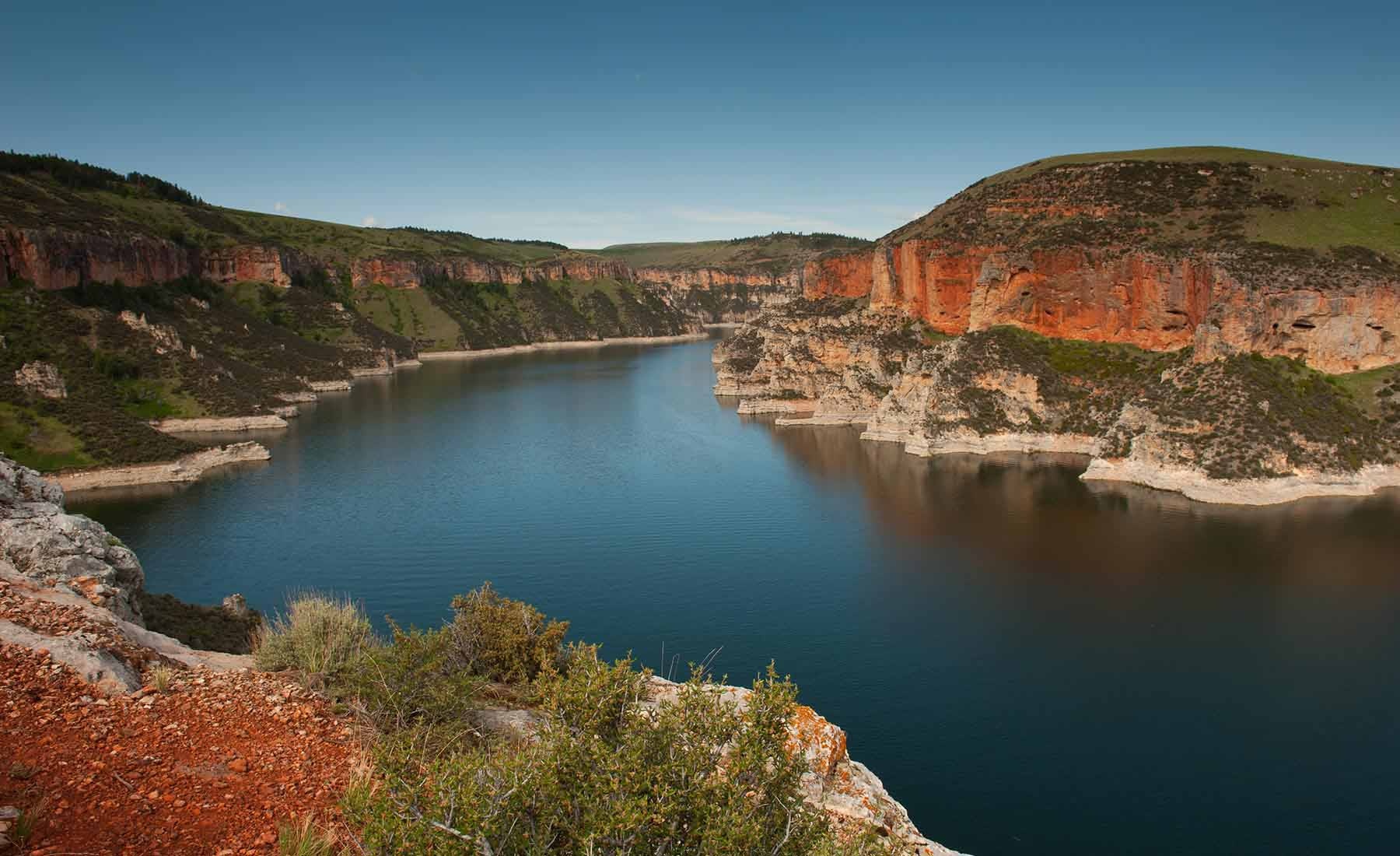
Fort Smith is a small unincorporated community in Big Horn County, in south-central Montana, with a population of only a few hundred year-round residents. Tucked into a scenic stretch of the Bighorn River canyon, it has a quiet, outdoorsy character defined less by its own streets than by the dramatic public lands that surround it. The town serves as a primary gateway to the Bighorn Canyon National Recreation Area and to a stretch of southern Montana that draws anglers, boaters, and history-minded travelers. Fort Smith sits roughly 100 miles southeast of Billings, the nearest major city, and about 40 miles south of Hardin, the Big Horn County seat, with much of the surrounding land belonging to the Crow Indian Reservation.
The marquee draw is the Bighorn Canyon National Recreation area, a National Park Service unit that stretches from the yellowtail Dam southward into Wyoming. The recreation area features sheer canyon walls rising above the Bighorn River, deep blue reservoir waters, and miles of relatively undeveloped shoreline. Visitors come for scenic drives, horseback riding, wildlife viewing, and cool-season hiking, with several launches for boats and kayaks. The Fort Smith-area districts of the park, including the After Bay Lake and portions of the Bighorn Lake reservoir, are only a short drive from the community itself.
The Bighorn River below Yellowtail Dam is one of the most celebrated trout fisheries in the western United States, drawing fly anglers from across the country. Public access points along the river are within minutes of Fort Smith, and the tailwater section is known for its unusually large wild brown and rainbow trout. A handful of local outfitters operate in and around Fort Smith during the fishing season, and the river corridor provides a relaxed, low-key setting that contrasts with the busier trout streams of Montana's better-known mountain valleys.
Roughly an hour to the north, near the town of Crow Agency, the Little Bighorn Battlefield National Monument preserves the site of the 1876 battle between the U.S. Seventh Cavalry and Lakota, Northern Cheyenne, and Arapaho forces. The monument's visitor center, cemetery, and walking trails offer a contemplative stop that pairs naturally with a stay in Fort Smith, especially for travelers interested in the deeper layers of Northern Plains history.
For short-term rental owners, Fort Smith's appeal comes down to geography. It sits at the intersection of a major national recreation area, a world-class trout river, and a region rich in Native American and frontier history, all within a comfortable drive of a sizable population base in Billings. The community's small footprint, dramatic setting, and steady seasonal flow of anglers, boaters, and park visitors make it a natural fit for cabin-style and lodge-style rentals aimed at outdoor travelers who want a quieter base than Montana's more crowded gateway towns.
Want to know if a property in Fort Smith is a good investment?
Enter an address to get instant revenue potential and comps.