
Dayton, Montana
Want to see how Dayton compares to other top cities in Montana? Explore all city regulations in Montana. →
Dayton, MT
Challenging To Investors
STR Regulations for Dayton, Montana
Therefore, this guide will focus on the State of Montana's short-term rental regulations, as they apply universally within the state, including to properties in Dayton, MT, unless specific local ordinances exist.
Important Note: Before proceeding, verify with the local authorities in Dayton, MT to confirm if there are any additional city or county-level regulations that are more restrictive than state law. Contact details for the appropriate Montana state authority are provided below.
Guide to Short-Term Rentals (STRs) in Dayton, Montana (MT)
Overview: Short-Term Rentals (STRs) are allowed in the State of Montana for residential properties. Montana does not have state-level prohibition on STRs. However, they must comply with state laws regarding business licensing, taxes, and health and safety standards. City or county-level rules in Dayton or Lake County may add further requirements. Investors must research and comply with all applicable local ordinances.
I. How to Start a Short-Term Rental Business in Dayton, MT
- Understand the Market: Research the local demand in Dayton, MT. Consider its proximity to Flathead Lake, Glacier National Park, and other regional attractions to gauge tourism potential.
- Prepare Your Property: Ensure the property meets all safety standards required for a residence and commercial lodging. This includes functioning smoke and carbon monoxide detectors, fire extinguishers, egress windows in sleeping areas, and basic safety features. Property standards are often equivalent to those for a Bed & Breakfast.
- Secure Insurance: Obtain appropriate liability insurance for operating a business. A standard homeowners' policy is likely insufficient. Consult with an insurance provider to find coverage that protects against guest injuries, property damage, and business operations.
- Comply with State Business Laws: As an STR operator, you are running a business. This triggers obligations at the state level for taxes and business licensing.
- Research Local Ordinances: This is critical. Contact the Town of Dayton and Lake County directly to determine if they have specific zoning restrictions, permitting requirements, occupancy limits, or other rules for STRs that exceed state-level requirements.
II. Required Documents, Permits, Licenses, and Guidelines
State-Level Requirements:
- Montana Business License: You are required to obtain a Montana business license from the Montana Department of Revenue. This can be done online through their website.
- Tax Registration & Collection:
- Sales & Use Tax: You must register to collect Montana's Lodging Facility Use Tax (a type of sales tax) from guests on behalf of the state. This is typically done when obtaining your business license.
- Lodging Taxes: The state rate for the Lodging Facility Use Tax is currently 4% (as of 2024). You are responsible for collecting this tax from guests and remitting it to the Montana Department of Revenue.
- Local Taxes: Check with Lake County. They may impose an additional local lodging or resort tax. You would be responsible for collecting and remitting this as well.
- Liability Insurance: As mentioned in Section I, point 3. While not explicitly a "permit," it is a critical document for legal protection and may be a requirement on booking platforms.
Potential Local-Level Requirements (Contact Authorities to Verify):
- City of Dayton: The town may have a specific business license or permit for STRs.
- Lake County: The county may have zoning regulations or permitting requirements for STRs located outside the town limits or within specific zoning districts.
- Health Department: Montana's health regulations for lodging establishments may apply. The Lake County Environmental Health Department should be contacted to confirm requirements for sewage disposal, water quality, and food service (if applicable).
III. Specific Regulations for Short-Term Rentals
State of Montana:
- Allowed Practice: Montana state law allows for the short-term rental of residential properties. There is no statewide ban.
- Tax Obligation: Operators must collect and remit the state's 4% Lodging Facility Use Tax.
- Liability: Operators have a duty of care to ensure the property is safe for guests. Failure to do so can result in significant liability.
- Safety Standards: Properties are generally expected to meet the same safety standards as a standard residence, but operators must be diligent in preventing hazards. The state's health and safety laws for lodging facilities may apply depending on the specifics of the operation.
- Zoning: STRs must comply with local zoning ordinances. A property zoned for "residential" may have restrictions on the number of paying guests allowed or other operational limits. This is a key area for local compliance.
Potential Additional Rules (Local Level - Dayton, MT & Lake County):
- Occupancy Limits: There may be a cap on the number of guests per rental.
- Parking Restrictions: Limits on the number of vehicles allowed per property.
- Noise Ordinances: Additional quiet hours or noise level restrictions.
- Permit Caps: A limited number of STR permits may be issued within the town or county.
- Owner Presence: Requirements for the owner to be present during the rental or to live on the property.
It is paramount to contact local authorities to understand these potential local rules.
IV. Contact Information
For State-Level Information (Montana Department of Revenue):
- Phone: (406) 444-6900
- Website: Montana Department of Revenue
- Online Services: Business tax registration and lodging tax information are available through the Department's online portal.
For Local-Level Information (Town of Dayton and Lake County):
- Town of Dayton (Lake County):
- Phone: (406) 849-5362
- Email: [Please search online or contact the Lake County website for current contact information]
- Website: Town of Dayton, MT (Note: The town's official website may not be immediately apparent; it is often part of the county website).
- Lake County (Planning & Zoning):
- Phone: (406) 883-7285
- Website: Lake County, Montana
- This is the most critical contact for verifying zoning and any county-level STR regulations.
V. Links to Source Pages
- Montana Department of Revenue - Business Taxes: https://mtrevenue.gov/businesses/
- Lake County, Montana (Official Website): https://www.lakecounty-mt.gov/
- Reference to Dayton, OR Regulations (NOT Dayton, MT): https://dayton.municipalcodeonline.com/book?type=ordinances#name=7.2.417_Short-Term_Rentals
- Town of Dayton, MT (Potential Unofficial Link, verify): https://www.townofdayton.com/
Final Recommendation for STR Investors: The provided sources contained data for Dayton, Oregon, not Dayton, Montana. Before making any investment or operational decisions in Dayton, MT, you must independently contact the Lake County Planning & Zoning Department and the Town of Dayton offices to confirm all applicable regulations. Compliance at the local level is essential for a successful and legal STR business.
What do Airbnb hosts actually earn in Dayton?
Dayton hosts earn a median $23,563/year with $315 ADR and 63% occupancy.
Top performers pull in $32,630+ per year.
See the full Dayton market breakdownNext step
Found a property in Dayton?
Paste any address and get estimated revenue, cash-on-cash return, and comparable STR performance in under 5 minutes. 3 free analyses per day.
Free brief
Get the free Dayton STR Investment Brief
Revenue data, top neighborhoods, seasonal trends, and the key regulations for Dayton, Montana in one email.
Dayton
Market Saturation Score
Photos of Dayton
Overview of Dayton
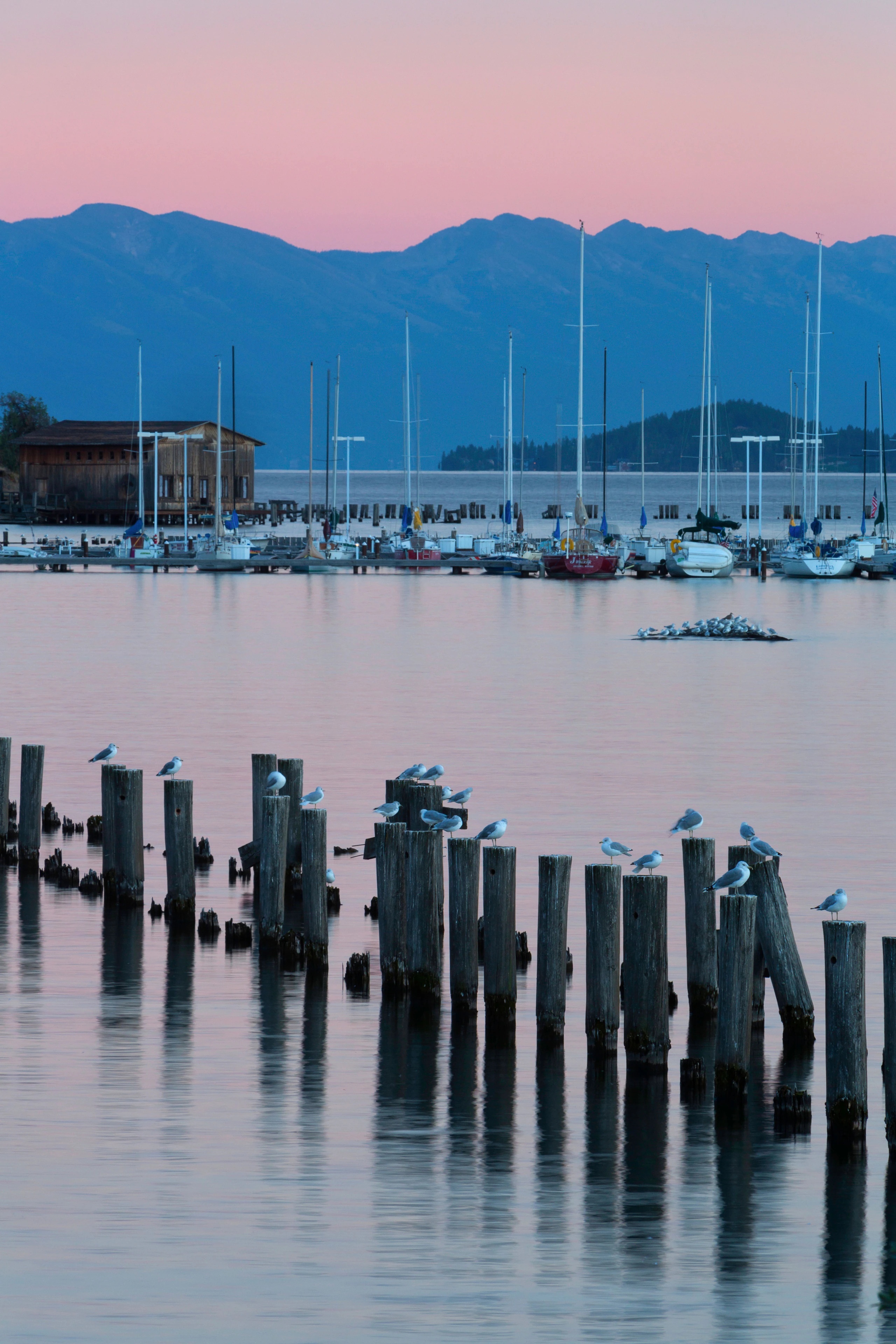
Dayton is a small lakeside community in Flathead County, Montana, situated on the western shore of Flathead Lake in the state's scenic northwest region. With a population of just a few hundred residents, Dayton has the unhurried feel of a rural lakeside settlement, where visitors come primarily to enjoy water-based recreation and the sweeping mountain scenery that surrounds the area. The community serves as a quiet gateway to Flathead Lake, the largest natural freshwater lake in the western United States, and lies about 90 miles north of Missoula, the nearest sizable city.
Flathead Lake is the centerpiece of the region and the primary reason most travelers find their way to Dayton. The lake covers nearly 200 square miles, offering boating, fishing, swimming, and scenic drives along its shoreline. Public boat launches and small lakefront parks are within easy reach of Dayton, and the surrounding cherry orchards and rolling hills give the area a distinctive agricultural character that draws visitors in the summer months.
Just off the shore from Dayton lies Wild Horse Island State Park, one of the largest islands in Flathead Lake and a popular day-use destination accessible by boat. The park is known for its population of wild horses as well as bighorn sheep, deer, and bald eagles, and it offers primitive hiking trails and quiet coves around its rugged interior. Visitors typically reach the island via their own boat or a short chartered ride from a nearby marina, and the experience provides a sense of remoteness unusual for such an accessible destination.
A short drive north of Dayton brings visitors to Bigfork, a small community tucked along the Swan River at the northeastern corner of Flathead Lake. Bigfork has built a reputation as an arts and dining destination, with galleries, restaurants, and a long-running community theater that draws summer audiences. The drive from Dayton typically takes roughly 20 to 30 minutes, making the town a natural complement to a lake-focused stay without the bustle of larger resort areas.
Further north, [Glacier National Park](en.wikipedia.org/wiki/Glacier_National_Park_(U.S.) draws travelers from around the world with its dramatic peaks, remnant glaciers, and the famous Going-to-the-Sun Road. While the park is a longer excursion of roughly 80 to 90 miles from Dayton, many vacationers in the region devote at least a day to exploring its trails, lakes, and mountain vistas before returning to the quieter pace of the Flathead Lake shoreline.
Dayton appeals to short-term rental owners because it combines the seclusion and natural beauty of a small lakeside community with convenient access to some of Montana's most celebrated destinations. Visitors who choose to stay here can spend their mornings on Flathead Lake, their afternoons wandering Bigfork or hiking on Wild Horse Island, and their weekends exploring Glacier National Park, all while enjoying the slower rhythm that defines the Flathead region.
Want to know if a property in Dayton is a good investment?
Enter an address to get instant revenue potential and comps.