
Cut Bank, Montana
Want to see how Cut Bank compares to other top cities in Montana? Explore all city regulations in Montana. →
Cut Bank, MT
Generally Investor Friendly
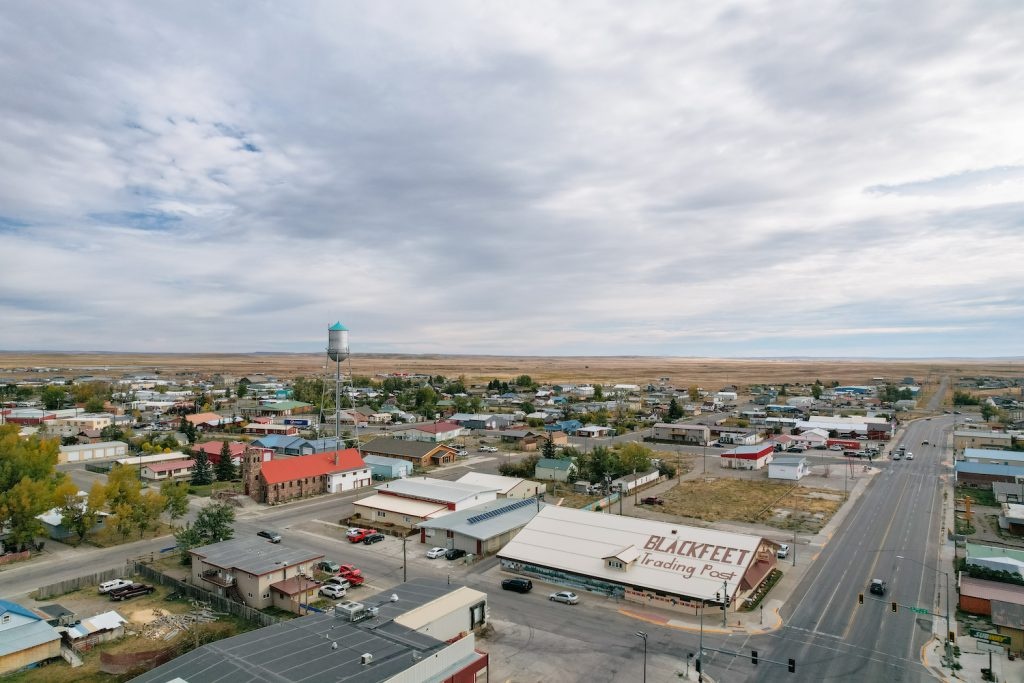
STR Regulations for Cut Bank, Montana
Overview: Are short‑term rentals allowed in Cut Bank?
Short‑term rentals (STRs) are allowed in Cut Bank, MT. The market currently operates under a low‑regulation environment. Based on available data, no licensed STRs were identified among the 26 active listings analyzed, and there were no city‑ or county‑specific permitting programs surfaced in the provided materials. As with any jurisdiction, confirm current local rules with the City of Cut Bank and Glacier County before listing.
What do Airbnb hosts actually earn in Cut Bank?
Cut Bank hosts earn a median $21,288/year with $140 ADR and 66% occupancy.
Top performers pull in $26,432+ per year.
See the full Cut Bank market breakdownHow to start a short‑term rental business in Cut Bank
- Property due diligence
- Verify that the property is in a location where STRs are permissible (no deed restrictions or HOA bans that prohibit transient rentals).
- Confirm zoning allows your intended use. If the property is within city limits, check with the City of Cut Bank. If it’s in the county, check with Glacier County.
- Align your plan with market fit: 2–3 bedroom houses and 4–6 guest capacity properties dominate demand in Cut Bank; the median property hosts about five guests. Larger homes (3–4+ bedrooms) attract families and groups and support higher nightly rates in peak season.
- Setup and preparation
- Provide essential amenities guests expect: smoke alarm, carbon monoxide alarm, Wifi, free parking on premises, kitchen with cooking basics, hangers, and coffee maker. Consider adding popular differentiators such as a fire extinguisher and reliable hot water.
- Optimize for occupancy and pricing: 53.8% of listings use a 1‑night minimum; 26.9% use 2 nights; a small segment targets extended stays with 30+ nights. July is the peak month for revenue and booking lead time; January is the low season.
- Business operations
- Use dynamic pricing to reflect seasonality. Peak months (June–August) support premium rates and longer stays; shoulder season (April, October–November) requires balanced pricing; low season (January, December) benefits from promotions, discounts for extended stays, and flexible cancellation policies.
- Align cancellation policies with market preferences. “Strict” policies are most common (42.3%), followed by “Firm” (23.1%). Strong performance generally correlates with high ratings, quick response times, and robust listing content.
- Guest profile and marketing
- Cut Bank’s STR guest base is overwhelmingly domestic (about 94.5%), with English as the primary language and Spanish as a secondary language. A significant share of guests belongs to the Post‑2000s cohort (Gen Z/Alpha).
- Tailor messaging and amenities to these demographics (fast Wifi, smart home features, local guides for Glacier National Park and local events).
- Revenue benchmarks and setting expectations
- Median annual revenue ≈ $19,335, ADR ≈ $141, occupancy ≈ 45.7%. Best‑performing listings can achieve 80%+ occupancy and ADR above $200.
- Revenue is highly seasonal: peak revenue in July; lowest in January. Manage expectations with conservative underwriting in shoulder/low months and aggressive revenue capture in peak months.
Required documents, permits, licenses, and guidelines
The following summarizes what is likely required or advisable based on Montana rules and typical local requirements. Confirm specifics with the City of Cut Bank and Glacier County.
- Business registration
- Consider registering a Montana Secretary of State entity (if using an LLC or corporation) for liability protection and banking.
- Obtain a Federal EIN (IRS) for tax filings and banking.
- Local business licensing
- Glacier County may require a county business license. Check with the Glacier County Clerk & Recorder.
- Tax obligations (lodging and sales)
- Montana’s lodging taxes apply to short‑term rentals. The Lodging Facility Use Tax is commonly cited at 7%, and Montana also imposes a Lodging (Accommodations) Sales Tax (typically 4%). There may be local option lodging taxes in certain jurisdictions. Consult the Montana Department of Revenue to confirm your lodging tax registration and remittance requirements.
- Federal taxes
- Report STR income on Schedule C (or appropriate business form) and track business expenses. Consider quarterly estimated tax payments.
- Insurance
- Carry appropriate property and liability coverage. Verify whether standard homeowners policies cover transient rentals or if you need a commercial or short‑term rental policy.
- Health and safety
- Install and maintain smoke and carbon monoxide detectors; keep a fire extinguisher; follow basic life‑safety practices for kitchens and outdoor spaces.
- Building and zoning compliance
- Confirm occupancy limits and fire egress standards with local authorities. Ensure the property complies with residential use rules; discuss any plans for expanded capacity or significant modifications.
Important: The provided sources do not document city‑specific licensing in Cut Bank. However, Glacier County may have general business licensing requirements, and state lodging taxes still apply.
Specific regulations: city, county, and state
Given limited city‑specific regulation surfaced in the sources, the following applies:
- City of Cut Bank
- No city‑specific STR licensing or permitting surfaced in the provided content. Verify zoning and any short‑term rental provisions with the City Clerk or Planning Department.
- Glacier County
- The county likely administers general business licensing and zoning. Confirm any STR or lodging‑related requirements with the Glacier County Clerk & Recorder and Planning Department.
- State of Montana
- STRs are subject to Montana lodging taxes. Per the Montana Department of Revenue: the Lodging Facility Use Tax (LFUT) applies to short‑term accommodations and is generally borne by guests. Hosts must register, collect, and remit lodging taxes.
- Background context: the University of Montana’s study on STR impacts (2015–2020) notes significant growth in STR activity statewide and highlights local debates over housing availability and neighborhood impacts; Flathead County and Whitefish represent examples of municipalities that regulate where STRs can operate within their jurisdictions. Use this to understand the broader policy climate and the importance of staying current with evolving rules.
Contact information (phone, email, website)
Because specific officer names were not provided, the following departments are the appropriate first points of contact.
- City of Cut Bank (City Hall)
- Phone: (406) 873‑2515
- Address: 15 E Main St, Cut Bank, MT 59427
- Website: cityofcutbank.com
- Glacier County (Clerk & Recorder and Planning/Building)
- Phone: (406) 873‑3600
- Address: 512 E Main St, Cut Bank, MT 59427
- Website: glaciercountymt.gov
- Montana Department of Revenue (Lodging Tax Registration)
- Phone: (406) 444‑6900
- Website: mtrevenue.gov
Source pages and links
- Cut Bank, MT short‑term rental market overview and metrics: www.airroi.com/report/world/united-states/montana/cut-bank
- University of Montana STR impact study (2015–2020): scholarworks.umt.edu/itrr_pubs/418/
- Montana Department of Revenue (lodging tax information): mtrevenue.gov
- City of Cut Bank official website: cityofcutbank.com
- Glacier County official website: glaciercountymt.gov
Notes and caveats
- The sources do not identify a city‑specific STR license or permit program for Cut Bank; nonetheless, check zoning and business licensing with the city and county before listing.
- Montana lodging taxes apply to STRs; you may need to register and collect lodging taxes even if no local STR license is required.
- Regulations can change. Verify requirements before investing and periodically thereafter.
Next step
Found a property in Cut Bank?
Paste any address and get estimated revenue, cash-on-cash return, and comparable STR performance in under 5 minutes. 3 free analyses per day.
Free brief
Get the free Cut Bank STR Investment Brief
Revenue data, top neighborhoods, seasonal trends, and the key regulations for Cut Bank, Montana in one email.
Cut Bank
Market Saturation Score
Photos of Cut Bank


Overview of Cut Bank
Cut Bank is the county seat of Glacier County in north-central Montana, with a population of approximately 3,000 residents. Set on the high plains where the Great Plains give way to the eastern slopes of the Rockies, the town has the feel of a small, working agricultural and energy community, and it serves as a quiet eastern gateway to one of America's most celebrated national parks. The nearest major US city is Great Falls, located roughly 130 miles to the southeast along US Highway 2 — a drive of about two hours.
The most prominent draw in the region is Glacier National Park, whose eastern approaches are accessible from Cut Bank. The Two Medicine area of the park, known for its scenic lakes, waterfalls, and relative solitude compared to the busier west side, can be reached by driving southwest about 35 miles to East Glacier Park Village, which itself functions as a charming historic resort community and a useful staging ground for excursions. From East Glacier, the St. Mary entrance — the eastern terminus of the famous Going-to-the-Sun Road — lies another 30 miles or so to the north.
To the east of Cut Bank, the town of Browning serves as the seat of the Blackfeet Nation, and visitors will find the Museum of the Plains Indian there, a federally operated gallery and cultural center featuring historic and contemporary works from Northern Plains tribes. The drive from Cut Bank to Browning is approximately 35 miles, and the museum provides a meaningful cultural counterpoint to the natural grandeur of the surrounding landscape.
West of Cut Bank, the Rocky Mountain Front rises sharply from the prairie, marking one of the most abrupt transitions from plains to mountains anywhere in the lower 48. The area is a haven for wildlife watching, with bighorn sheep, elk, mountain goats, and grizzly bears frequenting the forested slopes, and several Forest Service roads and trailheads branch off Highway 2 within an hour's drive of town. Hikers, photographers, and anglers are drawn to the front throughout the warmer months for its combination of accessibility and wild character.
Cut Bank's appeal as a base for a short-term rental is closely tied to its position along the well-traveled corridor between the Great Plains and the mountains. Travelers looking to experience Glacier National Park without paying the higher lodging prices found inside the park or in West Glacier will find Cut Bank a practical and affordable alternative, and the town's authentic small-town Montana character adds a layer of local flavor that the larger gateway communities often lack.
Want to know if a property in Cut Bank is a good investment?
Enter an address to get instant revenue potential and comps.