
Butte, Montana
Want to see how Butte compares to other top cities in Montana? Explore all city regulations in Montana. →
Butte, MT
Challenging To Investors
STR Regulations for Butte, Montana
Overview: Are Short-Term Rentals Allowed in Butte, MT?
Yes, short-term rentals are explicitly allowed in Butte, Montana. Short-term rentals operate under Butte-Silver Bow County jurisdiction and are governed through a special use permit system. The local government has established a framework that permits STRs while maintaining neighborhood compatibility through regulatory oversight.
The city-county consolidated government of Butte-Silver Bow has implemented a structured approval process that requires multiple departmental approvals, including planning, public health, and business licensing. While the STR industry is permitted, it operates under specific conditions and regulations designed to balance economic opportunities with community concerns.
What do Airbnb hosts actually earn in Butte?
Butte hosts earn a median $19,198/year with $141 ADR and 53% occupancy.
Top performers pull in $27,650+ per year.
See the full Butte market breakdownStarting a Short-Term Rental Business in Butte, MT
Step-by-Step Process
Step 1: Initial Consultation Contact the Butte-Silver Bow Planning Department to discuss your property's suitability and zoning requirements. Early consultation helps identify potential challenges andstreamlines the approval process.
Step 2: Property Assessment Ensure your property meets zoning requirements and can accommodate the operational standards for short-term rentals, including parking, signage limitations, and neighborhood compatibility.
Step 3: Application Submission Submit a special use permit application to the Zoning Board of Adjustments. The board typically has up to 15 days to deliberate on applications but may expedite decisions based on case complexity and board workload.
Step 4: Public Review Process Be prepared for potential community input during the approval process. The board considers neighborhood concerns, particularly regarding parking and traffic impacts.
Step 5: Operational Implementation Upon approval, implement all required conditions and maintain ongoing compliance with all applicable regulations.
Timeline Expectations
- Standard Processing: Up to 15 days for board deliberation
- Special Use Permit Process: May take up to 45 days (one and a half months) when additional zoning analysis is required
- Business License: Typically processed within 2-3 business days once other approvals are secured
Required Documents, Permits, Licenses, and Guidelines
Core Permits and Licenses
Special Use Permit
- Required for all short-term rental operations in residential zones
- Reviewed by the Zoning Board of Adjustments
- Subject to public hearing and community input
- May include specific conditions based on neighborhood characteristics
Business License
- Annual license fee: $35
- Issued by Butte-Silver Bow County
- Required before operational commencement
- Must be renewed annually
Public Accommodation License
- Required under Montana State law
- Issued by the Department of Public Health and Human Services
- Ensures compliance with public health and safety standards
- Subject to ongoing regulatory oversight
Public Health Department Approval
- Property inspection required
- Ensures compliance with health and safety regulations
- May require additional improvements to meet standards
Supporting Documentation Requirements
Property Documentation
- Proof of property ownership or lease agreement
- Site plan showing parking arrangements
- Property survey if boundaries are unclear
Operational Plans
- Guest management procedures
- Noise control measures
- Emergency contact information
- Cleanup and maintenance protocols
Compliance Documentation
- Zoning compliance verification
- Health department clearance
- Business registration completion
Specific Regulations for Short-Term Rentals in Butte-Silver Bow County
Zoning and Location Requirements
Permitted Zoning Districts Short-term rentals are permitted in residential zones subject to special use permit approval. The Zoning Board evaluates each application based on:
- Neighborhood compatibility
- Parking availability
- Traffic impact considerations
- Signage requirements and limitations
Residential Character Preservation Properties must maintain their residential appearance. While signage is permitted, it should be minimal and functional, displaying the address to help visitors locate the property without creating visual clutter in residential neighborhoods.
Operational Standards
Parking Requirements Properties must provide adequate parking for guests without creating neighborhood disruptions. The planning department evaluates parking plans during the special use permit review process.
Noise and Nuisance Control Operators are responsible for managing guest behavior to prevent neighborhood disturbances. Violations of city ordinances or permit conditions may result in civil penalties or permit revocation.
Signage Limitations
- Address identification is required
- Excessive signage is discouraged in residential areas
- Signage should blend with neighborhood character
Enforcement and Compliance
Violation Consequences
- Civil penalties for ordinance violations
- Potential permit revocation for repeated or serious violations
- Community members have right to challenge approvals in district court within 30 days
Ongoing Compliance Requirements Operators must maintain compliance with all permit conditions and local ordinances throughout the rental operation period.
Montana State-Level Regulations for Short-Term Rentals
Public Accommodation Requirements
Licensure and Regulation Montana State law requires public accommodation establishments, including short-term rentals, to obtain licensure under Montana Code Annotated Title 50, Chapter 51. This applies to all lodging facilities providing temporary accommodation to transient guests.
Health and Safety Standards Short-term rentals must comply with Montana's Public Sleeping Accommodations Rules (ARM 37.111.1), which establish minimum standards for:
- Guest safety and emergency procedures
- Sanitation and hygiene requirements
- Fire safety and evacuation protocols
- Water supply and waste disposal systems
Plan Review Requirements Plans for public accommodations must be reviewed by county sanitarians. Operators should contact their local environmental health department to obtain plan review applications and requirements.
Bed and Breakfast Establishment Standards If operating as a bed and breakfast, properties must comply with specific rules under ARM 37.111.3, which address:
- Food service regulations
- Guest room specifications
- Common area requirements
- Owner/operator qualifications
Tax Obligations
Transient Occupancy Tax While specific tax rates are not detailed in the provided sources, short-term rental operators should expect to collect and remit transient occupancy taxes according to local requirements. Contact the Butte-Silver Bow Treasurer's Office for current tax obligations.
Contact Information
Primary Local Authorities
Butte-Silver Bow Planning Department
- Phone: (406) 497-6250
- Email: permits@bsb.mt.gov
- Role: Special use permit applications, zoning compliance, general planning inquiries
Butte-Silver Bow Health Department
- Phone: (406) 497-5020
- Email: jrolich@bsb.mt.gov
- Role: Public health approvals, inspections, accommodation licensing
Butte-Silver Bow Treasurer's Office
- Phone: (406) 497-6310
- Email: mbumgarner@bsb.mt.gov
- Role: Business licensing, tax collection, financial compliance
State-Level Contacts
Montana Department of Public Health and Human Services
- Website: dphhs.mt.gov/publichealth/EHFS/PublicAccommodations/index
- Environmental Health and Food Safety Section
- Role: State public accommodation licensing, health standards oversight
County Environmental Health Department
- Contact through local health department for plan reviews and state compliance
- Role: Local implementation of state health and safety standards
Source References
- Butte-Silver Bow Zoning Board of Adjustments meeting documentation, June 17, 2025 - View full meeting
- Montana Department of Public Health and Human Services Public Accommodations - dphhs.mt.gov/publichealth/EHFS/PublicAccommodations/index
- NBC Montana "Licenses required for vacation rentals in Butte" - nbcmontana.com/news/local/licenses-required-for-vacation-rentals-in-butte
Important Note: This guide is based on publicly available information as of the documented sources. Regulations and requirements may change, and investors should verify current requirements with the appropriate authorities before proceeding with any short-term rental investment or operation.
Next step
Found a property in Butte?
Paste any address and get estimated revenue, cash-on-cash return, and comparable STR performance in under 5 minutes. 3 free analyses per day.
Free brief
Get the free Butte STR Investment Brief
Revenue data, top neighborhoods, seasonal trends, and the key regulations for Butte, Montana in one email.
Butte
Market Saturation Score
Photos of Butte


Overview of Butte
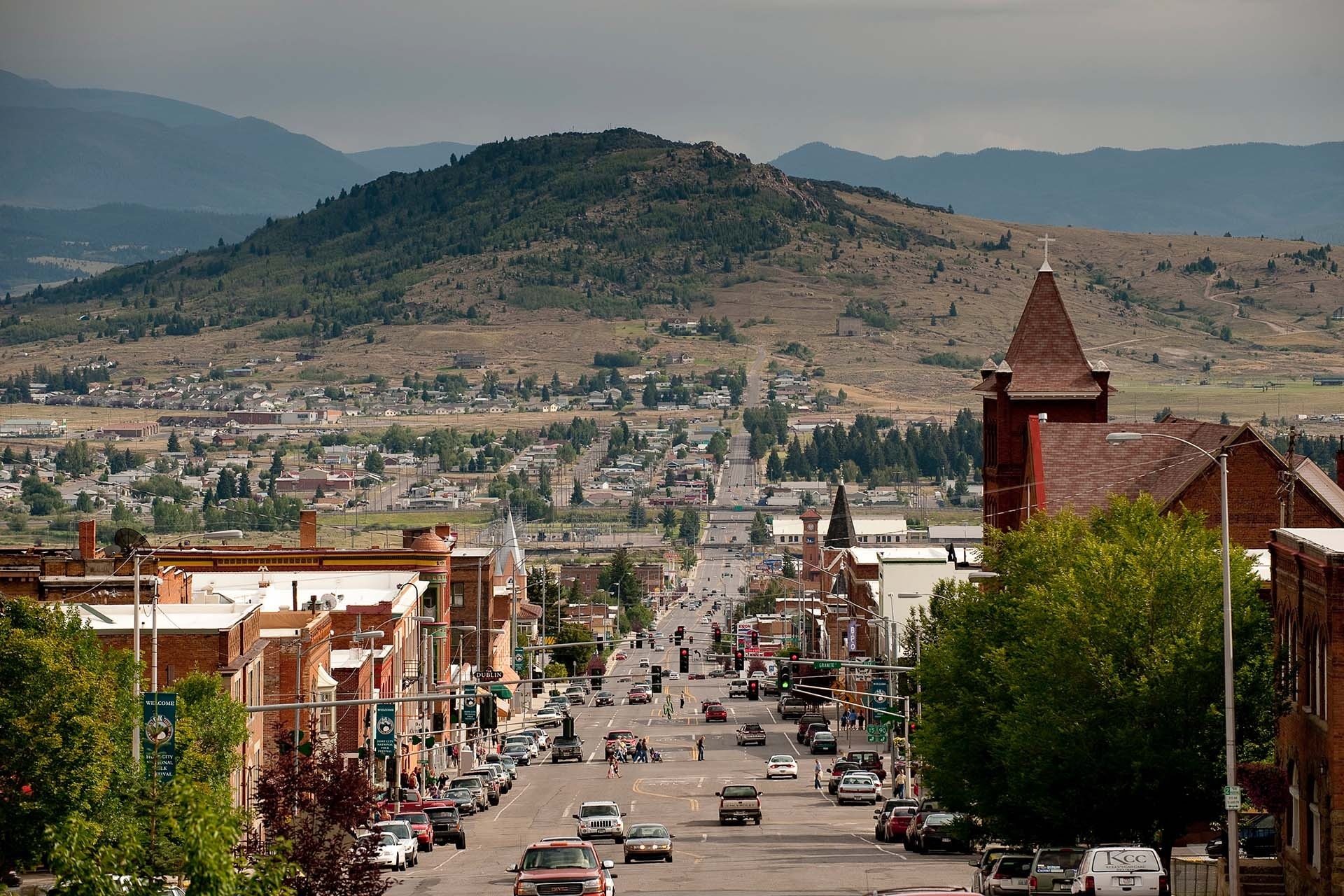
Butte, Montana sits in the southwestern part of the state, in Silver Bow County, with a population of approximately 34,000 residents. Long nicknamed "The Richest Hill on Earth" for the extraordinary copper deposits extracted from the surrounding hills, the city carries the layered character of a former mining boomtown whose fortunes are still visible in its ornate Victorian-era architecture, surviving headframes, and a downtown listed on the National Register of Historic Places. Butte functions as a natural base for travelers exploring southwest Montana's outdoor landscapes and historical sites, and it sits at the junction of Interstates 15 and 90, roughly 70 miles southwest of Helena, the state capital, and about 120 miles southeast of Missoula.
A short drive from downtown, the Berkeley Pit is one of the most visited spots in the region: a vast former open-pit copper mine that operated from 1955 until 1982 and now holds a strikingly colored acidic lake. An observation deck provides views of the mile-wide pit along with explanations of the area's mining geology, and the site functions almost as a monument to the industry that built the city.
The World Museum of Mining brings that industrial past to life at the Orphan Girl Mine, just north of the city center. The museum occupies a cluster of preserved buildings and offers an underground mine tour, while the surrounding "Hell Roaring Gulch" recreates a frontier mining town from dozens of relocated historic structures, making it a favorite stop for visitors who want a hands-on sense of the work and daily life that shaped Butte.
Up on the Continental Divide east of town, Our Lady of the Rockies rises 90 feet above the ridgeline overlooking the city. Built by volunteers in the 1980s as a tribute to mothers, it has become one of the most photographed landmarks in the region and is accessible by guided tour from late spring through fall.
To the west, the Big Hole National Battlefield, a Nez Perce War site managed by the National Park Service, sits about a hundred miles from town and pairs naturally with a Butte stay as a day trip. Closer to the city, the surrounding Beaverhead-Deerlodge National Forest offers direct access to hiking, fishing, and camping around Georgetown Lake, roughly 30 miles west of downtown.
Butte's appeal for short-term rental guests lies in the unusual combination of an unusually dense and authentic mining-heritage downtown, mountain scenery that begins almost at the city limits, and a central location within reach of Glacier and Yellowstone national parks. Owners can market to road-trippers passing through on I-15 or I-90, history-focused travelers, and outdoor visitors who want a more characterful base than the larger cities of Helena or Missoula.
Want to know if a property in Butte is a good investment?
Enter an address to get instant revenue potential and comps.