
Tracy, Minnesota
Want to see how Tracy compares to other top cities in Minnesota? Explore all city regulations in Minnesota. →
Tracy, MN
Generally Investor Friendly
STR Regulations for Tracy, Minnesota
Overview: Are Short-Term Rentals Allowed in Tracy, Minnesota?
Tracy’s publicly available city documents do not contain an explicit ordinance that either expressly permits or prohibits short-term rentals (STRs). The City Charter and budget materials make clear that Tracy operates as a home rule city with broad police powers (see City Charter Sections 1.02 and 8.01), and that lodging-related activity is commonly treated as a licensed activity in Minnesota cities. However, none of the provided pages describe a specific STR licensing scheme, zoning allowances, or restrictions for Tracy. Until the City adopts specific STR rules, STR operators should assume standard pathways apply: zoning and land-use compliance, potential lodging/rental licensing, health and safety standards, and adherence to Minnesota’s uniform Dwelling Code. In practice, many Minnesota municipalities regulate STRs through zoning (principal vs. nonprincipal STR, minimum stay, occupancy caps), business licensing, and inspection requirements. Investors should verify local zoning, licensing, and safety requirements with the City before listing or operating.
Bottom line for investors: If you plan an STR in Tracy, confirm with the City that your intended use is a permitted use in the subject property’s zoning district and whether any lodging/rental permit, inspection, or registration applies.
What do Airbnb hosts actually earn in Tracy?
Tracy hosts earn a median $19,918/year with $151 ADR and 52% occupancy.
Top performers pull in $26,090+ per year.
See the full Tracy market breakdownHow to Start a Short-Term Rental Business in Tracy
Step-by-step practical approach based on Tracy’s municipal structure and typical Minnesota requirements:
- Confirm zoning and land-use status
- Verify the property’s current zoning (Residential, Commercial, etc.) with the City’s Planning & Zoning or Community Development department. Many Minnesota cities limit STRs to certain districts or require conditional use permits.
- If the STR will be your primary residence, some jurisdictions allow fewer restrictions than nonprincipal STRs. Confirm Tracy’s policy.
- Complete any required licensing/registration
- While no STR-specific licensing is shown in the provided pages, Tracy’s Licensing & Permits page is the place to start. If lodging or “rental dwelling” rules apply, you will likely submit applications, fees, and possibly background checks.
- Meet building, housing, and fire safety requirements
- Minnesota’s Uniform Dwelling Code governs life-safety elements (egress, smoke/CO detectors, structural, electrical, mechanical, and plumbing). Tracy Code Enforcement and the Building Department oversee local inspections. Expect to pass standard safety inspections common to lodging or rental properties.
- Comply with state-level Minnesota requirements
- Register and collect applicable state sales and local lodging taxes (e.g., if renting lodging to guests). Registration is done through the Minnesota Department of Revenue.
- If operating as a business entity, choose the structure (LLC, corporation, etc.) and meet Minnesota filing and tax obligations.
- Establish operations
- Draft house rules, post emergency contact information, and keep occupancy within approved limits.
- Maintain records of permits, inspections, revenue, taxes, and guest communications.
- If you employ staff or contract services, ensure proper payroll, licensing, and insurance coverage.
Required Documents, Permits, Licenses, and Guidelines
City-level
- Zoning confirmation or conditional use approval (if required for STR use)
- Business or lodging/rental license application (if applicable in Tracy)
- Building and fire safety inspection approvals (as applicable)
- Proof of property ownership or authorization
- Local contact information posted for guests
- Emergency procedures and safety documentation
State-level (Minnesota)
- Sales and lodging tax registration and filings (if renting lodging)
- Compliance with Minnesota Uniform Dwelling Code and local housing/health standards
- Business entity registration (if applicable) and state tax registrations
- Workers’ compensation and employer obligations (if hiring employees)
Notes for investors:
- Where Minnesota cities regulate STRs, requirements commonly include a valid business license, property registration, occupancy limits, posting requirements, and annual inspections. Tracy has not published STR-specific rules in the provided pages; confirm directly with the City.
Specific Regulations: Tracy, Lyon County, and Minnesota
Tracy (city) level
- The City operates under a home rule charter granting broad powers to regulate for public safety, health, and welfare (City Charter Section 1.02). Public improvements and local regulations are authorized by Charter Section 8.01.
- No STR-specific zoning, licensing, or operational rules appear in the provided materials. Tracy’s Licensing & Permits, Code Enforcement, and Building Departments are the likely entry points for approvals.
- Municipal authority: City Council (Mayor-Council plan) can adopt ordinances and regulations; see City Charter Chapters II–III.
Lyon County (county) level
- The provided materials contain no county-level STR rules. County regulations typically address health, septic systems, and land use in unincorporated areas, not city zoning inside municipal boundaries. Confirm with Lyon County if your property is outside city limits.
State level (Minnesota)
- Lodging taxes and sales tax: Typically collected by operators of lodging; register and file with the Minnesota Department of Revenue.
- Building/housing: Minnesota Uniform Dwanding Code applies to residential structures used as lodging; life-safety requirements govern smoke and CO detection, egress, and systems compliance.
- Business operations: Standard Minnesota requirements for entity formation, tax accounts, and employer obligations apply to STR businesses.
- Municipal home rule authority: Minnesota statutes allow cities to license, inspect, and regulate STRs. If Tracy adopts STR rules in the future, they would be published as ordinances and placed on the City’s website.
Reminder for investors: Minnesota municipalities often vary on STR rules (principal vs. nonprincipal, minimum-stay, occupancy caps, inspection cycles, and permit renewals). Always verify the current local ordinance before investing or listing.
Contact Information (Local Authority in Charge of STRs)
Given the absence of STR-specific listings, start with the City’s main departments. Ask to be directed to the department that handles lodging/rental licensing or planning/zoning for STRs.
-
City Hall (primary municipal contact)
- Address: 336 Morgan Street, Tracy, MN 56175
- Phone: (507) 629-5528
- Office Hours: Monday–Friday, 8:00 a.m.–4:00 p.m.
-
City Departments (use the website to route to the correct department)
- Licensing & Permits: Start here for any required permits or licenses
- Building: Building permits and inspections
- Code Enforcement: Property standards and compliance
- Community Development: Zoning, planning, and development inquiries
- City Clerk/Administrator: General administrative questions and council/ordinance information
Links to Source Pages
- City of Tracy official website (home): tracymn.gov/
- City Charter (Tracy home rule charter): tracymn.gov/city-charter
- City Code (municipal ordinances, codes, and policies): tracymn.gov/code
- Building (permits and inspections): tracymn.gov/building
- Planning & Zoning (zoning confirmation and land use): tracymn.gov/index.asp?SEC=8B899713-C28D-4BB4-A2C7-452E2C39F01A
- Licensing & Permits (permits and licensing entry point): tracymn.gov/licensing
- Code Enforcement (housing and property standards): tracymn.gov/code-enforcement
Investor guidance: Contact the City to confirm the current zoning district for your property, whether STR use is permitted or requires a conditional use permit, whether lodging or rental registration is required, and the inspection standards that apply. If your property is outside city limits, verify Lyon County requirements as well. Monitor the City’s code and ordinance pages for future STR-specific regulations.
Next step
Found a property in Tracy?
Paste any address and get estimated revenue, cash-on-cash return, and comparable STR performance in under 5 minutes. 3 free analyses per day.
Free brief
Get the free Tracy STR Investment Brief
Revenue data, top neighborhoods, seasonal trends, and the key regulations for Tracy, Minnesota in one email.
Tracy
Market Saturation Score
Photos of Tracy
Overview of Tracy
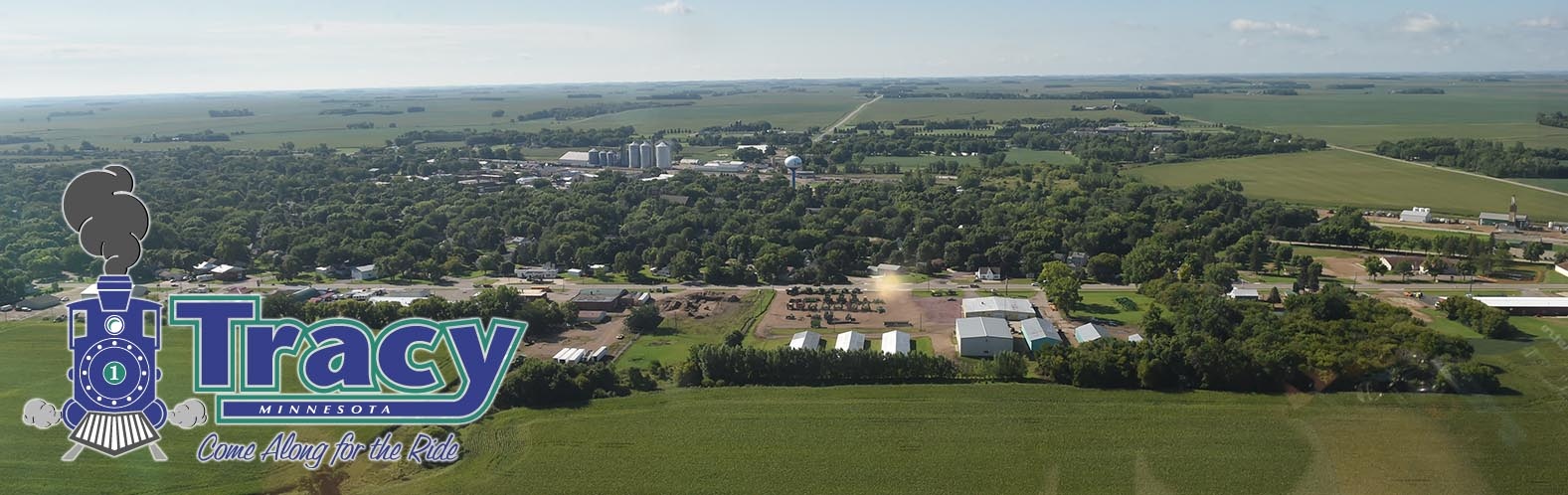
Tracy is a small prairie city in Lyon County, in the southwestern corner of Minnesota, with a population of approximately 2,000 residents. The town has a quiet, agricultural character, surrounded by the flat fields and big skies that define this stretch of the Minnesota prairie. It serves as a convenient stopover point for travelers exploring southwestern Minnesota and the nearby lake country, and it sits roughly 90 miles northeast of Sioux Falls, South Dakota, the nearest sizable metropolitan area.
Just a short drive southeast of Tracy, in the same county, Camden State Park offers one of the region's most appealing outdoor escapes. Set along the Redwood River, the park features wooded bluffs, a small lake, hiking trails, a swimming beach, and family-friendly campgrounds. From Tracy, the park is about a 20-minute drive, making it an easy day trip for visitors who want to experience the contrast between the open prairie and the river valley's tall trees.
A bit farther south, in neighboring Murray County, Lake Shetek State Park sits on the shores of one of the largest lakes in southwestern Minnesota. The park is roughly a 45-minute drive from Tracy and draws visitors for fishing, boating, and birdwatching, as well as a segment of the paved trails that circle the lake. The lake itself is part of the Shetek chain and has long been a popular summer destination for families from across the region.
To the north of Tracy, the small town of Walnut Grove holds a particular claim to fame as the adopted hometown of the Ingalls family from the beloved "Little House" books, a connection celebrated through local historical attractions tied to Laura Ingalls Wilder. The drive from Tracy to Walnut Grove is roughly 40 minutes, and fans of the books and the long-running television adaptation regularly make the journey to step into the landscape that inspired the stories.
Tracy's appeal as a base for short-term rentals comes from its position at the intersection of the wide-open prairie and a cluster of distinctive regional attractions. Guests who stay in the area can easily pair a visit to the Ingalls country in the north with a day on the water at Lake Shetek to the south, or spend an afternoon hiking in the wooded terrain of Camden State Park. With its small-town atmosphere, central location within Lyon County, and proximity to the broader southwestern Minnesota recreation corridor, Tracy offers travelers a relaxed and authentic slice of the prairie that feels a world away from the busier corners of the state.
Want to know if a property in Tracy is a good investment?
Enter an address to get instant revenue potential and comps.