
Montevideo, Minnesota
Want to see how Montevideo compares to other top cities in Minnesota? Explore all city regulations in Minnesota. →
Montevideo, MN
Very Investor Friendly
STR Regulations for Montevideo, Minnesota
Overview
Short-term rentals are allowed in Montevideo, MN. Montevideo operates under general Minnesota state regulations for lodging businesses and imposes a 3% local lodging tax on short-term rentals of 30 days or less. There are no city-specific short-term rental permits, licenses, or regulations identified in the provided sources, making this a relatively straightforward market for STR investors following state general lodging tax requirements.
What do Airbnb hosts actually earn in Montevideo?
Montevideo hosts earn a median $19,058/year with $121 ADR and 50% occupancy.
Top performers pull in $25,421+ per year.
See the full Montevideo market breakdownHow to Start a Short-Term Rental Business in Montevideo
Market Entry Strategy
Montevideo presents an interesting opportunity for STR investors. Based on the housing assessment data, the city shows several positive indicators:
- Stable Population: While modest decline between 2010-2018 (-1.97%), projections show slight growth by 2023 (+0.54%)
- Employment Stability: The city serves as the regional hub for Chippewa County with major employers including Montevideo Schools (500 employees), Jenni-O Turkey Processing (329 employees), and Chippewa County Hospital (200 employees)
- Limited Rental Supply: The assessment identified a shortage of quality rental properties, particularly in higher price ranges, with only a 1.3% vacancy rate in surveyed apartments
- Strategic Location: Montevideo sits at the junction of U.S. Highways 59 and 212 and Minnesota Highways 7 and 29, serving as a regional retail center
Business Setup Process
- Property Acquisition: Consider the existing housing stock conditions - 5.4% of homes are dilapidated, 14.6% require major repairs, and 29.4% need minor repairs
- Business Registration: Register your business following standard Minnesota requirements
- Tax Registration: Obtain necessary tax IDs for collecting and remitting lodging taxes
- Insurance: Secure appropriate liability and property insurance coverage
Required Documents, Permits, Licenses, and Guidelines
State Requirements (General Minnesota Law)
Based on the provided sources, Minnesota operates under a general framework for lodging businesses:
- Business Registration: Standard Minnesota business registration requirements
- Tax Registration: Minnesota tax ID numbers for lodging tax collection and remittance
- Sales Tax Registration: State sales tax registration may be required depending on the business structure
Local Requirements (Montevideo-Specific)
No specific city permits or licenses for short-term rentals were identified in the provided documents. Montevideo follows the general Minnesota state framework for lodging businesses.
Tax Obligations
Local Lodging Tax: Montevideo imposes a 3% lodging tax under Minnesota Statutes section 469.190. This tax applies to:
- Rentals of 30 days or less for lodging
- Hotels, motels, rooming houses, tourist courts, or resorts
- The tax must be collected and remitted to the city
- 95% of revenue must be used for tourism promotion
Specific Regulations for Short-Term Rentals
City Level (Montevideo)
No city-specific STR regulations were identified in the provided sources. The city appears to operate under the general Minnesota state framework for lodging businesses.
County Level (Chippewa County)
No county-specific STR regulations were identified in the provided sources. Chippewa County does not appear to have additional lodging tax requirements beyond the city tax.
State Level (Minnesota)
Minnesota's general lodging tax framework includes:
Statutory Authority
- Authority: Minnesota Statutes, section 469.190
- Tax Rate: Up to 3% for cities, towns, and counties
- Definition: Applies to rentals of 30 days or less for lodging at "hotel, motel, rooming house, tourist court, or resort"
Tax Collection and Remittance
- Local Collection: Most local governments collect lodging tax locally
- State Collection Option: Jurisdictions may negotiate with Department of Revenue for state collection
- Administration: Local governments may use 5% of proceeds for administration costs
Revenue Use Requirements
- Mandatory Use: 95% of revenue must fund local convention or visitor's bureau for tourism and convention center promotion
- Exceptions: This requirement doesn't apply to taxes enacted before 1972 or those authorized by special law
Lodging Tax Rate Summary for Montevideo
| Tax Type | Rate | Application | |----------|------|-------------| | Montevideo Local Lodging Tax | 3% | All lodging rentals ≤30 days | | Minnesota State Sales Tax | Varies | May apply to lodging services | | Total Potential Rate | ~3% + State Tax | Combined lodging tax burden |
Contact Information
Local Authority (Montevideo)
While specific contact information for STR oversight wasn't provided in the sources, Montevideo operates under general Minnesota lodging tax requirements. For lodging tax questions:
City of Montevideo
- General Contact: City Hall administration
- Business Licensing: City Clerk's office
- Tax Questions: City Finance/Treasury department
State-Level Contacts
Minnesota Department of Revenue
- Website: www.revenue.state.mn.us
- Phone: 651-296-3781
- Lodging Tax Administration: Local government tax division
County Authority (Chippewa County)
Chippewa County
- County Seat: Montevideo
- General Administration: County Administration office
Market Opportunities and Considerations
Positive Indicators
- Supply Gap: Assessment shows shortage of quality rental properties with only 1.3% vacancy rate
- Economic Stability: Multiple large employers providing steady demand
- Tourism Potential: As regional hub, Montevideo attracts business and leisure travelers
- Infrastructure: Good highway access and regional services
- Opportunity Zone: Entire city designated as Opportunity Zone, offering potential tax advantages
Investment Considerations
- Property Conditions: 50.6% of housing is considered sound; significant portion needs repairs
- Limited New Construction: Only 41 single-family homes built in city limits (2008-2017)
- Aging Population: Demographic trend toward older residents
- Rural Market: Smaller market size compared to metropolitan areas
Links to Source Pages
IMPORTANT: As requested, here are the links to the source materials used for this analysis:
- Minnesota Lodging Tax Guide: www.house.mn.gov/hrd/pubs/lodgetax.pdf
- Montevideo Housing Assessment: www.montevideomn.org/vertical/sites/%7B1E588D02-EF04-451F-809A-685A67AFCE61%7D/uploads/Complete_Montevideo_Study.0119.pdf
Disclaimer: This guide is based solely on the provided source materials. For current regulatory requirements, investors should verify all information with local and state authorities before making investment decisions. Local regulations may have changed since these documents were published.
Next step
Found a property in Montevideo?
Paste any address and get estimated revenue, cash-on-cash return, and comparable STR performance in under 5 minutes. 3 free analyses per day.
Free brief
Get the free Montevideo STR Investment Brief
Revenue data, top neighborhoods, seasonal trends, and the key regulations for Montevideo, Minnesota in one email.
Montevideo
Market Saturation Score
Photos of Montevideo
Overview of Montevideo
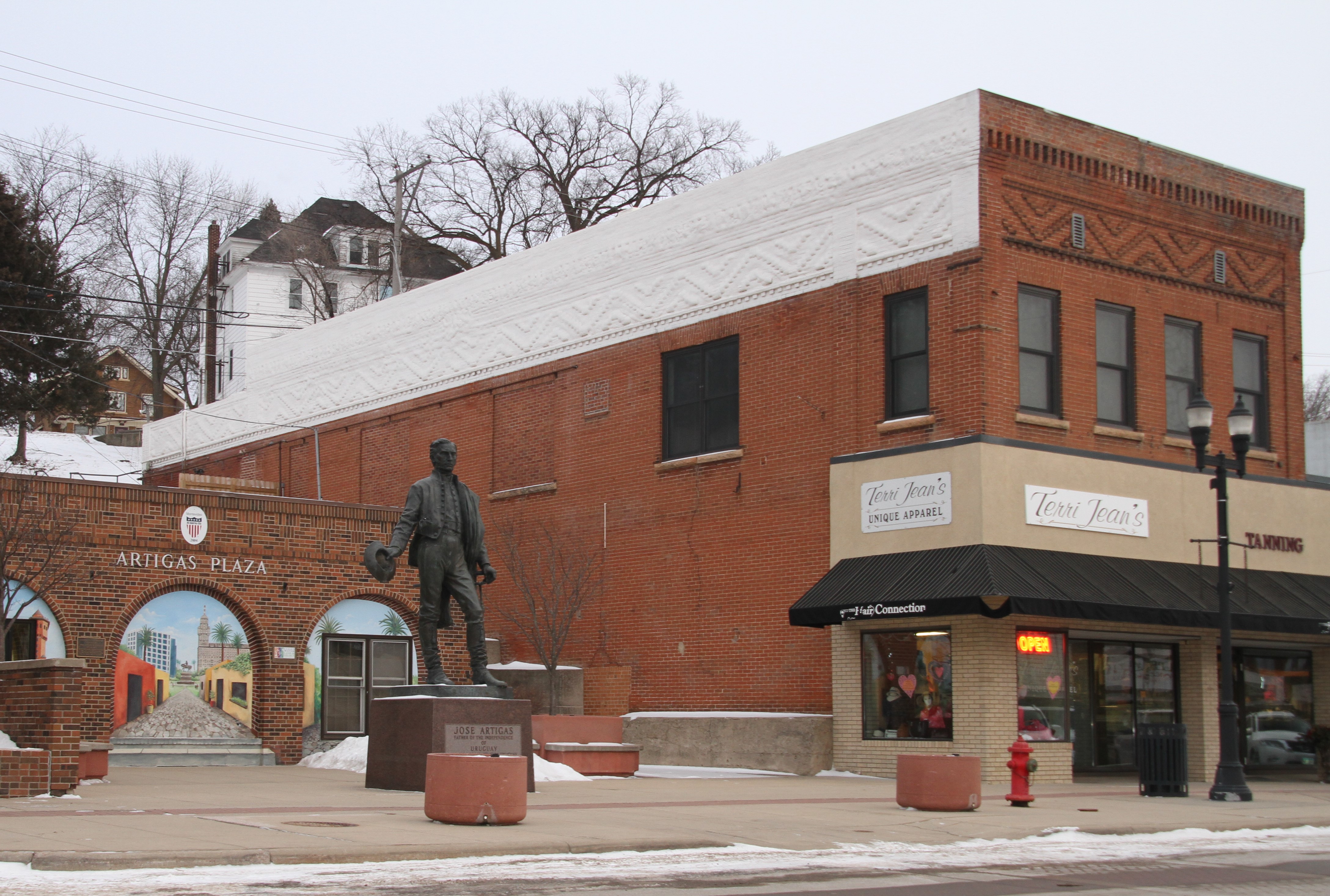
Montevideo is a small, unhurried city in southwestern Minnesota, serving as the county seat of Chippewa County and home to roughly 5,200 residents. Set along the banks of the Minnesota River where the Chippewa River joins it, the community has the feel of a traditional Midwestern river town, with a walkable historic downtown, tree-lined streets, and an easygoing pace that reflects its agricultural roots. The city is best known as a gateway to the Lac qui Parle region, a popular destination for outdoor recreation, bird watching, and exploring the upper Minnesota River Valley. Montevideo sits about 130 miles west-southwest of Minneapolis, with most visitors reaching it via a roughly two-and-a-half-hour drive along U.S. Highway 212 or Interstate 12 to state highways.
Just north of the city, Lac qui Parle State Park is the area's marquee natural attraction. Roughly 15 to 20 minutes from downtown Montevideo, the park centers on a quiet reservoir of the Minnesota River and is known for excellent waterfowl viewing, especially during spring and fall migrations when tundra swans, pelicans, and bald eagles pass through. Visitors can hike a network of trails, fish for walleye and northern pike, and stay overnight in one of the park's well-regarded campgrounds or rental cabins, making it a natural anchor for a stay in the area.
The Minnesota River itself is woven into the identity of the region, and the Montevideo Riverfront is a focal point of local life. A short walk from the central business district leads to riverside trails, observation points, and overlooks where travelers can watch the slow current drift past. The riverfront is also part of the broader Lac qui Parle State Water Trail system, and paddlers often launch upstream or downstream of town for multi-day canoe and kayak trips through the surrounding bottomlands and prairies.
To the south and east of Montevideo, the rolling terrain climbs onto Buffalo Ridge, a glacial moraine that has become one of the most visible wind-energy landscapes in the country. Scattered across the ridgeline, towering wind turbines stretch toward the horizon, drawing energy enthusiasts, photographers, and curious travelers who want to see one of the earliest large-scale wind developments in the United States. Brief interpretive stops and roadside pull-offs make it easy to appreciate the scale of the installations.
Montevideo makes a compelling base for short-term rentals because it pairs small-town hospitality with surprisingly diverse surroundings. Travelers can spend the day on the river, in the state park, or simply wandering a historic downtown that still feels distinctly local, then return to comfortable lodging without the crowds of a larger destination. Its central position in western Minnesota, combined with access to both prairie and river ecosystems, gives the city a quiet, year-round appeal for guests seeking a slower pace and a genuine sense of place.
Want to know if a property in Montevideo is a good investment?
Enter an address to get instant revenue potential and comps.