
Deer River, Minnesota
Want to see how Deer River compares to other top cities in Minnesota? Explore all city regulations in Minnesota. →
Deer River, MN
Very Investor Friendly
STR Regulations for Deer River, Minnesota
Overview: Are Short‑Term Rentals Allowed in Deer River?
Allowed with state‑level compliance; no city‑specific rules identified. Deer River (city) does not publish its own short‑term rental (STR) ordinance in the sources reviewed. Minnesota regulates STRs primarily at the state level (taxes) and through city/county ordinances. Within Deer River’s market, your compliance baseline is Minnesota state law (especially sales/lodging taxes) and, where applicable, Itasca County requirements (e.g., shoreland zoning and septic rules). Always verify with city/county officials before listing.
Bottom line for investors
- Minnesota allows STRs; no statewide “STR license” exists. Cities and counties may add permits, safety inspections, and local taxes.
- Deer River: no city‑specific STR permit found in provided sources. Treat your operation as a Minnesota state‑level STR unless city/county authorities say otherwise.
Source: general Minnesota STR guidance and absence of Deer River–specific rules in the provided sources. [See sources: RedAwning MN overview; MN DNR hot tub law update]
What do Airbnb hosts actually earn in Deer River?
Deer River hosts earn a median $26,760/year with $236 ADR and 48% occupancy.
Top performers pull in $37,842+ per year.
See the full Deer River market breakdownHow to Start a Short‑Term Rental Business in Deer River
- Confirm local rules
- Deer River (city): No city‑specific STR rules found in provided sources; verify with the city clerk.
- Itasca County: Expect shoreland zoning and septic system rules (especially for waterfront). Confirm density, setback, and occupancy limits with Environmental Services/County Planning.
- Register for Minnesota state sales/lodging taxes
- If you rent for fewer than 30 consecutive days, you are generally providing taxable lodging.
- Register with the Minnesota Department of Revenue (if you collect guest payments directly, or if your platform does not remit for you).
- Establish business operations
- Decide hosting model: single unit, room, or multiple properties.
- Secure STR‑appropriate insurance (liability coverage is a common local requirement in Minnesota cities; aim for ≥ $300,000 where cities require it; otherwise carry what prudent investors use).
- Prepare safety systems (smoke/CO detectors, fire extinguisher, clear exits).
- Optional: Consider entity formation (e.g., LLC) for liability protection; this is not required by Minnesota to operate an STR.
Source: Minnesota state tax and licensing overview; local licensing language in Minnesota cities. [See sources: RedAwning MN overview; Steadily MN regulations]
Required Documents, Permits, Licenses, and Guidelines
At a minimum, plan for:
-
Minnesota sales/lodging tax registration
- Rentals under 30 days are generally taxable lodging.
- Registration is required if you collect payments directly and the platform does not remit on your behalf.
-
Insurance
- Common Minnesota city practice is ≥ $300,000 in liability coverage; carriers vary on exact requirements. Maintain a policy that explicitly covers short‑term rentals.
-
Safety equipment and readiness
- Smoke detectors, carbon monoxide detectors (where fuel-burning appliances exist), fire extinguisher, posted emergency information, and clear egress.
-
Property condition and systems
- Especially important in rural markets with wells/septic: adequate capacity for expected occupancy; guest education on septic care.
-
Zoning/ownership verification
- Confirm use is permitted (and compliant with shoreland/septic rules) with Itasca County Environmental Services.
Note: The sources did not identify a Deer River–specific permit. However, several Minnesota cities require hosts to display a permit number in listings. If Deer River later adopts a similar rule, expect to add: permit posting and annual renewals.
Source: Minnesota STR legal/tax framework and Minnesota city permit/inspection norms. [See sources: RedAwning MN overview; Steadily MN regulations]
Specific Regulations Affecting Deer River: City, County, and State
City of Deer River (Itasca County)
- No city‑specific STR permit or licensing identified in the provided sources.
- If the city later adopts rules, typical Minnesota elements include: a business license/registration, safety inspection, occupancy limits, and the requirement to display a permit number in listings.
Source: absence of Deer River–specific content in provided search results; general Minnesota STR practice. [See sources: RedAwning MN overview; Steadily MN regulations]
Itasca County
- No county‑specific STR licensing appears in the provided sources.
- Expect county shoreland zoning, septic system, and set‑back/occupancy rules to apply. Confirm requirements before operation—especially for waterfront properties.
Source: general MN zoning/septic context and absence of county-specific STR rules in the provided sources. [See sources: RedAwning MN overview]
State of Minnesota
-
Taxes
- State sales tax: 6.875% on lodging under 30 days.
- Local lodging taxes: counties/cities may add lodging taxes; the exact rate varies. Confirm the current rate for Itasca County before filing.
- If you host via platforms that remit automatically, verify your platform is collecting/remitting all required Minnesota and local taxes.
-
Permitting
- Minnesota does not issue a statewide STR license; permits are municipal/county when adopted.
- Minnesota cities may require permits, inspections, occupancy/noise standards, and posting permit numbers.
-
Insurance
- While requirements vary, Minnesota cities commonly require liability coverage (often ≥ $300,000) or proof that your platform provides equivalent coverage.
-
Hot tubs/Spas (2025 change)
- Effective July 1, 2025, Minnesota’s “free the hot tub” law declassifies hot tubs used at short‑term rentals as “public pools.”
- Requirements: keep spa temperature ≤ 106°F and test water for disinfection residual (chlorine/bromine), pH, and alkalinity before each guest check‑in. Post an exemption notice informing guests the spa is exempt from state/local anti‑entrapment and sanitary requirements.
- This change provides statewide clarity and uniformity that previously varied across counties.
Sources: Minnesota tax framework and Minnesota city licensing norms; 2025 hot tub law. [See sources: RedAwning MN overview; Steadily MN regulations; Inforum MN hot tub law (July 2025)]
Contact Information (Local Authority in Charge of STRs)
City of Deer River
- Phone: (218) 246‑8225
- Email: Not provided in sources
- Website: Not provided in sources
- Use for: verifying city rules, permitting, business licensing.
Itasca County Environmental Services (zoning/septic/shoreland)
- Phone: (218) 326‑8422
- Email: Not provided in sources
- Website: Not provided in sources
- Use for: shoreland zoning, septic capacity, occupancy limits, building/setbacks.
Minnesota Department of Revenue (sales/lodging tax)
- Phone: (651) 296‑6181 or (800) 657‑3777
- Email: Not provided in sources
- Website: Not provided in sources
- Use for: sales tax registration, filing schedules, local lodging tax confirmations.
Source: contact listings in Minnesota STR sources. [See sources: RedAwning MN overview; Steadily MN regulations]
Links to Source Pages
-
Minnesota Airbnb and Short‑Term Rental Regulations (2025 Update) – RedAwning
-
Airbnb & Short‑Term Rental Laws and Regulations In Minnesota – Steadily
-
New Minnesota law lifts hot tub regulations for short‑term rentals – Inforum
Practical next steps for Deer River investors:
- Call Deer River city hall to confirm whether any city STR licensing is in place or planned.
- Call Itasca County Environmental Services for shoreland/septic requirements and occupancy limits.
- Register with the Minnesota Department of Revenue and confirm current local lodging tax rates for Itasca County.
- Set up STR insurance with adequate liability coverage and hot‑tub compliance procedures aligned with the 2025 state law.
Next step
Found a property in Deer River?
Paste any address and get estimated revenue, cash-on-cash return, and comparable STR performance in under 5 minutes. 3 free analyses per day.
Free brief
Get the free Deer River STR Investment Brief
Revenue data, top neighborhoods, seasonal trends, and the key regulations for Deer River, Minnesota in one email.
Deer River
Market Saturation Score
Photos of Deer River
Overview of Deer River
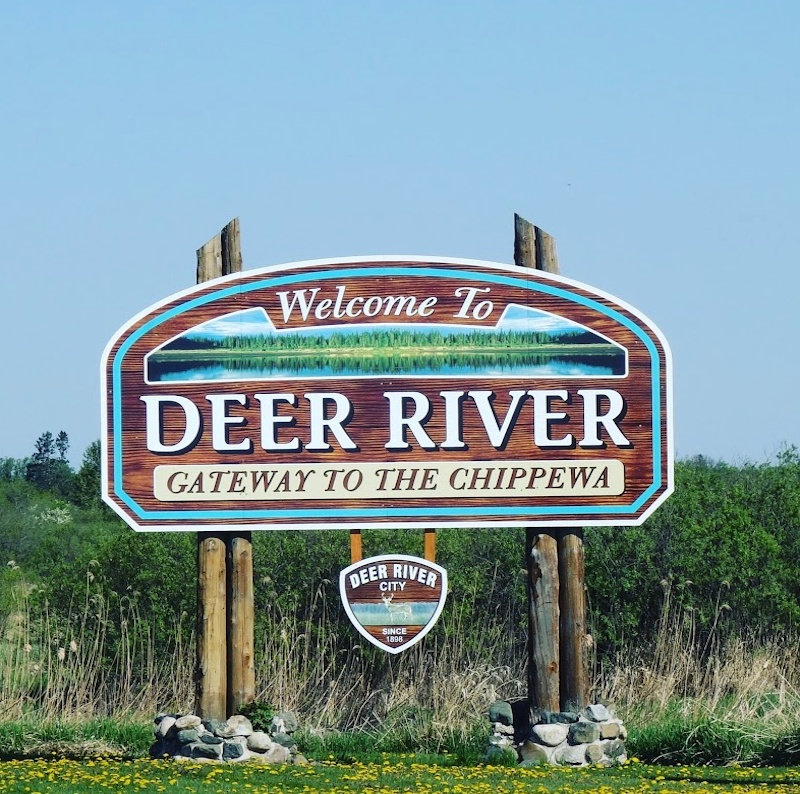
Deer River is a small, unassuming village tucked into the forested landscape of north-central Minnesota, situated in Itasca County along the upper reaches of the Mississippi River. With a population of roughly 900 residents, it has the laid-back, outdoorsy character typical of small communities in this part of the state, where lakes, woodlands, and a slower pace of life define daily life. The town is best known as a gateway to the Chippewa National Forest and to some of Minnesota's most celebrated fishing waters, and it sits approximately 90 miles northwest of Duluth, the nearest major city.
Just a short drive north of town lies Lake Winnibigoshish, one of Minnesota's largest and most productive walleye lakes, often simply called "Lake Winnie" by locals and visiting anglers. The lake is roughly a 20-minute drive from Deer River and draws thousands of fishing enthusiasts each year, particularly in the open-water season and during the winter ice-fishing months. Its sprawling bays, wild rice beds, and reputation for trophy-sized walleye make it a defining feature of the region and a natural anchor for any outdoor-oriented stay.
Surrounding Deer River to the north and east, the Chippewa National Forest covers more than 660,000 acres of pine, hardwood, and wetland habitat, laced with hundreds of lakes, rivers, and miles of trails. Visitors come for canoeing, kayaking, wildlife watching, and quiet camping experiences that feel far removed from the busier national parks farther west. Several entry points and recreation areas are within a 30-minute drive of the village, making Deer River a convenient jumping-off point for guests who want to spend their days paddling or hiking without committing to a more remote base camp.
About 40 minutes southwest of Deer River, Itasca State Park offers a completely different appeal. Home to the headwaters of the Mississippi River, where visitors can wade across the shallow outlet among smooth stones, the park also features old-growth red and white pines, more than 100 lakes, and an extensive trail network. The drive from Deer River passes through Grand Rapids, the nearest sizable town, which adds options for dining, shopping, and supplies along the way. For travelers willing to make a half-day excursion, Itasca delivers one of the most iconic natural landmarks in the upper Midwest.
Taken together, Deer River's combination of small-town character, immediate access to world-class fishing, vast national forest wilderness, and proximity to a flagship state park makes it a quietly compelling base for short-term rentals. Guests can spend mornings on the water, afternoons exploring forest trails, and evenings back in a quiet village setting, all without the crowds or price tags of Minnesota's more heavily trafficked destinations. For owners, that blend of accessibility and authenticity is exactly the kind of experience that resonates with today's outdoor-focused travelers.
Want to know if a property in Deer River is a good investment?
Enter an address to get instant revenue potential and comps.