
Rapid City, Michigan
Want to see how Rapid City compares to other top cities in Michigan? Explore all city regulations in Michigan. →
Rapid City, MI
Challenging To Investors
STR Regulations for Rapid City, Michigan
Note: “Rapid City, MI” refers to Rapid City in Kalkaska County, Michigan. It is an unincorporated community; there are no city-issued short-term rental (STR) regulations. Your obligations come primarily from Michigan state law plus county/township rules. If you meant Rapid City, South Dakota, those rules are different and are not covered here.
Overview
- Are short-term rentals allowed in Rapid City, MI? Yes—STRs are allowed in Michigan and in Kalkaska County. There is no city STR license for Rapid City (city-level STR rules don’t exist because this is not an incorporated city).
- Compliance framework:
- State: 6% use/sales tax on stays under 30 days; state sales/use tax registration and filing (if the platform doesn’t remit automatically); fire safety and building code compliance.
- County/Township: Check county-level lodging taxes and township zoning, noise, and nuisance rules. Many Michigan communities rely on township-level ordinances or county health/department rules.
- Platforms: Airbnb/Vrbo often collect and remit state/local taxes where configured. You remain responsible for correct tax collection and remittance.
- Action steps:
- Confirm township zoning allows STRs on your parcel; 2) Comply with fire/life-safety standards; 3) Register for Michigan taxes if required; 4) Assess county lodging taxes; 5) Document your compliance and maintain records.
Sources:
- Michigan STR legal context: RedAwning (2025) overview
- Rapid City, MI STR regulatory basics and registration/licensing note: GoSummer Rapid City, MI guide
What do Airbnb hosts actually earn in Rapid City?
Rapid City hosts earn a median $25,479/year with $452 ADR and 54% occupancy.
Top performers pull in $31,479+ per year.
See the full Rapid City market breakdownHow to Start a Short-Term Rental in Rapid City, MI
- Confirm zoning and land use
- Contact your township zoning administrator to verify STRs are a permitted use on your property and check occupancy, parking, and nuisance rules.
- Review any homeowner/condo association restrictions if applicable.
- Life safety and building standards
- Ensure working smoke detectors, CO alarms (where applicable), fire extinguishers, clear egress, and compliance with Michigan fire and building codes.
- Prepare emergency instructions for guests; display exit plans; post maximum occupancy and house rules.
- Business structure and insurance
- Consider forming an LLC or similar entity for liability protection (not required by Michigan state law but commonly recommended).
- Obtain short-term rental insurance (most homeowners policies do not fully cover STR activity).
- Guest operations
- Publish clear house rules (quiet hours, occupancy, parking, smoking, events).
- Implement check-in/out procedures and responsive guest communication.
- Keep logs of bookings, guest counts, and incident reports.
- Taxes and registration
- Register with the Michigan Department of Treasury if the platform does not automatically collect/remit the 6% Michigan use/sales tax.
- Check Kalkaska County for any local lodging tax and register as required.
- Maintain monthly records to file/pay on schedule.
Sources:
- State-level operational framework: RedAwning (2025)
- Rapid City, MI operational basics (registration note, occupancy, taxes): GoSummer Rapid City, MI
Required Documents, Permits, Licenses, and Guidelines
- Permits/licenses
- There is no Rapid City (city) STR license because this is an unincorporated area. Some hosts choose to obtain a Michigan business license through the Michigan Department of Licensing and Regulatory Affairs (LARA) as a standard business registration; verify if applicable to your model.
- If you operate within a township that requires inspections or health permits, obtain those.
- Confirm with your township zoning office whether special use or additional permits are required.
- Required documents
- Proof of property ownership.
- Site/floor plans showing bedrooms and exits for occupancy and life-safety compliance.
- Contact information for owner and local contact (often required by townships).
- Insurance declarations showing appropriate liability coverage for STR activity.
- Emergency instructions and posted maximum occupancy.
- Taxes
- Michigan Department of Treasury registration for state sales/use tax if you collect rather than rely on platform remittance.
- County lodging tax registration (if any) through Kalkaska County.
- Ongoing compliance
- Keep copies of all filings, licenses/registrations, tax returns, guest logs, and safety inspections.
- Reconfirm township zoning, building/fire code updates annually.
Sources:
- State-level guidance and tax overview: RedAwning (2025)
- Rapid City, MI references (licensing mention, occupancy, taxes): GoSummer Rapid City, MI
Specific Regulations for STRs in Rapid City, MI (City, County, State)
- State (Michigan)
- Tax: 6% use/sales tax on rentals under 30 days.
- Definition: Short-term rentals are generally defined locally; common threshold is under 30 days.
- Safety: Smoke/CO alarms, fire extinguishers, egress, building/fire code compliance.
- Licensing: No statewide STR license; municipalities may require permits and inspections.
- Zoning: Governed by local (county/township) ordinances.
- County (Kalkaska County)
- Confirm whether a lodging tax applies and how to register and remit.
- Check county health department rules for private rentals (if any).
- Township (local)
- Zoning use designation, occupancy limits, parking, noise/quiet hours, and nuisance provisions.
- Township may require local contact, inspections, or posting requirements.
- Rapid City, MI
- No city-issued STR rules because Rapid City is unincorporated.
Sources:
- Michigan STR landscape: RedAwning (2025)
- Kalkaska County/Rapid City, MI local context: GoSummer Rapid City, MI
Taxes
- Michigan use/sales tax
- 6% on short-term stays (commonly under 30 days).
- If Airbnb/Vrbo collects/remits in Michigan, you may not need to register; however, you are ultimately responsible.
- Register and file monthly/quarterly as directed by the Michigan Department of Treasury if you collect.
- Local lodging taxes
- Some counties/townships impose an additional lodging tax. Verify with Kalkaska County for current rates and registration.
- Platforms may not automatically collect local lodging taxes unless required by local agreements.
Sources:
- Michigan tax overview: RedAwning (2025)
- Rapid City, MI STR tax note: GoSummer Rapid City, MI
Contact Information
- Michigan Department of Treasury (taxes)
- Phone: Not provided in source content.
- Email: Not provided in source content.
- Website: michigan.gov/taxes
- Kalkaska County (lodging tax, health regulations)
- Phone: Not provided in source content.
- Email: Not provided in source content.
- Website: kalkashacountymi.gov (verify lodging tax info on the county site)
- Township (zoning, permitting, noise)
- Contact your township supervisor/zoning administrator for zoning use, occupancy limits, parking, and nuisance rules. Contact details vary by township; locate through the township’s official website or Kalkaska County’s municipal contacts.
Sources:
- State tax and regulatory context: RedAwning (2025)
- Local contact framework for Rapid City, MI: GoSummer Rapid City, MI
Links to Source Pages
- Michigan Airbnb and Short-Term Rental Regulations (2025 Update) – RedAwning
- Vacation Rental Management in Rapid City, Michigan – GoSummer
- Michigan Short-Term Rental Regulations: Know Your Obligations – Checkmate Rentals
Important: If you were referring to Rapid City, South Dakota, that market has its own STR ordinance under active development. The Rapid City Journal article linked below pertains to South Dakota and is not applicable to Rapid City, MI. If you need the South Dakota guide, let me know and I will provide it.
Next step
Found a property in Rapid City?
Paste any address and get estimated revenue, cash-on-cash return, and comparable STR performance in under 5 minutes. 3 free analyses per day.
Free brief
Get the free Rapid City STR Investment Brief
Revenue data, top neighborhoods, seasonal trends, and the key regulations for Rapid City, Michigan in one email.
Rapid City
Market Saturation Score
Photos of Rapid City

Overview of Rapid City
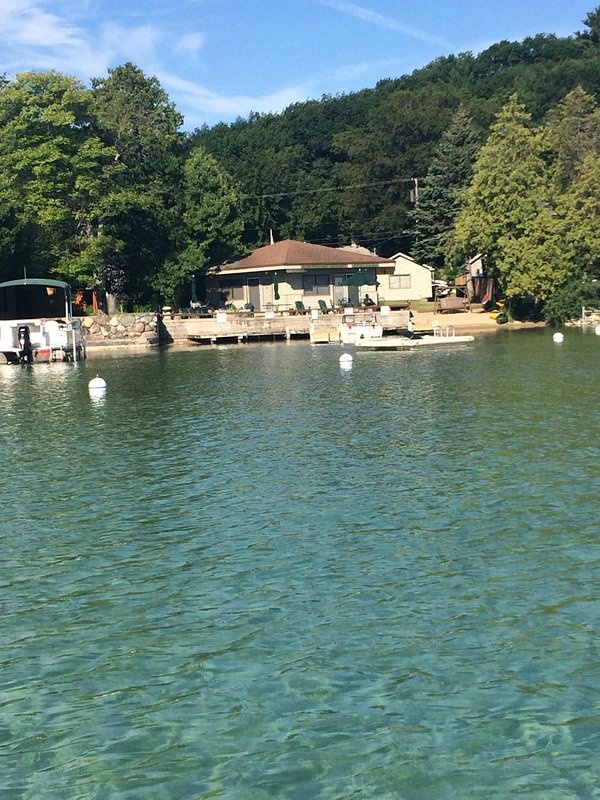
Rapid City is a small unincorporated community in Kalkaska County, in the northern Lower Peninsula of Michigan. The community sits among the forested, lake-dotted terrain that defines Michigan's "Up North" region, an area long associated with summer cottages, fishing, hunting, and outdoor recreation. With only a few hundred residents, Rapid City has the quiet, woods-and-water character typical of small Kalkaska County settlements, and it serves as a tranquil base for visitors exploring the surrounding state forests, rivers, and lakes. The nearest major city is Traverse City, a well-known regional hub located roughly 30 to 40 miles to the northwest, which offers the nearest commercial airport and the bulk of the area's dining, shopping, and services.
About 30 to 40 miles northwest of Rapid City, Traverse City is the cultural and commercial center of the region. The city sits on Grand Traverse Bay and is known for its cherry production, growing wine industry, and proximity to the Lake Michigan shoreline. Visitors are drawn to its downtown waterfront, the redeveloped former state hospital complex, and the many wineries and farm markets that dot the surrounding peninsula.
To the west and northwest of Rapid City, the area is threaded with rivers, inland lakes, and stretches of state forest land. Torch Lake, one of Michigan's most famous inland lakes, lies a short drive to the northwest in neighboring Antrim County, its strikingly clear waters making it a popular destination for boating and swimming. The surrounding Kalkaska and Antrim county forests offer hiking, mountain biking, and snowmobiling through the colder months.
Further afield, Sleeping Bear Dunes National Lakeshore sits roughly an hour and a half to two hours' drive to the northwest, drawing visitors with its towering sand dunes overlooking Lake Michigan, scenic drives along the bluff tops, and ferry access to the Manitou Islands.
For short-term rental investors, Rapid City's appeal lies in its small-town, off-the-beaten-path setting paired with its proximity to some of northern Michigan's most visited destinations. The community's quiet, forested character appeals to travelers seeking a traditional "Up North" cabin experience, while Traverse City, Torch Lake, and the broader Grand Traverse region provide enough year-round draw to support steady seasonal demand. The combination of a low-key base and a strong tourism catchment makes the area a natural fit for cabin-style or waterfront short-term rentals serving both summer and winter visitors.
Want to know if a property in Rapid City is a good investment?
Enter an address to get instant revenue potential and comps.