
Indian River, Michigan
Want to see how Indian River compares to other top cities in Michigan? Explore all city regulations in Michigan. →
Indian River, MI
Generally Investor Friendly
STR Regulations for Indian River, Michigan
Overview: Are Short-Term Rentals Allowed in Indian River, MI?
Yes. Short-term rentals (STRs) are allowed in Indian River, MI as of the latest public materials reviewed; however, they are governed by overlapping layers of zoning and state tax law. The principal oversight is at the county level—Indian River lies within Cheboygan County. The county’s zoning code does not presently define “short-term rental” as a distinct use; instead, properties rented transiently for lodging typically fall under “tourist lodging facilities” or related commercial lodging categories (e.g., resorts, motels, vacation lodges). The county requires special use permits (SUP) for such facilities in certain zoning districts, and some lodging projects have recently been proposed with SUPs specifically for “tourist lodging.”
State-level requirements are straightforward and binding: Michigan imposes a 6% use/sales tax on transient lodging (rentals under 30 nights). No state-issued STR license exists; compliance with local zoning, the Michigan Use Tax Act, and any HOA restrictions is essential. As of the latest review, there is no evidence of a city-level STR license or unique municipal permit in Indian River; hosts must confirm zoning with Cheboygan County and any HOA rules before listing.
Bottom line for investors: proceed cautiously, treat STRs as lodging under Cheboygan County zoning, and plan for a Special Use Permit where the zoning district requires it.
What do Airbnb hosts actually earn in Indian River?
Indian River hosts earn a median $24,979/year with $262 ADR and 52% occupancy.
Top performers pull in $38,288+ per year.
See the full Indian River market breakdownHow to Start a Short-Term Rental Business in Indian River, MI
-
Confirm zoning eligibility
- Identify your property’s zoning district (Cheboygan County Zoning Ordinance No. 200).
- Determine if “tourist lodging facilities” are allowed as a permitted or special use in your district.
- For parcels in the Commercial Development (D-CM) district (e.g., Indian River), expect a Special Use Permit (SUP) for tourist lodging. A recent agenda item shows an SUP request to place 12 rental cabins in Indian River under D-CM with tourist lodging standards.
- For residential parcels, the county does not present a clear “STR by-right” carve-out in the available materials; discuss whether transient rentals constitute a lodging facility with county zoning staff before proceeding.
-
Determine the permitting pathway
- If your zoning requires lodging facilities, apply for an SUP. If lodging facilities are permitted by right in your district, still verify dimensional and operational standards for lodging uses.
- For multi-unit or cabin projects, expect detailed site plan review and a public hearing. The recent SUP request indicates adherence to standards for resorts/motels/tourist lodging and associated amenities (e.g., incidental office use, parking, potential food trucks).
-
Comply with state tax obligations
- Register for Michigan use/sales tax and remit 6% on all short-term rental income (rentals of fewer than 30 nights). Transient lodging under 30 days is taxable; 30+ nights is generally exempt from sales/use tax.
- Track and remit taxes even if online platforms collect and remit on your behalf; confirm actual collection/remittance practices.
-
Account for HOA, deed restrictions, and local covenants
- Many communities and lakeside associations in this region restrict STRs. Review CC&Rs, HOA bylaws, and any recorded restrictions; compliance is mandatory even when zoning allows lodging uses.
-
Plan operations and insurance
- Align your use with dimensional standards (e.g., setbacks, height, parking). For tourist lodging, the county’s lodging categories often involve design and site plan requirements.
- Secure appropriate liability and property insurance for transient lodging operations.
- Ensure water, sewage, and waste management comply with local standards and health department requirements where applicable.
Required Documents, Permits, Licenses, and Guidelines
Cheboygan County (primary local authority)
-
Special Use Permit (SUP) application for tourist lodging facilities
- Use case: commercial lodging projects or multi-unit cabins in zoning districts requiring SUP for lodging (e.g., D-CM in Indian River).
- Requirements per the latest materials: submission per Section 9.3.9 of Zoning Ordinance #200 (resorts, resort hotels, recreation farms, vacation lodges, motor inns, motels, and other tourist lodging facilities).
- Site plan and supporting documentation: site layout, parking, access, utilities, environmental constraints, and any on-site amenities.
- Public hearing and Planning Commission review; final approval by County (subject to BOCC as applicable).
-
Zoning compliance verification
- Confirm zoning district, permitted vs. special uses, and compliance with dimensional standards (setbacks, height, lot coverage, parking).
- If you are in a residential district and plan to host transient guests, obtain written confirmation from county zoning staff whether the use constitutes a lodging facility requiring SUP.
Michigan state requirements
-
Sales/Use Tax Registration (Michigan Department of Treasury)
- Apply for a sales/use tax account and collect/remit 6% on short-term rentals (under 30 nights).
- File returns on the prescribed schedule; maintain records of income and taxable nights.
-
Local agreements (if applicable)
- Depending on the scale and location of lodging facilities (e.g., larger energy-related projects), the county has hosted community agreements; STR projects are typically not subject to such agreements, but remain attentive to any county or township fee schedules.
Documentation and records
- Detailed rental records: guest nights, gross rental receipts, tax remittances.
- Insurance certificates (liability/property) specific to transient lodging.
- HOA/deed restriction acknowledgment and compliance proof (letters, minutes, recorded covenants).
- Site plan and building information: address, parcel ID, zoning, utilities, on-site parking.
- Occupancy and life-safety compliance: follow any applicable fire/life safety codes for transient accommodations.
Specific Regulations by Jurisdiction
Cheboygan County (county-level, the primary local regulator for Indian River)
- Zoning Ordinance No. 200 governs land uses; STRs are not explicitly defined as a use, but transient lodging for tourists commonly falls under “tourist lodging facilities” categories (resorts, motels, vacation lodges).
- Special Use Permit (SUP) requirements:
- Required for tourist lodging in certain commercial districts (e.g., Commercial Development—D-CM) and potentially in other districts where lodging uses are not permitted by right.
- The Planning Commission reviews SUPs for lodging facilities; example agenda item shows an SUP for 12 rental cabins with incidental office use and on-site parking on a 2.79-acre parcel zoned D-CM at 4148 S. Straits Hwy. (Indian River, Tuscarora Twp.).
- Dimensional and operational standards:
- Compliance with setbacks, height, parking, lighting, and site design standards for lodging facilities within the applicable district.
- For energy-related facilities (e.g., solar/wind/energy storage), a “Compatible Renewable Energy Ordinance” applies; this is separate from lodging but is included in the current code set and may inform county approach to large facility siting.
Indian River (municipal/township context)
- The materials reviewed do not show a city or township-level STR license or unique municipal permit system. Indian River is in Tuscarora Township; any township-level rules should be verified directly with township officials.
- Given the county’s dominant role in zoning and the recent focus on lodging SUPs, investors should treat STRs as lodging uses under county zoning.
Michigan (state-level)
- 6% use/sales tax on transient lodging rentals under 30 nights. Rentals of 30 nights or more are generally exempt from sales/use tax.
- No state-issued STR license; zoning compliance and tax obligations are the principal statewide requirements.
- State fire/life safety codes may apply for certain transient accommodations; confirm applicable thresholds and requirements with county officials.
Contact Information
Cheboygan County Planning Department (primary authority)
- Address: 870 South Main St., P.O. Box 70, Cheboygan, MI 49721
- Phone: (231) 627-8489
- Fax: (231) 627-3646
- Website: cheboygancounty.net
Additional contacts (as referenced in county materials)
- Planning Commission Secretary: Charles Freese (see Planning Commission minutes for contact details via county).
- Tuscarora Township: The materials reviewed do not list contact information; investors should reach out directly to the township for any local registration or compliance questions.
Important note on state tax registration
- Michigan Department of Treasury: Use the state’s official registration portal to obtain a sales/use tax account and to file returns. Precise phone and web links are not provided in the materials reviewed; visit michigan.gov/treasury for current guidance.
Source Links and Reference Materials
- Vacation rental market overview and regulatory statement (Indian River, Michigan) – www.gosummer.com/vacation-rental-management/indian-river-michigan
- Cheboygan County Planning Commission Meeting Packet (Dec 18, 2024) – tourist lodging SUP, D-CM zoning, and related agenda – www.cheboygancounty.net/wp-content/uploads/2024/12/12.18.24-PC-Packet.pdf
- Cheboygan County Planning Commission Draft Minutes (Nov 6, 2024) – discussion of lodging and zoning implications, SUP processes – www.cheboygancounty.net/wp-content/uploads/2024/12/12.18.24-PC-Packet.pdf
- Cheboygan County Zoning Ordinance materials (via packet) – definitions and standards pertinent to lodging facilities – www.cheboygancounty.net/wp-content/uploads/2024/12/12.18.24-PC-Packet.pdf
Action Checklist for Investors
- Verify zoning district and permitted lodging uses; in D-CM and similar commercial districts, plan for an SUP.
- Prepare a comprehensive site plan addressing parking, setbacks, access, and any on-site amenities required for tourist lodging.
- Register for Michigan sales/use tax and implement a compliant tax collection/remittance process.
- Review and document HOA/deed restrictions; obtain approvals where required.
- Coordinate with Cheboygan County Planning to confirm whether your intended STR model constitutes a “tourist lodging facility” and which pathway applies.
- Monitor Planning Commission agendas for ordinance amendments or enforcement updates.
Important Disclaimers
- This guide is based exclusively on the materials provided and is current as of the referenced dates. Regulations and interpretations can change; consult Cheboygan County Planning and your legal advisor before finalizing any STR investment or operations.
- If your property is part of an HOA, deed restrictions can override zoning allowances; compliance with those covenants is essential.
Next step
Found a property in Indian River?
Paste any address and get estimated revenue, cash-on-cash return, and comparable STR performance in under 5 minutes. 3 free analyses per day.
Free brief
Get the free Indian River STR Investment Brief
Revenue data, top neighborhoods, seasonal trends, and the key regulations for Indian River, Michigan in one email.
Indian River
Market Saturation Score
Photos of Indian River


Overview of Indian River
Indian River is a small unincorporated community and census-designed place in Cheboygan County, in the northern Lower Peninsula of Michigan. With a year-round population of roughly 1,500 to 2,000 residents, the community has a quiet, outdoorsy character, drawing visitors who come for its lake country setting rather than any urban energy. It sits along the I-75 corridor and is best known as a stopover on the way to Mackinaw City and Mackinac Island, about 25 miles to the north, or roughly a 25- to 30-minute drive. Because of that location, Indian River has long functioned as a gateway community for travelers heading north from cities like Detroit, Flint, and Saginaw, and it has a healthy share of motels, cabins, and seasonal rentals catering to that traffic.
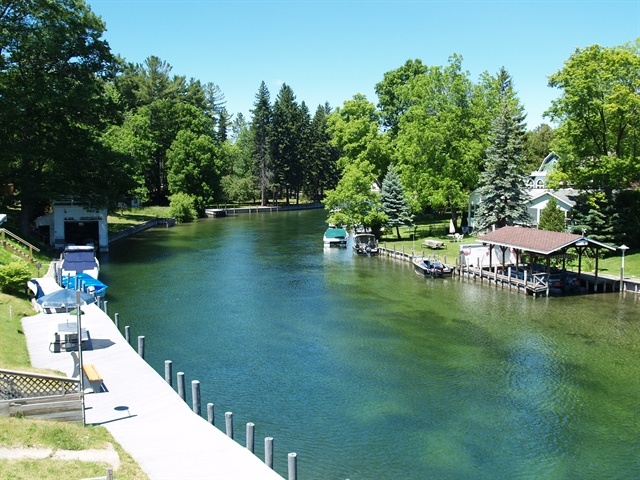
Just a few minutes from the center of town, Burt Lake anchors the community's identity. As one of the larger inland lakes in northern Michigan, it offers boating, fishing, kayaking, and lakeside cottages, and it forms part of the historic Inland Waterway, a navigable chain of rivers and lakes that links Crooked Lake near Petoskey all the way to Lake Huron. The waterway is a popular route for kayakers, slow-speed boaters, and anglers, and its quiet stretches through Cheboygan County are one of the defining recreational draws of the area.
About 30 minutes north, Mackinaw City and Mackinac Island deliver the marquee tourist experience of the region. Mackinaw City serves as the mainland departure point for ferry crossings to Mackinac Island, a destination famous for banning automobile traffic and filling its streets with horse-drawn carriages, fudge shops, and the restored Fort Mackinac. Travelers based in Indian River can easily make the drive up I-75 for a day on the island, an evening at the Mackinaw City dinner theaters, or a stop at Colonial Michilimackinac before heading back to a quieter rental at the end of the day.
A bit farther afield, roughly 45 minutes to the southwest, lies the Petoskey area along Lake Michigan's Little Traverse Bay. The region offers Lake Michigan beaches, the Gaslight Shopping District in downtown Petoskey, and the chance to hunt for the Petoskey stone, the fossilized coral that is the state stone of Michigan. Charlevoix and Harbor Springs sit just to the west along the bay, giving Indian River-based visitors a full slate of harbor towns, vineyards, and shoreline drives within an easy day trip.
Indian River is a compelling base for short-term rentals precisely because it offers what many Michigan visitors are actually looking for: a quiet, lake-country setting within easy reach of the state's most iconic destinations. Owners benefit from a steady mix of Mackinac-bound travelers, summer lake vacationers, fall color seekers, and winter snowmobilers using the area's extensive trail network, while guests enjoy a peaceful retreat that still puts Mackinaw City, Mackinac Island, and the Petoskey coast within an easy drive.
Want to know if a property in Indian River is a good investment?
Enter an address to get instant revenue potential and comps.