
Winter Harbor, Maine
Want to see how Winter Harbor compares to other top cities in Maine? Explore all city regulations in Maine. →
Winter Harbor, ME
Generally Investor Friendly
STR Regulations for Winter Harbor, Maine
Overview: Are Short-Term Rentals Allowed in Winter Harbor?
Short-term rentals (STRs) are allowed in Winter Harbor, Maine, subject to local licensing, safety inspection, proof of insurance, zoning compliance, and state tax obligations. Winter Harbor does not publish a standalone STR ordinance in the sources provided; however, property-level requirements are consistently described for the town by industry and local advisory sources. In addition, Maine imposes an 9% lodging tax on transient accommodations collected from guests and remitted to the state.
Because Winter Harbor shares planning and housing context with the neighboring Town of Gouldsboro, and because Hancock County municipalities have adopted a range of STR rules, investors should expect municipal discretion around zoning and licensing and should verify current requirements directly with the town prior to launching a property.
What do Airbnb hosts actually earn in Winter Harbor?
Winter Harbor hosts earn a median $31,858/year with $281 ADR and 59% occupancy.
Top performers pull in $50,239+ per year.
See the full Winter Harbor market breakdownHow to Start a Short-Term Rental Business in Winter Harbor
- Confirm zoning and land-use eligibility
- Determine the property’s zoning district and whether short-term rental use is permitted “by right,” conditionally permitted, or prohibited.
- If the STR is not owner-occupied or if the unit is accessory to a primary dwelling, confirm that the intended configuration is allowed (e.g., separate dwelling units, ADUs, or room rentals).
- Because Winter Harbor shares workforce housing pressures with Gouldsboro, and STRs have been cited by local stakeholders as impacting long-term rental availability, anticipate scrutiny of non-owner-occupied STRs.
- Obtain the municipal STR license and pass safety inspection
- Apply for the STR license with the Town of Winter Harbor (municipal office).
- Prepare for and pass a safety inspection. Sources indicate this includes smoke and carbon monoxide detectors, functioning egress, fire extinguishers, and related life-safety items.
- Provide proof of insurance (general liability covering transient lodging/STR operations).
- Set up state tax accounts
- Register for Maine sales and use tax and lodging tax accounts through Maine Revenue Services (MRS) to collect and remit the 9% lodging tax from guests.
- Implement a reliable method to capture tax on every booking and file returns on the schedule set by MRS (typically monthly or quarterly; confirm the current cadence).
- Establish operational systems
- Build guest screening, house rules, and check-in/out procedures.
- Implement property management, housekeeping, and maintenance protocols suitable for a seasonal coastal market.
- Align marketing and pricing with the region’s pronounced seasonality (peak summer demand, quieter winters).
- Renew, inspect, and maintain compliance
- Renew the STR license annually (exact renewal timeline and fees are not specified in the provided sources).
- Keep insurance current and available for inspection.
- Maintain detailed records of bookings, taxes collected, and guest communications.
Required Documents, Permits, Licenses, and Guidelines
Municipal
- STR License Application (Town of Winter Harbor)
- Requires safety inspection (life-safety items such as smoke/CO alarms, egress, fire extinguisher)
- Requires proof of insurance (liability coverage for STR operations)
- Zoning confirmation/approval from the town (to verify STR use is allowed on the parcel and in the intended configuration)
State of Maine
- Sales and Use Tax Registration (MRS)
- For collecting and remitting sales tax and the 9% lodging tax on transient accommodations
- Maine Lodging Tax Registration and Ongoing Filing (MRS)
- 9% lodging tax rate; filings typically monthly or quarterly (confirm current requirement)
Best-practice documentation (recommended, though not mandated in the provided sources)
- Guest agreements and house rules
- Emergency procedures and contact cards
- Maintenance and cleaning logs
- Insurance declarations page specific to STR operations
Note: The sources do not provide a Winter Harbor STR fee schedule or renewal timeline. For all municipal licensing specifics (fees, renewal cycles, and inspection details), contact the town directly.
Specific Regulations for Short-Term Rentals: Winter Harbor, Hancock County, and Maine
Town of Winter Harbor
- Licensing required; application includes a safety inspection and proof of insurance.
- 9% lodging tax applies; hosts must collect this tax from guests and remit it to Maine Revenue Services.
- Zoning restrictions may apply; confirm that the proposed STR use is permitted in the relevant district and that any owner-occupancy or unit-type conditions are met.
Hancock County (municipal context)
- Winter Harbor and Gouldsboro are neighboring coastal towns that share similar housing pressures and workforce challenges. Hancock County municipalities have adopted a variety of STR approaches:
- Bar Harbor requires annual STR registration and categorizes rentals as VR-1 (owner’s primary residence, often room-based, <30 days, ≥2 nights) or VR-2 (non-primary residence entire unit, <30 days, ≥4 nights), with an annual fee of $250.
- Portland, South Portland, Freeport, Kennebunkport, Falmouth, and Cape Elizabeth have adopted registration or licensing requirements with differing fee structures, limits on non-owner-occupied units, and day-use caps. This diversity underscores the importance of checking each municipality’s rules directly.
- The broader regional trend emphasizes owner-occupied or capped STRs; expect Winter Harbor to exercise zoning judgment consistent with local housing goals.
State of Maine
- Lodging Tax: 9% on the rental price of transient accommodations. Hosts must register with MRS, collect the tax from guests, and file and remit according to MRS schedules.
- Sales and Use Tax: Applicable to certain STR-related transactions; register with MRS and comply with filing.
- Municipal Home Rule: Municipalities retain authority to regulate STRs through local ordinances, including licensing, inspections, caps, and zoning standards.
Important caveat
- No Winter Harbor-specific ordinance text is included in the provided sources. Confirm all municipal requirements directly with the Town of Winter Harbor prior to purchase, conversion, or listing.
Contact Information
Local Authority (municipal)
- Authority: Town of Winter Harbor (Code Enforcement/Licensing)
- Purpose: STR license application, safety inspection scheduling, zoning confirmation
- Note: Phone, email, and website are not provided in the sources. Contact the Winter Harbor municipal office in person or via the town’s official website/phone listing for the most current licensing officer contact.
State of Maine
- Agency: Maine Revenue Services (MRS)
- Purpose: Sales and use tax registration and filings; lodging tax registration and filings (9% lodging tax on transient accommodations)
- Online portal and contact details are available via Maine.gov; confirm account setup and filing cadence directly with MRS.
Links to Source Pages
-
Vacation Rental Management in Winter Harbor, Maine (gosummer.com)
- Source details on local licensing, safety inspection, proof of insurance, and the 9% lodging tax
- URL: www.gosummer.com/vacation-rental-management/winter-harbor-maine
-
Commission To Increase Housing Opportunities in Maine by Studying Land Use Regulations and Short-term Rentals: Examples of Local Ordinances regulating Short-term Rentals (STRs) in Maine (Maine Legislature, OPLA)
- Comparative municipal rules across Hancock County and Maine (Bar Harbor, Portland, South Portland, Freeport, Kennebunkport, Falmouth, Cape Elizabeth)
- URL: legislature.maine.gov/doc/8864
-
Housing Assessment: Towns of Gouldsboro and Winter Harbor, ME (July 2024)
- Local housing context, workforce displacement, and stakeholder observations on the impact of STRs on rental availability
- URL: www.gouldsborotown.com/wp-content/uploads/2024/07/FINAL-Gouldsboro-Winter-Harbor-Housing-Assessment.pdf
Practical next steps for investors
- Verify zoning and STR eligibility with the Town of Winter Harbor before purchase or conversion.
- Obtain the STR license, schedule the safety inspection, and secure appropriate insurance.
- Register for Maine sales and lodging tax with MRS and implement a compliant tax workflow.
- Budget for strong seasonality (peak summer demand, lower winter demand) when modeling revenue.
- Plan operations for coastal conditions (e.g., winterization, storm preparedness, and reliable cleaning/maintenance partners).
Next step
Found a property in Winter Harbor?
Paste any address and get estimated revenue, cash-on-cash return, and comparable STR performance in under 5 minutes. 3 free analyses per day.
Free brief
Get the free Winter Harbor STR Investment Brief
Revenue data, top neighborhoods, seasonal trends, and the key regulations for Winter Harbor, Maine in one email.
Winter Harbor
Market Saturation Score
Photos of Winter Harbor


Overview of Winter Harbor
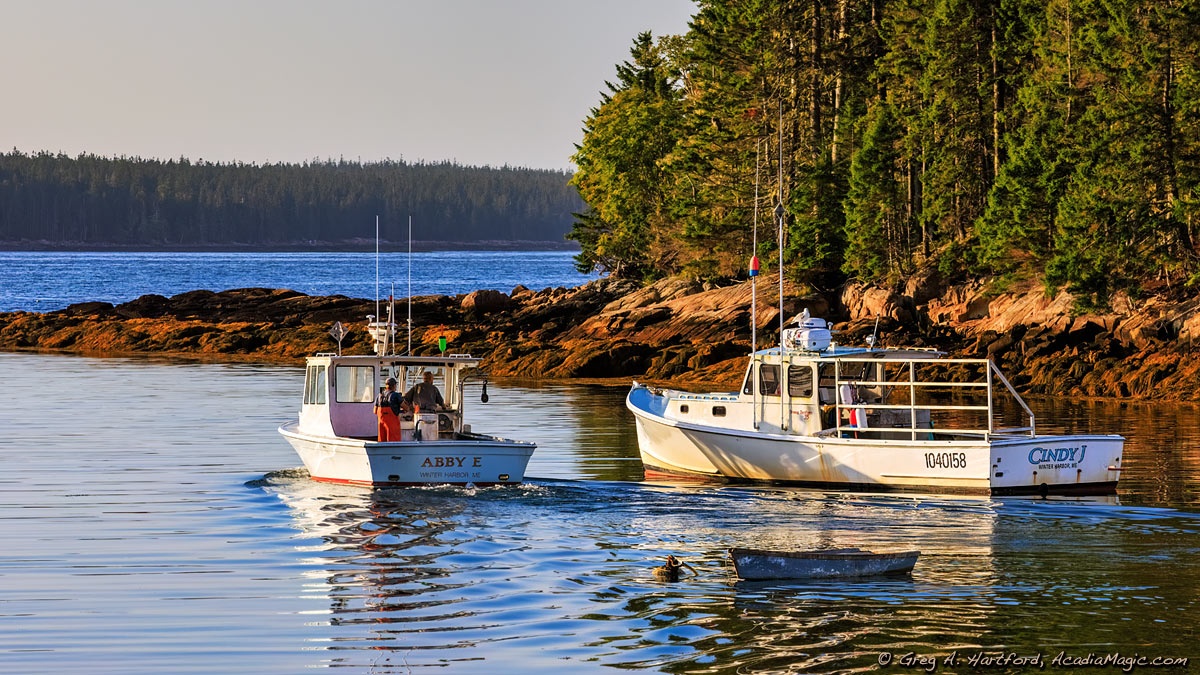
Winter Harbor is a small coastal town in Hancock County, Maine, situated on the quieter side of the Schoodic Peninsula. With a year-round population of roughly 500 to 600 residents, the community has a quiet, working-harbor character shaped by lobster boats, weathered fishing shacks, and a compact downtown clustered along the waterfront. It is best known as the mainland gateway to the Schoodic District of Acadia National Park, the only portion of that celebrated park that sits on the North American mainland rather than on Mount Desert Island. Winter Harbor lies approximately 45 miles southeast of Bangor, Maine's third-largest city, and roughly an hour's drive east of Bar Harbor, the more bustling tourist hub just across Frenchman Bay.
The single biggest draw in the area is the Schoodic District of Acadia National Park, which begins just a few minutes' drive from downtown Winter Harbor. The district offers a wilder, less-crowded experience of Acadia, with rocky headlands, spruce forests, and roughly eight miles of carriage roads and trails well suited to hiking, cycling, and birdwatching. Because most visitors to Acadia never venture to Schoodic, the area retains a sense of solitude that is increasingly rare in the park.
A highlight within the district is Schoodic Point, about a 10-minute drive from the center of town. The point is famous for its broad expanse of pink granite battered by Atlantic surf, and it has become a favorite destination for photographers who come at sunset to watch waves explode against the slabs of rock. Picnic tables, a short loop trail, and ample parking make it an easy stop for travelers staying in the area.
For those interested in maritime heritage, the working waterfront along Main Street offers a glimpse of a traditional Maine lobstering community, with boats leaving the harbor early in the morning and returning with their catch later in the day. The nearby town of Bar Harbor, about an hour to the west, expands the visitor experience considerably, with its galleries, restaurants, the Abbe Museum, and access to the main section of Acadia National Park including Cadillac Mountain and Sand Beach.
Winter Harbor makes a compelling base for a short-term rental because it offers the dramatic scenery and trail networks of Acadia without the peak-season congestion of Bar Harbor. Guests can enjoy dark, quiet nights, fresh seafood, and easy access to one of America's most visited national parks, all within a setting that still feels like authentic coastal Maine. For travelers and property owners alike, the town represents a rare combination of accessibility and tranquility on the Atlantic coast.
Want to know if a property in Winter Harbor is a good investment?
Enter an address to get instant revenue potential and comps.