
Whiting, Maine
Want to see how Whiting compares to other top cities in Maine? Explore all city regulations in Maine. →
Whiting, ME
Challenging To Investors
STR Regulations for Whiting, Maine
Overview: Are Short-Term Rentals Allowed in Whiting?
Short-term rentals are permitted in Whiting, Maine. The town has no dedicated short‑term rental ordinance. STRs operate under general land use, zoning, shoreland, building, plumbing, health, and fire safety requirements that apply to lodging and residential uses. In practice, Whiting allows:
- Home-based STRs that function as “home occupations” (accessory to a residential use; typically owner‑occupied).
- Owner‑occupied STRs that are similar to bed‑and-breakfast-style lodging (limited guestrooms, meals may be served).
- Standalone rental cottages or cabins on residential lots (guest occupancy is typically allowed as a residential accessory or home-occupation use; no separate lodging license exists at the municipal level).
If an STR includes multiple rental units (e.g., a multi-unit lodging property), confirm conformance with the district’s land-use allowances. In shoreland zones, all development must comply with Whiting’s Shoreland Zoning Ordinance (updated March 27, 2023), including setbacks, lot standards, non-conforming structure rules, vegetation buffers, and permitting procedures.
How to Start a STR Business in Whiting, ME
- Site and zoning due diligence
- Confirm your property’s district and whether it is within the Shoreland Zone (250 feet from great ponds/rivers/coastal wetlands and 75 feet from streams). If within a Shoreland district:
- Resource Protection (RP): Highly restricted; most structures and commercial activities prohibited. In general, new commercial lodging is not allowed. Confirm whether your proposed use is expressly permitted before pursuing an STR.
- Limited Residential (LR): Residential and compatible accessory uses permitted. STRs generally operate as “home occupations” (owner-occupied, accessory to residential). Commercial lodging is usually not allowed.
- General Development I (GD I): Existing intensely developed areas; lodging and commercial uses are allowed.
- Stream Protection (SP): 75-foot buffer; highly restrictive; typical lodging uses not allowed.
- Verify permitted status via Table 1 (Land Uses in the Shoreland Zone):
- “One and two family residential” is PB (Planning Board) in LR; commercial/industrial lodging typically No in LR/RP.
- “Individual, private campsites” are allowed by PB in all districts (a potential STR cottage or campsite model).
- “Home occupations” are allowed by PB in all districts (a likely avenue for home-based STRs).
- Check parcel details: lot size, shore frontage, setbacks, and structure dimensions against Section 15 minimums. Use the Official Shoreland Zoning Map for district confirmation and setbacks.
- Structure and septic systems
- All new principal or accessory structures must meet shoreland setbacks (Section 15(B)(1)):
- Great ponds classified GPA and rivers flowing to GPA: 100 feet (75 feet for other water bodies/wetlands).
- RP District: 250 feet setback unless the use is expressly allowed (lodging generally prohibited).
- GD I District: 25-foot minimum setback (structure-dependent).
- Significant River Segments: 125 feet with screening.
- Non-conforming structures may be expanded with limits (Section 12(C)):
- Under 25 feet from water/wetland: No expansion of structures (functionally water-dependent uses excepted).
- Structures 25–75 feet from water/wetland: Strict footprint and height caps; must be in accordance with 12(C)(1)(b)–(c).
- Foundations: Must meet setbacks to the greatest practical extent.
- Subsurface sewage and waste disposal (Section 15(K)):
- Comply with the State of Maine Subsurface Wastewater Disposal Rules.
- Holding tanks are not allowed for first-time residential use in the shoreland zone (includes lodging with >120 days occupancy).
- When occupancy exceeds 120 days/year, lodging is considered residential and requires a conforming system (Local Plumbing Inspector approval).
- Conversions:
- Seasonal-to-year-round conversions require a Local Plumbing Inspector permit (Section 15, Table 1).
- Permitting path (Section 16)
- Apply for land use or building permits based on the specific project:
- New STR structure (e.g., a cottage): Permit required; often Planning Board (PB) approval depending on district and use (Table 1).
- Home-based STR within existing residence: Typically allowed by PB as a “home occupation.”
- Individual private campsite or tiny cabin: PB permit required; must meet campsite siting rules (Section 15(E)).
- Applications go to the Code Enforcement Officer (CEO) or Planning Board (PB). LPI approval is required for plumbing/wastewater. Submit:
- Scaled site plan (Section 16(C)).
- Owner/agent signature, right, title, or interest.
- If off-site sewer disposal: written authorization from the receiving facility/landowner.
- Pre- and post-construction shoreline vegetation photos (within 20 days of completion).
- Erosion/sedimentation control plan and certified erosion control person if >1 cubic yard of soil disturbance.
- Review timeline: Permitting authority must act within 35 days of a complete application (Section 16(D)).
- Variances: Board of Appeals can consider variance requests (Section 16(H)).
- Operations and seasonal occupancy
- Individual private campsites and STRs with stays >120 days/year trigger full residential requirements, including subsurface sewage systems.
- Amenity structures (deck, retaining wall, stairways) must comply with setbacks and special allowances (e.g., stairways up to 4 feet width may be allowed by CEO in certain slope conditions).
- Vegetation buffers and clearing limits apply (Section 15(P)): Maintain shoreline vegetation; significant canopy clearing or openings require PB approval and may require mitigation planting. Agricultural or hazard tree exceptions do not apply to lodging unless expressly authorized.
- Compliance documentation and business licensing
- Maintain permit records, photos, plans, and approvals on-site during development and operations.
- Confirm if a municipal business license is required; none is referenced in the provided sources.
- Coordinate with the Local Plumbing Inspector (LPI) and Code Enforcement Officer (CEO) for inspections.
Required Documents, Permits, Licenses, and Guidelines
- Land use and building permits
- Planning Board (PB) permit for principal STR structures, campsite conversions, and home occupations.
- CEO permit for certain accessory or temporary uses, stairways, and vegetation clearing within thresholds.
- Zoning approvals
- Shoreland Zoning compliance and mapping confirmation.
- Setbacks, lot coverage (Section 15(B)(4)), and non-conforming structure rules (Section 12).
- Plumbing and wastewater
- LPI permit or approvals for subsurface wastewater disposal, seasonal-to-year-round conversions, and holding/off-site disposal authorizations (where applicable).
- On-site evaluation and engineered system plans for higher-intensity lodging (>120 days/year occupancy or multi-unit).
- Fire and health safety
- Comply with applicable State of Maine fire and health codes for lodging facilities. Coordinate with the Maine Department of Public Safety and Maine CDC for inspections/approvals (if operating a lodging facility with guestrooms).
- Erosion and sedimentation control
- Written plan for >10 cubic yards earthwork (Section 15(T)), and certified erosion control person on-site for earthmoving activities >1 cubic yard (Section 16(C)(6)).
- Shoreland vegetation
- Pre/post-construction photos; buffer conservation plan; mitigation plantings for clearing (Section 15(P)–(S)).
Specific Regulations Affecting STRs in Whiting (City), Washington County, and Maine (State)
-
Whiting Shoreland Zoning Ordinance (effective March 27, 2023)
- Applies within 250 feet of great ponds/rivers/coastal wetlands and within 75 feet of streams. STR structures and campsite-style rentals must meet district-specific setbacks and lot standards.
- Districts: RP (very restrictive), LR (residential-oriented), GD I (commercial/industrial-compatible areas), SP (stream buffers).
- Table 1 clarifies land use allowances; lodging as commercial use typically not allowed in LR or RP but may be allowed in GD I. Home occupations and individual private campsites are viable pathways in LR/RP, subject to PB approval and stricter conditions.
- Non-conforming structures may be expanded under strict limits; no expansion is permitted within 25 feet of water/wetlands (except functionally water-dependent structures).
- Vegetation clearing and buffer requirements are strict; any significant clearing requires PB approval, photo documentation, and potential replanting.
- Roads and driveways within shoreland zones have setback and slope restrictions; engineering and erosion control measures are required.
- Administration requires PB/CEO permits within 35 days of completed application; Board of Appeals handles variances.
-
State of Maine requirements for lodging and STRs
- Comply with the State of Maine Subsurface Wastewater Disposal Rules and the Subsurface Wastewater Disposal Law (e.g., holding tanks prohibited for first-time residential use in shoreland zones; off-site disposal requires written authorization).
- Coordinate with the Maine Department of Public Safety and Maine CDC for fire and health licensing/inspection of lodging facilities (requirements vary by facility size and occupancy).
- The Natural Resources Protection Act (NRPA, 38 M.R.S.A. §480-C) may apply to certain in-water and wetland-adjacent structures; no specific Town regulation exists for docks, piers, and wharves (they are not regulated by Whiting under Section 15(C)).
-
Washington County
- No county-level short-term rental, zoning, or lodging licensing controls are referenced in the provided sources.
Contact Information (Local Authority in Charge of STRs)
-
Town of Whiting — Code Enforcement Officer (CEO) and Planning Board
- Mailing Address: P.O. Box 148, Whiting, ME 04664
- Email: whitingceo@whitingmaine.com
- Phone: (207) 733-3000
- Website: www.whitingmaine.com
- Use CEO for permit intake; PB for home occupations, new STR structures, campsite permits, and shoreland variances.
-
Local Plumbing Inspector (LPI)
- Contact the Town Clerk for current LPI contact information.
-
State Resources (lodging, wastewater, and fire/health compliance)
- Maine Department of Environmental Protection (DEP)
- Natural Resources Protection Act permitting guidance and shoreland compliance support: www.maine.gov/dep
- Maine Department of Public Safety
- Fire Marshal’s Office — lodging fire safety compliance: www.maine.gov/dps
- Maine Center for Disease Control and Prevention (CDC)
- Lodging and public health compliance (e.g., food service in B&Bs): www.maine.gov/dhhs/mecdc
- Maine Department of Environmental Protection (DEP)
Notes for Whiting STR Investors
- Use the Official Shoreland Zoning Map to confirm your parcel’s district and setbacks before acquisition.
- Confirm whether your STR model (home occupation vs. private campsite vs. commercial lodging) is allowed in the district.
- If you plan significant structural changes, design to meet or improve shoreland setbacks and minimize clearing.
- Engineer and permit your subsurface wastewater solution early; the LPI must approve plans.
- For multi-unit or higher-intensity lodging, plan for fire and health inspections and registrations at the state level.
Source Links
- Whiting Shoreline Zoning Ordinance (adopted March 27, 2023): www.whitingmaine.com/wp-content/uploads/2023/03/Whiting-Shoreline-Zoning-latest-version08-31-2022-final-draft-for-town-approval-003.pdf
- Town of Whiting official site: www.whitingmaine.com
- Maine Department of Environmental Protection: www.maine.gov/dep
- Maine Department of Public Safety (Fire Marshal’s Office): www.maine.gov/dps
- Maine CDC (lodging/public health): www.maine.gov/dhhs/mecdc
What do Airbnb hosts actually earn in Whiting?
Whiting hosts earn a median $22,932/year with $166 ADR and 62% occupancy.
Top performers pull in $27,662+ per year.
See the full Whiting market breakdownNext step
Found a property in Whiting?
Paste any address and get estimated revenue, cash-on-cash return, and comparable STR performance in under 5 minutes. 3 free analyses per day.
Free brief
Get the free Whiting STR Investment Brief
Revenue data, top neighborhoods, seasonal trends, and the key regulations for Whiting, Maine in one email.
Whiting
Market Saturation Score
Photos of Whiting
Overview of Whiting
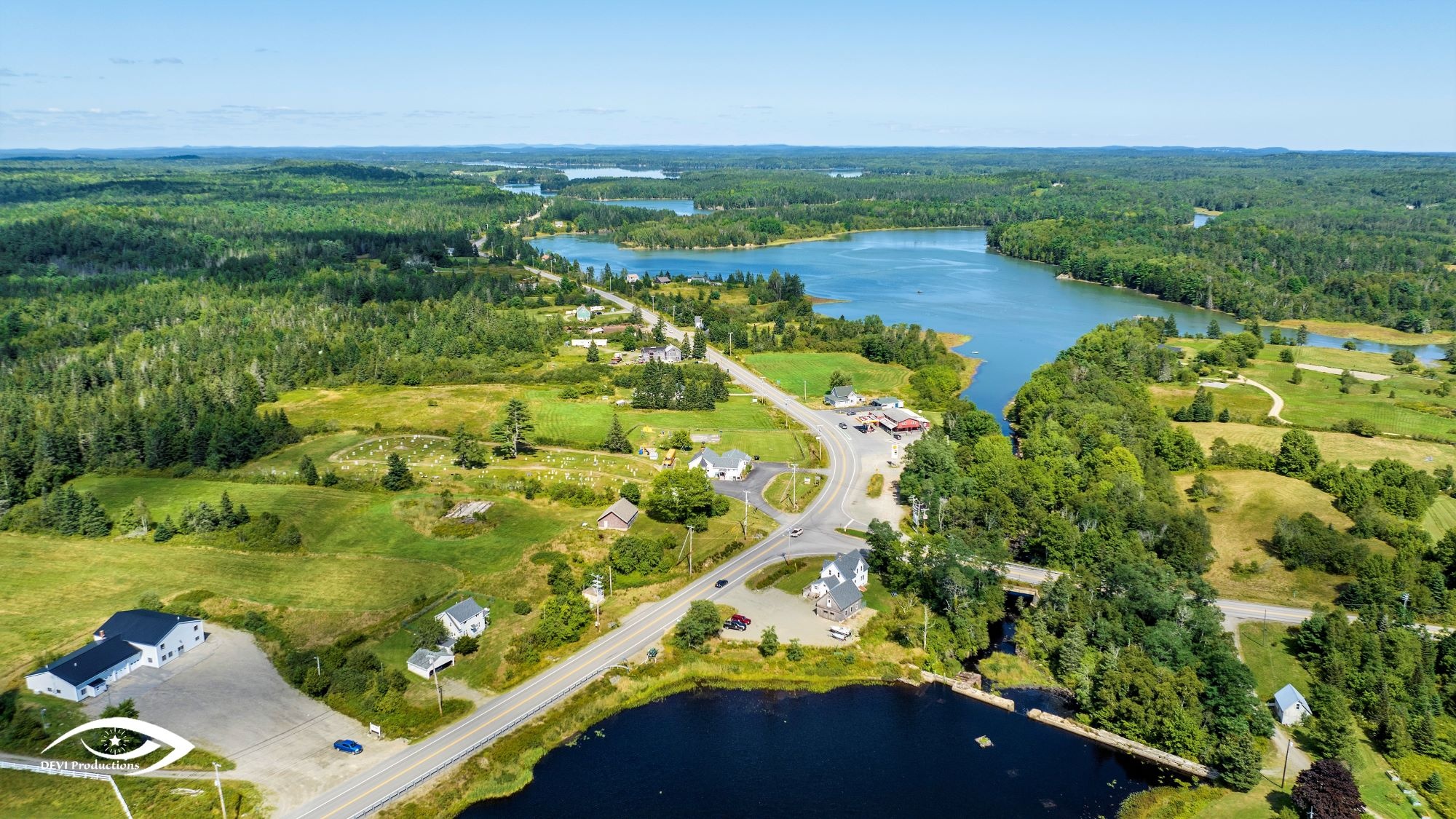
Whiting is a small, sparsely populated town in Washington County, in the Downeast region of Maine. With only a few hundred year-round residents, it has a quiet, rural character defined by forests, blueberry barrens, and a rocky Atlantic coastline. The community is best known as a tranquil jumping-off point for travelers exploring the rugged eastern edge of the state, including the Bold Coast, the Quoddy Head peninsula, and the surrounding waters of Cobscook Bay. The nearest major city is Bangor, roughly a two-hour drive to the west and north, while Calais sits about thirty minutes to the north along U.S. Route 1.
Just north of Whiting lies Cobscook Bay State Park, a roughly fifteen-minute drive that offers saltwater kayaking, tidal-walk exploration, and excellent birdwatching along one of the most dramatic bays on the Maine coast. The park's campsites and shoreline trails draw visitors who want to experience the powerful tides that distinguish this stretch of the Atlantic.
A short drive further east, in the town of Lubec, Quoddy Head State Park marks the easternmost point of the contiguous United States and is home to the candy-striped West Quoddy Head Light. Roughly forty-five minutes from Whiting, the park offers cliff-top hiking trails, puffin-spotting opportunities, and panoramic views across the Bay of Fundy toward the cliffs of New Brunswick.
Just across the international bridge from Lubec, Roosevelt Campobello International Park preserves the beloved summer cottage of President Franklin D. Roosevelt on Campobello Island, a roughly hour-long drive from Whiting including the border crossing. The park's handsome shingle-style home, walking trails, and rocky beaches attract both history-minded visitors and those drawn to the island's natural scenery.
Whiting makes a compelling base for short-term rentals precisely because of its unhurried setting and proximity to some of the most distinctive landscapes in the eastern United States. Travelers who choose to stay here trade the bustle of Maine's busier coastal villages for genuine quiet, dark night skies, and easy day trips to state parks, lighthouses, and the Canadian border. For guests seeking a Downeast experience grounded in scenery rather than crowds, Whiting offers an authentic, off-the-beaten-path alternative that pairs small-town stillness with access to a remarkable cluster of coastal and historical attractions.
Want to know if a property in Whiting is a good investment?
Enter an address to get instant revenue potential and comps.