
Richmond, Maine
Want to see how Richmond compares to other top cities in Maine? Explore all city regulations in Maine. →
Richmond, ME
Generally Investor Friendly

STR Regulations for Richmond, Maine
Overview: Are short-term rentals allowed in Richmond, Maine?
Short-term rentals are allowed in Richmond, Maine. There are no town-specific short‑term rental prohibitions or licensing requirements identified in the provided materials. The Town’s Land Use Ordinance (effective November 9, 2005, as amended) governs land use, building permits, and zoning compliance. It incorporates Maine’s statutory framework (30‑A M.R.S.A. §4364‑C et seq.) which explicitly authorizes municipalities to regulate short‑term rental units to meet statewide housing production goals. If no local STR rules are in place, statewide rules and general land use standards apply. State laws also regulate lodging taxes and certain land‑use/environmental approvals (e.g., shoreland zoning, natural resources protection, subdivisions, plumbing code, seasonal‑dwelling conversions). Investors must confirm the current status of any newer local ordinances or fee schedules with the Town, as those are not present in the provided documents.
How to start a short-term rental business in this market
- Verify zoning and principal use status for your property.
- Confirm that renting your dwelling unit (or an accessory dwelling unit) is a permitted principal or accessory use in the subject district. Bed and breakfast is specifically defined as a single‑family, owner‑occupied dwelling offering no more than five rooms for lodging. Standard short‑term rentals that are not owner‑occupied or that exceed the B&B parameters generally rely on general “dwelling” use rather than the B&B definition.
- Check shoreland, floodplain, and environmental constraints.
- Projects within 250 feet of most water bodies and wetlands fall under Shoreland Zoning Act (38 M.R.S.A. §435 et seq.). Coastal wetlands, freshwater wetlands, great ponds, rivers, streams, brooks, and significant wildlife habitat may require State permits under the Natural Resources Protection Act (38 M.R.S.A. §480‑A et seq.).
- Determine whether any permits are required before operating.
- Building/structural changes: A permit is required to erect, move, place, add to, or structurally alter any structure; permits expire if substantial start is not made within one year. Conversions of seasonal dwellings in shoreland areas to year‑round use require a State permit. Internal plumbing and on‑lot subsurface sewage disposal systems must comply with the State Plumbing Code (30‑A M.R.S.A. §4201 et seq.).
- Subdivision: Subdividing land requires municipal Planning Board review under the Subdivision Act (30‑A M.R.S.A. §4401 et seq.).
- Register for and comply with state lodging taxes.
- Maine’s Meals & Rooms (lodging) tax applies to short‑term rentals. Register with Maine Revenue Services (MRS) and file returns/collections as required. Revenue sharing with municipalities is under state control (see LD 283 in the legislative update below).
- Operate responsibly and meet health/safety baselines.
- At minimum, comply with the State Plumbing Code and ensure lawful wastewater disposal. The ordinance empowers the Code Enforcement Officer (CEO) to enforce all provisions and investigate complaints; violations are deemed nuisances and may be addressed via legal action and fines under 30‑A M.R.S.A. §4452.
- Keep records and anticipate inspections.
- The CEO maintains records of permit applications, inspections, variances, violations, and fines. On-site inspections may be conducted to ensure compliance.
Required documents, permits, licenses, and guidelines
- Building permit (if applicable)
- Required for erection, moving, placement, additions, or structural alterations.
- Shoreland permit (if applicable)
- Required before converting a seasonal dwelling to year‑round use within shoreland areas; governed by 30‑A M.R.S.A. §4201 et seq.
- State plumbing and subsurface wastewater compliance (if applicable)
- Internal plumbing and on‑lot subsurface sewage disposal must meet the State Plumbing Code (30‑A M.R.S.A. §4201 et seq.). Comparable sewer systems (discharging over 2,000 gallons/day) are regulated under 10‑144 C.M.R. Ch. 241.
- Subdivision approval (if applicable)
- Required for any subdivision of land (30‑A M.R.S.A. §4401 et seq.).
- Natural Resources Protection Act permits (if applicable)
- Required for alterations or construction near/in sand dunes, coastal wetlands, fragile mountain areas, freshwater wetlands, great ponds, rivers, streams, brooks, and significant wildlife habitat (38 M.R.S.A. §480‑A et seq.).
- Site Location of Development Act (if applicable)
- Large‑scale development activities (e.g., borrow pits, mining) require State approval under 38 M.R.S.A. §481 et seq.
- Access management approval (if applicable)
- State permit required for any new entrance or significant change of use on state/state‑aid roads (23 M.R.S.A. §704 et seq.).
- Business registration and lodging tax compliance
- Register with Maine Revenue Services for the Meals & Rooms (lodging) tax; collect and remit as required by state law.
- Municipal records and site‑specific documentation
- Property deed, site plan, floor plans (if applicable), evidence of wastewater/plumbing compliance, and any required State permits should be maintained and available for inspection.
Specific regulations for short-term rentals in Richmond, county (Sagadahoc), and Maine
- Municipal (Town of Richmond)
- No town‑specific STR licensing or prohibition found in the provided ordinance. The general rule: renting an existing dwelling typically constitutes a residential use; B&B is defined separately as owner‑occupied, up to five rooms. Any STR operating as a commercial lodging enterprise may need to be reviewed against commercial use definitions and district allowances.
- Building permits are required for structural changes; permits expire after one year of inactivity.
- Shoreland Zoning applies within 250 feet of most water bodies and wetlands; conversions of seasonal dwellings to year‑round use require State permits.
- Subdivision activity requires Planning Board approval.
- Violations are treated as nuisances; enforcement via the Code Enforcement Officer, municipal officers, and courts; fines under 30‑A M.R.S.A. §4452.
- Affordable housing density and accessory dwelling units (ADUs) are allowed per State law (30‑A M.R.S.A. §4364 et seq., §4364‑B).
- Municipalities may establish STR regulations to meet statewide housing production goals (30‑A M.R.S.A. §4364‑C).
- County level
- No county‑specific STR regulations were provided in the source materials; investors should check with Sagadahoc County for any additional administrative policies.
- State of Maine
- Lodging tax: Short‑term rentals are subject to Maine’s Meals & Rooms tax regime; registration and collections are administered by MRS.
- Shoreland Zoning Act (38 M.R.S.A. §435 et seq.) and Natural Resources Protection Act (38 M.R.S.A. §480‑A et seq.) apply to development within protected resources.
- Subdivision Act (30‑A M.R.S.A. §4401 et seq.) requires municipal review for subdivisions.
- Plumbing Code (30‑A M.R.S.A. §4201 et seq.) regulates internal plumbing and on‑lot sewage systems.
- Seasonal dwelling conversions in shoreland areas (30‑A M.R.S.A. §4201 et seq.) require State permits.
- Site Location of Development Act (38 M.R.S.A. §481 et seq.) governs large‑scale development.
- Access Management Law (23 M.R.S.A. §704 et seq.) controls entrances on state/state‑aid roads.
- Affordable housing density (30‑A M.R.S.A. §4364 et seq.), Residential areas up to 4 dwelling units (30‑A M.R.S.A. §4364‑A), ADUs (30‑A M.R.S.A. §4364‑B), and municipal role in statewide housing production goals with authority to regulate STRs (30‑A M.R.S.A. §4364‑C).
Important legislative update for Maine (from Spring 2025 state short‑term rental bills to watch):
- Maine LD 283 (redirecting 1% of meals and lodging sales tax revenue to municipalities) was voted down in the Committee on Taxation on March 11, 2025. Current lodging tax administration remains with the State; monitor any future changes.
Contact information
- Code Enforcement Officer (building permits, zoning enforcement, violations)
- Town of Richmond
- Address: Richmond Town Office (per official site; see link below)
- Phone: Not provided in the sources
- Email: Not provided in the sources
- Website: www.richmondmaine.com
- Maine Revenue Services (Meals & Rooms tax registration and compliance)
- Phone: Not provided in the sources
- Website: www.maine.gov/revenue
- Planning Board (subdivision and land use reviews)
- Town of Richmond Planning Board
- Website: www.richmondmaine.com
- State agencies (environmental/shoreland permits)
- Maine Department of Environmental Protection (DEP)
- Website: www.maine.gov/dep
- Maine Department of Inland Fisheries and Wildlife (significant wildlife habitat)
- Website: www.maine.gov/ifw
- Maine Historic Preservation Commission (historic/archaeological resources)
- Website: www.maine.gov/mhpc
- Maine Department of Environmental Protection (DEP)
Links to source pages
- Richmond, Maine – Land Use Ordinance Article 1 (General): www.richmondmaine.com/media/News_pdfs/Article%201%20revised.pdf
- Richmond, Maine – Land Use Ordinance Article 3 (Definitions): www.richmondmaine.com/media/News_pdfs/Article%203%20revised.pdf
- Proper Insurance – Short-Term Rental Regulations (Maine): www.proper.insure/regulations/
- Rent Responsibly – Spring 2025 state short-term rental bills to watch (Maine LD 283): www.rentresponsibly.org/spring-2025-state-short-term-rental-bills-to-watch/
- Town of Richmond, Maine (official site): www.richmondmaine.com
- Maine Revenue Services (Meals & Rooms tax): www.maine.gov/revenue
- Maine Department of Environmental Protection: www.maine.gov/dep
- Maine Department of Inland Fisheries and Wildlife: www.maine.gov/ifw
- Maine Historic Preservation Commission: www.maine.gov/mhpc
Practical compliance checklist for investors
- Confirm zoning district and permissible principal/accessory uses for the property.
- Screen for shoreland/floodplain/wetland constraints; obtain required State permits if applicable.
- Determine whether any structural work triggers a building permit; plan permit timing to avoid expiration (one‑year substantial start rule).
- Validate compliance with the State Plumbing Code and subsurface wastewater rules.
- If subdividing, prepare and submit subdivision plans for Planning Board review.
- Register for Maine lodging tax and set up periodic filing/remittance.
- Maintain a compliance file with permits, plans, and tax records; keep site ready for CEO inspections.
- Monitor Town updates for any new STR‑specific regulations or fees.
What do Airbnb hosts actually earn in Richmond?
Richmond hosts earn a median $27,854/year with $236 ADR and 58% occupancy.
Top performers pull in $39,420+ per year.
See the full Richmond market breakdownNext step
Found a property in Richmond?
Paste any address and get estimated revenue, cash-on-cash return, and comparable STR performance in under 5 minutes. 3 free analyses per day.
Free brief
Get the free Richmond STR Investment Brief
Revenue data, top neighborhoods, seasonal trends, and the key regulations for Richmond, Maine in one email.
Richmond
Market Saturation Score
Photos of Richmond

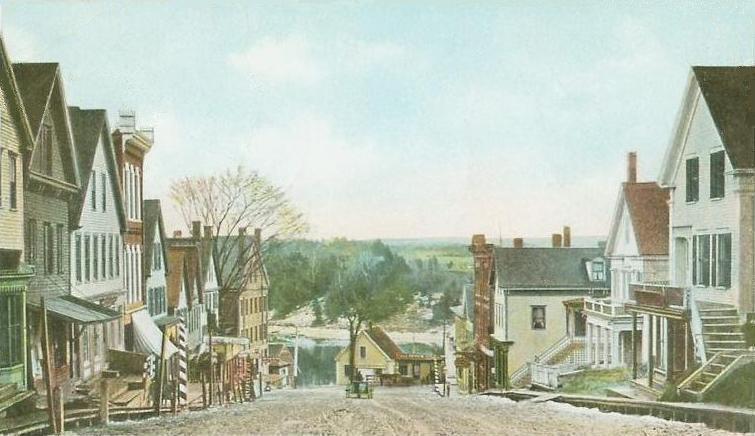

Overview of Richmond
Richmond, Maine is a small town of roughly 3,500 residents in Sagadahoc County, set along the lower Kennebec River in the state's Midcoast region. It has the unhurried feel of a historic mill town, with nineteenth-century brick and granite buildings clustered near the waterfront and working boatyards still in operation along the river. Richmond works well as a quiet base from which to explore Midcoast Maine, including the shipbuilding city of Bath, the beaches and state parks around Popham and Georgetown, and the network of peninsulas that line the Atlantic side of Sagadahoc and Lincoln counties. The nearest major city is Portland, about 50 miles to the southwest, an easy drive of roughly an hour via US-1 and I-295.
The marquee draw right at the edge of town is Swan Island, a roughly 1,700-acre wildlife management area in the middle of the Kennebec, reached by a short drive to a state boat landing (or by canoe or kayak from upstream). The island is known for its high population of white-tailed deer, active bald eagle nesting territory, and accessible hiking and wildlife-viewing loops, and it also preserves the foundations and cellar holes of an early-nineteenth-century farming community. Access is managed seasonally by the Maine Department of Inland Fisheries and Wildlife, and a visit offers one of the more genuinely wild experiences on the lower Kennebec.
Just downriver in Bath, about ten miles south, the Maine Maritime Museum explores the long shipbuilding heritage of the Kennebec, with a waterfront campus, exhibits on Bath Iron Works, historic small craft, and access to nineteenth-century shipyard structures. The drive from Richmond typically takes under twenty minutes, making it a natural half-day trip.
Further south along the coast, Popham Beach State Park and Reid State Park offer classic Atlantic shore experiences of dunes, surf, and tidal river mouths, and they sit roughly thirty to forty minutes from Richmond by car. With river scenery, working harbors, and state wildlife lands all within a short radius, Richmond is a low-key and unpretentious base for travelers who want real Midcoast access without Midcoast crowds.
Want to know if a property in Richmond is a good investment?
Enter an address to get instant revenue potential and comps.