
Columbia, Maryland
Want to see how Columbia compares to other top cities in Maryland? Explore all city regulations in Maryland. →
Columbia, MD
Generally Investor Friendly
STR Regulations for Columbia, Maryland
Note on scope: “Columbia” here refers to the census-designated place and community within Howard County, Maryland. A separate page from Columbia, South Carolina (“Columbia City Council”/“Ordinance 2023‑037”) was included in the materials but does not apply to Maryland.
Overview: Are STRs allowed in Columbia, MD?
Short‑term rentals are allowed in Columbia, MD (Howard County) provided the unit complies with zoning and obtains the necessary county licenses/permits. Under Maryland law and county practice, a property offered for occupancy for fewer than 30 consecutive days is treated as a short‑term rental. In Howard County, any dwelling unit offered for rent (short‑term or long‑term) requires a Rental Housing License issued by the Department of Inspections, Licenses & Permits. STRs must also meet applicable safety, zoning, tax, and consumer‑protection rules. There is no separate municipal STR permit for Columbia, MD (it is an unincorporated CDP); all relevant permits and enforcement are county‑level.
Sources:
- Howard County Planning & Zoning (regulatory context) [www.howardcountymd.gov/departments/planning-and-zoning]
- Howard County Code – Landlord‑Tenant Act (Title 17, Subtitle 10) [library.municode.com/md/howard_county/codes/code_of_ordinances?nodeId=HOCOCO_TIT17PUPRSE_SUBTITLE_10LANARE]
- Maryland Real Property Article, Title 8 (State landlord‑tenant law) [[govt.westlaw.com/mdc/Browse/Home/Maryland/MarylandCodeCourtRules?guid=N8FF2EE609CC311DB9BCF9DAC28345A2A&originationContext=documenttoc&transitionType=Default&contextData=(sc.Default](https://govt.westlaw.com/mdc/Browse/Home/Maryland/MarylandCodeCourtRules?guid=N8FF2EE609CC311DB9BCF9DAC28345A2A&originationContext=documenttoc&transitionType=Default&contextData=(sc.Default))]
What do Airbnb hosts actually earn in Columbia?
Columbia hosts earn a median $24,853/year with $122 ADR and 71% occupancy.
Top performers pull in $34,027+ per year.
See the full Columbia market breakdownHow to start an STR business in this market
- Confirm zoning and use eligibility
- Verify that the property’s zoning allows rental housing and short‑term occupancy. Howard County zoning districts control principal uses, accessory uses, and minimum lot/yard standards. Contact Planning & Zoning for parcel‑specific guidance and any special exceptions or conditional uses that might apply.
- If the property is part of a homeowners’ association or condo regime, obtain written confirmation that transient rentals are permitted. HOA/condo rules can prohibit STRs even where county zoning is permissive.
- Obtain the required county licenses and permits
- Rental Housing License: Required for any dwelling unit offered for rent. Apply through the Department of Inspections, Licenses & Permits. The license covers both long‑term and short‑term rentals and must be kept current.
- Safety/compliance scope: The county inspects for habitability and code compliance as part of the rental licensing process. Ensure functioning smoke and carbon monoxide detectors, safe egress, and other life‑safety items prior to listing.
- Secure appropriate insurance
- Maintain property/casualty coverage adequate for short‑term occupancy. Coordinate with your insurer to ensure your policy recognizes transient rentals and meets county requirements. Note that many standard homeowner policies exclude or restrict STR activity; a landlord or commercial policy may be necessary.
- Register for and comply with taxes
- Sales tax: Register with the Maryland Comptroller for sales tax account and file/pay as required.
- Income reporting: Report STR income on federal and state returns. Consult a tax professional to optimize deductions and comply with nexus/sales tax rules.
- Local/room taxes: Some Maryland jurisdictions impose local occupancy taxes. Howard County has not adopted a separate local STR occupancy tax as of the sources provided; nonetheless, confirm with the county or your tax advisor whether any local taxes apply in your specific location.
- Build an operating playbook
- Guest communications: Provide check‑in instructions, house rules (noise, occupancy, parking, smoking, events), local emergency numbers, and a local contact/representative.
- Safety documentation: Keep current safety inspection records and copies of licenses on‑premise and/or posted online as required.
- Complaints: Implement a 24/7 response protocol. Track and resolve neighbor concerns promptly to avoid code enforcement actions.
Sources:
- Howard County Planning & Zoning (zoning questions, parcel info, exceptions) [www.howardcountymd.gov/departments/planning-and-zoning]
- Landlord‑Tenant Act (local standards context) [library.municode.com/md/howard_county/codes/code_of_ordinances?nodeId=HOCOCO_TIT17PUPRSE_SUBTITLE_10LANARE]
- Maryland Comptroller (sales tax registration and filings) [www.marylandtaxes.gov/]
- Office of Consumer Protection – Landlord/Tenant guidance [www.howardcountymd.gov/consumer-protection/landlord-tenant-information]
Required documents, permits, licenses, and guidelines
- Rental Housing License (Howard County). Required for any dwelling unit offered for rent, including STRs. Keep license documentation available for inspection.
- Property/landlord information. Proof of ownership or written authorization from the owner, property address, contact details for owner and local representative (if owner resides far away).
- Insurance documentation. Evidence of property/casualty coverage adequate for transient rentals.
- Safety compliance. Smoke detectors, carbon monoxide detectors (where applicable), egress safety, and other habitability items consistent with county inspection standards. Keep inspection records and receipts for devices.
- Business/tax registrations. Maryland sales tax account number (if applicable), and records to support income reporting.
- Guest information packet. House rules, occupancy limits, quiet hours, parking rules, emergency contacts, and local representative contact information.
- HOA/condo approval (if applicable). Written authorization or a copy of community rules allowing STRs.
Note on citations: The county’s formal STR citation page and fee schedule were not part of the provided materials. For exact licensing forms, inspection checklists, fees, and renewal timelines, consult the Department of Inspections, Licenses & Permits (see Contact section).
Sources:
- Landlord‑Tenant Act – licensing and tenant‑landlord obligations (local context) [library.municode.com/md/howard_county/codes/code_of_ordinances?nodeId=HOCOCO_TIT17PUPRSE_SUBTITLE_10LANARE]
- Consumer Protection – landlord/tenant process, habitability, and rental licensing (department contact for habitability questions) [www.howardcountymd.gov/consumer-protection/landlord-tenant-information]
Specific regulations at the city, county, and state level
City level (Columbia, MD)
- Columbia is an unincorporated CDP in Howard County; there is no separate municipal STR permit. All licensing and zoning oversight flows through Howard County.
County level (Howard County)
- Zoning: Your ability to operate an STR depends on the underlying zoning district and any applicable overlays or planned development standards. Some uses may require a special exception or conditional use approval. Verify zoning with Planning & Zoning before purchase or listing.
- Licensing: A Howard County Rental Housing License is required for any rental dwelling unit (short‑term or long‑term). Contact Inspections, Licenses & Permits for the application, inspection, and renewal process.
- Enforcement: The Office of Consumer Protection assists with landlord‑tenant disputes, and code enforcement addresses habitability and nuisance issues. Violations of housing or zoning codes can lead to corrective orders, fines, and license suspension/revocation.
- Documentation: Keep the rental license and safety documentation accessible. Respond to complaints and inspection findings promptly.
State level (Maryland)
- Short‑term rental definition: Maryland law treats occupancy for fewer than 30 consecutive days as a short‑term rental (STR).
- Landlord‑tenant law: Title 8 of the Maryland Real Property Article sets the baseline for landlord‑tenant obligations (security deposits, notice requirements, habitability, etc.), with Howard County’s Landlord‑Tenant Act (Title 17, Subtitle 10) adding local protections and procedural requirements.
- Sales tax: Short‑term rentals of accommodations are generally subject to Maryland sales tax; register and remit via the Comptroller’s office.
- Property standards and safety: Comply with applicable state fire/life‑safety standards and local building codes. Maryland’s State Fire Marshal and local fire authorities enforce safety standards for sleeping accommodations.
Sources:
- Howard County Planning & Zoning [www.howardcountymd.gov/departments/planning-and-zoning]
- Howard County Landlord‑Tenant Act [library.municode.com/md/howard_county/codes/code_of_ordinances?nodeId=HOCOCO_TIT17PUPRSE_SUBTITLE_10LANARE]
- Maryland Real Property Article, Title 8 [[govt.westlaw.com/mdc/Browse/Home/Maryland/MarylandCodeCourtRules?guid=N8FF2EE609CC311DB9BCF9DAC28345A2A&originationContext=documenttoc&transitionType=Default&contextData=(sc.Default](https://govt.westlaw.com/mdc/Browse/Home/Maryland/MarylandCodeCourtRules?guid=N8FF2EE609CC311DB9BCF9DAC28345A2A&originationContext=documenttoc&transitionType=Default&contextData=(sc.Default))]
- Maryland Comptroller [www.marylandtaxes.gov/]
- Landlord‑Tenant resources (county) [www.howardcountymd.gov/consumer-protection/landlord-tenant-information]
Key contacts for local authority (Howard County, MD)
- Department of Inspections, Licenses & Permits (Rental Housing Licenses)
- Phone: 410‑313‑1830
- Notes: Primary office for rental licensing and inspections.
- Planning & Zoning Department (zoning/use eligibility)
- Website: www.howardcountymd.gov/departments/planning-and-zoning
- Notes: Confirm permitted uses, special exceptions/conditional uses, overlays, and any planned development standards affecting STRs.
- Office of Consumer Protection (landlord‑tenant, disputes, consumer issues)
- Phone: 410‑313‑6420
- Email: consumer@howardcountymd.gov
- Notes: Guidance on tenant rights, dispute resolution, and local landlord‑tenant requirements.
- Maryland Comptroller (sales tax registration and compliance)
- Website: www.marylandtaxes.gov/
- Notes: Register for sales tax accounts, file returns, and obtain guidance on accommodation tax treatment.
Note: There is no separate city STR permit or dedicated Columbia, MD STR office; the above county and state resources govern STR operations in Columbia, MD.
Source pages (for reference)
- Howard County Planning & Zoning: www.howardcountymd.gov/departments/planning-and-zoning
- Howard County Landlord‑Tenant Act (Title 17, Subtitle 10): library.municode.com/md/howard_county/codes/code_of_ordinances?nodeId=HOCOCO_TIT17PUPRSE_SUBTITLE_10LANARE
- Maryland Real Property Article, Title 8: [govt.westlaw.com/mdc/Browse/Home/Maryland/MarylandCodeCourtRules?guid=N8FF2EE609CC311DB9BCF9DAC28345A2A&originationContext=documenttoc&transitionType=Default&contextData=(sc.Default](https://govt.westlaw.com/mdc/Browse/Home/Maryland/MarylandCodeCourtRules?guid=N8FF2EE609CC311DB9BCF9DAC28345A2A&originationContext=documenttoc&transitionType=Default&contextData=(sc.Default))
- Maryland Comptroller of the Treasury: www.marylandtaxes.gov/
- Howard County Office of Consumer Protection – Landlord‑Tenant Information: www.howardcountymd.gov/consumer-protection/landlord-tenant-information
Practical next steps
- Before acquiring or listing a property, call the Department of Inspections, Licenses & Permits to confirm the license category, inspection scope, and renewal cadence for your intended use.
- Engage Planning & Zoning to validate zoning compliance, including any overlay districts or HOA/condo controls that could restrict STR operations.
- Register for sales tax with the Comptroller if required and implement tax collection/remittance processes in your booking and accounting systems.
- Build a compliance binder (digital and physical) containing licensing documents, insurance declarations, inspection records, and guest policies to streamline renewals and inspections.
Next step
Found a property in Columbia?
Paste any address and get estimated revenue, cash-on-cash return, and comparable STR performance in under 5 minutes. 3 free analyses per day.
Free brief
Get the free Columbia STR Investment Brief
Revenue data, top neighborhoods, seasonal trends, and the key regulations for Columbia, Maryland in one email.
Columbia
Market Saturation Score
Photos of Columbia


Overview of Columbia
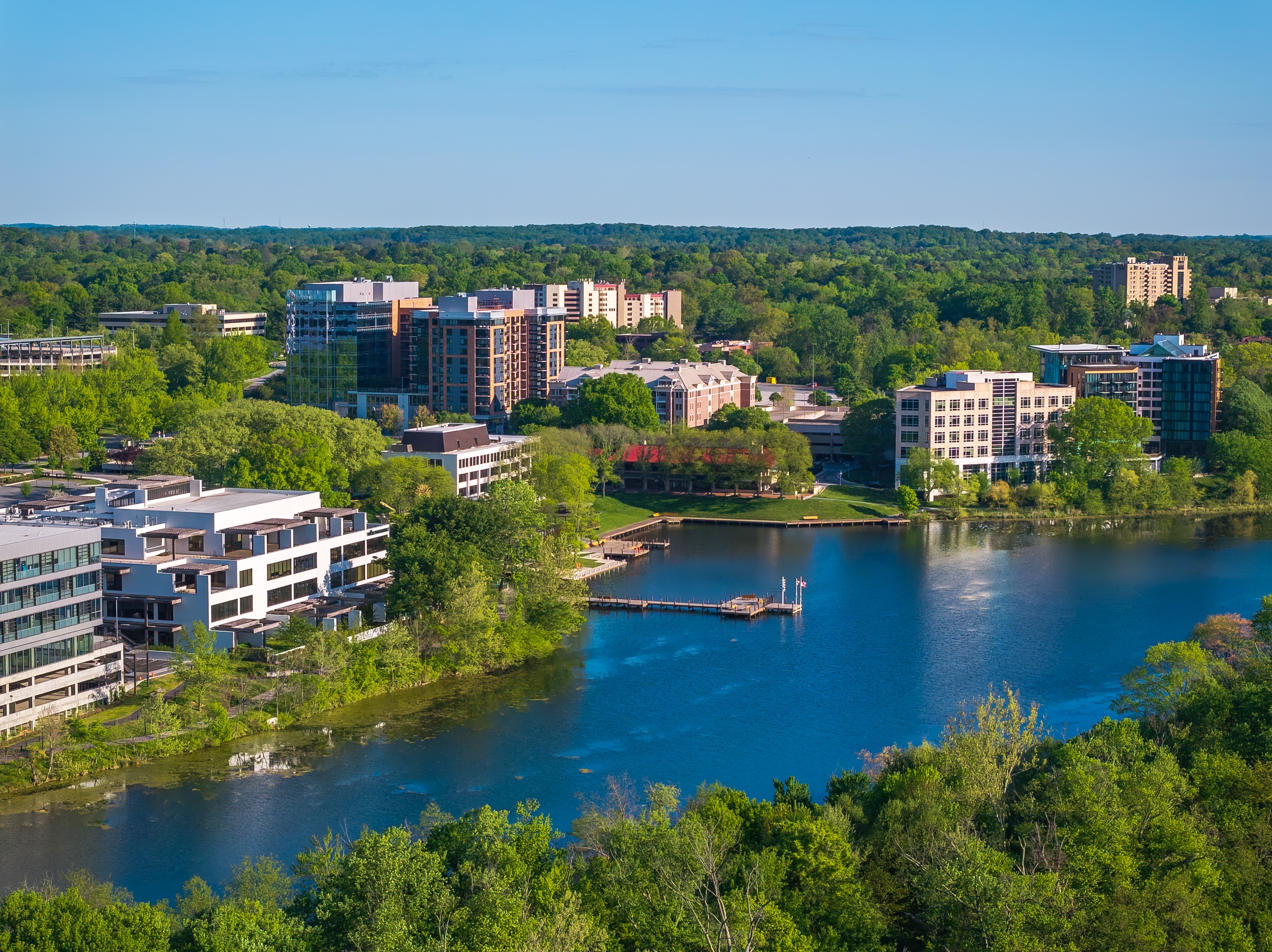
Columbia is an unincorporated planned community in Howard County, Maryland, situated squarely between the major metropolitan areas of Baltimore and Washington, D.C. With a population of approximately 105,000, it ranks among the largest unincorporated communities in the United States. Conceived by developer James Rouse in the 1960s as a model of thoughtful suburban planning, Columbia is organized into a network of distinct villages connected by lakes, pathways, and community centers, giving it a village-like character within the broader Baltimore–Washington corridor. It lies roughly halfway between the two cities, with Baltimore about 20 miles to the northeast and the nation's capital about 30 miles to the south, making Columbia a convenient home base for travelers exploring the mid-Atlantic.
Merriweather Post Pavilion is Columbia's most celebrated cultural landmark, an open-air music amphitheater that has hosted legendary performances since 1967. Set within the wooded Symphony of the Woods neighborhood, the venue draws major national acts each summer and remains one of the region's premier concert destinations, located just minutes from the heart of the community. Merriweather Post Pavilion
Just a few miles to the north sits Historic Ellicott City, a remarkably preserved 18th-century mill town along the Patapsco River. Visitors can wander cobblestone streets lined with antique shops, art galleries, and restaurants housed in original stone buildings, offering a glimpse into Maryland's early industrial heritage and a charming counterpoint to Columbia's modern planned landscape.
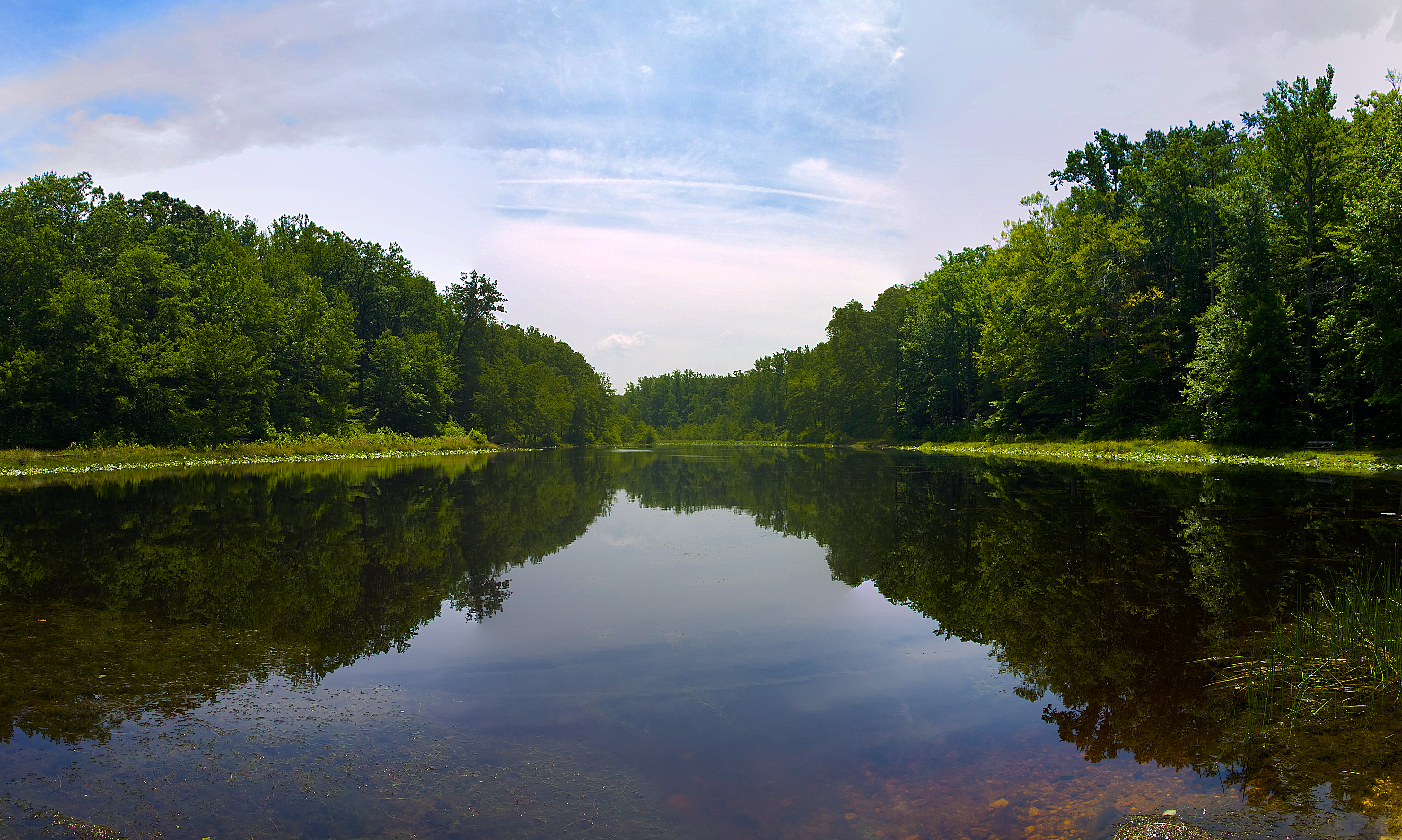
Outdoor enthusiasts are drawn to Centennial Park, Columbia's largest green space, which features a sizable lake suitable for fishing and non-motorized boating, along with miles of walking trails, picnic areas, and open fields. The park provides a peaceful retreat right within the community and is a favorite among families, joggers, and casual nature lovers.
A short drive southwest brings visitors to Patapsco Valley State Park, Maryland's most-visited state park, which winds along the Patapsco River with more than 16,000 acres of forest, rocky gorges, and historic mill sites. Hikers, cyclists, and paddlers find ample room to explore, with trailheads accessible within roughly 20 minutes of central Columbia.
Columbia's appeal as a short-term rental destination lies in this rare combination of qualities: a quiet, amenity-rich community with its own distinctive cultural venues, yet positioned within easy reach of the historic and political landmarks of Washington, D.C., the Inner Harbor and museums of Baltimore, and the colonial charm of Annapolis along the Chesapeake Bay. Travelers seeking a comfortable suburban base with quick access to three major cities and abundant outdoor recreation will find Columbia an exceptionally well-placed choice.
Want to know if a property in Columbia is a good investment?
Enter an address to get instant revenue potential and comps.