
Ottawa, Kansas
Want to see how Ottawa compares to other top cities in Kansas? Explore all city regulations in Kansas. →
Ottawa, KS
Generally Investor Friendly
STR Regulations for Ottawa, Kansas
Note: This guide synthesizes only the content you provided and is intended for investors evaluating STRs in Ottawa, Kansas. It is not legal or tax advice. Regulations evolve; confirm requirements with the City of Ottawa (planning/codes), Franklin County, and the Kansas Department of Revenue before operating.
Are Short‑Term Rentals Allowed in Ottawa, KS?
- Short‑term rentals appear to be allowed under Ottawa’s zoning definitions, but final permission depends on the property’s zoning district and whether a conditional use permit is required for a “lodging house.”
- Ottawa’s zoning defines “lodging house” as a building where, for compensation and by pre‑arrangement for definite periods, meals, or lodging and meals, are provided; individual cooking facilities are not provided. This aligns operationally with many short‑term rental setups (room‑level rentals, whole‑home listings where guests may use cooking facilities, etc.).
- Because Ottawa’s zoning treats lodging houses as a distinct use, hosts must confirm: (i) the property’s zoning district and (ii) whether the district permits lodging houses by right or only by conditional use permit.
Source: Ottawa Zoning Regulations – Definitions (Article 2, Section 2‑301) — “Lodging house.”
What do Airbnb hosts actually earn in Ottawa?
Ottawa hosts earn a median $20,791/year with $128 ADR and 60% occupancy.
Top performers pull in $31,075+ per year.
See the full Ottawa market breakdownHow to Start an STR Business in Ottawa, KS (Practical Steps)
- Site selection and zoning verification
- Identify target properties and obtain zoning classifications. Confirm whether “lodging house” is a permitted or conditional use in each district.
- If lodging houses are conditional uses in the district, prepare to submit a conditional use permit (CUP) application with the required findings and supporting materials (site plan, parking/ingress/egress, utility capacity, and compatibility with surrounding uses).
- Compliance check with residential definitions and accessory use rules
- If the intended operation is akin to a “bed and breakfast inn,” confirm the use is allowed and whether additional conditions apply (e.g., receptions/weddings as accessory uses).
- Ensure the operation aligns with “home occupation” rules if proposing a low‑scale STR; clarify the distinction if guests cook on‑premises.
- Permitting and approvals
- If zoning permits lodging houses by right: proceed to building, life‑safety, and business licensing requirements.
- If lodging houses require a CUP: apply through Planning/Codes, follow noticing and hearing procedures, and address any conditions imposed.
- Life‑safety and building compliance
- Verify fire, building, and occupancy requirements with City of Ottawa codes. If conversions from single‑family to lodging use trigger life‑safety upgrades, plan scope and budget.
- Insurance and risk management
- Secure a short‑term rental policy. Standard homeowners policies typically exclude hosting‑related liability and property damage; specialized STR coverage is advisable.
- Tax setup
- Register for Kansas sales/use tax and the Kansas Transient Guest Tax (TGT) through the Kansas Department of Revenue.
- If a local lodging/tourist tax exists in Franklin County or Ottawa, register with the local authority.
- Booking operations and recordkeeping
- Establish consistent check‑in/out standards, guest screening, quiet hours/noise management, parking plans, and complaint response protocols. Maintain records for at least the statutory retention period (if any), and for tax reporting.
- Compliance monitoring
- Monitor City Commission and Planning Commission agendas for ordinance amendments affecting lodging houses or STRs. Renew any registrations/permits as required.
Documents, Permits, Licenses, and Guidelines
City (Ottawa)
- Conditional Use Permit (if lodging houses are not permitted by right in the subject zoning district)
- Building/fire/life‑safety permits and inspections as applicable to occupancy classification
- Business registration/licensing (if required by City; confirm with Codes)
- Kansas resale/exemption and tax registration (KDOR; for TGT and sales tax compliance)
State (Kansas)
- KDOR registration for Transient Guest Tax (TGT) and sales/use tax
- Sales tax permit if applicable
- Compliance with any Kansas Department of Health and Environment (KDHE) health and safety provisions where relevant
Federal
- Federal tax filings for rental income, estimated taxes, and potentially 1099‑K reporting (consult a CPA)
Operation
- STR insurance policy
- House rules, safety procedures, and emergency contact information
- Guest screening policies and incident logs
Specific Regulations: Ottawa (City), Franklin County (County), Kansas (State)
City of Ottawa (City Code Appendix C – Zoning, Article 2, Definitions)
- Lodging house definition: Building where lodging and/or meals are provided for pay by pre‑arrangement for definite periods; no individual cooking facilities provided. This is a key operational definition for STRs that operate at room‑level or in a home sharing format.
- Bed and breakfast inn: Residential structure where sleeping rooms and meals are provided for compensation by pre‑arrangement for short‑term stays. Receptions, weddings, and similar events are accessory uses at a bed and breakfast inn. Confirm zoning district allowance and any CUP requirements.
- Home occupation: Accessory occupational use conducted entirely within a dwelling unit by occupants; must be clearly incidental to residential use and not alter the residential character. STRs operating in a manner that fits this definition may be evaluated differently than lodging houses; confirm applicability.
- Conditional use: Certain uses (e.g., lodging houses) may be permitted only if compatible with surrounding uses following public notice, hearing, and approval; conditions and safeguards may be attached.
County (Franklin County)
- No specific Franklin County STR ordinance is provided in the source content. Some Kansas counties administer local transient guest or lodging taxes separate from the state. Hosts should verify with Franklin County (County Clerk or Treasurer) whether a local lodging tax applies in Ottawa.
State (Kansas)
- Transient Guest Tax (TGT): 6% on lodging for stays fewer than 28 consecutive days. The tax applies to rental establishments with more than two bedrooms and is remitted to the Kansas Department of Revenue. Hosts must collect and remit TGT from guests.
- Sales and use tax: Hosts should register for any applicable sales/use tax and confirm whether Airbnb/booking platforms remit taxes on the host’s behalf.
- No statewide definition: Kansas does not have a uniform statewide definition of short‑term rentals. Local municipalities set thresholds and rules; Ottawa should be treated as the primary authority for allowable uses, stay thresholds, and permitting.
Contact Information (Ottawa, County, State)
City of Ottawa – Planning, Codes, and Zoning Administration
- Primary contact: City of Ottawa Planning and Codes Administration
- Phone: Confirm current number with Ottawa City Hall (785‑229‑3600 is commonly published for general inquiries; verify)
- Email: Verify current Planning/Codes email through the City’s website (ottawaks.gov)
- Website: City of Ottawa – City Code Appendix C (Zoning): ottawaks.citycode.net/artiRuleInteAndDefi.htm
- In person: Ottawa City Hall; 101 S. Hickory St., Ottawa, KS 66067 (for scheduling permits/inspections)
Franklin County – County Clerk/Treasurer
- Local lodging tax question: Confirm whether Franklin County imposes a local lodging/tourist tax on stays under 28 days.
- Phone/email: Verify through the County website (franklincoks.gov) or County Clerk’s office
- Website: Franklin County, KS official site (franklincoks.gov)
Kansas Department of Revenue – Business Tax
- Registration: Set up TGT and sales tax accounts, obtain filing cadence, and retrieve forms.
- Phone/email: Verify via the KDOR website (ksrevenue.gov)
Important: The City of Ottawa does not appear to publish a dedicated STR licensing webpage in the provided sources. Confirm whether Ottawa requires a separate business license for lodging houses and obtain current contact details from City Hall or Planning/Codes.
Links to Source Pages
- Ottawa Zoning Regulations – Article 2 (Rules, Interpretations, Definitions): ottawaks.citycode.net/artiRuleInteAndDefi.htm
- Lodge Compliance – Kansas STR overview (statewide TGT and lack of uniform local STR law; local links vary): www.lodgecompliance.com/states/kansas
- Airbnb Help – Ottawa, Canada (not applicable; included in your data but not relevant to Ottawa, KS): www.airbnb.com/help/article/3220
- Proper Insurance – Kansas STR overview (Kansas City, Lawrence, Wichita rules): www.proper.insure/regulations/airbnb-laws-kansas/
Operating Notes
- Primary‑residence vs. non‑owner‑occupied: The provided Ottawa code does not specify primary‑residence restrictions for STRs. Many Kansas cities distinguish owner‑occupied vs. non‑owner‑occupied STRs (e.g., Lawrence limits non‑owner‑occupied STRs in RS/PD zoning). Ottawa’s stance requires confirmation with the City; plan for either scenario.
- Definitions drive outcomes: Because Ottawa explicitly defines “lodging house,” that classification is central to zoning and permitting decisions. Do not assume “hotel” definitions (e.g., Ottawa’s definition of a hotel as transient‑guest lodging with four or more rooms) apply to typical STRs.
- Taxation: The Kansas TGT at 6% for stays under 28 days is clear. Collect and remit via KDOR; verify whether Franklin County or Ottawa applies any local lodging taxes.
If you have a specific property address, I can suggest a targeted diligence checklist (zoning district, permitted uses, CUP applicability, utilities, parking, fire life‑safety, and tax registration path).
Next step
Found a property in Ottawa?
Paste any address and get estimated revenue, cash-on-cash return, and comparable STR performance in under 5 minutes. 3 free analyses per day.
Free brief
Get the free Ottawa STR Investment Brief
Revenue data, top neighborhoods, seasonal trends, and the key regulations for Ottawa, Kansas in one email.
Ottawa
Market Saturation Score
Photos of Ottawa


Overview of Ottawa
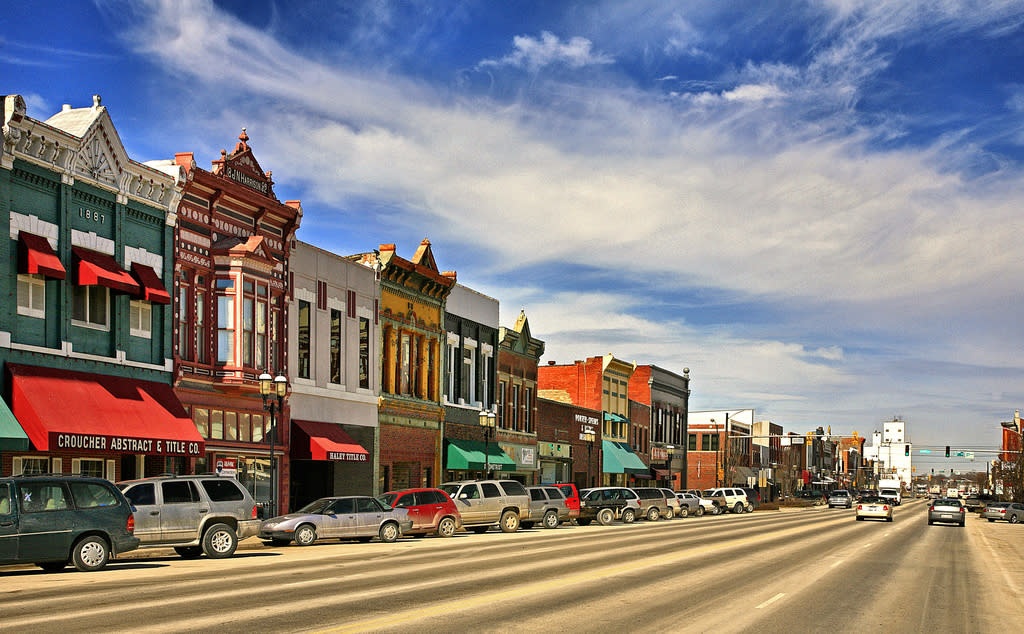
Ottawa is a small city in eastern Kansas, serving as the county seat of Franklin County. It sits along the Marais des Cygnes River and is home to approximately 12,000 to 13,000 residents. The city has a quiet, traditional Midwestern character anchored by a brick-paved courthouse square in its historic downtown, and it is best known as the home of Ottawa University, a private liberal arts college founded in 1865. Ottawa lies roughly 50 to 55 miles southwest of the Kansas City metropolitan area, putting a slower-paced small-town experience within an easy drive of a major metro.
The Old Depot Museum, located in downtown Ottawa, preserves local history inside a former railroad depot. It offers a look at the city's railroad heritage, frontier-era settlement, and the everyday life of eastern Kansas in the 19th and early 20th centuries, all within walking distance of the courthouse square and a short stroll from locally owned restaurants and shops.
About 20 to 25 minutes southwest of Ottawa, Melvern Lake and the surrounding Eisenhower State Park provide a generous outdoor escape. The lake and park offer boating, fishing, swimming, camping, and hiking, giving visitors a chance to spend a full day on the water or on the prairie without venturing far from town.
Roughly 40 to 45 minutes to the northeast, near Lawrence, [Constitution Hall State Historic Site](en.wikipedia.org/wiki/Constitution_Hall_(Lecompton,_Kansas) in Lecompton is a National Historic Landmark where the proslavery Lecompton Constitution was debated in 1857. It offers a tangible connection to the turbulent pre-Civil War era often called "Bleeding Kansas" and stands as one of the more significant historical stops in the region. Lawrence itself, home to the University of Kansas, is a worthwhile addition to a day trip in this direction.
A bit further to the west and southwest, the rolling tallgrass of the Flint Hills begins to make itself known, hinting at the broader prairie landscape that defines much of central Kansas and offering scenic drives for travelers who want to venture deeper into the state.
Ottawa works well as a short-term rental base for travelers who want a quiet, walkable small-town stay with access to both Kansas City and the natural and historical offerings of eastern Kansas. Its central position between the metro, the outdoor recreation around Melvern Lake, and the historic sites of the region gives it a balanced appeal, especially for visitors who prefer the character of a small college town over the chain hotels of larger cities.
Want to know if a property in Ottawa is a good investment?
Enter an address to get instant revenue potential and comps.