
Richmond, Indiana
Want to see how Richmond compares to other top cities in Indiana? Explore all city regulations in Indiana. →
Richmond, IN
Challenging To Investors
STR Regulations for Richmond, Indiana
Overview: Are short-term rentals allowed in Richmond, IN?
- No city-specific short-term rental (STR) regulations or guidance were provided for Richmond, Indiana (Wayne County) in the source materials.
- Absent city-specific rules, STR operations in Richmond, IN are generally subject to Indiana state-level requirements, including business registration, state gross retail/public safety improvement taxes, and local innkeeper’s/accommodation taxes where applicable.
- Because local ordinances, permits, and contact details are not provided in the source set, investors should confirm with the City of Richmond (Building/Zoning) and Wayne County before listing or operating a property.
- Important: The provided sources include detailed STR frameworks for Richmond, CA and Richmond, VA. Those frameworks are not applicable to Richmond, IN and are referenced here only to illustrate what an STR regime can look like in other jurisdictions.
How to start a short-term rental business in this market (Richmond, IN)
- Confirm local zoning and land use:
- Determine whether STRs are a permitted use in the subject zoning district and whether a conditional use permit (CUP), site plan, or other approvals are required. Building/zoning approval typically precedes any license or tax registration.
- Establish legal entities and insurance:
- Form an appropriate business entity; obtain general liability and property insurance appropriate for short-term rental operations. If the property is in a homeowners association (HOA), review covenants, conditions, and restrictions (CC&Rs) for STR prohibitions or limits.
- Register for taxes and obtain licenses:
- Register with the Indiana Department of Revenue for state taxes (e.g., gross retail tax and state public safety improvement tax) and for any federal employer identification number (EIN) if acting as an employer or filing business returns.
- Determine if a local (city/county) innkeeper’s or accommodation tax applies and register accordingly.
- Engage reputable property management (if applicable):
- Consider a licensed local property management company for turnkey operations, guest screening, and regulatory compliance monitoring.
Required documents, permits, licenses, and guidelines
- State and federal:
- Indiana business registration (if required for the entity type) and tax registration for gross retail/public safety improvement taxes; EIN for federal tax reporting; IRS W-9 for vendor/tenant communications if collecting local accommodation taxes.
- Local (city/county):
- Zoning approval/CUP and/or building compliance where required by local ordinance (status unknown for Richmond, IN).
- Any local business license or transient occupancy/accommodation tax registration (status unknown for Richmond, IN).
- Property-level compliance:
- Smoke detectors, carbon monoxide detectors (if sleeping rooms or cooking areas exist), fire extinguishers, safe egress, and compliance with relevant building/fire codes (confirm local requirements).
- Parking and occupancy standards as may be set by local ordinance (confirm).
- Advertising standards/permit posting if the city requires permit numbers in listings (confirm).
- Good-practice documentation:
- Detailed floor plan showing room uses, sleeping occupancy, cooking facilities, and detector/extinguisher locations; owner residency affidavit if required by local permit.
Specific regulations for short-term rentals in this city, county, and state
- City of Richmond, IN:
- No city-specific STR regulations, permit requirements, or contact details are provided in the sources. Confirm with the City’s Building/Zoning and Clerk-Treasurer offices for any local ordinance, license, or tax requirements.
- Wayne County:
- No county-specific STR guidance is provided in the sources. County accommodations/innkeeper’s taxes may apply; confirm with the County Treasurer/Auditor.
- Indiana (state level):
- Indiana generally treats most lodging businesses as “ret food & lodging” subject to state gross retail tax and the state public safety improvement tax.
- Short-term rentals must collect and remit applicable state sales/use taxes (if required for the business classification).
- Local innkeeper’s/accommodation taxes may apply and are typically collected by the operator and remitted to local tax administrators.
- Fire/bafety, building, and zoning rules apply to STRs; confirm local enforcement and any home occupation permit requirements.
Contact information for the local authority in charge of STRs
- City of Richmond, IN (status unknown based on provided content):
- Phone: Not provided in sources.
- Email: Not provided in sources.
- Website: Not provided in sources.
- Recommended action: Contact the City Building Department, Zoning Administration, and Clerk-Treasurer’s office to confirm permits, licensing, and any local accommodation taxes.
Links to source pages
- Richmond, CA – Short-Term Rentals (City): www.ci.richmond.ca.us/3219/Short-Term-Rentals
- Richmond, VA – Short-Term Rentals (City): www.rva.gov/planning-development-review/short-term-rentals
Notes
- This guide intentionally avoids importing rules from Richmond, CA or Richmond, VA because those are separate jurisdictions and not applicable to Richmond, IN.
- Investors should obtain written confirmation from the City of Richmond, IN and Wayne County on zoning, permitting, taxes, and fire/life-safety requirements before acquiring or listing properties.
What do Airbnb hosts actually earn in Richmond?
Richmond hosts earn a median $23,500/year with $119 ADR and 61% occupancy.
Top performers pull in $27,653+ per year.
See the full Richmond market breakdownNext step
Found a property in Richmond?
Paste any address and get estimated revenue, cash-on-cash return, and comparable STR performance in under 5 minutes. 3 free analyses per day.
Free brief
Get the free Richmond STR Investment Brief
Revenue data, top neighborhoods, seasonal trends, and the key regulations for Richmond, Indiana in one email.
Richmond
Market Saturation Score
Photos of Richmond



Overview of Richmond
Richmond is a city in eastern Indiana that serves as the county seat of Wayne County. With a population of approximately 35,000 residents, it carries the feel of a classic Midwestern town with a strong industrial heritage and a deep sense of place. Best known for its historic role in early American manufacturing and the Underground Railroad, Richmond also acts as a convenient gateway to the natural beauty of east-central Indiana and the rural borderlands near Ohio. The city sits about 70 miles east of Indianapolis and roughly 65 miles northwest of Dayton, Ohio, giving it a useful position for travelers exploring the tri-state region.
One of the area's most distinctive cultural draws is the Model T Ford Museum, which celebrates Richmond's significant place in early American automobile history. The city was once home to a cluster of early auto manufacturers, and the museum preserves vehicles, memorabilia, and stories from that pioneering era. It is located within the city and is a popular stop for automotive enthusiasts and history-minded visitors alike.
A short drive north of Richmond, in the small town of Fountain City, sits the Levi Coffin House, a National Historic Landmark often called the "Grand Central Station" of the Underground Railroad. Coffin and his wife Catharine sheltered an estimated 3,000 freedom seekers before the Civil War, and the restored Federal-style home now operates as a museum. The site is approximately 12 miles from downtown Richmond and offers a moving complement to the city's own abolitionist history.
For those drawn to the outdoors, the Hayes Arboretum offers miles of walking trails through woodlands, meadows, and rock outcroppings on the east side of Richmond. The arboretum spans several hundred acres and is known for its native tree collection, seasonal wildflowers, and quiet, hilly terrain typical of the unglaciated portion of eastern Indiana. It is a quick drive from the city center and a popular spot for hiking, birding, and nature programs.
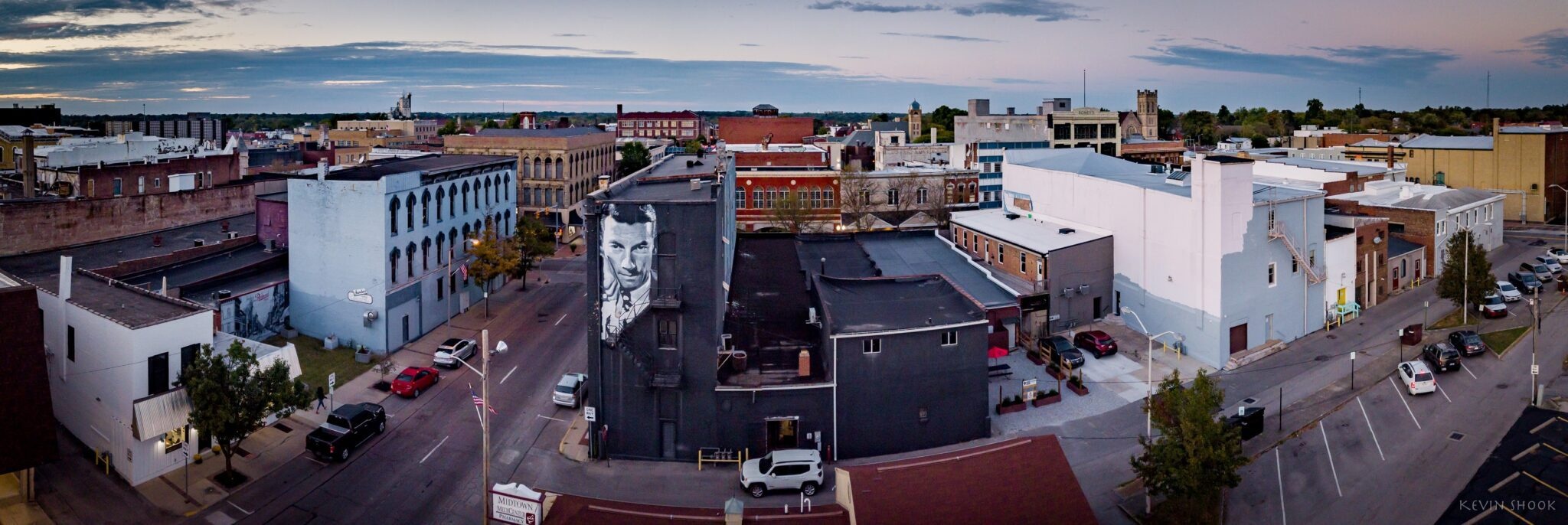
Downtown Richmond itself continues to reflect its 19th-century prosperity through a preserved historic core of Italianate and Victorian architecture, anchored by the Wayne County Courthouse. Independent shops, restaurants, and small performance venues line the main streets, and the Starr-Gennett recording legacy gives the city a footnote in early jazz and blues history that still draws curious visitors.
Richmond's appeal as a short-term-rental base lies in the balance it strikes between small-town affordability, layered history, and outdoor access. Visitors can spend the morning in a museum, the afternoon on an arboretum trail, and the evening browsing a quiet historic downtown, all within a short drive. Its proximity to both Indianapolis and Dayton, along with a steady calendar of regional events, helps give the city year-round demand from travelers seeking something a little less hurried than the big metros nearby.
Want to know if a property in Richmond is a good investment?
Enter an address to get instant revenue potential and comps.