
Muncie, Indiana
Want to see how Muncie compares to other top cities in Indiana? Explore all city regulations in Indiana. →
Muncie, IN
Generally Investor Friendly
STR Regulations for Muncie, Indiana
Overview: Are Short-Term Rentals Allowed in Muncie, IN?
Yes, short-term rentals are allowed in Muncie, Indiana. Based on the available data and market analysis, Muncie operates under a low regulation environment for short-term rentals, offering investors significant operational flexibility. The city has 116 active STR listings with strong market performance, indicating that short-term rental operations are not only permitted but thriving in this market. The AirROI 2025 market analysis specifically notes "Leveraging the low regulation environment is key to maximizing your short term rental income potential" in Muncie.
What do Airbnb hosts actually earn in Muncie?
Muncie hosts earn a median $24,267/year with $120 ADR and 67% occupancy.
Top performers pull in $32,759+ per year.
See the full Muncie market breakdownHow to Start a Short-Term Rental Business in Muncie
Market Analysis and Opportunity Assessment
Before launching your STR business in Muncie, it's essential to understand the market dynamics:
- Active Market: 116 active listings currently operating
- Average Daily Rate: $141
- Occupancy Rate: 45.5%
- Median Annual Revenue: $19,329
- Revenue Growth: 18.3% year-over-year
- Peak Season: July generates highest revenues
- Low Season: February presents lowest earnings
Property Selection and Location Strategy
Muncie offers several attractive neighborhoods for STR investment:
- Downtown Muncie - Heart of the city with vibrant atmosphere
- Historic Old West End - Charming historic district
- Northside - Close to Ball State University
- University Village - Adjacent to BSU, ideal for university events
- Riverside - Scenic area along White River
Business Formation Steps
- Property Acquisition: Target houses (73.3% of market composition)
- Zoning Compliance: Verify zoning allows residential use and STR operations
- Property Preparation: Ensure property meets all essential amenities requirements
- Insurance Coverage: Obtain appropriate STR liability and property insurance
- Platform Registration: List on Airbnb, VRBO, or other platforms
Required Documents, Permits, Licenses, and Guidelines
Zoning and Land Use Compliance
Current Status: Based on the City of Muncie Comprehensive Zoning Ordinance, short-term rentals appear to operate under residential zoning classifications without specific STR permits or licenses currently required. However, operators must comply with:
Essential Zoning Requirements
Single-Family Residential Zones (R-1 through R-6):
- Structures must be used primarily as single-unit dwellings
- Home occupation regulations may apply to STR operations
- Minimum floor area requirements vary by zone (860-950+ sq ft)
- Setback requirements: Front (25-50 ft), Side (6-15 ft), Rear (25-35 ft)
- Maximum height limits: 30-45 feet depending on zone
Accessory Use Regulations:
- STR operations may be considered accessory uses
- Must be incidental and commonly associated with principal residential use
- Cannot exceed height, area, and bulk limitations of principal use
- Must maintain same ownership as principal use
Building and Safety Requirements
Standard Building Permits:
- Building permits required for significant alterations
- Electrical, plumbing, and mechanical permits as needed
- Certificate of Occupancy may be required for new STR conversions
- Smoke detectors and safety equipment compliance
Health and Safety Standards:
- Compliance with Indiana One and Two Family Dwelling Code
- Proper sanitation facilities
- Adequate heating, ventilation, and air conditioning
- Safe egress and emergency access
Business Licensing
Current State: No specific STR business licenses or permits appear to be mandated based on available documentation. However, verify current requirements with local authorities as regulations can change.
Insurance Requirements
Recommended Coverage:
- General liability insurance ($1M+ recommended)
- Property damage coverage
- Business interruption insurance
- Guest injury coverage
Specific Regulations for Short-Term Rentals
City-Level Regulations (Muncie)
Zoning Compliance Requirements:
- STRs must conform to underlying residential zoning
- No specific STR density limitations identified
- Signage must comply with Article XXX regulations
- Off-street parking requirements per Article XXX, Section 2
Home Occupation Considerations:
- STR operations may fall under home occupation regulations (Article IX, Section 116)
- Must not significantly increase traffic or parking demand
- Cannot create noise or nuisance conditions
- Customer parking must be addressed per zoning requirements
Performance Standards:
- Must not exceed noise ordinance limitations
- Proper waste management required
- Property maintenance standards apply
- No outdoor storage or display regulations apply
County-Level Regulations (Delaware County)
Jurisdiction: Delaware-Muncie Metropolitan Board of Zoning Appeals has oversight authority for zoning variances and special use permits within their jurisdiction.
Zoning Appeals Process:
- Special use permits may be required for some STR operations
- Variance procedures available for unique circumstances
- Appeals process available for zoning decisions
State-Level Regulations (Indiana)
Indiana Code References:
- IC 36-7-1-1 through IC 36-7-1Do (zoning authority)
- IC 36-7-4100 through IC 36-7-41200 (planning and zoning)
State Requirements:
- Fire safety compliance per Indiana Fire Code
- ADA accessibility requirements for public accommodations
- Sales tax collection and remittance requirements
- Income tax reporting obligations
Contact Information for Local Authority
Primary Contacts
Delaware-Muncie Metropolitan Plan Commission
- Phone: Contact Muncie City Hall for current contact information
- Role: Zoning administration and plan review
- Address: City of Muncie, Delaware County, Indiana
City of Muncie Building Department
- Phone: Contact City Hall for current building department number
- Role: Building permits and inspections
- Address: 300 N. High Street, Muncie, IN 47305
Muncie City Hall
- Phone: (765) 747-4845
- Address: 300 N. High Street, Muncie, IN 47305
- Website: www.cityofmuncie.com
Delaware-Muncie Metropolitan Board of Zoning Appeals
- Role: Zoning variances, special use permits, and appeals
- Contact through City Hall
Delaware County Health Department
- Role: Health and sanitation compliance
- Contact through Delaware County government
Additional Contacts
Ball State University
- Phone: (765) 289-1241
- Role: University area coordination and event planning
- Address: 2000 W. University Avenue, Muncie, IN 47306
Market Performance and Investment Metrics
Revenue Performance Tiers (2025)
Top Tier (Top 10%): $3,867+ monthly revenue
- Best-in-class properties achieve 80%+ occupancy
- Daily rates of $211+ per night
- Premium amenities and strategic pricing
Strong Performers (Top 25%): $2,690+ monthly revenue
- Occupancy rates of 66%+
- Daily rates of $168+ per night
- Effective management and desirable locations
Typical Properties (Median): $1,744 monthly revenue
- Occupancy rate around 47%
- Daily rate around $121 per night
- Average market performance
Entry-Level Properties (Bottom 25%): $1,050+ monthly revenue
- Occupancy rate around 27%
- Daily rate around $89 per night
- Potential for optimization
Seasonal Performance Patterns
Peak Season (June-August):
- Revenue: $2,868 monthly average
- Occupancy: 54.7% average
- Daily rates: $157 average
Shoulder Season:
- Revenue: $1,984 monthly average
- Occupancy: 47.0% average
- Daily rates: $134 average
Low Season (January-February, December):
- Revenue: $1,475 monthly average
- Occupancy: 40.1% average
- Daily rates: $125 average
Minimum Stay and Cancellation Trends
Most Common Minimum Stay: 2 nights (41.4% of listings)
- 1-2 night stays represent 73.3% of market
- 19% of properties accept 30+ night stays
- Extended stay opportunities exist
Cancellation Policy Distribution:
- Moderate: 44.7% of listings (most common)
- Flexible: 33.3% of listings
- Firm: 13.2% of listings
- Strict: 8.8% of listings
Essential Amenities and Requirements
Guest Expectations and Market Standards
Required Essential Amenities:
- WiFi (high-speed for modern guests)
- Smoke alarm systems
- Air conditioning (critical for Indiana summers)
- Functional kitchen facilities
- Reliable hot water
Popular Differentiating Amenities:
- Coffee makers and kitchen basics
- Dedicated workspace
- Smart home features
- Unique amenities (hot tub, EV charging)
Guest Demographics
Primary Market Segments:
- 96% domestic travelers
- 50% from Post-2000s generation (Gen Z/Alpha)
- 95.5% from United States
- 81% English-speaking, 8.8% Spanish-speaking
- Key origin markets: Indianapolis area
Best Practices for Success
Operational Strategies
Pricing Strategy:
- Dynamic pricing based on seasonality
- Peak season: Premium pricing with longer minimum stays
- Low season: Competitive pricing with promotions
- Shoulder season: Balanced approach with weekend focus
Marketing Approach:
- Target Indianapolis and local markets
- Emphasize Ball State University events
- Highlight unique local experiences
- Mobile-optimized booking experience
Property Management:
- Professional cleaning between stays
- Prompt guest communication
- Regular maintenance and updates
- Local vendor relationships
Regulatory Monitoring
Stay Informed About:
- Municipal zoning ordinance updates
- Indiana state legislative changes
- County-wide regulations
- Industry best practices and standards
Source Pages
Primary Regulatory Documents
- City of Muncie Comprehensive Zoning Ordinance: https://www.muncieanna.com/assets/documents/nonglobal/Resources/City-of-Muncie-Comprehensive-Zoning-Ordinance.pdf
Market Analysis Data
- AirROI Muncie STR Market Report: https://www.airroi.com/report/world/united-states/indiana/muncie
Additional Resources
- Muncie Municipal Government Website: Contact City Hall for current website information and additional regulatory resources
Important Disclaimers and Recommendations
Regulatory Compliance: While current analysis indicates a low-regulation environment for STRs in Muncie, regulations can change rapidly. Always verify current requirements with local authorities before investing or operating.
Zoning Verification: Confirm zoning compliance with the Planning Commission or Building Department before property acquisition or operation.
Professional Consultation: Consider consulting with local real estate attorneys, accountants, and STR management professionals familiar with Muncie regulations.
Ongoing Monitoring: Establish relationships with local government contacts and monitor for regulatory changes that could impact STR operations.
This analysis is based on the provided source materials and current market conditions. Given the dynamic nature of STR regulations and local policies, investors should conduct additional due diligence and verify all regulatory requirements with current local authorities.
Next step
Found a property in Muncie?
Paste any address and get estimated revenue, cash-on-cash return, and comparable STR performance in under 5 minutes. 3 free analyses per day.
Free brief
Get the free Muncie STR Investment Brief
Revenue data, top neighborhoods, seasonal trends, and the key regulations for Muncie, Indiana in one email.
Muncie
Market Saturation Score
Photos of Muncie


Overview of Muncie
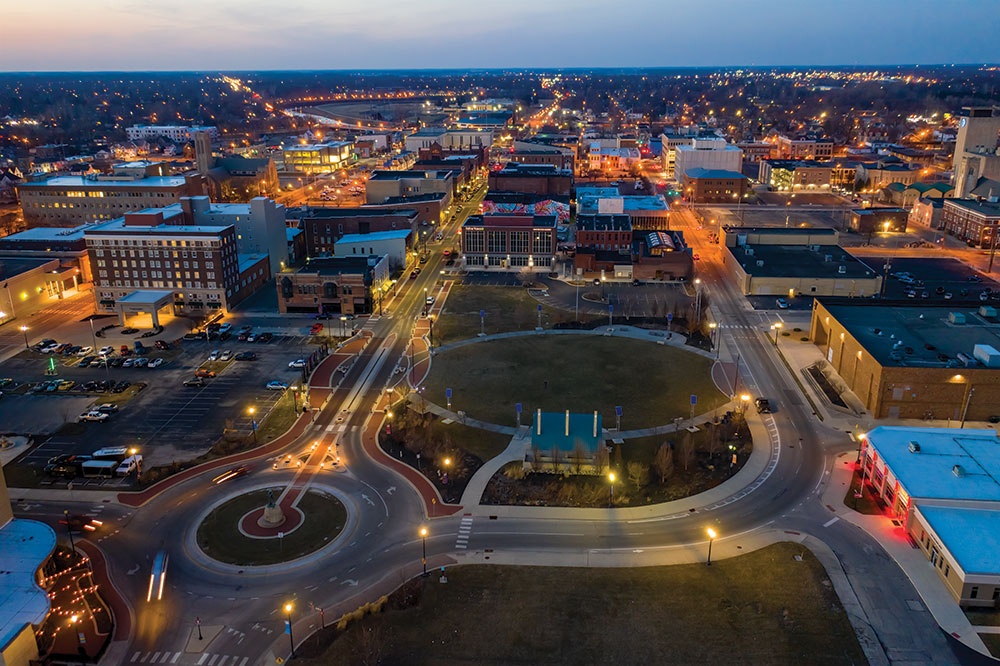
Muncie is a mid-sized city in east-central Indiana, serving as the county seat of Delaware County. With a population of approximately 70,000, it carries the long-standing nickname "Middletown, USA," a label given by sociologists in the 1920s who selected it as a representative slice of American community life. Today, the city is best known as the home of Ball State University, a public research institution that gives the community a young, college-town energy. Muncie sits about 55 miles northeast of Indianapolis, roughly an hour's drive along Interstate 69, making it accessible to the state's capital while retaining its own distinct identity.
Ball State University anchors much of the city's cultural and economic life, drawing tens of thousands of students and faculty each year. The campus, located in the heart of Muncie, hosts concerts, theatre productions, lectures, and sporting events that are open to the public. Football games at Scheumann Stadium and basketball games at Worthen Arena are particularly lively draws during their respective seasons, bringing visiting families into the city throughout the academic year.
Just north of downtown, Minnetrista is a museum and cultural campus spanning several dozen acres, centered on the legacy of the Ball brothers and the Ball Corporation. The grounds include the historic Oakhurst mansion, themed gardens, walking paths, rotating exhibits, and a seasonal farmers market. It functions as both a museum and a community gathering space within minutes of the city center.
Outdoor recreation surrounds the city, with the Cardinal Greenway, a long-distance rail-trail, passing through Muncie and stretching across much of east-central Indiana. The paved trail is popular with cyclists, runners, and walkers, connecting the city to nearby small towns and rural landscapes. Prairie Creek Reservoir, a short drive west of town, adds another outdoor option with boating, fishing, and shoreline trails for day-use visitors.
Muncie offers short-term rental owners a market shaped by Ball State's year-round visitation, regional events, and its role as a hub for the surrounding rural counties. Its affordability, walkable downtown, and proximity to Indianapolis make it appealing to visiting families, prospective students, and business travelers alike. The combination of small-city character, cultural amenities, and easy access to the rest of central Indiana gives the city a steady and varied stream of potential guests.
Want to know if a property in Muncie is a good investment?
Enter an address to get instant revenue potential and comps.