
Evansville, Indiana
Want to see how Evansville compares to other top cities in Indiana? Explore all city regulations in Indiana. →
Evansville, IN
Generally Investor Friendly
STR Regulations for Evansville, Indiana
Are short-term rentals allowed in Evansville?
Evansville, Indiana permits short-term rentals (STRs) under current state and local frameworks. Indiana law (House Bill 1035/1036) prohibits municipalities from banning vacation rentals, though cities can regulate them through permitting, safety, and zoning tools. As of 2025, Evansville does not have a city-specific STR ordinance in its municipal code, and the city does not operate a dedicated short-term rental permitting system. The city does maintain a general “Rental Property Registration” for long‑term rentals ( Ordinance G-2014-29), but this is not a short‑term rental license.
However, a 2026 outlook article projects a more structured registration/licensing regime, including possible background checks, property inspections, and a capped application fee of $150 (mirroring Indiana’s statewide cap for initial permits). These proposals are not currently codified and should be treated as directional rather than enforceable until confirmed by the city.
Bottom line: Yes—STRs are allowed today under general state and local rules; prepare for potential new requirements in 2026 that may introduce a registration/licensing pathway.
- Source references: Indiana overview and protections (Checkmate Rentals; RedAwning), Evansville rental registry (City of Evansville), 2026 outlook and proposed changes (Jaken Finance Group), neutral/undocumented code status (BuildYourBNB).
What do Airbnb hosts actually earn in Evansville?
Evansville hosts earn a median $21,904/year with $108 ADR and 74% occupancy.
Top performers pull in $31,678+ per year.
See the full Evansville market breakdownHow to start a short-term rental business in Evansville
-
Research zoning and land use
- Confirm that STR use is allowed on your parcel. Even without a dedicated STR code, residential/commercial zoning and HOA/cc&r constraints still apply. For properties governed by community associations, obtain written approval before listing.
-
Secure tax registrations and compliance
- Register with the Indiana Department of Revenue to collect/remit the 7% state sales tax on accommodations under 30 days.
- Verify county-level lodging (innkeeper’s) tax obligations (typically remitted through the Indiana Department of Revenue portal for state-administered local taxes).
- Maintain accurate records of nightly rates, cleaning fees, and total charges to ensure precise reporting.
-
Obtain insurance appropriate for commercial STR use
- Standard homeowners policies often exclude short-term rental activity. Carry property and liability coverage tailored to STR operations. Platforms’ host protection programs have gaps and should not be your sole coverage.
-
Implement safety and maintenance standards
- Equip units with working smoke detectors, carbon monoxide alarms where applicable, fire extinguishers, clearly posted emergency egress information, and any additional items required by local code or insurers.
- Establish and document cleaning, maintenance, and turnover protocols to manage compliance, guest safety, and property condition.
-
Designate local point of contact and operations
- Identify an on-call contact for emergency response and complaint resolution. Where owner is out of market, contract with a local property manager. Document response times, issue escalation, and guest communication practices.
-
Guest screening and operational policies
- Define guest criteria, maximum occupancy, quiet hours, parking rules, and community standards. Include house rules in listings and guest agreements.
-
Platform setup and revenue controls
- Publish listings on your chosen channels, implement dynamic pricing, and set channel manager workflows for calendar, messaging, and payment reconciliation.
Required documents, permits, licenses, and guidelines
-
Current state and local requirements
- Business/tax registration: Indiana Department of Revenue registration for 7% state sales tax on transient lodging.
- County lodging tax: Registration and remittance through the state’s portal where administered locally; confirm your specific rate with local authorities.
- General liability and property insurance appropriate for STR use (evidence may be requested by insurers, platforms, or neighbors).
- Local contact information for emergency response and complaint resolution.
- Fire and life-safety equipment: smoke/CO detectors, extinguishers, posted egress info; comply with applicable building/fire codes.
- If in a condo or HOA: written approval or confirmation that STRs are permitted under association bylaws.
-
Likely 2026 registration items (proposed; not yet codified)
- Short-Term Rental Business License (if adopted).
- Application fee capped at $150 for initial permit (Indiana HB 1035 limit).
- Proof of adequate insurance (commonly $1 million liability minimum in comparable Indiana jurisdictions; confirm locally).
- Background checks and property inspections may be included in a future registration framework.
- Designation of a local contact person available 24/7.
- Compliance with building, fire, and zoning codes.
- If your property falls within a “conditional” zone under future zoning overlays, a conditional use permit might be required.
- Expect quarterly tax filings through the Indiana Department of Revenue portal.
-
Documents to maintain for ongoing operations
- Ownership verification, tax registrations, insurance declarations, inspection certificates, local contact details, guest logs and house rules, cleaning and maintenance logs, and tax remittance records.
Specific regulations for short-term rentals in Evansville, Vanderburgh County, and Indiana
-
City of Evansville
- No dedicated short-term rental ordinance as of 2025; general business licensing and safety/nuisance rules apply. City maintains a separate Rental Property Registration for long-term rentals (Ordinance G‑2014‑29), unrelated to STRs.
-
Vanderburgh County
- County lodging/innkeeper’s taxes typically apply to transient accommodations and are administered through the Indiana Department of Revenue portal. Rate and filing cadence should be confirmed with county/IDOR; general range statewide is 2%–10%.
-
State of Indiana
- HB 1035/1036 prohibits municipalities from banning short-term rentals; caps initial permit fees at $150; permits local regulations for safety, zoning, and operational standards.
- State sales tax of 7% applies to lodging under 30 days; state-administered local lodging taxes are filed through the same portal.
- STRs are defined as residential units rented for fewer than 30 consecutive days across much of Indiana; Indianapolis and other cities adopt the same threshold.
-
2026 outlook (proposed, not codified)
- Anticipated introduction of a registration/licensing system, inspections, proof of insurance, and potential zoning overlays that categorize areas as permitted/conditional/prohibited.
- Proposed density or saturation caps and guest registration requirements may be considered as the city formalizes rules.
Contact information for the local authority in charge of STRs
-
City of Evansville – Building Commission, Rental Registry & Housing Coordinator
- Sherry Schapker, Rental Registry & Housing Coordinator
- Address: 1 NW Martin Luther King Jr Blvd, Civic Center Complex, Room 310, Evansville, IN 47708
- Phone: (812) 227-6188
- Fax: (812) 436-7869
- Department: Building Commission (Rental Registry Division)
- Online registration (long-term rental registry; not specific to STRs): rentalregistry.evansville.in.gov/
-
Indiana Department of Revenue (State sales and state-administered local lodging taxes)
- Website: www.in.gov/dor/
- Registration and filings are handled through the state’s online portal; use your state sales tax account to collect/remit transient lodging taxes.
Links to source pages (important)
- Indiana short-term rental overview, definitions, licensing, taxes, and state protections: www.checkmaterentals.com/blog/indiana-short-term-rental-laws
- Evansville 2026 STR outlook (projected regulations, fees, inspections, zoning overlays): www.jakenfinancegroup.com/evansville-short-term-rental-laws-2026-a-complete-guide
- City of Evansville Building Commission – Rental Property Registration contact and registry: www.evansvillegov.org/city/department/division.php?structureid=164
- Indiana overview (state protections, general local variations, and taxes): www.redawning.com/pm/post/indiana-short-term-rental-laws
- Evansville code/STR status reference (no specific STR ordinance in 2021 data): www.buildyourbnb.com/us-airbnb-and-short-term-rental-regulations/evansville
- Indiana Department of Revenue (sales tax and lodging tax portal): www.in.gov/dor/
Important note on timing and verification:
- This guide reflects information available through mid‑2025. Because Indiana allows local governments to add or adjust STR rules, and Evansville may formalize a registration system in 2026, confirm any pending or new requirements with the Building Commission and the Indiana Department of Revenue before investing or launching. When in doubt, treat 2026 proposals as directional until they appear in the city’s ordinances or official guidance.
Next step
Found a property in Evansville?
Paste any address and get estimated revenue, cash-on-cash return, and comparable STR performance in under 5 minutes. 3 free analyses per day.
Free brief
Get the free Evansville STR Investment Brief
Revenue data, top neighborhoods, seasonal trends, and the key regulations for Evansville, Indiana in one email.
Evansville
Market Saturation Score
Photos of Evansville


Overview of Evansville
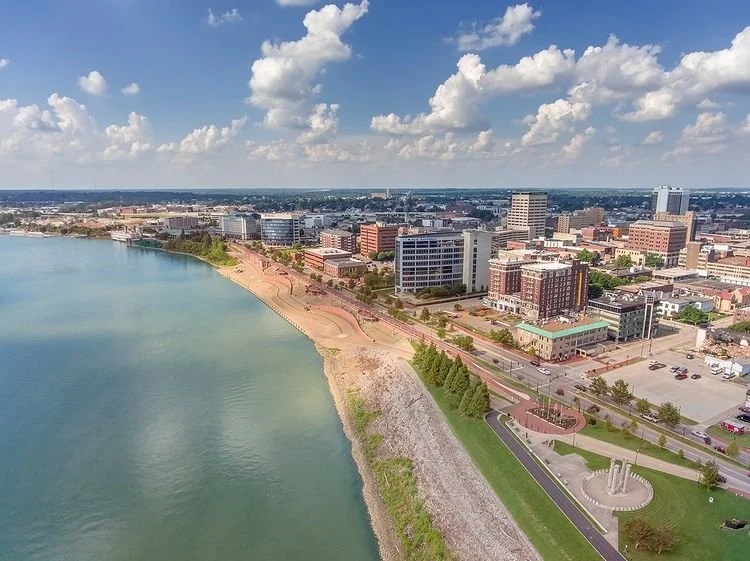
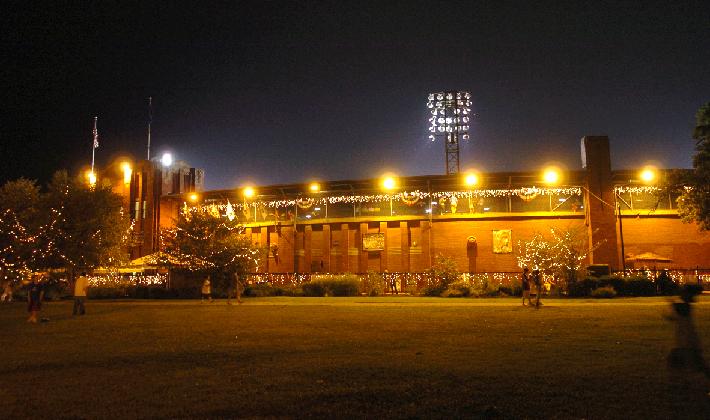
Evansville is the third-largest city in Indiana and the seat of Vanderburgh County, situated along the south bank of the Ohio River in the state's southwestern corner. With a population of approximately 117,000, it has long served as the regional hub of the Tri-State area where Indiana, Kentucky, and Illinois meet. Its downtown riverfront, mid-century neighborhoods, and steadily growing arts scene give the city a working-class, blue-collar-meets-revitalization character, and it is best known as a center for healthcare, manufacturing, and river commerce. Evansville sits roughly 150 miles southwest of Indianapolis, the nearest major city, and is about 115 miles northwest of Louisville, Kentucky, and roughly 165 miles east of St. Louis.
Just east of downtown, Angel Mounds State Historic Site preserves one of the best-documented Mississippian culture settlements in the United States, with earthen mounds, a reconstructed village, and an interpretive center operated by the Indiana State Museum. The site is a National Historic Landmark and lies about eight miles southeast of the city center, making it an easy half-day excursion for visitors interested in pre-contact North American history.
Wesselman Woods Nature Preserve, located on Evansville's north side, protects one of the largest remaining tracts of old-growth bottomland hardwood forest in the country and is recognized as a National Natural Landmark. Its boardwalk trails offer a quiet, shaded escape just minutes from the urban core, and the on-site nature center hosts rotating exhibits on the region's flora and fauna.
Downtown Evansville clusters several indoor and outdoor attractions within walking distance of one another along the riverfront. The USS LST-325, a fully operational World War II-era landing ship that was transported from Greece in the early 2000s, is now permanently docked in Evansville and serves as a floating museum popular with veterans and history enthusiasts. Nearby, Mesker Park Zoo & Botanic Garden combines animal exhibits with a tropical rainforest dome, an Asia exhibit, and landscaped botanical gardens, while the Evansville Museum of Arts, History & Science on the riverfront pairs regional art collections with a planetarium and a hands-on children's discovery area under one roof.
A short drive west of the city, the historic town of New Harmony sits along the Wabash River and offers a preserved utopian settlement founded in the early nineteenth century, with tours of original Harmonist and Owenite buildings, period gardens, and a community labyrinth.
Evansville makes a compelling base for a short-term rental because it pairs affordable Midwestern pricing with a surprisingly deep bench of attractions. Travelers passing through the Tri-State area, families on regional road trips, and visitors to area tournaments, riverfront festivals, and college events find a city that feels approachable, walkable along the Ohio, and well-served by amenities, while still offering the outdoor recreation and historic depth that turn a quick stopover into a destination.
Want to know if a property in Evansville is a good investment?
Enter an address to get instant revenue potential and comps.