
Freeport, Illinois
Want to see how Freeport compares to other top cities in Illinois? Explore all city regulations in Illinois. →
Freeport, IL
Generally Investor Friendly

STR Regulations for Freeport, Illinois
Executive Overview: STR Status in Freeport, IL
Short-term rentals are currently allowed in Freeport, Illinois. The city has an established licensing and registration framework in place for vacation rentals. Most recently, in October 2025, the Freeport City Council rejected a proposed ordinance (2025-58) that would have eliminated short-term rental operations from single-family residential zones (R-1 through R-4), preserving the ability to operate STRs in these traditionally residential areas.
The city operates under a licensing-based system that requires registration, with regulations focused on owner accountability and basic operational standards. While recent incidents have prompted discussions about enhanced safety measures, Freeport currently maintains a permissive regulatory environment compared to many other municipalities.
What do Airbnb hosts actually earn in Freeport?
Freeport hosts earn a median $17,564/year with $158 ADR and 52% occupancy.
Top performers pull in $24,008+ per year.
See the full Freeport market breakdownHow to Start a Short-Term Rental Business in Freeport
Step-by-Step Licensing Process
-
Complete the City Application
- Download and complete the official Vacation Rental Application from the City of Freeport website
- Return completed forms to: City Clerk Forms, 314 W. Stephenson Street, Suite 200, Freeport IL 61032
-
Submit Required Documentation
- Owner of record must be listed on the application (this is mandatory under current regulations)
- Provide proof of insurance that matches the title ownership
- Submit documentation verifying legal property ownership
- For rent-to-own arrangements: provide owner affidavits as appropriate
-
Obtain Approval
- Applications are reviewed for completeness and compliance
- Matching insurance and title ownership verification is required
- Approved applications receive city licensing
-
Ongoing Compliance
- Maintain current contact information with city for emergency services
- Comply with all city ordinances regarding noise, property maintenance, and nuisance activities
- Display required posting as outlined in city regulations
Business Planning Considerations
- Market Analysis: Freeport has limited STR inventory (only a handful available on major platforms according to city officials), suggesting potential opportunity
- Property Standards: Ensure properties meet all local housing and safety standards
- Insurance Requirements: Maintain comprehensive liability insurance matching property ownership documentation
- Local Relations: Given recent regulatory discussions, maintaining positive community relationships is crucial
Required Documents, Permits, Licenses, and Guidelines
Primary Requirements
Licensing Documents:
- Vacation Rental Application (official city form)
- Proof of property ownership or owner affidavits for rent-to-own situations
- Insurance documentation matching title ownership
- Owner contact information for emergency services access
Permits and Approvals:
- City business license (through standard licensing process)
- Any applicable zoning compliance verification
- Special-use permits where required (see specific regulations section)
Compliance Documentation:
- Current contact information filed with city for police/fire access
- Property maintenance compliance documentation
- Noise and nuisance ordinance adherence proof
Platform Compliance
Airbnb Requirements:
- Background checks for hosts in certain regions (not specifically required by city)
- Standard platform host verification processes
Vrbo Requirements:
- No specific background check mandates
- Standard platform registration processes
Platform Contact Information:
- Airbnb host support through platform systems
- Vrbo host support through platform systems
Specific Regulations: City, County, and State
City of Freeport Regulations
Current Licensing Framework:
- Mandatory registration with the city (enforced under current ordinances)
- Owner of record must be listed on applications
- Insurance and title ownership verification required
- Contact information must be provided for emergency services
Recent Regulatory Activity (2025):
-
Failed Restriction Ordinance:
- Ordinance 2025-58 would have eliminated STRs from R-1 through R-4 single-family zones
- Defeated 6-2 by City Council in October 2025
- Planning commission had recommended approval by 5-0 vote
- Current regulations remain in effect
-
Amendments to STR Ordinance (Previous):
- City council approved amendments following resident complaints
- Key provisions included:
- Limitation of one rental per 200 feet in certain areas
- Special-use permit requirements for STR use
- Prohibition of street parking
- Required posting of license and host rules at front door
- Grandfathering provisions for properties in compliance at time of amendment
Operational Standards:
- Adherence to existing city ordinances for noise, property maintenance, and nuisance activities
- No specific background check requirements for guests
- Hosts may establish additional safety rules and consult with police department
Stephenson County Regulations
Current Status:
- No specific county-level STR regulations identified
- County Board member Lynette Williams has expressed interest in reviewing vacation rental industry regulations following safety incidents
- Potential future county-level oversight discussions possible
Safety and Public Safety Context:
- Recent incidents have prompted calls for enhanced regulation
- County officials monitoring situation for potential future action
Illinois State Regulations
General Business Framework:
- Standard Illinois business licensing requirements
- State health and safety regulations apply
- Sales tax collection requirements for short-term rentals
- Local control framework allows municipalities significant regulatory authority
State-Level Considerations:
- No statewide ban on short-term rentals
- Municipalities have significant home rule authority over zoning and licensing
- Short-term rental operations fall under general business regulations
Contact Information for Local Authorities
City of Freeport - Primary Contact
City Clerk's Office (STR Licensing)
- Phone: 815-235-8203
- Address: City Clerk Forms, 314 W. Stephenson Street, Suite 200, Freeport IL 61032
- Email: Contact through City Hall main number
- Website: cityoffreeport.org/documents/vacation-rentals/
City Hall General Contact
- Phone: (815) 235-8203 (main)
- Address: 314 W. Stephenson Street, Freeport IL 61032
- Website: cityoffreeport.org/
- Hours: Monday-Friday, 8:00 am - 5:00 pm
Community Development Department
- Phone: (815) 235-8203 (through City Hall)
- Role: Zoning and development compliance for STR operations
Freeport Police Department
Emergency Contact:
- 911: For emergencies
Non-Emergency Contact:
- Phone: Contact through City Hall for non-emergency police services
- Role: Safety consultation, incident response, enforcement of existing ordinances
Chief Chris Shenberger:
- Contact: Through police department administrative channels
- Role: Oversees law enforcement response to STR-related incidents
Stephenson County Government
County Board Member (District E) - Lynette Williams
- Role: County oversight, potential future county-level regulation consideration
- Contact: Through Stephenson County Board offices
County Board:
- Phone: Contact through county government offices
- Role: Monitoring STR situation for potential county-level action
Important Source Links and References
Official City Resources
Primary Application and Documentation:
- Vacation Rental Application: cityoffreeport.org/documents/vacation-rentals/
- City Website: cityoffreeport.org/
- Codified Ordinances: codelibrary.amlegal.com/codes/freeport/latest/overview
- Rental Registration: cityoffreeport.org/documents/registration/
Recent Meeting Records and News Sources
City Council Meeting Documentation:
- Full Meeting Video (Failed Ban Ordinance): Meeting record showing October 2025 council debate
News Coverage:
- Amendment History: thefacts.com/news/freeport-city-council-approves-amendments-to-short-term-rental-ordinance/article_001e5cb4-0533-5f23-88aa-9021f2430f5f.html
- Safety Incidents Coverage: www.wifr.com/2025/06/10/guns-found-freeport-vrbo-inspire-call-more-short-term-rental-regulation/
Regulatory and Background Information
State Framework:
- Illinois Municipal League for statewide municipal regulation context
- Illinois Department of Revenue for tax compliance requirements
Platform Background Check Policies:
- Airbnb Host Screening: www.airbnb.com/help/article/1308
- Vrbo Host Information: Platform-specific host requirements (no publicly available screening policies identified)
Key Takeaways for STR Investors
Permissive Environment: Freeport currently maintains a business-friendly approach to short-term rentals, with recent council action rejecting attempts to restrict STR operations in residential zones.
Established Process: The city has a functioning licensing framework with clear application requirements, making the regulatory environment predictable for new entrants.
Growth Opportunity: Limited existing STR inventory suggests potential market opportunity, though recent safety incidents may prompt future regulatory changes.
Community Relations: Given active council discussions and recent safety concerns, maintaining positive community relationships and exceeding minimum standards is advisable for long-term success.
Regulatory Monitoring: Stay informed about council meetings and proposed amendments, as the regulatory environment may evolve in response to community concerns or safety incidents.
Compliance Priority: Ensure full compliance with existing licensing requirements, insurance matching ownership, and all city ordinances to avoid enforcement issues and maintain operation status.
This guide represents current regulations as of late 2025. Given the active legislative environment around STRs in Freeport, investors should regularly monitor city council meetings and regulatory updates to remain compliant with evolving requirements.
Next step
Found a property in Freeport?
Paste any address and get estimated revenue, cash-on-cash return, and comparable STR performance in under 5 minutes. 3 free analyses per day.
Free brief
Get the free Freeport STR Investment Brief
Revenue data, top neighborhoods, seasonal trends, and the key regulations for Freeport, Illinois in one email.
Freeport
Market Saturation Score
Photos of Freeport
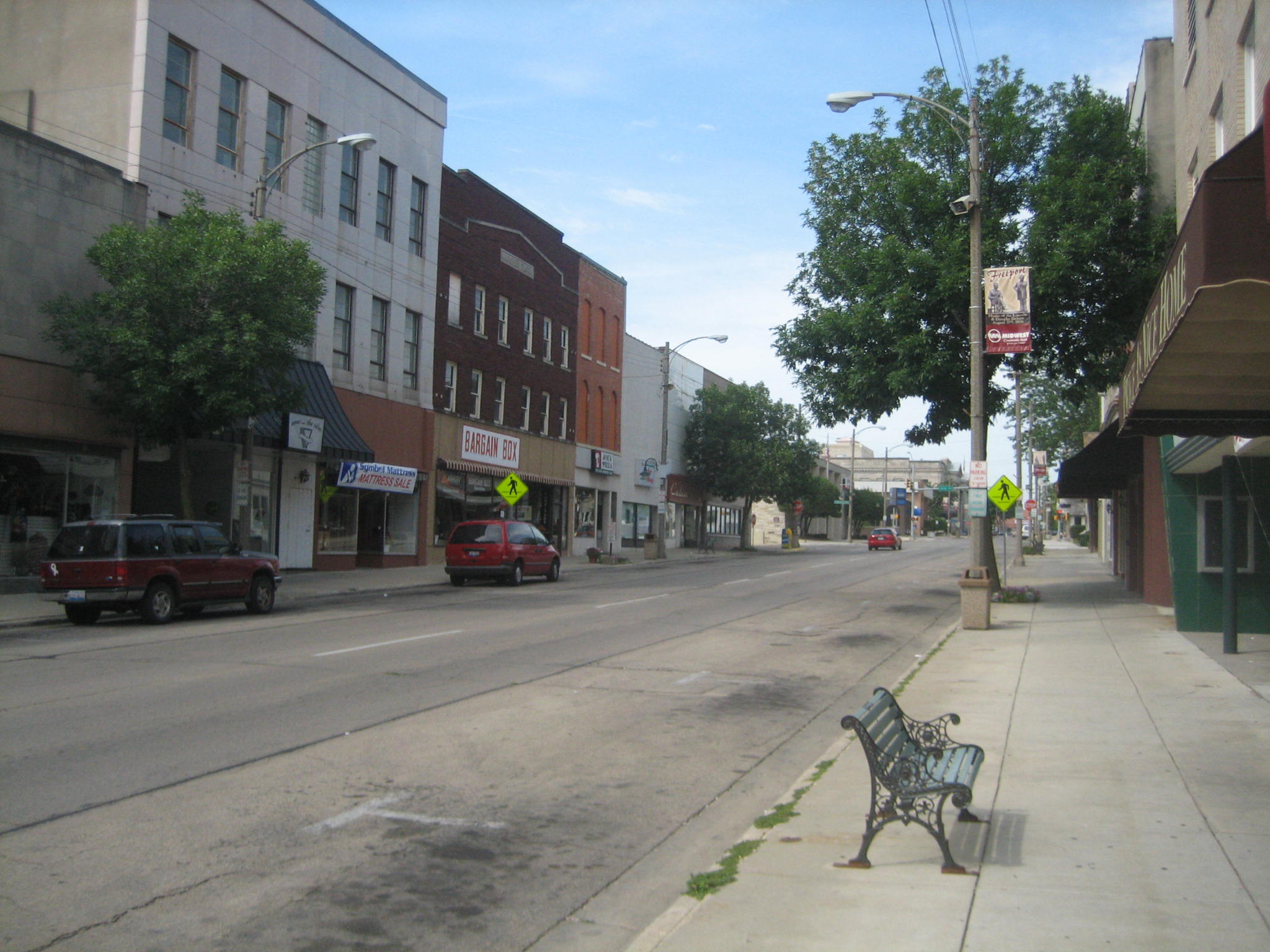


Overview of Freeport
Freeport sits in Stephenson County in northwestern Illinois, with a population of roughly 24,000 residents. The city serves as the county seat and functions as a small commercial, educational, and cultural hub for the surrounding agricultural region. Best known as the site of the second Lincoln-Douglas debate of 1858, Freeport also acts as a gateway to the rolling farmland, river valleys, and state parks of northwest Illinois. It lies approximately 120 miles west-northwest of Chicago, about a two-and-a-half-hour drive via I-90 and US-20, and is roughly an hour south of the Wisconsin border.
The Lincoln-Douglas debate of 1858 is the city's most celebrated historical claim. On August 27, 1858, Abraham Lincoln and Stephen A. Douglas faced off in Freeport during the second of their seven famous debates for the U.S. Senate seat from Illinois, and the so-called "Freeport Question" became one of the most quoted exchanges of the campaign. A marker and small memorial commemorate the site, and the broader Lincoln–Douglas debates are well documented in the historical record. The event draws history-minded visitors to town each year and gives the community a clearly defined heritage tourism hook.
About fifteen minutes southeast of Freeport, Lake Le-Aqua-Na State Park offers a small lake, picnic areas, hiking trails, and campgrounds tucked into the wooded hills of Stephenson County. It is a popular local destination for fishing, swimming, and family camping trips and gives travelers an easy nature escape close to town without requiring a long drive.
Within the city itself, Krape Park is a long-loved green space along the Pecatonica River, featuring walking paths, paddleboat lagoons, a miniature golf course, and a historic carousel. The park anchors the local outdoor scene and draws both residents and visiting families for casual recreation, and it offers a low-key alternative to the larger state-park experience for guests who want to stay close to their rental.
For short-term rental owners, Freeport combines a modest, walkable downtown with a strong historical identity and easy access to the wider Driftless Area landscape that spills across northwest Illinois and into southwest Wisconsin. Its position along the I-90 and US-20 corridors, the steady flow of heritage and outdoor travelers, and the appeal of a quieter small-city base within reach of Chicago give the market a distinctive mix of weekend visitors, family reunions, and longer regional stays.
Want to know if a property in Freeport is a good investment?
Enter an address to get instant revenue potential and comps.