
Du Quoin, Illinois
Want to see how Du Quoin compares to other top cities in Illinois? Explore all city regulations in Illinois. →
Du Quoin, IL
Generally Investor Friendly
STR Regulations for Du Quoin, Illinois
-
Overview: Are short‑term rentals allowed in Du Quoin? Based on the provided source (City of Du Quoin Subdivision Code), short‑term rentals (STRs) are not expressly prohibited. The Subdivision Code sets development, platting, and infrastructure standards for land within the City and within 1.5 miles of its corporate limits, but it does not contain zoning‑use restrictions or STR prohibitions. Unless the City’s Zoning Code, a separate municipal ordinance, or homeowners association (HOA) covenants explicitly ban STRs, operating an STR is generally permitted in Du Quoin as a residential use. Investors should confirm with the City Planner/Zoning Administrator whether STRs are a permitted use in the specific zoning district and whether any local STR or transient‑guest licensing is in place.
-
How to start a short‑term rental business in Du Quoin
- Confirm zoning and use. Verify the property is in a zoning district that allows the intended use; ask the City Planner/Zoning Administrator if STRs are permitted and whether any density or operating restrictions apply.
- Decide business structure and register. Form an appropriate legal entity; register the business with the Illinois Secretary of State if needed; obtain a federal EIN; open a business bank account.
- Assess licensing/permits. Contact the City Clerk (City Hall) and the Building/Planning Department to identify any local business license, transient‑guest license, STR registration, zoning permits, and safety inspections (smoke/CO detectors, egress, fire extinguishers) required for lodging activities.
- Tax setup. Enroll for state sales/use tax and the Hotel Operators’ Occupation Tax (HOOT) through MyTax Illinois; set up local hotel/motel taxes if the City has adopted one (check with the City/County).
- Insurance and safety. Obtain appropriate liability and property insurance; comply with applicable fire/life safety standards and occupancy limits; post emergency procedures and house rules.
- Utility and subdivision compliance. If subdividing or developing property, follow the Subdivision Code (preliminary and final plats, improvement plans, inspections, bonds, and maintenance standards).
- Ongoing compliance. Collect/ remit taxes; renew licenses; keep financial and occupancy records; respond to code enforcement inquiries.
- Required documents, permits, licenses, and guidelines
- Zoning confirmation. Written confirmation (email/letter) from the City Planner/Zoning Administrator that STRs are allowed in the subject zoning district.
- Business registration. Business license/registration with the City if required; State of Illinois registration (SOS) as applicable; Federal EIN.
- STR/transient‑guest registration. Any local STR registration/permit issued by the City (if applicable).
- Safety and occupancy compliance. Proof of smoke and carbon monoxide detection; egress plans; local fire/life safety inspection approval if required.
- Taxes. State sales/use tax account; Hotel Operators’ Occupation Tax account; any local hotel/motel tax registration.
- Insurance. Certificate of Liability and Property insurance evidencing adequate coverage for lodging operations.
- Financial records. Hosting platform statements, guest logs, and revenue records to support tax remittance and local reporting.
- Subdivision/development documentation (if applicable). Preliminary/final plats, improvement plans, inspection reports, performance/maintenance bonds as required by the Subdivision Code.
- Specific regulations affecting STRs (City, County, State)
City of Du Quoin (Subdivision Code highlights):
- Jurisdiction: Applies within the City and within 1.5 miles of corporate limits.
- Subdivision procedures: Preliminary plat approval (City Engineer review within 30 days; City Council action within 60 days), improvement plans, inspections, and “as‑built” records are required for subdivisions/developments.
- Assurance and bonds: Performance bonds, escrow, or letters of credit to ensure completion; release based on City Engineer certification; 25% surety bond for street acceptance and two‑year maintenance bond.
- Design/improvement standards: Minimum lot size (10,000 sq ft; 75 ft front width), setbacks (front 25 ft; side street 20 ft; side lot 5 ft; rear 25 ft), two off‑street parking spaces per dwelling unit; street design, utilities, drainage, sidewalks, streetlights, and signage standards.
- Enforcement and penalties: Fines for violations ($75–$750 per day; each day a separate offense).
- Note: The provided document does not include zoning or specific STR licensing/occupancy regulations; confirm with the City.
Perry County (County‑level considerations):
- Floodplain/road access: County Engineer reviews plats for roadway access; Flood Hazard and Drainage certificates required on plats in special flood hazard areas; drainage must not harm adjoining properties.
- 9‑1‑1 addressing: County 9‑1‑1 Coordinator approval on plats.
State of Illinois:
- Hotel Operators’ Occupation Tax (HOOT): 6% gross receipts tax on charges for rooms in hotels/motels; registration and monthly filing required via MyTax Illinois.
- Sales/use tax: Generally applies to tangible personal property and certain services; confirm applicability for STRs and platform transactions; file/ remit through MyTax Illinois.
- Fire and life safety: Municipal enforcement (via building/fire officials); comply with smoke/CO detection, egress, fire extinguisher requirements, and any applicable Illinois Accessibility Code for ramps.
- Vacation Rental Act (765 ILCS 605): Governs certain restrictions or restrictions that HOAs may place on STRs; does not grant local authority to ban STRs outright but sets rules around HOA restrictions.
- Municipal home rule authority: Cities may adopt local STR ordinances; investors must verify whether Du Quoin has adopted any additional local rules (e.g., registration, caps, taxes).
- Broader lodging tax base: Some Illinois municipalities impose local hotel/motel taxes beyond HOOT; check with the City/County if any apply in Du Quoin.
- Contact information (for licensing and compliance)
- City of Du Quoin – City Hall (general licensing, business registration, zoning/subdivision inquiries)
- Website: duquoinil.gov/
- Phone: Contact City Hall at the number listed on the official site
- Email: Use the contact form or email address provided on the official site
- Zoning/Planning Administrator (land use, platting, subdivision standards)
- Coordinate through City Hall/Planning Department
- City Engineer (subdivision improvement plans and inspections)
- Coordinate through City Hall; per the Subdivision Code, the Engineer reviews plats, improvement plans, and issues inspection approvals
- Perry County offices ( plats, roadway access, 9‑1‑1 addressing)
- Perry County Highway Department (road access approval)
- Perry County 9‑1‑1 Coordinator (9‑1‑1 certificate on plats)
- Illinois Department of Revenue (taxes)
- Website: www2.illinois.gov/sites/idor/pages/default.aspx
- Phone: 1‑800‑732‑8866
- Source pages and documents
- City of Du Quoin Subdivision Code (2024): duquoinil.gov/wp-content/uploads/2024/10/Subdivision-Code.pdf
- City of Du Quoin official website (contact and general information): duquoinil.gov/
- Illinois Department of Revenue (HOOT, sales/use tax, MyTax Illinois): www2.illinois.gov/sites/idor/pages/default.aspx
Notes for investors
- The provided Subdivision Code does not set STR use or licensing rules. Investors must verify zoning use, any local STR registrations, and whether additional city/county ordinances apply.
- If subdividing, developing, or modifying infrastructure, the Subdivision Code controls process, standards, bonds, and inspections.
- If a platform or HOA is involved, review the Vacation Rental Act and HOA covenants to ensure enforceability of any restrictions.
What do Airbnb hosts actually earn in Du Quoin?
Du Quoin hosts earn a median $18,231/year with $115 ADR and 49% occupancy.
Top performers pull in $24,640+ per year.
See the full Du Quoin market breakdownNext step
Found a property in Du Quoin?
Paste any address and get estimated revenue, cash-on-cash return, and comparable STR performance in under 5 minutes. 3 free analyses per day.
Free brief
Get the free Du Quoin STR Investment Brief
Revenue data, top neighborhoods, seasonal trends, and the key regulations for Du Quoin, Illinois in one email.
Du Quoin
Market Saturation Score
Photos of Du Quoin

Overview of Du Quoin
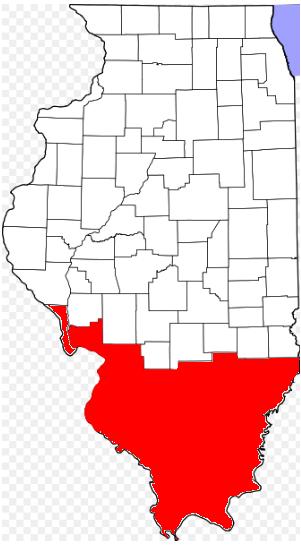
Du Quoin is a small city in Perry County, in the southern portion of Illinois, with a population of approximately 6,000 residents. It sits in a region historically tied to coal mining and agriculture, and today functions as a quiet, working-class community with a strong sense of local identity. The city is best known for the DuQuoin State Fair, one of Illinois's most significant annual events, and serves as a convenient base for travelers exploring the natural landscapes of southern Illinois. Du Quoin is located roughly 90 miles southeast of St. Louis, Missouri, and about 30 miles north of Carbondale, placing it within easy driving distance of several regional attractions.
The DuQuoin State Fairgrounds is the city's marquee draw, hosting one of Illinois's largest agricultural expositions each summer. The fair features livestock shows, harness racing, concerts, carnival rides, and a long tradition of showcasing rural Midwestern culture, drawing visitors from across the region and beyond. Outside of fair week, the fairgrounds also host seasonal events, antique shows, and motorsports throughout the year.
Just a short drive east of Du Quoin, Rend Lake offers a different kind of getaway. This large reservoir spans parts of Jefferson and Franklin counties and is popular for boating, fishing, swimming, and camping. With hundreds of miles of shoreline and several public recreation areas, it provides an accessible outdoor escape within roughly 20 to 25 miles of the city, and the surrounding campgrounds and marinas make it a natural destination for families and outdoor enthusiasts.
To the south, the broader Southern Illinois landscape opens up into the rolling hills, forests, and river country that define the region. Within roughly an hour's drive, visitors can reach portions of the Shawnee National Forest and the scenic byways that wind through the area's bluffs and bottomlands, making Du Quoin a practical jumping-off point for travelers wanting to explore the natural side of southern Illinois.
Du Quoin's appeal as a short-term rental market lies in its combination of small-town character and event-driven tourism. The annual state fair brings a predictable surge of visitors each summer, while the proximity to Rend Lake, the Southern Illinois landscape, and the St. Louis metropolitan area gives the city year-round draw. Travelers looking for an affordable, authentic base from which to experience both the cultural traditions and outdoor recreation of southern Illinois will find Du Quoin a sensible and welcoming option.
Want to know if a property in Du Quoin is a good investment?
Enter an address to get instant revenue potential and comps.