
Twin Falls, Idaho
Want to see how Twin Falls compares to other top cities in Idaho? Explore all city regulations in Idaho. →
Twin Falls, ID
Very Investor Friendly
STR Regulations for Twin Falls, Idaho
Overview: Are Short-Term Rentals Allowed in Twin Falls, ID?
Yes, short-term rentals are explicitly allowed in Twin Falls, Idaho. The city has taken a hands-off regulatory approach, with the City Council recently voting against implementing new STR regulations in September 2025. This makes Twin Falls one of the most investor-friendly jurisdictions in Idaho for short-term rental operations.
Unlike many Idaho cities that have implemented permits, inspections, and guest limits, Twin Falls continues to allow short-term rentals to operate without special permits, inspections, or guest caps. Council members who voted against new regulations expressed concerns about burdening property owners who purchase these homes as investments.
What do Airbnb hosts actually earn in Twin Falls?
Twin Falls hosts earn a median $27,048/year with $132 ADR and 74% occupancy.
Top performers pull in $37,149+ per year.
See the full Twin Falls market breakdownHow to Start a Short-Term Rental Business in Twin Falls
Starting an STR business in Twin Falls is straightforward due to the minimal regulatory requirements:
1. Property Acquisition and Due Diligence
- Verify the property is located in a zone that allows residential uses (all residential zones permit STRs)
- Review any homeowners association (HOA) covenants that might restrict short-term rentals
- Consider proximity to attractions like Shoshone Falls, which drives tourism demand
2. Business Registration
- Register your business entity with the Idaho Secretary of State if operating as an LLC or corporation
- Obtain an EIN from the IRS for tax reporting purposes
- Open a business bank account for STR operations
3. Insurance Acquisition
- Secure comprehensive short-term rental insurance covering:
- Property damage and loss
- Liability protection (minimum $1M recommended)
- Business interruption coverage
- Guest injury protection
4. Tax Registration
- Register with the Idaho State Tax Commission to collect and remit state sales tax
- Obtain a seller's permit for tax collection
- Set up systems for tracking rental income and expenses
5. Property Preparation
- Install required safety equipment (smoke detectors, carbon monoxide detectors, fire extinguishers)
- Ensure compliance with building and safety codes
- Prepare the property for guest stays with furnishings and amenities
Required Documents, Permits, Licenses, and Guidelines
Current Requirements (2025)
Twin Falls currently requires NO special permits or licenses for short-term rentals. The city council explicitly rejected proposals for:
- Special STR permits
- Annual inspections
- Guest occupancy limits
- Additional parking requirements
- Business license requirements for STRs specifically
State-Level Requirements
Since local requirements are minimal, investors must comply with Idaho state requirements:
Required Documentation:
- Property ownership proof (deed, tax statement, or mortgage documentation)
- Insurance documentation evidencing adequate coverage
- Tax registration with Idaho State Tax Commission
- Business registration (if operating as a formal business entity)
- Safety compliance certification (smoke detectors, CO detectors, fire extinguishers)
Safety Standards:
- Working smoke detectors on each level
- Carbon monoxide detectors in properties with gas appliances
- Fire extinguishers easily accessible
- Emergency contact information posted
- Maximum occupancy clearly posted
Tax Obligations:
- 6% Idaho state sales tax
- 2% Travel and Convention Tax
- Federal and state income tax on rental income
- Property tax based on local assessment
Specific Regulations for Short-Term Rentals
City of Twin Falls
Current Status: No specific STR regulations in effect
- No permits required
- No occupancy limits beyond standard building codes
- No inspection requirements
- No registration requirements
- Standard nuisance, noise, and property maintenance ordinances apply
Twin Falls County
No specific county-level STR regulations identified. County regulations would primarily involve:
- Zoning compliance
- Building permit requirements for any property modifications
- Property tax assessments
State of Idaho
Idaho maintains a decentralized approach to STR regulation:
State-Level Framework:
- STRs are permitted in residential zones (cities cannot ban them outright)
- State law preempts local bans but allows local regulation of operational aspects
- Primary state oversight focuses on tax collection and business registration
State Tax Requirements:
- 6% Sales Tax on all short-term accommodations
- 2% Travel and Convention Tax on lodging charges
- Local option taxes may apply in certain areas
- Platforms like Airbnb/VRBO collect some taxes in certain jurisdictions
Zoning Authority:
- State law permits STRs in residential zones
- Cities cannot prohibit STRs entirely in residential areas
- Local governments retain authority over operational regulations (permits, inspections, etc.)
- Zoning compliance required (properties must be in areas allowing residential use)
Contact Information for Local Authority
City of Twin Falls
Primary Contact:
- Website: www.twinfallscity.org
- City Hall: (208) 735-7200
- Planning Department: (208) 735-7260
- Code Enforcement: (208) 735-7275
Mailing Address: City of Twin Falls 203 Main Avenue East Twin Falls, ID 83301
Key Departments:
- Planning & Zoning: For zoning compliance questions
- Code Enforcement: For nuisance and property maintenance issues
- Business Licensing: General business registration (208) 735-7260
Twin Falls County
County Government:
- Website: www.twinfallscountyidaho.gov
- Phone: (208) 736-4000
- Assessor: (208) 736-4006 (for property tax questions)
State of Idaho
Idaho State Tax Commission:
- Website: tax.idaho.gov
- Phone: (208) 334-7660
- Registration: Required for sales tax collection
Idaho Secretary of State:
- Website: sos.idaho.gov
- Phone: (208) 334-2300
- Business Services: (208) 334-2301
Investment Considerations and Market Outlook
Advantages for Investors:
- Minimal regulatory barriers to entry
- No permit costs or annual licensing fees
- Flexible operation without guest caps or inspection requirements
- Growing tourism market driven by outdoor recreation
- Competitive advantage over regulated neighboring cities
Market Factors:
- Tourism drivers: Shoshone Falls, Snake River Canyon, outdoor recreation
- Target market: Family vacations, outdoor enthusiasts, business travelers
- Seasonal demand: Peak periods during summer months and fall
- Competition: Limited due to minimal regulation encouraging market entry
Financial Planning:
- Factor state taxes (8% combined) into pricing calculations
- Budget for property management if not self-managing
- Consider insurance costs (higher than traditional rentals)
- Plan for marketing and platform fees (typically 15-25% of gross revenue)
Risk Considerations:
- Regulatory uncertainty: Council could revisit regulations in the future
- Market competition: Other investors may enter the market
- Economic factors: Tourism demand can be cyclical
- Property management: Remote ownership requires reliable management
Source Links
- STRisker Bulletin - Twin Falls, ID - Council vote against new regulations
- Twin Falls City Government Website - Official city information
- Idaho State Tax Commission - Tax registration and requirements
- Idaho Short-Term Rental Laws - Checkmate Rentals - State-level overview
- Idaho STR Laws - RedAwning - State regulations by city
- Idaho State Government - State regulatory framework
Conclusion
Twin Falls, Idaho presents an exceptional opportunity for short-term rental investors due to its minimal regulatory environment. The city's decision to reject additional STR regulations in 2025 demonstrates a business-friendly approach that prioritizes property owner rights over restrictive oversight.
Investors should act quickly to capitalize on this favorable regulatory environment while maintaining compliance with state-level requirements. The combination of reduced barriers to entry, growing tourism demand, and competitive advantages over neighboring cities creates a compelling investment climate for short-term rental operations in Twin Falls.
However, investors should remain vigilant regarding potential future regulatory changes and maintain close relationships with city officials to stay informed about any emerging discussions regarding short-term rental oversight.
Next step
Found a property in Twin Falls?
Paste any address and get estimated revenue, cash-on-cash return, and comparable STR performance in under 5 minutes. 3 free analyses per day.
Free brief
Get the free Twin Falls STR Investment Brief
Revenue data, top neighborhoods, seasonal trends, and the key regulations for Twin Falls, Idaho in one email.
Twin Falls
Market Saturation Score
Photos of Twin Falls


Overview of Twin Falls
Twin Falls is the county seat of Twin Falls County in southern Idaho, home to roughly 50,000 residents who enjoy a small-city feel surrounded by high-desert landscapes and dramatic river canyon scenery. The city takes its name from the nearby Shoshone Falls and serves as the commercial and cultural hub of the Magic Valley, an agricultural region anchored by irrigated farmland along the Snake River. Travelers often pass through on their way between Boise and Yellowstone, but many linger for the outdoor recreation and the canyon's natural beauty. Twin Falls is located approximately 130 miles southeast of Boise, the nearest major city, and sits right at the rim of the Snake River Canyon, which gives the city its distinctive character and sweeping views.
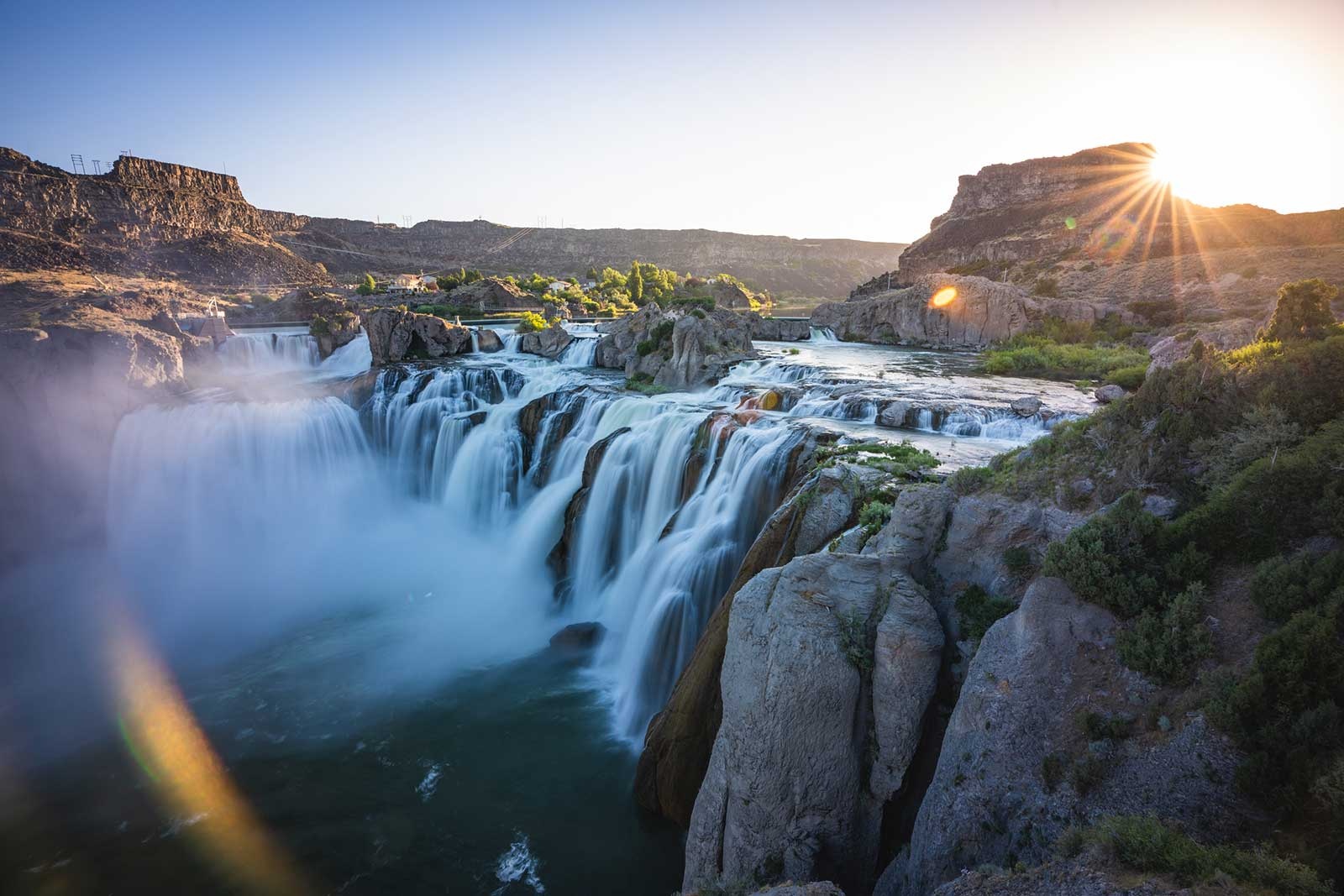
Just a few minutes east of downtown, Shoshone Falls tumbles about 212 feet over a wide basalt rim in the Snake River Canyon, earning the nickname "the Niagara of the West." The falls flow at their most impressive in spring, when snowmelt feeds the Snake River, and a developed park with viewpoints and walking paths makes the site easy to visit year-round. It's roughly a ten-minute drive from the city center and remains the most photographed landmark in the region.
Spanning the canyon just south of the city, the I.B. Perrine Bridge is the only man-made structure in the United States where BASE jumping is legal year-round without a permit, drawing thrill-seekers and curious spectators to its railings and the canyon floor below. The bridge stands about 486 feet above the Snake River, and visitors can often watch jumpers launch from its edge. Paved walking paths and viewing areas beneath the span make it easy for non-jumpers to take in the scale of the canyon.
The Snake River Canyon itself is a draw in its own right, laced with rim trails, climbing routes, and stretches of river popular for kayaking, paddleboarding, and trout fishing. Dierkes Lake, a small reservoir tucked into the canyon near Shoshone Falls, offers a quiet spot for picnicking and short walking loops, while longer canyon-edge trails reward hikers with wide views of the river and the surrounding high desert.
Within roughly two hours of town, guests can also explore the lava fields and cinder cones of Craters of the Moon National Monument to the northeast and the rolling fossil beds of Hagerman Fossil Beds National Monument to the west. Further north, the Sawtooth National Recreation Area adds alpine lakes and mountain trails, positioning Twin Falls as a comfortable base for travelers who want canyon scenery and broader Idaho wilderness in the same trip.
With its dramatic canyon setting, easy access to multiple national monuments, and a steady flow of road-trippers, BASE jumpers, and family travelers, Twin Falls gives short-term rental owners a market that blends small-city amenities with some of the West's most photographed waterfalls and vistas. The combination of a walkable downtown, reliable year-round visitation, and a striking natural backdrop makes it a memorable base for guests exploring southern Idaho.
Want to know if a property in Twin Falls is a good investment?
Enter an address to get instant revenue potential and comps.