
Lansing, Iowa
Want to see how Lansing compares to other top cities in Iowa? Explore all city regulations in Iowa. →
Lansing, IA
Very Investor Friendly
STR Regulations for Lansing, Iowa
Overview: Are short-term rentals allowed in Lansing, IA?
Yes. Short-term rentals are allowed in Lansing, Iowa. Lansing does not have city-specific STR regulations because Iowa’s House File 2641 (enacted 2020) significantly curtails municipal authority to regulate STRs. Under Iowa Code §414.1, a city “shall not adopt or enforce any regulation, restriction, or other ordinance, including a conditional use permit requirement, relating to short-term rental properties,” and “shall not require a license or permit fee for a short term-rental property.” Lansing therefore cannot impose STR licenses, permit fees, or STR-specific zoning or density rules. However, general state and local codes (housing, property maintenance, building, health and safety) still apply, and certain narrow exceptions can allow local controls. In practice, investors operate STRs in Lansing as of-right residential uses subject only to baseline codes, without a municipal STR permit or registration. Sources emphasize that protective, city-level measures like those in some Iowa cities (e.g., Des Moines’ $500k liability insurance requirement and maintenance standards) do not apply in Lansing due to state preemption.
What do Airbnb hosts actually earn in Lansing?
Lansing hosts earn a median $19,304/year with $209 ADR and 45% occupancy.
Top performers pull in $37,822+ per year.
See the full Lansing market breakdownHow to start a short-term rental business in this market
- Confirm residential zoning and use: Treat your property as a residential rental. Because House File 2641 prohibits local STR-specific restrictions, the default is that STRs operate as a residential use. Confirm that the property is within city limits and zoned for residential occupancy; if outside city limits, check Allamakee County zoning.
- Align with baseline codes: Even without STR-specific rules, the property must meet Iowa’s housing code requirements. Iowa Code §364.17 requires cities over 15,000 population to adopt and enforce a housing code, and to operate programs for regular rental inspections. While Lansing is well under 15,000 residents, this statute demonstrates the state’s expectation that rental properties be subject to habitability, health, and safety standards.
- Secure robust insurance: Platform liability (Airbnb/Vrbo) is limited. Follow the Des Moines model of carrying no less than $500,000 in liability coverage for bodily injury and property damage related to your STR, plus comprehensive property and loss-of-income coverage. This is a best practice to protect assets and comply with evolving norms in Iowa.
- Implement proactive inspections and maintenance: Maintain safe walkways, handrails, structural soundness, weed/rodent control, and exterior/interior standards typical of Iowa housing codes (even absent a formal licensing process). Think of the proactive rental inspection (PRI) framework: routine checks prevent small issues from becoming code violations and reduce risk.
- Verify taxes and lodging taxes: If applicable, set up state and local lodging tax remittance. The sources do not detail Lansing’s lodging tax administration; confirm with city hall or the county whether transient lodging taxes apply and how to remit.
- Prepare basic hosting documentation: House rules, occupancy limits, emergency procedures, contact info for local services, and guest expectations (quiet hours, parking, trash/recycling, smoking, pets).
- Utilize a management plan: Given Lansing’s seasonal tourism surge (the community nearly triples in summer), ensure staffing, turnovers, and on-call support are adequate. Build relationships with local trades and cleaners early.
Required documents, permits, licenses, and guidelines
- No city STR permit or license is required in Lansing due to House File 2641/Iowa Code §414.1. The city may not impose fees for, or regulate the operation of, STRs via permits or conditional use permits.
- You must comply with:
- General zoning and land use (residential use).
- Iowa housing/health/safety codes (e.g., structural integrity, sanitation, habitability).
- Property maintenance standards (sidewalks, handrails, weed/rodent control, accessory structures).
- Building and fire code compliance for any renovations or changes to occupancy.
- Insurance is strongly recommended (minimum $500,000 liability, plus property and loss-of-income coverage), reflecting best practices seen in Des Moines.
- Local lodging tax registration (if applicable) should be confirmed with the city/county; no specific Lansing tax details are provided in the sources.
- Registration or licensing may still occur if properties fall under any of the narrow exceptions under §414.1 (e.g., protecting public health, safety, and welfare). Given the constraints, hosts should seek written confirmation from the city if any such exception is asserted.
Specific regulations for short-term rentals (city, county, state)
- City of Lansing: No STR-specific regulations, permits, or fees are enforceable due to House File 2641 and Iowa Code §414.1. However, general municipal codes (e.g., property maintenance, nuisance, building, fire, health) still apply.
- Allamakee County: The sources do not provide county-specific STR rules. If a property is outside city limits, check county zoning and any applicable health/safety standards. Coordinate with the county planning/zoning or environmental health office for clarity.
- State of Iowa:
- House File 2641/Iowa Code §414.1 preempts municipal STR regulation except for narrow public health, safety, and welfare exceptions. It prohibits cities from requiring STR licenses, permits, or fees and from enforcing STR-specific zoning controls.
- Iowa Code §364.17 requires larger Iowa cities to adopt housing codes and regular rental inspection programs; while Lansing isn’t subject to that specific requirement, it illustrates the baseline standards for habitability and inspection expectations statewide.
- City-level mandates seen in some Iowa jurisdictions (e.g., Des Moines’ $500,000 liability requirement and detailed exterior/interior property standards) reflect best practices and highlight what Lansing cannot legally require.
Contact information (phone, email, website where available)
- City of Lansing
- Website: Lansing, Iowa official site (verify via local search; exact URL not provided in sources).
- Email (Economic Development context, as cited in source): director@lansingmatters.com (Andy Kelleher, Main Street Lansing).
- Phone: Not provided in sources. Contact city hall or county offices for routing to building/planning/environmental health.
- Allamakee County
- Website: Allamakee County official site (verify via local search; exact URL not provided in sources).
- Phone/Email: Not provided in sources. Contact county planning/zoning or environmental health to confirm zoning and health/safety requirements outside city limits.
- Iowa state resources (for general code guidance and lodging tax information)
- Iowa Legislature: Iowa Code §414.1 and §364.17 (see source links).
- Iowa Department of Revenue (lodging tax guidance; URL not provided in sources).
Note: Because Lansing does not have a designated STR authority due to preemption, investors should start with city hall or county planning for baseline compliance confirmations.
Links to source pages
- Steadily – Airbnb & Short Term Rental Laws and Regulations In Iowa: www.steadily.com/blog/airbnb-short-term-rental-laws-and-regulations-in-iowa
- Des Moines Register – Opinion: Let Iowa cities manage short-term-rental housing: www.desmoinesregister.com/story/opinion/columnists/iowa-view/2022/09/22/iowa-cities-restrictions-airbnb-short-term-rental-housing/10378275002/
- Iowa Code §414.1 (PDF): www.legis.iowa.gov/docs/code/2022/414.1.pdf
- ChangeLab Solutions – A Guide to Proactive Rental Inspections (2022): www.changelabsolutions.org/sites/default/files/2022-11/A-Guide-to-Proactive-Rental-Inspections_FINAL_20221031A.pdf
Final note for investors: Lansing’s regulatory environment is unusually permissive at the municipal level because of state preemption. The absence of city STR rules is not an invitation to ignore standards—baseline housing, building, and health codes still govern operations, and a robust insurance and maintenance regimen is essential to mitigate risk, protect guests, and preserve neighborhood goodwill.
Next step
Found a property in Lansing?
Paste any address and get estimated revenue, cash-on-cash return, and comparable STR performance in under 5 minutes. 3 free analyses per day.
Free brief
Get the free Lansing STR Investment Brief
Revenue data, top neighborhoods, seasonal trends, and the key regulations for Lansing, Iowa in one email.
Lansing
Market Saturation Score
Photos of Lansing


Overview of Lansing
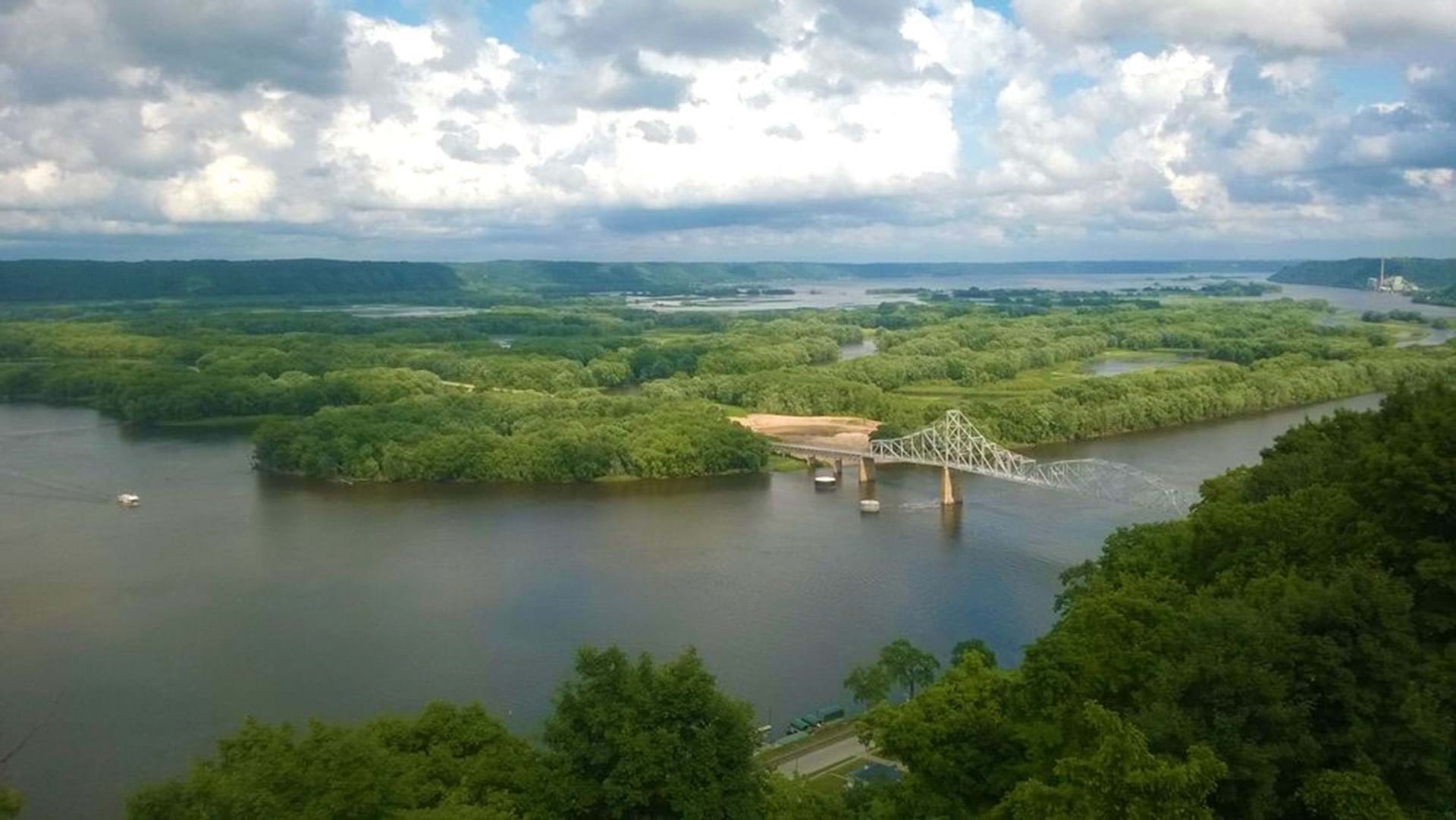
Lansing is a small riverfront town in northeastern Iowa, serving as the county seat of Allamakee County. With a population of roughly 1,000 residents, it sits along the Upper Mississippi River, surrounded by the dramatic bluffs and hollows of the Driftless Area, a region that escaped glaciation and is known for its rugged, scenic terrain. Lansing is best known as a gateway for outdoor recreation and river travel, and as a quiet stop along the Great River Road. The nearest sizable city is La Crosse, Wisconsin, about 35 miles to the north, while the larger Twin Cities of Minneapolis and St. Paul lie roughly 150 miles to the northwest.
Just across the river in Wisconsin, Pikes Peak State Park rises above the Mississippi and offers some of the most photographed overlooks in the region. A drive of roughly 30 to 40 minutes brings visitors to its bluff-top trails, where the confluence of the Wisconsin and Mississippi rivers unfolds in a sweeping panorama. The park's hiking paths, picnic areas, and river overlooks make it a popular stop for travelers exploring the Upper Mississippi Valley, and a natural day trip for guests staying in Lansing.
To the south, Effigy Mounds National Monument preserves more than 200 prehistoric Native American mound structures, including bear and bird-shaped effigies not found in such concentration anywhere else. Located near Marquette, Iowa, the monument is roughly a 35-minute drive from Lansing and offers interpretive trails through the mounds and along the bluffs above the Mississippi. The site's combination of cultural significance and river scenery draws visitors interested in both archaeology and the outdoors.
The surrounding Driftless Area is laced with state forests, cold-water trout streams, and winding back roads that appeal to cyclists, anglers, and leaf-peepers in autumn. Yellow River State Forest, a short drive southwest of Lansing, adds camping, horseback riding trails, and additional bluff hiking to the mix, making the town a natural base for travelers who want to unplug and explore the region over several days.
With its riverfront setting, easy access to both the Iowa and Wisconsin sides of the Mississippi, and proximity to nationally recognized natural and cultural sites, Lansing offers a distinctive alternative to the busier tourism hubs farther south along the river. Its small-town character, combined with the dramatic scenery of the surrounding bluffs, makes it an appealing location for travelers seeking a quieter, more scenic base, and a strong fit for short-term rentals that cater to outdoor enthusiasts, history-minded visitors, and anyone tracing the Great River Road through the Upper Midwest.
Want to know if a property in Lansing is a good investment?
Enter an address to get instant revenue potential and comps.