
Lanai City, Hawaii
Want to see how Lanai City compares to other top cities in Hawaii? Explore all city regulations in Hawaii. →
Lanai City, HI
Challenging To Investors
STR Regulations for Lanai City, Hawaii
Overview: Are STRs allowed in Lāna‘i City?
Yes—short‑term rentals are allowed on Lāna‘i (Lāna‘i City and surrounding community plan area) but only through one of three Maui County‑approved permit frameworks: Short‑Term Rental Home (STRH), Bed & Breakfast (B&B), or a Conditional Permit. In this island context, STRH and B&B are the primary pathways for single‑family residences. Apartment‑zoned condos and certain other properties can operate as transient vacation rentals (TVRs) without an STRH/B&B permit if they meet state/county “vested rights” criteria (often referred to as the Minatoya framework).
Regulatory authority is at the County of Maui level (Department of Planning; Planning Commission for certain decisions). The state sets broader vacation rental advertising, registration, and tax rules, and allows counties to regulate STRs. Lāna‘i is governed by Maui County’s ordinances.
What do Airbnb hosts actually earn in Lanai City?
Lanai City hosts earn a median $71,041/year with $317 ADR and 72% occupancy.
Top performers pull in $93,430+ per year.
See the full Lanai City market breakdownHow to Start a STR Business on Lāna‘i
- Choose your product type: STRH (unhosted single‑family residence with a designated manager) or B&B (hosted, owner‑resident, with breakfast service). If the property is on the Minatoya List (apartment‑zoned and meeting vested‑rights criteria) and you are seeking a TVR rather than an STRH/B&B, confirm eligibility with the Department of Planning before relying on the list.
- Confirm zoning and caps. Lāna‘i is capped at 15 STRH permits and 15 B&B permits. In addition to the island cap, Lāna‘i has special spacing and block limits (see “Lanai‑Specific Regulations”).
- Engage a manager. STRH must designate a local manager who is reachable 24/7 and can arrive within one hour; Lāna‘i allows any qualified person (the owner, a real estate licensee, or a family member) to serve as manager (manager qualification is not restricted on Lāna‘i as it is in some other areas).
- Register and license: obtain Hawaii GET and TAT numbers; Maui County requires proof of tax compliance at renewal. B&Bs must also obtain any required food‑related authorization if operating any food service outside zoning allowances.
- Submit the permit application under Chapter 19.64 (B&B) or Chapter 19.65 (STRH). Expect an initial term of 1–3 years, with possible shorter durations. Permits must be held by a natural person (not an LLC or corporation).
- Display the permit sign and post House Policies in the rental unit (quiet hours, no amplified sound beyond property lines, no street parking).
- Operate responsibly and renew on time. Noncompliance can trigger warnings, fines, revocation, and a two‑year prohibition on reapplying after a permit is revoked or not renewed.
Required Documents, Permits, Licenses, and Guidelines
- Maui County STRH or B&B permit (Chapter 19.65 or 19.64)
- Application details, site plan/floor plan, fees, and procedures are established by Maui County Department of Planning. Initial permit term: 1–3 years; shorter terms may be issued.
- Permit must be held by a natural person (not an LLC, corporation, etc.).
- Manager designation (STRH)
- Manager must be available by telephone at all times and able to arrive on‑site within one hour when called.
- On Lāna‘i, no special restrictions beyond the above (the more restrictive manager-license requirements in some Maui areas do not apply on Lāna‘i).
- State tax accounts and compliance
- Hawaii General Excise Tax (GET) and Transient Accommodations Tax (TAT) registration and ongoing compliance are mandatory. Maui County also assesses a Transient Accommodations Tax (MCTAT). Current Maui County advisory rates:
- GET: 4.5% (4% state + 0.5% Maui County)
- TAT: 13.25% (10.25% state + 3% Maui County)
- State advertising and registration requirements (Act 204): all online advertisements must display the property’s registration ID number and local contact information; DOTAX can assess civil penalties for noncompliance.
- Hawaii General Excise Tax (GET) and Transient Accommodations Tax (TAT) registration and ongoing compliance are mandatory. Maui County also assesses a Transient Accommodations Tax (MCTAT). Current Maui County advisory rates:
- House policies and signage
- Quiet hours: 9:00 p.m. to 8:00 a.m.
- No amplified sound beyond property boundaries.
- No street parking—use designated on‑site stalls only.
- STRH: no group gatherings (beyond normal occupancy limits).
- Post House Policies inside the rental; display the A2 sign with permit number, 24‑hour manager phone, and department contact.
- Food service and breakfast (B&B)
- Provide breakfast; non‑hazardous food must be made available. Operating as a formal food establishment requires authorization through zoning or a conditional permit.
- Advertising
- Include the STRH permit number in all listings; include registration ID and local contact per state law.
- Other practical items
- Property/casualty insurance; safety features (smoke/CO detectors where applicable); occupancy limits; local contact protocols for emergencies and complaints.
Specific Regulations for STRs in Lāna‘i City (and Maui County)
Permits and caps
- STRH cap on Lāna‘i: 15
- B&B cap on Lāna‘i: 15
- Many parts of Maui are subject to a moratorium on new STR/B&B permits (Ordinance 5316; effective January 7, 2022). Applications and renewals continue to be processed where allowed by ordinance. Lāna‘i investors should verify the current status of any moratorium exceptions before acquiring or applying.
Lanai‑specific spacing and clustering rules
- One‑per‑block rule: No more than one STRH or B&B permitted on the same block.
- 300‑foot spacing rule: On Lāna‘i, no more than one STRH or B&B is permitted within a 300‑foot radius of another STRH or B&B. These siting constraints apply in addition to island caps.
Bedroom limits
- B&B: Up to 6 bedrooms.
- STRH: Up to 3 bedrooms, with one rental agreement per stay.
- Lāna‘i exception: Valid existing STRH permits authorizing more than 3 bedrooms may be renewed.
Hosting and manager requirements
- B&B: Owner must live on the property (owner‑resident; not necessarily in the same structure).
- STRH: Owner need not live on the property, but must designate a manager who is reachable 24/7 and can arrive within one hour when called. On Lāna‘i, the manager may be the owner, a real estate licensee, or a family member (no special manager‑license restriction applies on Lāna‘i).
Property age and ownership (confirm applicability to your application)
- Chapter 19.65 historically required the dwelling to be at least 15 years old and the owner/operator to have owned the property for a minimum of 15 years. Maui later amended the law to require owners to have owned the home for 5 years prior to application (effective September 27, 2018). Confirm with the Department of Planning which standard applies to your property and timing.
TVRs in apartment zoned or Minatoya‑listed properties
- Certain apartment‑zoned condos and planned developments with vested rights may operate as TVRs without an STRH/B&B permit if they meet county/state criteria (e.g., lawful pre‑existence and continued use under Chapter 19.12.020). Inclusion on any published list does not by itself confer a right to operate—confirm with the Department of Planning.
Taxes
- GET and TAT plus MCTAT are required; rates are set by state and county and are subject to change.
- Maui County requires proof of GET/TAT/MCTAT payment at permit renewal.
Permit administration and enforcement
- Permits initially granted for 1–3 years; shorter durations possible.
- The Department of Planning may revoke or deny renewal for false/misleading information; delinquency in taxes/fines/penalties; nonresponsive management; police reports of disturbances; neighbor complaints leading to warnings or violations; noncompliance with permit conditions; or noncompliance with government regulations.
- If a permit is revoked or not renewed by the Department, no new application for that property may be accepted for two years.
Affordable housing protection
- Dwelling units developed under Hawaii Revised Statutes chapter 201H or Maui County Code chapter 2.96 are prohibited from use as STRHs.
House rules and operations
- Quiet hours: 9:00 p.m. to 8:00 a.m.
- No amplified sound beyond property lines.
- No street parking—use designated stalls only.
- STRH: no group gatherings (beyond normal occupancy rules).
Zoning and planned developments
- Planned developments are generally prohibited from transient vacation rental use unless specifically allowed under the code; confirm with the Planning Department.
State‑level Hawaii rules
- Act 204: Online listings must show the registration ID number and a local contact; violations can result in civil penalties from the Hawaii Department of Taxation (DOTAX).
Lanai planning commission authority
- The Lāna‘i Planning Commission (LPC) has approval authority for:
- B&B: A B&B within 300 feet of another B&B; written protests comprising 30% or more of owners within 300 feet; or any B&B using a variance.
- STRH: Two or more STRHs within 300 feet; written protests comprising 15% or 30% of owners within 300 feet; or any STRH using a variance. The LPC’s remit includes protecting neighborhood character.
Contact Information (Local Authority in Charge of STRs)
- County of Maui, Department of Planning – Short‑Term Rentals (Maui County)
- Website: www.mauicounty.gov/1377/Short-Term-Rentals
- Website (permit lists and info): www.mauicounty.gov/DocumentCenter/View/14762/Approved-Short-Term-Rental-Homes-List?bidId=-
- Lāna‘i Planning Commission
- Contact through the County of Maui, Department of Planning (Maui County Council/LPC support). Confirm current contact details on the county site.
For state tax and registration enforcement:
- Hawaii Department of Taxation (DOTAX)
- TAT/GET registration and compliance; Act 204 advertisement enforcement
For real‑property tax classification and exemptions:
- County of Maui, Real Property Assessment Division
- Website: www.mauipropertytax.com/
Note: Contact phone numbers/email addresses were not provided in the source materials. Please verify current contact details on the official sites before application or renewal.
Links to Source Pages (Lanai and Maui County Materials)
- Short‑Term Rental Homes Approved List (includes Lāna‘i): www.mauicounty.gov/DocumentCenter/View/14762/Approved-Short-Term-Rental-Homes-List?bidId=-
- Lanai Planning Commission – STRH and B&B regulatory summary (caps, spacing, one‑per‑block, bedroom limits, manager, signage, taxes, revocation triggers, affordable housing restrictions): www.mauicounty.gov/DocumentCenter/View/138246/122122_Item-D5_BB-and-STHR
- Maui Short Term Rental Update (May 4, 2024): context on ordinances, moratoriums, TVR/Minatoya properties, Act 204, and links to related statutes and FAQs: www.luxuryrealestatemaui.com/blog/maui-short-term-rental-update-may-4-2024.html
Key Takeaways for Investors
- STRs are viable on Lāna‘i via STRH or B&B permits, subject to island caps (15 each) and strong siting constraints (one per block; 300‑foot spacing).
- Lāna‘i’s manager requirements for STRH are flexible; a 24/7, one‑hour response standard still applies.
- Bedroom caps: 3 for STRH; 6 for B&B; and, Lāna‘i allows renewals for pre‑existing STRH permits exceeding 3 bedrooms.
- Display signage and House Policies; enforce quiet hours, no amplified sound beyond property, and on‑site parking only.
- Secure GET/TAT/MCTAT accounts and comply with state advertising rules (Act 204).
- Verify property age/ownership requirements and current moratorium status with the Department of Planning at the time of application.
Next step
Found a property in Lanai City?
Paste any address and get estimated revenue, cash-on-cash return, and comparable STR performance in under 5 minutes. 3 free analyses per day.
Free brief
Get the free Lanai City STR Investment Brief
Revenue data, top neighborhoods, seasonal trends, and the key regulations for Lanai City, Hawaii in one email.
Lanai City
Market Saturation Score
Photos of Lanai City



Overview of Lanai City
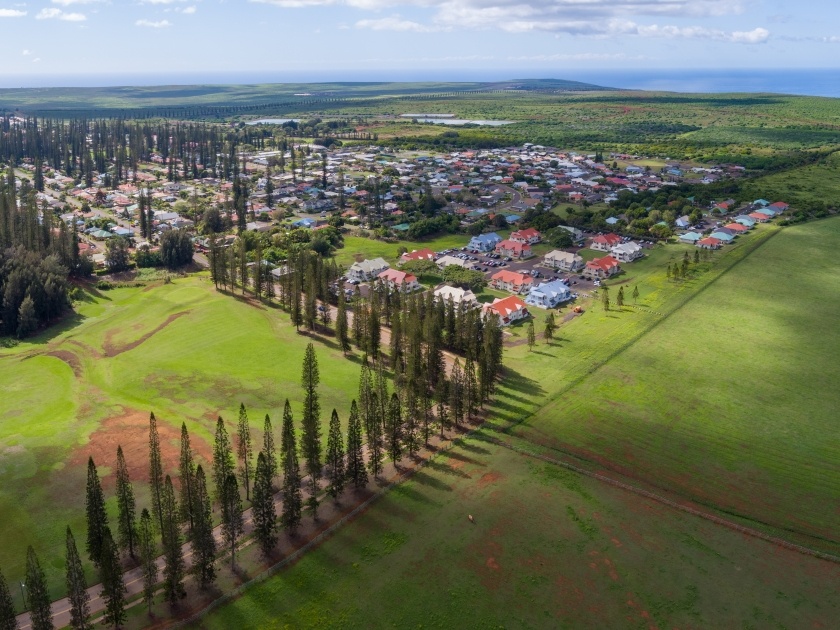
Lanai City is the only community of any size on the island of Lānaʻi, set in the cool central uplands of the island in Maui County, Hawaii. The town has a population of roughly 3,000 residents and retains the feel of a small plantation village, ringed by Cook Island pines and dotted with tin-roofed buildings dating to the era when James Dole operated the island's vast pineapple fields. Today it serves as the cultural and commercial heart of Lānaʻi and the gateway to the island's most striking natural areas, from shoreline bays to red-rock highland plateaus. The nearest major American city is Honolulu, on the island of Oʻahu, which sits roughly 75 miles to the northwest and is reached by a short inter-island flight; Lānaʻi is also connected to Lahaina on Maui by a passenger ferry that takes about 45 minutes.
At the center of town sits Dole Park, a leafy town square that doubles as the community's main gathering space, with small shops, cafes, and art galleries lining its perimeter. It is within walking distance of anywhere in the urban area and a relaxed place to begin a visit, shaded by towering Cook pines and ringed with the kind of low-rise storefronts that give the community its quiet, old-Hawaii character.
About 15 minutes south of town by car, Hulopoʻe Bay is the island's most celebrated beach, a crescent of golden sand protected by rocky headlands and known for clear water and excellent snorkeling over coral reefs. The bay sits near the Manele small-boat harbor, and visitors can sometimes spot spinner dolphins and humpback whales offshore in the right season.
In the island's northern interior lies Keahiakawelo, often called the Garden of the Gods, a windswept landscape of red- and orange-hued volcanic boulders sculpted by erosion into otherworldly spires and craters. The site sits at roughly 4,000 feet of elevation, about a 40-minute drive from Lanai City along a dirt road, and offers panoramic views toward Molokai and Maui on clear days.
The Munro Trail, named for early rancher George Munro, winds up the spine of the island toward the summit of Lānaʻihale at just over 3,400 feet, traversing native cloud forest and eucalyptus groves. The unpaved route is passable in most conditions for 4WD vehicles and serves as the trailhead for one of Hawaii's most striking ridge hikes, with views reaching as far as Mauna Kea on a clear day.
Lanai City is a compelling base for short-term rentals because it pairs genuine small-town character with proximity to some of Hawaii's most singular landscapes. Guests who stay in town can walk to local restaurants in the morning and reach world-class snorkeling, a high-desert rock garden, or a cloud-forest summit within an hour, all without the heavier foot traffic of the state's larger resort destinations. The combination of seclusion, natural variety, and a limited supply of accommodations keeps the island's appeal high, making in-town cottages and renovated plantation homes a quietly rewarding corner of the vacation-rental market.
Want to know if a property in Lanai City is a good investment?
Enter an address to get instant revenue potential and comps.