
Kula, Hawaii
Want to see how Kula compares to other top cities in Hawaii? Explore all city regulations in Hawaii. →
Kula, HI
Generally Investor Friendly
STR Regulations for Kula, Hawaii
Kula, Maui County Short-Term Rentals: Investor-Ready Compliance and Setup Guide
Overview: Are STRs allowed in Kula, Hawaii?
- Yes, short-term rentals (STRs) are allowed in Kula, Maui, subject to Maui County’s permitting and caps. Kula falls within the Makawao–Pukalani–Kula Community Plan Region. STRs may operate as:
- Hotel-zoned properties (no STR permit required), which are rare in Kula; or
- Non-hotel-zoned single-family STRs that obtain a Short-Term Rental Home (STRH) permit, which are capped at 15 in the Kula region. As of the current public list, 9 permits are issued (60% of cap). [Source 1]
How to start an STR business in Kula, Maui
- Confirm zoning and eligibility
- Determine your property’s zoning. STRs are allowed by right in hotel districts and, under certain conditions, in apartment districts; non-conforming areas require a permit.
- Kula is largely rural/residential and agricultural; most properties will need an STRH permit if they intend to operate as STRs. [Source 1]
- Apply for the correct authorization
- Hotel-zoned or apartment-zoned properties that meet the county code criteria may operate without an STRH permit. If not in an allowed zone, apply for an STRH permit (Short-Term Rental Home) or a Conditional Permit depending on your zoning. Permits are regionally capped; Kula’s cap is 15. [Source 1, Source 4]
- Secure a designated manager
- Every STRH must have a designated manager who is available by telephone at all times and can arrive on-site within one hour when needed. Publish the manager’s contact details as required. [Source 1]
- Manage parking and occupancy
- Provide on-site parking; street parking is not allowed for guests. STRH operations may include up to six bedrooms total across two licensed STRH dwellings. [Source 1]
- Register for state taxes
- Register and pay Hawaii’s General Excise Tax (GET) and Transient Accommodation Tax (TAT) for all STRs. [Source 1, Source 4]
- Advertising compliance
- All advertising must include the STRH permit number. Many platforms require proof of permits and compliance. [Source 1]
- Monitor cap status and policy updates
- The County Council reviews community plan restrictions when the number of approved STRHs exceeds 90% of the cap. Kula is at 60% of the cap (9 of 15). The overall STR regulatory environment is evolving; follow Maui County Council and Planning Department updates. [Source 1, Source 2]
Required documents, permits, licenses, and guidelines
- Property information
- Ownership verification (deed or title documentation)
- Parcel/TMK number
- Property zoning documentation
- Site plan showing on-site parking configuration
- Authorization
- STRH permit application (for non-hotel/non-conforming properties) or proof of eligibility to operate without a permit (hotel/apartment zoning) [Source 1]
- Conditional Permit, if applicable to zoning
- Manager details
- Designated manager name and 24/7 phone contact
- Manager’s acknowledgment/availability plan (arrive within one hour)
- Taxes
- GET and TAT registration and filings with the Hawaii Department of Taxation [Source 1, Source 4]
- Operations
- Occupancy and bedroom counts (max six bedrooms across two licensed STRH dwellings) [Source 1]
- Advertising copy with STRH permit number included [Source 1]
Specific regulations for STRs (Kula / Maui County / State of Hawaii)
- Maui County STRH rules
- Designated manager required; available by phone; on-site arrival within one hour
- All guest parking must be on-site; no street parking
- STRH operations may have up to six bedrooms across two licensed STRH dwellings
- All advertising must display the STRH permit number
- STRHs are capped by community plan area; Kula’s cap is 15 (Makawao–Pukalani–Kula Region) [Source 1]
- Zoning and where STRs are allowed
- Hotel districts: permitted by right; no STRH permit required
- Apartment districts: certain pre-existing conditions allow STR operation without a permit (often referred to as the Minatoya framework); otherwise, a permit is required
- Other districts (residential/rural/agricultural): generally require a Conditional Permit or STRH permit to operate a STR [Source 1]
- State-level reforms and tax obligations
- SB 2919 (signed May 4, 2024) empowers counties to regulate STRs and combat illegal STRs; counties now have broader home rule authority. [Source 4]
- All STRs must register for and pay GET and TAT. [Source 1, Source 4]
- Enforcement and caps review
- The County Council reviews community plan restrictions when approvals reach 90% of the cap. [Source 1]
- Evolving policy environment
- The Maui County Council is considering broader reforms, including phase-out strategies for certain apartment-zoned STRs (Bill 9). As of the latest reports, economic studies and carve-outs are under active review, and the timeline and final policy outcomes remain in flux. Investors should monitor council actions. [Source 2, Source 3]
Contact information (for STRs in Kula / Maui County)
- Maui County Planning Department (permits/zoning)
- Phone: Not provided in the sources
- Email: Not provided in the sources
- Website: Mauicounty.gov (see Document Center and Permit Center)
- Note: Use Maui County’s general Planning Department contact channels for STRH and Conditional Permit inquiries. [Source 1]
- Hawaii Department of Taxation (GET/TAT registration and compliance)
- Phone: Not provided in the sources
- Email: Not provided in the sources
- Website: Tax.Hawaii.gov
- Note: Register for GET and TAT accounts and file returns for transient accommodations. [Source 4]
Source links
- Short-Term Rental Homes Approved List (includes Kula caps and operating requirements) [Source 1]: www.mauicounty.gov/DocumentCenter/View/14762/Approved-Short-Term-Rental-Homes-List?bidId=-
- Maui County Council STR policy updates (Bill 9, investigative group carve-outs) [Source 2]: www.civilbeat.org/2025/10/controversial-bill-to-phase-out-maui-vacation-rentals-could-get-watered-down/
- Commentary on evolving STR policy landscape [Source 3]: beatofhawaii.com/mauis-vacation-rental-ban-just-cracked-wide-open/
- State-level enabling law (SB 2919) and Maui STR updates (February 2025) [Source 4]: www.luxuryrealestatemaui.com/blog/maui-short-term-rental-update-february-2025.html
Practical takeaways for Kula investors
- Eligibility: Most Kula properties will require an STRH permit. The cap is 15 permits for the Kula region; 9 are currently issued. Confirm cap status before investing.
- Operations: Budget for a manager and ensure on-site parking. Keep permit numbers in all ads.
- Taxes: Set up GET/TAT accounts immediately upon permit approval or eligibility.
- Policy risk: Regulatory changes are ongoing; the council is reassessing apartment-zoned STRs and creating carve-outs. Monitor Maui County communications closely for final rules and timelines.
What do Airbnb hosts actually earn in Kula?
Kula hosts earn a median $90,155/year with $300 ADR and 90% occupancy.
Top performers pull in $99,194+ per year.
See the full Kula market breakdownNext step
Found a property in Kula?
Paste any address and get estimated revenue, cash-on-cash return, and comparable STR performance in under 5 minutes. 3 free analyses per day.
Free brief
Get the free Kula STR Investment Brief
Revenue data, top neighborhoods, seasonal trends, and the key regulations for Kula, Hawaii in one email.
Kula
Market Saturation Score
Photos of Kula
Overview of Kula
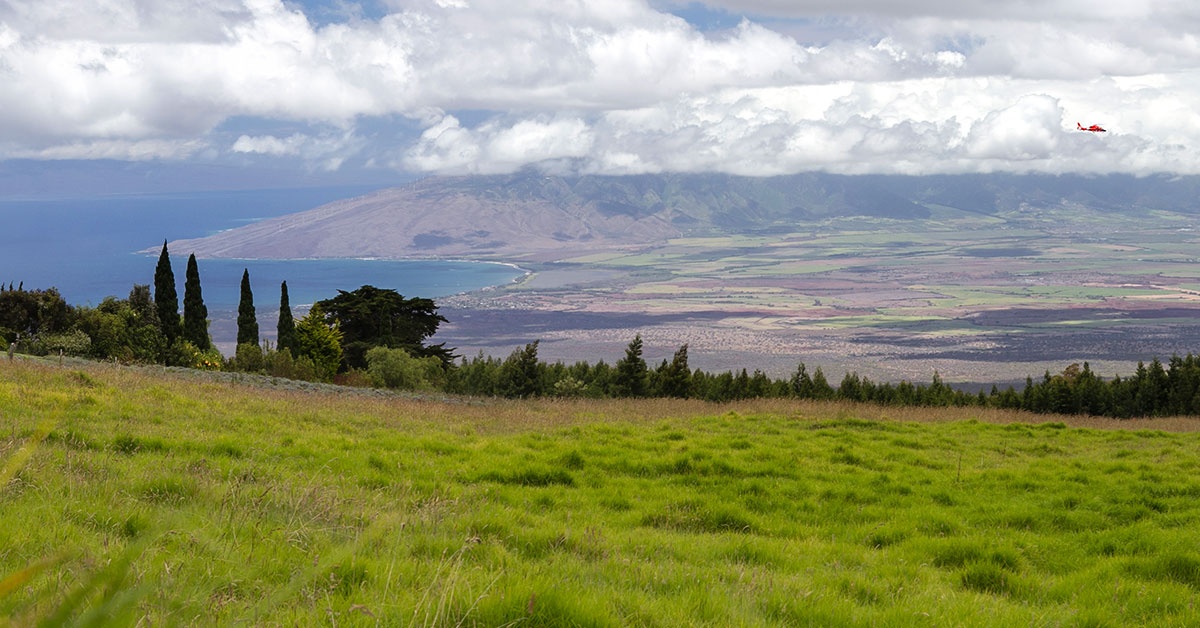
Kula is a small, widely scattered upcountry community on the island of Maui, situated in Maui County on the leeward slopes of Haleakala volcano. The Kula census-designated place has a population of roughly 6,000 to 7,000 residents, spread across ranchland, small farms, and hillside neighborhoods at elevations between roughly 1,500 and 4,000 feet. The area has a noticeably cooler, drier character than Maui's coastal resort zones, with cooler nights, sweeping pastoral views, and a working-agriculture feel rooted in paniolo (Hawaiian cowboy) heritage. Kula is best known as a gateway to the upper slopes of Haleakala and as a quiet, scenic counterpoint to the busier beach towns below, sitting roughly 20 to 30 minutes uphill (and east) of Kahului, the island's main commercial hub and airport.
The single biggest draw in the area is Haleakala National Park, whose summit district begins at the top of the road that climbs through Kula. From the community, visitors can reach the park entrance in roughly 30 to 45 minutes, where they can experience the massive Haleakala Crater, native silversword plants, and the famous sunrise above the clouds. Kula is also home to Ali'i Kula Lavender, a working lavender farm and garden on the slopes above town that draws visitors for its walking paths, gift shop, and panoramic valley views. The farm is just a few minutes from central Kula, making it an easy add-on for travelers staying in the area.
A short drive further upslope brings travelers to the Kula Botanical Garden, a six-acre garden showcasing native Hawaiian plants alongside tropical and temperate species from around the world, with paved walkways that make it accessible for families and older visitors. The surrounding upcountry, including the nearby small towns of Pukalani and Makawao, adds a cluster of roadside farm stands, small art galleries, and casual eateries, giving Kula a more locally rooted, less tourist-saturated feel than the beachside resort areas of West or South Maui.
This combination of quiet, elevated setting and easy access to Maui's most iconic natural attraction makes Kula a particularly compelling base for short-term rentals. Guests can return from a chilly pre-dawn Haleakala trip to a sun-warmed cottage, spend afternoons exploring botanical gardens and lavender fields, and still reach the beaches of Kihei, Wailea, or the Road to Hana within an hour or so by car. For travelers who want a Maui experience that trades beachfront crowds for open skies, starry nights, and a slower agricultural pace, Kula offers a setting that is hard to replicate elsewhere on the island.
Want to know if a property in Kula is a good investment?
Enter an address to get instant revenue potential and comps.