
Woodstock, Georgia
Want to see how Woodstock compares to other top cities in Georgia? Explore all city regulations in Georgia. →
Woodstock, GA
Challenging To Investors

STR Regulations for Woodstock, Georgia
Executive overview: Short‑term rentals are allowed in Woodstock, Georgia—but only with compliance at both the city and county levels. In the City of Woodstock, an STR must obtain a City Short‑Term Rental Certificate and a Home Occupation License. In the unincorporated parts of Cherokee County surrounding Woodstock (and any unincorporated STR you operate in the county), you must also obtain a County Short‑Term Rental Certificate under the county’s Division 11 ordinance (Article III, Chapter 18). State‑level requirements—especially Georgia’s lodging excise tax and transient occupancy tax reporting—apply county‑wide.
This guide explains how to launch and operate a compliant STR in Woodstock and Cherokee County, the exact documents and permits you need, the specific regulations you must follow, the key contact points, and the official sources. Use this as your operating playbook.
1) Whether STRs Are Allowed
-
City of Woodstock: Yes—STRs are allowed if the property is within city limits and you obtain both the City STR Certificate and the City Home Occupation License, and you comply with city‑level operating requirements. The City Council approved city code amendments for STRs on August 23, 2021, and the city’s forms portal lists a “Short‑term Rental Application” among Business License applications.
-
Cherokee County (unincorporated areas): Yes—STRs are allowed in unincorporated county residential zoning districts if you obtain a County Short‑Term Rental Certificate and comply with County Division 11 standards (Article III, Chapter 18 of the Cherokee County Code of Ordinances). The County’s Development Service Center administers the program; registration requires an application and fee ($50) and additional documentation.
State of Georgia: State‑level statutes do not impose a licensing/registration requirement for STRs; however, Georgia’s lodging excise tax (often “hotel/motel tax”) applies to transient accommodations, and local government excise or occupation taxes may also apply.
What do Airbnb hosts actually earn in Woodstock?
Woodstock hosts earn a median $34,687/year with $171 ADR and 72% occupancy.
Top performers pull in $46,609+ per year.
See the full Woodstock market breakdown2) How to Start an STR Business in Woodstock/Cherokee County
Follow these steps to launch a compliant operation:
-
Step 1: Verify location and zoning. Confirm whether your property is inside the City of Woodstock or in unincorporated Cherokee County. If inside the city, you must follow both city and county requirements. If outside the city, county requirements still apply. Ensure your property is a single‑family structure in a residential zoning district (county regulations do not permit STRs in multifamily developments and cap STR units at five bedrooms).
-
Step 2: Screen for HOA/covenants and septic (county requirement). If you are in an HOA‑governed neighborhood, obtain a written statement from the HOA confirming the HOA bylaws do not prohibit STRs (county requirement). If the property uses an on‑site septic system, obtain a performance evaluation from the Cherokee County Health Department verifying the septic system is in good working order (county requirement).
-
Step 3: Prepare property for safety and standards. Ensure compliance with county safety requirements (operational smoke and CO detectors, emergency egress windows, visible house numbers, maintenance standards, and pool compliance). Confirm sufficient on‑site parking—one hard‑surfaced space per rented bedroom, on the same property.
-
Step 4: Designate a local contact person and responsible adult. Identify a 24/7 local contact who can respond within one hour to complaints and can appear on site. Identify the “responsible person” who must be at least 24 years of age and ensure occupants’ compliance.
-
Step 5: Assemble required documents and complete applications.
- For the County STR Certificate: Complete the county application and submit the $50 fee plus the additional items described below.
- For the City STR: Complete the city’s STR application and obtain the Home Occupation License.
-
Step 6: Submit applications and obtain certificates. Submit county materials to the Cherokee County Development Service Center (DSC). Submit city applications to the City of Woodstock Community Development/Business Licensing Division. Note: City applications must be reviewed and decided within 30 days; county applications are typically processed within five days (subject to completeness).
-
Step 7: Prepare guest documentation and on‑premise notices.
- Prepare the exemplar rental agreement with required provisions (occupant agreement to comply with local noise and STR regulations; acknowledgement of violations; immediate termination/eviction language).
- Post the on‑premise information notice inside the unit with the required content (owner/local contact, local hospital, occupancy limit, parking rules, trash pickup, quiet hours, outdoor‑speaker prohibition, copy of the certificate with number).
-
Step 8: Advertising and listing. Include the certificate number in all online and print advertisements for the property (county requirement).
-
Step 9: Collect and remit state and local taxes. Register for Georgia lodging excise tax (and any local hotel/motel/transient taxes) as required, and remit per filing schedules. This applies across Cherokee County and includes Woodstock.
-
Step 10: Operating controls and compliance monitoring. Maintain noise/quiet‑hour compliance, off‑street parking, occupancy limits, exterior maintenance, posted notices, and 24/7 contact responsiveness. Maintain insurance coverage and keep emergency equipment functional.
-
Step 11: Renewal and updates. Renew annually (county certificates expire December 31). Update the county DSC in writing within 14 days if the local contact or contact information changes; failure to update is grounds for revocation.
3) Required Documents, Permits, Licenses, and Guidelines
Use this checklist to assemble your application and operating package:
-
Cherokee County STR Certificate (required for unincorporated county STRs; city‑incorporated properties must also comply under city code).
- Completed county application form.
- $50 certificate fee.
- County application items include:
- Owner information (name, address, phone, email); if owner is not a natural person, disclose partners/officers/directors with >20% ownership and contact information.
- Property address.
- 24‑hour local contact name, address, phone, email.
- Owner’s sworn acknowledgement of STR regulations and requirements.
- Number of bedrooms, approximate square footage, maximum occupants allowed.
- Number and location of required off‑street parking spaces (hard‑surfaced, on the same property).
- Owner’s agreement to use best efforts to ensure quiet enjoyment for neighbors.
- Any other information required by Division 11.
- HOA statement (if applicable) confirming STRs are not prohibited.
- Acknowledgement of the posted information notice requirements.
- Septic performance evaluation from Cherokee County Health Department (if on‑site septic system).
- Exemplar guest agreement containing required provisions (compliance with noise ordinance and local rules; acknowledgement that violations can trigger termination/eviction and fines).
- Proof of current ownership.
- Proof of insurance.
- Written certification from the local contact person agreeing to perform duties.
-
City of Woodstock requirements:
- City Short‑Term Rental Certificate (application listed under Business License/Tax Applications & Forms).
- Home Occupation License (required for STR operation inside city limits).
- City application items include:
- Principal owner contact information.
- Proof of insurance (rental/vacation property coverage).
- Written HOA statement (if applicable) confirming STRs are not prohibited.
- Designation of a unit agent (owner or representative; representative must be 18+).
- On‑premise posting requirements include the certificate, maximum occupancy, number of allowed vehicles, and agent contact info.
-
Operating documents and notices:
- Guest agreement (see exemplar requirements above).
- On‑premise information notice (see city and county posting lists).
- Visible house number and street address posting.
-
Health and safety (county):
- Operational smoke detectors in every bedroom and on each story; maintained in good working order.
- Carbon monoxide detectors outside each bedroom and on each story.
- Emergency egress windows/doors from each bedroom that open directly to exterior without tools.
- Portable ABC fire extinguisher (5‑pound minimum, fully charged, not expired) on each floor.
- Sewer or septic system in good working order and capacity.
- Pool compliance with current International Swimming Pool and Spa Code, as applicable.
- Property maintenance standards and visible street number.
-
Advertising and listing:
- Include certificate number in advertisements.
-
State and local tax filings:
- Georgia lodging excise tax registration and filings (state).
- Any local hotel/motel or transient occupancy taxes if applicable in the jurisdiction.
4) Specific Regulations for Short‑Term Rentals (City, County, and State)
Woodstock (City Code Amendments, 2021):
- STRs require both a City STR Certificate and a Home Occupation License.
- City review timeline: Applications must be approved or denied within 30 days.
- On‑premise posting: Post the certificate; maximum occupancy; number of allowed vehicles; and agent contact information.
- Violations and penalties:
- First offense: $500.
- Second offense within 12 months: $750.
- Third offense: $1,000.
- Violations can result in suspension or revocation of the license.
Cherokee County Code (Division 11 – Short‑Term Rentals, Article III, Chapter 18):
- Applicability: Unincorporated county residential zoning districts.
- Certificate required: Certificate must be obtained before renting, operating, or advertising any property as an STR.
- Property and use limits:
- Single‑family housing types only; no more than five bedrooms.
- No multifamily STRs (no units in multifamily developments).
- Not a special event facility, lodge, campground, or similar use.
- Occupancy:
- Maximum two persons per bedroom plus two additional persons; total occupancy cannot exceed 16.
- Children three and under are not counted toward occupancy limits.
- Local contact:
- One designated contact, available 24/7; must respond to any county notice within one hour and appear on site as needed.
- Responsible person:
- Every STR must be rented to a “responsible person” at least 24 years of age who ensures compliance by all occupants.
- Parking:
- Off‑street parking required: One space per bedroom, on hard‑surfaced areas (gravel, concrete, asphalt).
- Parking cannot occur off the designated hard‑surfaced areas or on neighboring property.
- Noise and quiet hours:
- Quiet hours: 12:00 a.m. to 7:00 a.m. daily; Saturday midnight to 1:00 p.m. Sunday.
- Use of outdoor speakers by guests is prohibited.
- Posted notice:
- The unit must have a conspicuous and legible notice posted near the front door containing: owner and 24/7 local contact; nearest hospital; maximum occupants; maximum vehicles and parking rules; trash pickup instructions; quiet hours and outdoor‑speaker prohibition; and a copy of the certificate with the certificate number.
- Advertisement:
- The certificate number must appear in any advertisement (online or print).
- Safety and maintenance:
- Operational smoke and CO detectors; emergency egress windows; visible house number; minimum fire extinguisher on each floor; property maintenance compliance; functioning sewer/septic; pool code compliance.
- Certificate lifecycle:
- Each property requires its own certificate.
- Certificate expires December 31 each year; non‑transferable.
- Ownership changes require a new certificate application prior to continued operation.
- False statements or omissions in the application are grounds for denial, suspension, or revocation (including denial of future applications).
- Enforcement and penalties:
- Complaints trigger notices to the local contact and require corrective action within one hour.
- Three violations in 12 months can result in certificate revocation.
- Operation without a certificate is a violation; each day of noncompliance constitutes a separate violation.
- Violations may be prosecuted in magistrate court, and the county can pursue abatement as a nuisance and injunctive relief.
Georgia State Rules (relevant to all STRs in Cherokee County/Woodstock):
- Lodging excise tax: Georgia imposes a lodging excise tax on transient accommodations (often termed hotel/motel tax). STR operators must register with the Georgia Department of Revenue (or the appropriate tax administrator if applicable locally) and file remittances according to statutory schedules.
- Transient occupancy taxes: Local governments may impose additional excise taxes on transient stays; compliance obligations attach depending on the jurisdiction.
- These state and local tax obligations apply independently of city or county licensing.
5) Contact Information for Local Authorities
Cherokee County Development Service Center (Short‑Term Rentals – unincorporated county):
- Phone: 770‑721‑7810
- Email: contact via the county DSC page (see Source 1)
- Address: Development Service Center, Cherokee County
- Notes: Submit the county STR application and fee; direct septic evaluations to the Cherokee County Health Department.
- Source 1: www.cherokeecountyga.gov/dsc/business-licenses/Short-Term-Rentals/
- Source 2 (County ordinance draft/full text): www.cherokeecountyga.gov/_resources/Short-Term-Rental-Ordinance-DRAFT05102021.pdf
City of Woodstock Community Development/Business Licensing (city STR):
- Phone: 770‑592‑6000
- Address: Woodstock City Hall – Annex, 12453 Hwy 92, Woodstock, GA 30188
- Office Hours: Monday–Friday, 8:00 a.m.–5:00 p.m. (Utility/Permit Offices close at 4:00 p.m.)
- Application portal (Business License/Tax): see “Short‑term Rental Application” under Licensing/Tax Applications & Forms
- Source 3: www.woodstockga.gov/your_government/departments/community_development/forms.php
6) Links to Source Pages (IMPORTANT)
- Cherokee County STR landing and contact (Source 1): www.cherokeecountyga.gov/dsc/business-licenses/Short-Term-Rentals/
- Cherokee County Short‑Term Rental Ordinance (Source 2): www.cherokeecountyga.gov/_resources/Short-Term-Rental-Ordinance-DRAFT05102021.pdf
- City of Woodstock applications and forms portal (Source 3): www.woodstockga.gov/your_government/departments/community_development/forms.php
- News coverage of Woodstock’s STR ordinance adoption (Source 4): www.tribuneledgernews.com/local_news/woodstock-approves-short-term-rental-regulations/article_4c271b88-0a69-11ec-8b97-83a157dba6a0.html
Notes and operational guidance for investors:
- Because Woodstock properties may be inside city limits or adjacent to unincorporated county areas, double‑jurisdiction is the norm. Plan your licensing and compliance to satisfy both city and county requirements.
- The county certificate’s five‑day approval window is conditioned on a complete application; ensure your HOA, septic,
Next step
Found a property in Woodstock?
Paste any address and get estimated revenue, cash-on-cash return, and comparable STR performance in under 5 minutes. 3 free analyses per day.
Free brief
Get the free Woodstock STR Investment Brief
Revenue data, top neighborhoods, seasonal trends, and the key regulations for Woodstock, Georgia in one email.
Woodstock
Market Saturation Score
Photos of Woodstock


Overview of Woodstock
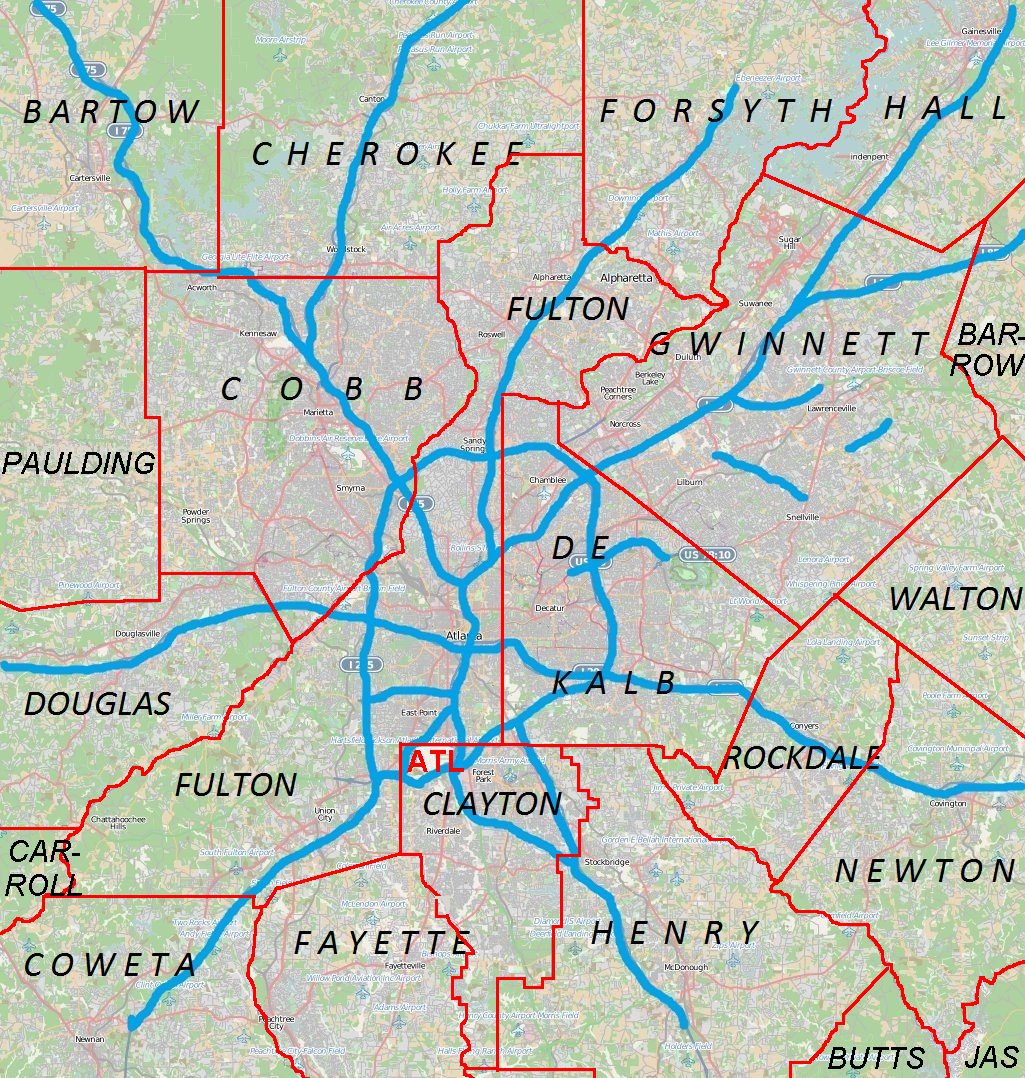
Woodstock is a growing city in Cherokee County, Georgia, situated in the northern reaches of the Atlanta metropolitan area. With a population of approximately 35,000, it carries a small-town feel while offering the amenities of a larger suburb, and it has earned a reputation for its revitalized historic downtown, locally owned restaurants, and a string of craft breweries. The city functions as a comfortable base for visitors heading into the foothills and mountains of North Georgia and sits roughly 30 miles north of downtown Atlanta, making it an easy day trip from the state's capital.
Downtown Woodstock is the city's social and commercial heart, where restored brick storefronts line a walkable stretch filled with independent shops, casual eateries, coffee roasters, and tasting rooms. Visitors can stroll between boutiques and patio bars, catch a show at the local performing arts venue, or simply enjoy the tree-shaded square that hosts community events throughout the year. The district is the focal point of the city's identity and a short walk or drive from most residential areas.
Just minutes from the town center, Olde Rope Mill Park offers a quieter escape along the Little River, with multi-use trails threading through woods and past a historic covered bridge and the remains of an old rope mill. The park is a favorite for hikers, joggers, and mountain bikers and connects to a broader network of greenways in the area, giving short-term rental guests a convenient place to enjoy the outdoors without leaving town.
About fifteen miles west of Woodstock, Lake Allatoona sprawls across several thousand acres and is one of the most popular recreational reservoirs in Georgia, drawing boaters, anglers, swimmers, and campers. Its shores are home to Red Top Mountain State Park, where visitors find more than fifteen miles of wooded trails, a sandy swimming beach, a marina, and yurts and cottages for overnight stays. Together, the lake and the park make an easy half-day excursion from Woodstock and add a substantial natural draw for travelers who want water and forest activities alongside their city comforts.
For short-term rental investors and visitors alike, Woodstock hits a useful balance between accessibility and escape. Its proximity to Atlanta brings steady year-round demand from business travelers, wedding guests, and visiting families, while its own downtown, trail system, and quick access to Lake Allatoona and the North Georgia mountains give leisure travelers plenty of reasons to extend their stay. That mix of suburban convenience, walkable charm, and nearby outdoor recreation is what makes Woodstock such an appealing base in the greater Atlanta market.
Want to know if a property in Woodstock is a good investment?
Enter an address to get instant revenue potential and comps.