
Saint Marys, Georgia
Want to see how Saint Marys compares to other top cities in Georgia? Explore all city regulations in Georgia. →
Saint Marys, GA
Challenging To Investors
STR Regulations for Saint Marys, Georgia
Saint Marys, GA Short-Term Rental (STR) Investor Guide
Overview: Are short-term rentals allowed in Saint Marys, GA?
Yes, but the allowed form and location depend on zoning. Saint Marys’ zoning ordinance does not define or specifically regulate “short-term rentals.” However, it contains analogous lodging uses:
- Hotel or motel: Includes “tourist homes and bed and breakfasts.”
- Boardinghouse: “A dwelling other than a hotel where, for compensation and by prearrangement for definite periods, meals or lodging and meals are provided for two or more persons.”
Key implications:
- Short-term rentals that operate like traditional lodging (i.e., renting sleeping rooms to transient guests) are treated under the same zoning framework as hotels/motels or boardinghouses.
- In residential districts (e.g., R‑1, R‑2, R‑3, R‑4), hotels/motels and boardinghouses are not listed as permitted uses; therefore they are generally not allowed unless the City has a separate licensing or special use pathway not captured here.
- In commercial districts (e.g., C‑1 Central Business and C‑2 Highway Commercial), hotels and boardinghouses are permitted or allowed via special permit, with additional performance and design standards.
- “Home occupations” are allowed in some residential districts but are very limited: no on-site customer servicing; no signs beyond a small nameplate; and no activities that create dust, noise, odor, or electrical disturbance beyond the lot. Operating a typical STR that provides overnight lodging to the general public would not qualify as a compliant home occupation.
Bottom line for investors:
- A whole‑unit STR or room‑rental STR is most viable in the C‑1 or C‑2 districts (consistent with hotels/boardinghouses).
- Operating such use in R‑1, R‑2, R‑3, R‑4 districts is generally not permitted unless a special use permit is granted and/or the City issues an STR‑specific license consistent with zoning—neither is documented in the provided material.
- Always confirm zoning and any City licensing requirements with the Building Department/Zoning Administrator before purchase or operation.
Note: State-level Georgia laws require compliance with health/safety rules and the collection/remittance of applicable state and local sales and hotel/motel taxes for transient accommodations. See the State-level section below.
What do Airbnb hosts actually earn in Saint Marys?
Saint Marys hosts earn a median $31,926/year with $150 ADR and 68% occupancy.
Top performers pull in $40,657+ per year.
See the full Saint Marys market breakdownHow to start a short-term rental business in Saint Marys
- Confirm zoning feasibility
- Identify the parcel’s zoning district.
- For commercial districts (C‑1 or C‑2), hotels/motels and boardinghouses are allowed or allowable by special permit—consistent with STR use. For residential districts, STRs as lodging are generally not permitted; do not rely on “home occupation” rules for an STR that rents rooms to transient guests.
- If in a permitted district, proceed to permitting.
- Design and code compliance
- Comply with building, life safety, and accessibility codes as applicable to transient lodging in the chosen district.
- Meet district-specific standards (e.g., in C‑1 for hotel/boardinghouse uses: minimum lot area, yard setbacks, height, parking, and “commercial dwelling” unit size minimums).
- Where applicable, ensure compliance with historic district design standards.
- Obtain permits and licenses
- Building permits and inspections for any construction, change of use, or life-safety improvements.
- Apply for any City business/occupational tax license required (the ordinance references a license for certain uses but does not list a City business license in the provided content; confirm current requirements with City Hall).
- Register for and comply with state and local tax obligations (sales and transient accommodation taxes).
- Set up tax compliance and reporting
- Register with the Georgia Department of Revenue for sales and transient accommodation tax.
- Collect and remit all applicable local hotel/motel taxes and state sales/transient taxes.
- Establish policies and operations
- Guest policies, occupancy limits, parking, noise/quiet hours, and trash management.
- Safety: smoke/CO detectors, egress, posted emergency info.
- Adequate off‑street parking per district rules and Article IV off‑street parking/loading requirements.
Required documents, permits, licenses, and guidelines
Zoning/land use approvals
- Verification of zoning district for the parcel; confirmation that lodging uses (hotel/motel or boardinghouse) are permitted or allowed by special permit in that district.
- If required, a special use permit per Section 110‑145 (special permit procedures and conditions in the zoning ordinance).
Building and life safety
- Building permits and inspections for any construction, alteration, or change of use to a lodging facility.
- Compliance with applicable building codes (e.g., fire separation, sprinkler systems if required, egress standards).
- For boardinghouses: comply with minimum unit size and density standards for the district (e.g., in R‑2: minimum heated and cooled area per unit; see specific district standards in Article II).
Business licensing
- City of Saint Marys occupational/business license (confirm current application and fees with City Hall—specifics are not provided in the ordinance content).
- Evidence of compliance with any state health/safety licensing applicable to transient lodging.
Tax registration and compliance
- Georgia Department of Revenue registration for sales and transient accommodation taxes.
- Remittance of state and local transient accommodation (hotel/motel) taxes.
Operational compliance
- Parking: Meet Article IV off‑street parking/loading requirements for the specific use and district (the ordinance references these standards but the full text is not included in the provided content).
- Design and site standards: In C‑1/C‑2, hotels/boardinghouses must meet district standards (setbacks, height, buffers/screens as applicable). If adjoining residential districts, greater setbacks and screening are typically required.
Specific regulations for short-term rentals in Saint Marys, Camden County, and Georgia
Saint Marys (City level)
- Hotel or motel: Defined to include tourist homes and bed and breakfasts.
- Boardinghouse: A dwelling (other than a hotel) where lodging (with or without meals) is provided for compensation to two or more persons by prearrangement for definite periods.
- Permitted locations by district:
- Residential districts (R‑1, R‑2, R‑3, R‑4): Hotels/motels and boardinghouses are not listed as permitted or special uses; thus, they are generally not allowed as of right. Short‑term rentals that function as lodging for transient guests generally fall outside the scope of permitted uses in these residential districts.
- Commercial districts:
- C‑1 Central Business: Hotels/boardinghouses are permitted. Residential uses are also allowed but must meet district standards (e.g., commercial dwelling units above the first floor that is commercial; unit size minimums).
- C‑2 Highway Commercial: Hotels, tourist homes, and motels are permitted. Boardinghouses are not listed as permitted uses in C‑2 in the provided content; confirm with the City whether a special use permit may be available.
- Other standards relevant to lodging uses:
- Minimum lot area, lot width, front/side/rear setbacks, maximum height, lot coverage, and minimum dwelling unit sizes are prescribed by district (e.g., R‑2 requires 600 sq ft minimum per unit; C‑1 commercial dwelling units must be at least 450 sq ft of heated/cooled area).
- Off‑street parking and loading: The ordinance references Article IV standards; confirm specific ratios with the City (full text of Article IV is not included in the provided content).
- Where lodging uses abut residential districts, additional setbacks/screening may be required.
- Home occupations: Limited to activities that are clearly incidental to the dwelling, conducted entirely within the main or accessory buildings, with no on‑site customer servicing, no outdoor signs other than a small nameplate, and no off‑site impacts (dust, noise, odors, etc.). Operating a typical STR that rents rooms to transient guests would not meet these restrictions.
Camden County (County level)
- The provided content does not include county-specific short-term rental regulations or ordinances. Investors should verify county-level licensing, taxes, or zoning overlays that might apply to unincorporated county areas.
Georgia (State level)
- Zoning and land use: State law authorizes municipalities to adopt and exercise zoning powers (Ga. Const. art. 9, sec. 2, par. 4; O.C.G.A. § 36‑66‑1 et seq.; O.C.G.A. § 36‑66‑2). This framework underpins Saint Marys’ zoning authority.
- Planning and development: Georgia law encourages coordinated and comprehensive planning by counties and municipalities (O.C.G.A. § 36‑70‑1 et seq.). The City’s zoning must align with its comprehensive plan.
- Health and safety: The ordinance references compliance with state health/safety rules for certain special permit uses (e.g., fruit and vegetable sales must display health department approvals). For transient lodging, expect compliance with state health/safety standards administered by the Georgia Department of Public Health and relevant state agencies.
- Taxes:
- Sales and transient accommodation (hotel/motel) taxes apply to short‑term lodging. Register, collect, and remit through the Georgia Department of Revenue and local tax authorities.
- The City’s zoning ordinance references the need for a valid occupational tax license for certain activities (e.g., fruit and vegetable sales). Confirm whether an equivalent City business license applies to lodging operations and the amount of any local hotel/motel tax with the City.
Contacts for local authority in charge of STRs/zoning
City of Saint Marys
- Building Department/Zoning Administrator: Primary point of contact for zoning confirmation, building permits, and inspection scheduling related to a proposed short‑term rental.
- Phone: Not provided in the ordinance content. Contact City Hall to be directed to the Building/Zoning office.
- Email: Not provided in the ordinance content.
- Website: Not provided in the ordinance content.
Planning Commission
- Handles special use permits, variances, and zoning map amendments, per Article II, Division 2 and Article VII procedures.
- Contact details: Not provided in the ordinance content.
Georgia Department of Revenue
- For registration and compliance for state sales and transient accommodation taxes.
- Website: dor.georgia.gov/
- Phone: Not provided here; see DOR’s official channels.
Camden County
- County-level licensing, taxes, or zoning administration contact: Not provided in the provided content. Verify with Camden County government for any county rules affecting unincorporated areas or county-administered taxes.
Links to source pages
- City of Saint Marys Zoning Ordinance (PDF): cms3.revize.com/revize/stmarysnew/government/authorities_boards_commissions_and_committees/planning_commission/docs/St__Marys_Zoning_Ordinance.pdf
- Georgia Department of Revenue (taxes): dor.georgia.gov/
Practical cautions and due diligence
- Do not assume an STR is permissible in a residential district without an explicit, approved pathway (e.g., special use permit or City-issued STR license consistent with zoning). The provided ordinance shows residential districts are protective and do not list hotels/boardinghouses as allowed uses.
- Confirm off‑street parking and loading requirements for lodging uses; full Article IV standards are referenced but not reproduced here.
- If the property is within the Historic District, additional design and preservation standards apply.
- Before acquiring a property for STR use, obtain a zoning verification letter and a written determination from the Building/Zoning Administrator that the proposed STR use is permitted and what permits are required.
- Secure insurance appropriate for transient lodging and document compliance with life safety codes.
This guide is based solely on the Saint Marys Zoning Ordinance content provided. Always verify with the City’s Building/Zoning Administrator for current requirements and interpretations.
Next step
Found a property in Saint Marys?
Paste any address and get estimated revenue, cash-on-cash return, and comparable STR performance in under 5 minutes. 3 free analyses per day.
Free brief
Get the free Saint Marys STR Investment Brief
Revenue data, top neighborhoods, seasonal trends, and the key regulations for Saint Marys, Georgia in one email.
Saint Marys
Market Saturation Score
Photos of Saint Marys

Overview of Saint Marys
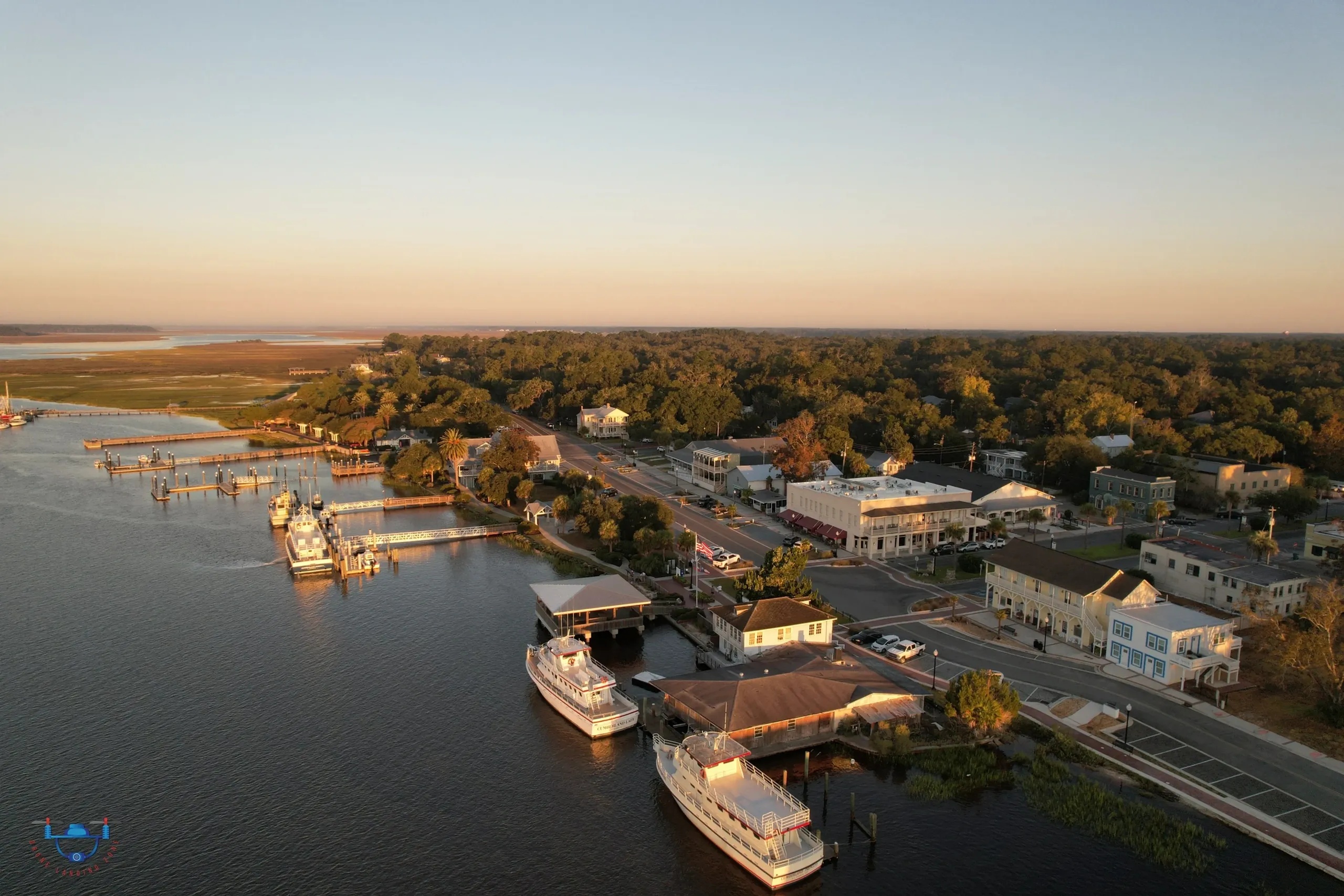
Saint Marys is a small coastal city in Camden County, in the southeastern corner of Georgia, situated along the St. Marys River where it meets the Atlantic. The city has a population of roughly 18,000 residents and carries the easygoing character of a historic Southern river town, with moss-draped live oaks, a walkable waterfront, and a pace shaped by the tides. Saint Marys is best known as the mainland gateway to Cumberland Island National Seashore, one of the largest and most protected barrier islands on the eastern seaboard. It lies about 35 miles north of Jacksonville, Florida, across the river from Fernandina Beach, and roughly 280 miles southeast of Atlanta, the nearest major metropolitan area in Georgia.
The marquee draw is Cumberland Island National Seashore, accessible by passenger ferry from a dock in downtown Saint Marys. The crossing takes about 45 minutes and deposits visitors on a largely undeveloped island of maritime forest, dune-lined beaches, salt marsh, and resident wild horses. The island also holds the evocative brick ruins of the Carnegie family estate, Dungeness, as well as the First African Baptist Church, one of the oldest African American congregations in the country. Cumberland's combination of natural beauty and historic sites draws visitors year-round, and the ferry departure point keeps Saint Marys firmly on the tourism map.
Just across the river in Florida, Fort Clinch State Park sits at the northern tip of Amelia Island in Fernandina Beach, only about ten minutes from downtown Saint Marys. The well-preserved brick fort, built before the Civil War, offers living-history demonstrations, rampart walks, and beachside camping, making it a popular companion stop to a Cumberland Island day trip.
A short drive north of the city, Crooked River State Park offers a quieter alternative for nature lovers, with salt marsh, tidal creek, and live-oak hammocks that are characteristic of the Georgia coast. The park has a campground, fishing pier, and trails that showcase the lowcountry landscape without the boat ride.
The historic downtown waterfront itself, with its riverfront boardwalk, small public beach, and restored nineteenth-century storefronts, gives the town a layered sense of place. Saint Marys is also home to Naval Submarine Base Kings Bay, which adds a steady, year-round population presence in addition to the seasonal tourist flow.
For short-term rental investors, Saint Marys offers a compelling mix: a walkable historic core, a strong national park draw that fills weekends and shoulder seasons, proximity to Jacksonville's airport for fly-in guests, and the natural buffer of the Georgia coast. The combination of limited lodging supply on Cumberland, steady base-driven traffic, and a setting that feels both remote and accessible makes it a quietly attractive market in the Southeast.
Want to know if a property in Saint Marys is a good investment?
Enter an address to get instant revenue potential and comps.