
Sanford, Florida
Want to see how Sanford compares to other top cities in Florida? Explore all city regulations in Florida. →
Sanford, FL
Generally Investor Friendly
STR Regulations for Sanford, Florida
Short-Term Rentals (STRs) in Sanford, Florida: Investor Guide
Overview: Are STRs allowed in Sanford, FL?
Yes. Short-term rentals (rentals of housing for fewer than 30 days) are allowed in Sanford, Florida, subject to a licensing framework and specific operating standards. In 2023, Sanford amended its licensing code (Chapter 149, Article V) to explicitly regulate short-term rentals, including units marketed on platforms such as Airbnb and VRBO. The amendments preserve neighborhood character, discourage conversion of housing to transient uses, and balance tourism benefits with residential quality. County-level rules in unincorporated Seminole County also apply to properties outside city limits, requiring registration and minimum standards. State law (Chapter 509, Florida Statutes) defines vacation rentals as transient public lodging establishments and sets the licensing and tax framework. Local governments in Florida cannot prohibit vacation rentals; they may regulate noise, occupancy, parking, and registration.
What do Airbnb hosts actually earn in Sanford?
Sanford hosts earn a median $30,649/year with $152 ADR and 70% occupancy.
Top performers pull in $42,268+ per year.
See the full Sanford market breakdownHow to start an STR business in Sanford
- Confirm zoning and eligibility
- Confirm the property is inside Sanford’s city limits (see Interactive Zoning Map). If outside city limits but within Seminole County, county rules will apply.
- In Sanford: In the Urban, Single Family Residential, or Residential Development Zone, the STR must be the primary residence of the property owner. A single-family property may have one STR unit or up to two rooms for rent when defined as a guest home under §280; a multi-unit property may have one STR unit.
- Obtain state lodging licensing and tax accounts
- License: Apply for a public lodging establishment license (transient) with the Florida Department of Business and Professional Regulation (DBPR). Vacation rentals are classified as transient public lodging establishments under Section 509.242, Florida Statutes.
- Taxes: Register with the Florida Department of Revenue (DOR) to collect and remit Florida sales tax and any applicable county surtax. If using a peer-to-peer (P2P) platform that remits taxes on your behalf, document this in your registration.
- Local tourist taxes: Obtain a local tourist development tax (bed tax) account with the Seminole County Tax Collector. If using a P2P platform that remits these taxes for you, maintain proof of the platform’s remittance obligations.
- Obtain local registration and business tax (county and/or city)
- County (unincorporated Seminole County): Register the vacation rental with Seminole County’s third-party vendor (Avenu Insights & Analytics). Annual registration is required; the fee is $250 and proceeds support the Affordable Housing Trust Fund.
- City (Sanford): Confirm compliance with city licensing and any updated fees; Sanford increased the lodging license fee by $100 per unit. Work with the Planning Division and Building/Code Enforcement teams to ensure zoning and license alignment.
- Local business tax: Pay the local business tax (Chapter 45, Part 1) where applicable.
- Insurance and safety
- Carry general liability insurance of at least $500,000 and sufficient property coverage for replacement, demolition, and debris removal.
- Provide required safety equipment: at least one ABC multi-purpose fire extinguisher per floor (near sleeping rooms) and a Class K extinguisher in the kitchen. Maintain a 24/7 local telephone contact and post emergency information in the unit.
- Occupancy and parking
- Occupancy: Maximum occupants are limited to two adults per sleeping room; up to four children under 13 may stay without counting toward the maximum. Post the occupancy permit in a conspicuous location.
- Parking: Provide sufficient on-site parking; no on-street parking for STR guests. For multi-bedroom units or associations, provide documentation of reserved parking spaces on the same parcel or via a notarized agreement for off-site spaces.
- Taxes and registrations platform documentation
- If using a P2P platform (Airbnb/VRBO), document that the platform will remit state sales tax and local tourist taxes. If not using a platform, obtain your DOR and county tax accounts and remit directly.
- Operating guidelines
- Comply with noise, solid waste, and (if in the Urban Bear Management Area) urban bear management requirements. Sexual offender/predator proximity restrictions also apply.
- Provide a “Transient Occupant Information” binder near the main common area phone with all rules, emergency contacts, and parking map.
- No property owner has a vested right to continue operating an STR that does not meet ordinance standards.
- Renewals and changes
- County registration is annual (October 1–September 30) and must be renewed each year. Report changes in ownership, responsible party, sleeping rooms, or parking; submit updates through the vendor portal when applicable.
- City: Renew licenses and business taxes annually, and verify compliance with any updated rules.
Required documents, permits, licenses, and guidelines
City of Sanford (Chapter 149, Article V)
- Short-term rental license (city licensing framework applies to STRs)
- Primary residence requirement (Urban/Single Family Residential/Residential Development Zones)
- Occupancy permit posted in unit
- Insurance: General liability ≥ $500,000; property coverage sufficient for replacement/demolition/debris removal
- Fire safety equipment: ABC extinguisher per floor near sleeping rooms; Class K extinguisher in kitchen
- On-site parking only; no on-street guest parking
- Guest home allowance: up to two rooms for rent under §280; only one STR unit per single-family property or multi-unit building
County (Seminole County, unincorporated areas; Ordinance 2020-14)
- Vacation rental registration with Avenu Insights & Analytics (annual; fee $250)
- Affidavit/registration form and self-certification of minimum standards:
- DBPR transient public lodging license number
- DOR registration for sales tax and platform remittance status
- Local tourist tax account (county tax collector) or platform remittance proof
- Local business tax proof (Chapter 45, Part 1)
- Acknowledgments: noise, solid waste, urban bear management (if applicable), sexual offender/predator restrictions
- Parking verification (survey/scaled sketch/photo), including reserved spaces and off-site notarized agreements where applicable
- Occupancy limits: two adults per sleeping room; up to four children under 13 not counted toward maximum
- Emergency information posting and binder content (address, emergency phone numbers, responsible party contact, parking map, local hospitals/clinics)
- Non-compliance inspections: County Code Enforcement may inspect upon reasonable indication of violations
State (Chapter 509, Florida Statutes)
- DBPR license: Transient public lodging establishment (vacation rentals)
- DOR tax registration: Florida sales tax and applicable county surtax; P2P platform remittance documentation
- Local tourist development taxes: County tax collector registration
- Vacation rentals cannot be prohibited; local governments may regulate noise, occupancy, parking, registration
Specific regulations by jurisdiction
City of Sanford
- Purpose and intent: Preserve residential quality and discourage conversion to transient uses; support tourism while protecting neighborhoods.
- STR definition: Rental for fewer than 30 days.
- Applicability: Includes tiny homes, seasonal dwellings, guest homes and cottages, and single-family homes; excludes hotels, motels, and bed-and-breakfasts.
- License: Rental housing licenses may be suspended if the building is designated a disorderly house (Chapter 114).
- Insurance: Minimum $500,000 general liability; property coverage for replacement, demolition, debris removal.
- Primary residence rule in certain zones; one STR unit per property; up to two rooms for rent as guest home.
- Occupancy: Two adults per bedroom; final determination by Code Enforcement; occupancy permit posted.
- Parking: Sufficient on-site; no on-street parking; license fee increased by $100 per unit for lodging establishments.
- No vested rights to operate non-conforming STRs.
Seminole County (unincorporated)
- Registration required: Vacation rentals must register with Avenu before operation and annually thereafter.
- Fees: $250 annual registration fee; County’s portion supports Affordable Housing Trust Fund.
- Minimum standards (self-certified):
- Occupancy: two adults per sleeping room; up to four children under 13 not counted.
- Local telephone service: 24/7 contact to 911 center; display phone number.
- Fire extinguishers: ABC per floor near sleeping rooms; Class K near kitchen.
- Transient Occupant Information binder: noise, parking, solid waste, bear management (if applicable), sexual offender rules, hospitals/clinics, responsible party phone, parking map.
- Parking: minimum two spaces; one additional space per sleeping room beyond four; spaces must be on same parcel unless off-site spaces are secured via notarized agreement and marked; in associations/shared facilities, spaces must be specifically reserved and signed for the STR.
- Posting: Emergency information posted on egress door, refrigerator, and inside doors of sleeping rooms; includes address, 911 contact, responsible party contact, and binder location.
- Violations: Reported to Code Enforcement; complaints can be filed with Seminole County Sheriff’s Office; county does not enforce private covenants/HOA rules.
- Annual renewal: Registration valid from October 1 to September 30; re-register upon changes in ownership, responsible party, sleeping rooms, or parking.
State of Florida
- Vacation rentals are transient public lodging establishments; DBPR licensing applies.
- Local governments may regulate noise, occupancy, parking, and registration; they may not prohibit vacation rentals or regulate the duration or frequency of rentals.
- Taxes: Sales tax and local tourist development taxes must be collected and remitted; P2P platforms often remit on behalf of hosts, which must be documented.
Contact information and resources
City of Sanford (inside city limits)
- Planning Division (land use, zoning, development): 407-688-5140
- Development Services Department: 407-688-5000
- Address: 300 N Park Ave, Sanford, FL 32771
- Hours: Mon–Thu 7:00–17:30; Fri 8:00–13:00
- Website (Planning, zoning maps, permits): sanfordfl.gov/government/development-services/planning
Seminole County (unincorporated areas and countywide registrations)
- Avenu Insights & Analytics (registration vendor): Online portal links provided by the County; phone support via vendor
- County Contact: 407-665-0000
- Address: 1101 E. 1st St., Sanford, FL 32771
- Hours: Mon–Fri 8:00–17:00
- Vacation rental registration: County portal through Avenu
- Complaint tip form and hotline: Online form (harmari.com/tipform-seminolecounty) or 1-866-819-8260 (24/7)
- Seminole County Sheriff’s Office Code Violations: (407) 665-6650; online reporting form available
State of Florida
- Department of Business and Professional Regulation (DBPR): Licensing for transient public lodging establishments; consult DBPR’s public lodging pages for application specifics.
- Florida Department of Revenue (DOR): Sales tax registration and filing; consult DOR’s vacation rental or P2P host guidance.
- Seminole County Tax Collector: Local tourist development tax (bed tax) account; consult County Tax Collector’s office for account setup.
Links to source pages (for verification)
- Sanford Springvale News coverage of city STR regulations: sanfordspringvalenews.com/short-term-rentals/
- City of Sanford Planning Division (zoning, applications, contacts): sanfordfl.gov/government/development-services/planning/
- Seminole County Vacation Rental Registration overview: www.seminolecountyfl.gov/departments-services/development-services/planning-development/forms-applications-resources/foreclosure-vacation-rental
- Seminole County Vacation Rental Ordinance No. 2020-14 (PDF): www.seminolecountyfl.gov/docs/default-source/pdf/Vacation-Rental-Ordinance_2020_14.pdf
Practical operating notes
- If the property is in a homeowners’ or condominium association, confirm and follow all private covenants; the County does not enforce private restrictions.
- If your property has a homestead exemption, be aware that STR use may affect eligibility; consult your tax advisor.
- For five or more bedrooms, include detailed parking graphics and signage in your postings and binder.
- Maintain proof of platform remittance of state and local taxes if applicable; keep DBPR license number, DOR account details, and tax receipts/confirmations on file.
Next step
Found a property in Sanford?
Paste any address and get estimated revenue, cash-on-cash return, and comparable STR performance in under 5 minutes. 3 free analyses per day.
Free brief
Get the free Sanford STR Investment Brief
Revenue data, top neighborhoods, seasonal trends, and the key regulations for Sanford, Florida in one email.
Sanford
Market Saturation Score
Photos of Sanford


Overview of Sanford
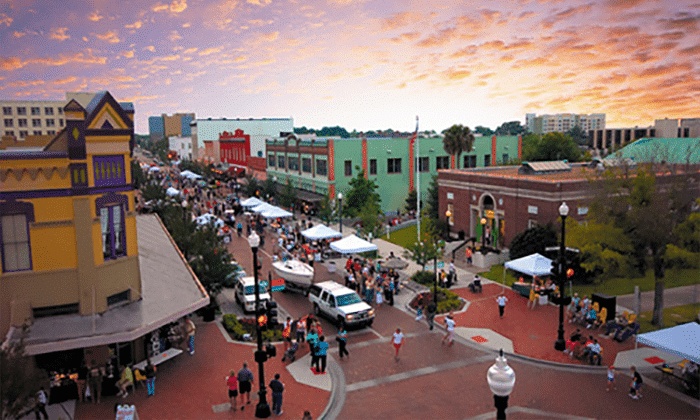
Sanford sits in Seminole County in central Florida, on the southern shore of Lake Monroe at the headwaters of the St. Johns River. With a population of approximately 60,000, the city blends a historic small-town feel with a revitalized riverfront and serves as a gateway to one of Florida's most important inland waterways. Sanford is best known for its walkable brick-lined downtown, antique shops, craft breweries, and a growing food scene, and it lies roughly 25 miles north of downtown Orlando, offering visitors a quieter counterpoint to the busy theme park corridor to the south.
The historic downtown district along First Street and Magnolia Avenue is the heart of the city, featuring restored 19th-century buildings, independent boutiques, restaurants, and a growing collection of breweries. The adjacent Sanford Riverwalk traces the shoreline of Lake Monroe and provides a scenic path for walking, jogging, and watching boats pass along the river. The downtown sits just minutes from most parts of the city and remains the main social and cultural hub, anchored by the historic Wayne Densch Performing Arts Center and a number of restored civic landmarks that give the area its distinctive character.
The Central Florida Zoo & Botanical Gardens sits on the western edge of Sanford and offers a mix of animal exhibits, a zipline course, and native Florida habitats. It is a family-friendly draw that complements the city's outdoor offerings and is a roughly 10-minute drive from downtown. The surrounding Seminole County landscape also provides access to numerous lakes, nature preserves, and trails, making the area attractive for guests who want to combine theme park visits with more relaxed outdoor recreation.
About 20 minutes north of Sanford, Blue Spring State Park is one of the region's most popular natural attractions. The park protects the largest spring on the St. Johns River and is a winter haven for West Indian manatees, drawing thousands of visitors each year who come to view the animals from boardwalks or to swim, kayak, and canoe in the spring's cool waters. It pairs well with a Sanford stay, especially for guests interested in Florida's unique wildlife and the broader river ecosystem.
Sanford's combination of small-city walkability, riverfront charm, and proximity to both Orlando's major attractions and central Florida's natural areas makes it a flexible base for short-term rentals. Guests can spend a day exploring theme parks to the south, then return to a quieter, more walkable setting with breweries, restaurants, and a historic downtown atmosphere. For investors and operators, the city offers a growing tourism market, a distinct identity separate from the theme park hubs, and easy access to the broader Orlando metro area, all of which support year-round appeal across a wide range of traveler types.
Want to know if a property in Sanford is a good investment?
Enter an address to get instant revenue potential and comps.