
Port Richey, Florida
Want to see how Port Richey compares to other top cities in Florida? Explore all city regulations in Florida. →
Port Richey, FL
Very Investor Friendly
STR Regulations for Port Richey, Florida
Overview: Are Short-Term Rentals Allowed in Port Richey?
Short-term rentals (STRs) are allowed in Port Richey. The city’s table entry states “No limitations pertaining to frequency, occupancy, or length of stay,” meaning Port Richey does not set local minimum stay, cap frequency, or cap occupancy for rentals.
Important nuance:
- “No limitations” typically implies rentals of any duration are permitted and not subject to city-level caps. It does not mean that no compliance is required at all.
- If the property lies within Pasco County’s unincorporated boundaries (most of the City of Port Richey is incorporated), Pasco County vacation rental regulations may apply. The county rules contain occupancy, parking, posting, and registration requirements. If your property is within the municipal limits of Port Richey proper and zoning is exclusively municipal, some investors interpret “no limitations” to mean the county rules do not apply inside city limits. Because this is not explicitly clarified in the provided sources, you should verify the property’s jurisdiction (city vs. unincorporated county) and applicable zoning with the City of Port Richey and the Pasco County Zoning and Site Development Department before relying on either set of rules.
In practice, even where city rules are permissive, state-level licensing, tax collection, and safety requirements apply, and any deed restrictions, HOA/POA rules, or homeowners association (HOA) covenants may further restrict STR activity.
What do Airbnb hosts actually earn in Port Richey?
Port Richey hosts earn a median $24,265/year with $142 ADR and 67% occupancy.
Top performers pull in $37,540+ per year.
See the full Port Richey market breakdownHow to Start a Short-Term Rental Business in This Market
Investors and hosts should approach Port Richey as a largely permissive city but with Pasco County overlay potential, and with Florida state requirements that always apply. The sequence below is designed to minimize legal and operational risk.
- Confirm jurisdiction and zoning
- Verify whether the subject property is inside the City of Port Richey or in unincorporated Pasco County. If inside the city, confirm that city zoning permits the intended STR use and check whether any deed restrictions apply.
- If the property is in unincorporated Pasco County, you must comply with the county vacation rental framework (see “Specific regulations” below).
- Obtain state licensing and registrations
- Florida Department of Business and Professional Regulation (DBPR) Vacation Rental License: If renting the property to the public for fewer than 6 months, you typically need a DBPR “transient public lodging establishment” license (Division II).
- Florida Department of Revenue (DOR): Register to collect and remit applicable sales and use taxes, transient rental taxes, and, if applicable, tourist development taxes for rentals ≤ 6 months.
- Note: DBPR’s sanitation and safety rule (61C‑3.001) applies to transient lodging, establishing housekeeping and safety standards.
- Secure local compliance
- City of Port Richey: No STR-specific permit, license, or business tax receipt is referenced in the provided data. However, Florida law allows cities to levy a local business tax (formerly “occupational license”) for the privilege of conducting business locally. Confirm with the City whether a local business tax receipt is required for STR operations within city limits.
- Pasco County (if jurisdiction applies): Complete annual vacation rental registration by September 30, obtain a business tax certificate from the Tax Collector, and post and operate in compliance with county rules. (See “Specific regulations” for the full list.)
- Safety and inspections
- Align the property with Florida Building Code, Florida Fire Code, and Florida Life Safety Code.
- For pools/spas, comply with Florida’s Residential Swimming Pool Safety Act (F.S. ch. 515). The county overlay (if applicable) references these same standards.
- If the property is in unincorporated Pasco, expect county posting and monitoring requirements (see “Specific regulations”).
- Insurance and risk management
- Obtain liability and property coverage appropriate for transient lodging operations. Ensure coverage aligns with the requirements of your DBPR license (if required) and mortgage/insurance carriers.
- Tax administration and remittance
- Register with DOR and set up remittance schedules for sales/use taxes and transient rental taxes. If the property is in a county that imposes tourist development taxes for rentals ≤ 6 months (as Pasco does), collect and remit those taxes. Keep detailed records of all transactions, stays, and remittances.
- Property setup and operations
- Draft guest agreements that comply with Florida law, include occupancy limits, quiet hours, parking rules, trash/recycling information, and emergency evacuation notices if required.
- If Pasco County rules apply, post the required in‑unit notice on or next to the main entrance and keep an occupancy log.
- Establish a 24/7 response protocol for issues and complaints.
- Marketing and advertising
- Comply with DBPR advertising requirements (accurate description, license/registration numbers where required, and compliance with all laws).
- If the property is subject to Pasco County rules, include the business tax certificate number in advertising if the county requires it.
- Ongoing compliance
- Renew any state licenses/registrations and Pasco County registration annually by September 30 (if applicable).
- Maintain records for at least the statutory period (typically 4 years for tax records).
- Monitor any city, county, or state code updates.
Required Documents, Permits, Licenses, and Guidelines
City level (Port Richey)
- City STR-specific permit/license: Not referenced in the provided material.
- Local business tax receipt: Not specifically mentioned for STRs; Florida law authorizes cities to levy business taxes—confirm with the City whether a local business tax receipt is required to operate an STR in Port Richey.
- Zoning confirmation: Verify that STR use is permitted in the subject zoning district and that no HOA/POA or deed restrictions bar STR operations.
Pasco County (if jurisdiction applies; strongly confirm applicability inside Port Richey’s municipal boundaries)
- Annual vacation rental registration with Pasco County (by Sept 30) and a business tax certificate from the Tax Collector for each unit or a single certificate per management company.
- Display of the DBPR license and local business tax certificate on the back of the main entrance/exit door (if county rules apply).
- Emergency telephone notice: “In Case of Emergency Dial 911” clearly posted near each telephone.
- Written occupancy log: Names/addresses/dates of stay; available to the county within 72 hours of written request.
- Guest notice: County-prescribed occupant notice posted on the main entrance door (12-point font minimum) regarding trash, noise, and other residential community rules.
- Property standards: Compliance with F.S. ch. 515 (pool safety), Florida Building Code, Florida Fire Code, and Florida Life Safety Code; plus all other applicable local, state, and federal regulations.
State level (Florida)
- DBPR Vacation Rental License (transient public lodging establishment) for rentals ≤ 6 months to the public.
- DOR registrations for sales/use taxes and transient rental taxes; remit applicable taxes on all rentals ≤ 6 months.
- Compliance with DBPR sanitation and safety requirements (61C‑3.001) and Florida building/fire/life safety codes.
Documentation you will need (typical)
- Proof of property ownership or lease authorization.
- DBPR license application and fee; DBPR display certificate.
- DOR tax registration and returns set‑up.
- County registration (if applicable) and business tax certificate.
- In‑unit postings (e.g., emergency contacts, occupancy limits, trash/collection days, quiet hours, and evacuation notices).
- Guest agreements containing dates of stay, occupancy limits, and compliance obligations.
- Incident and occupancy logs (Pasco County may require availability upon request).
- Insurance declarations and evidence of financial responsibility where required.
Specific Regulations: City, County, and State
City of Port Richey
- Provided entry explicitly states “No limitations pertaining to frequency, occupancy, or length of stay.” No city-specific minimum stay, occupancy caps, or business licensing for STRs is referenced in the source. Confirm with the City whether any local business tax receipt or zoning permit is required to operate in the city limits.
Pasco County (if property lies in unincorporated areas or county rules are deemed applicable)
- Applicability: Applies to “vacation rentals” (rentals to the public for fewer than 30 days or one calendar month, whichever is less, made available more than three times in a calendar year), excluding hotels/motels and B&Bs.
- Conditional Use requirement: Except for legally grandfathered units, a dwelling cannot be used for vacation rental unless approved via the Conditional Use process or an MPUD (Master Planned Unit Development) zoning amendment. Individual lots/units inside platted subdivisions or condominiums are not eligible for stand‑alone approval; approval must be for the entire subdivision/condominium or a defined section thereof, supported by at least 51% of lot/unit owners.
- Additional notice: Certified mail notice to all owners within the subject subdivision/condominium and to those within 250 feet of the boundary; strict proof-of-mailing timelines apply.
- Post‑approval notifications: Update deed restrictions; record a “Notice of Vacation Rentals” in the public records; post conspicuous notices in sales offices/model centers and include notices in sales literature; deliver written notice to buyers prior to closing.
- Registration and tax certificates: By Sept 30 each year, register each unit, pay the registration fee, and obtain a business tax certificate from the Tax Collector. One tax certificate per management company suffices regardless of the number of units managed.
- Operating standards:
- Minimum stay: No rentals fewer than 6 days.
- Occupancy: Maximum two persons per separate, enclosed bedroom.
- Safety: Display DBPR license and local business tax certificate; post emergency phone notice; provide trash collection information and rules.
- Occupancy log: Maintain and provide within 72 hours of a county request.
- Posting: Required occupant notice on the back of the main entrance door (12‑point minimum).
- Enforcement and fines: County code enforcement tools plus potential revocation of approval or registration. Violations can also trigger DBPR and tax‑authority referrals.
Florida state (applies regardless of local rules)
- Licensing: DBPR “transient public lodging establishment” license required for STR operations renting to the public for fewer than 6 months.
- Taxes: State sales/use taxes and transient rental taxes apply to all rentals of 6 months or less. Counties may levy additional tourist development taxes for the same periods. Registration with DOR is required to collect and remit.
- Safety and sanitation: DBPR sanitation and safety requirements (61C‑3.001) govern transient lodging; properties must meet Florida Building Code, Florida Fire Code, and Florida Life Safety Code standards.
Contact Information
Local authority in charge of STRs (jurisdiction-dependent)
-
City of Port Richey (for local business tax/permits, zoning verification, and city-level enforcement)
- Address: City of Port Richey, New Port Richey, FL (municipal limits)
- Website: cityofportrichey.com (not provided in sources; verify official contact via city website)
- Phone/Email: Not specified in the provided material. Contact City Hall for the appropriate department (planning, code enforcement, or business tax/ licensing).
-
Pasco County (for vacation rental registration and enforcement within unincorporated areas)
- Pasco County Zoning and Site Development Department (for conditional use/registration): (727) 847‑8132
- Pasco County Administrator’s Office (countywide coordination): (727) 847‑2411
- Address: 8731 Citizens Drive, Suite 350, New Port Richey, FL 34654
- Email: Not provided in the provided content (verify through the county website)
State agencies (Florida)
-
Florida Department of Business and Professional Regulation (DBPR)
- Vacation rental licensing, compliance, and complaints
- Website: myfloridalicense.com
- Phone/Email: Use DBPR’s contact portal (not specified in sources)
-
Florida Department of Revenue (DOR)
- Sales and use tax, transient rental tax, and tourist development tax registration/collections
- Website: floridarevenue.com
- Phone/Email: Use DOR’s contact portal (not specified in sources)
Links to Source Pages
- Local Short Term Rental Restrictions and/or City Contacts (Pinellas REALTOR®): pinellasrealtor.org/short-term-rentals/ (contains the Pasco section listing, including Port Richey’s “No limitations…”, and county regulations/contacts)
- Pasco County Vacation Rental Reopening Plan (PDF): www.fl-counties.com/sites/default/files/2020-05/Pasco%20Vacation%20Rental%20Reopening%20Plan.pdf (background county plan; not the operative permanent ordinance)
- Navigating Short-Term Rental Regulations in Florida’s Gulf Coast (LinkedIn article; supplemental context; not authoritative): www.linkedin.com/pulse/navigating-short-term-rental-regulations-floridas-gulf-taylor-xtgpe
Notes and reminders
- Jurisdictional clarity is essential: Because Pasco County rules are robust and the city entry states no limitations, confirm whether county rules apply inside the City
Next step
Found a property in Port Richey?
Paste any address and get estimated revenue, cash-on-cash return, and comparable STR performance in under 5 minutes. 3 free analyses per day.
Free brief
Get the free Port Richey STR Investment Brief
Revenue data, top neighborhoods, seasonal trends, and the key regulations for Port Richey, Florida in one email.
Port Richey
Market Saturation Score
Photos of Port Richey

Overview of Port Richey
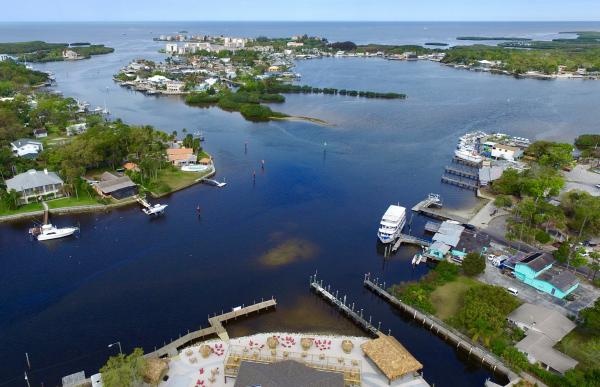
Port Richey is a small Gulf Coast city in Pasco County, Florida, with a population of roughly 3,000 residents. Tucked along the Pithlachascotee River where it meets the Gulf of Mexico, the city has a quiet, working-waterfront character shaped by its marinas, fishing fleets, and a relaxed rhythm that feels distinctly Old Florida. It sits about 40 miles northwest of Tampa and serves as a low-key gateway to the broader Nature Coast, a stretch of shoreline known for its springs, wildlife, and unspoiled barrier islands. The community pairs easily with its larger neighbor, New Port Richey, and offers visitors an affordable, uncrowded alternative to the busier beaches of Pinellas County to the south.
Just minutes from the heart of town, Werner-Boyce Salt Springs State Park offers one of the most unusual natural features on this part of the coast. The park surrounds four первоклассных saltwater springs that bubble up from deep below the surface, and a short boardwalk lets visitors walk out over the emerald pools where the springs meet the river. Trails wind through coastal hammocks and mangroves, and the park is popular with paddlers, birdwatchers, and anyone curious about Florida's underwater geology.
A short drive south, the historic Tarpon Springs Sponge Docks provide a striking cultural counterpoint to the laid-back beach towns. About 20 minutes from Port Richey, this waterfront district is home to one of the largest Greek American communities in the country, with family-run sponge-diving operations, bakeries, and tavernas lining the Anclote River. Visitors can watch divers demonstrate their craft, board a sponge-diving boat, or sample authentic pastries and Mediterranean dishes that have been made here for generations.
Offshore, Anclote Key Preserve State Park rewards day-trippers with four miles of largely undeveloped beach on a Gulf barrier island. Reached by ferry or private boat from nearby Tarpon Springs or New Port Richey, the island is known for its historic 1887 lighthouse, shallow wading waters, and shelling. It anchors the outdoor recreation scene for visitors who want a wilder, less commercialized beach experience than the ones found closer to Tampa Bay.
Port Richey makes a compelling base for short-term rental owners who want to offer guests a quieter, more affordable corner of the Tampa Bay region. Its waterfront setting, proximity to state parks and Gulf islands, and easy access to both the urban amenities of Tampa and the cultural draw of Tarpon Springs give visitors a wide range of experiences within a short drive. Combined with the year-round appeal of fishing, boating, and warm Gulf weather, the city has the kind of laid-back character that draws repeat travelers looking for an authentic stretch of Florida coast.
Want to know if a property in Port Richey is a good investment?
Enter an address to get instant revenue potential and comps.