
Ponte Vedra Beach, Florida
Want to see how Ponte Vedra Beach compares to other top cities in Florida? Explore all city regulations in Florida. →
Ponte Vedra Beach, FL
Generally Investor Friendly
STR Regulations for Ponte Vedra Beach, Florida
Overview: Are Short-Term Rentals Allowed in Ponte Vedra Beach?
Yes. Short-term rentals (STRs) are explicitly allowed in Ponte Vedra Beach, Florida, subject to registration, health, safety, parking, solid waste, and tax obligations administered by St. Johns County. The county’s Short-Term Vacation Rental Ordinance (Ordinance 2021-23, as revised) provides a comprehensive framework for permitting and compliance. Ponte Vedra Beach is an unincorporated community in St. Johns County, east of the Intracoastal Waterway, and therefore falls under county rules (not municipal rules). State-level regulations in Florida also apply and create the broader legal context for STRs.
Important jurisdictional note: Properties west of the Intracoastal Waterway in unincorporated St. Johns County are exempt from county registration; however, most of Ponte Vedra Beach is east of the waterway and thus subject to county regulations.
What do Airbnb hosts actually earn in Ponte Vedra Beach?
Ponte Vedra Beach hosts earn a median $46,692/year with $264 ADR and 68% occupancy.
Top performers pull in $67,119+ per year.
See the full Ponte Vedra Beach market breakdownHow to Start a Short-Term Rental Business in Ponte Vedra Beach
To operate legally and profitably, follow this structured pathway:
-
Verify Property Eligibility
- Confirm the property is in unincorporated St. Johns County east of the Intracoastal Waterway (most of Ponte Vedra Beach is included).
- Screen for exemptions: owner-occupied single-family dwellings with homestead exemption; owner-occupied duplexes where one unit is owner-occupied with homestead and common ownership; multifamily dwellings governed by HOA/COA/HOA or with onsite management; and properties west of the Intracoastal Waterway.
- For condominium or HOA properties, review the association’s governing documents; private associations may impose stricter limits or prohibitions even if county rules allow operation.
-
Register with St. Johns County
- Use the county’s online registration portal to register each unit (or portion thereof) separately.
- Complete the application, pay the registration fee, and execute the affidavit (located on the first page of the application).
- Renew registration every 12 months.
-
Secure Required State Licenses and Certificates
- Florida Department of Business and Professional Regulation (DBPR) license as a Transient Public Lodging Establishment (vacation rental dwelling).
- Florida Department of Revenue (DOR) Sales and Use Tax Certificate.
- If listing on third-party platforms (Airbnb, VRBO), obtain and submit a platform statement confirming tax collection/remittance where applicable.
-
Obtain Local Business Tax Receipt
- Register with the St. Johns County Tax Collector to receive your Local Business Tax Receipt.
-
Prepare Compliance Systems
- Establish occupancy controls aligned with the 10-guest maximum (for existing rentals, phased over three years).
- Design a parking plan to provide at least one space for every three guests.
- Implement solid waste controls with at least one garbage can for every four guests.
- Prepare a 24/7 contact system (owner, property manager, and a secondary contact).
- Integrate occupancy, parking, waste, and contact information into your rental agreement.
-
Maintain and Operate with Best Practices
- Ensure guest conduct aligns with county noise and neighborhood compatibility standards.
- Maintain health and safety standards and be prepared for reasonable county inspections.
- File county Tourist Development Tax (TDT) and applicable local lodging taxes (platforms do not currently collect county TDT), and file state sales/use tax returns.
Required Documents, Permits, Licenses, and Guidelines
St. Johns County Registration (each unit registered separately)
- Complete online registration application.
- Registration fee and annual renewal.
- Executed affidavit (first page of application).
- Sample rental/lease agreement including:
- Maximum occupancy.
- Maximum number of vehicles allowed.
- Name and 24-hour contact information of the owner, property manager, and a secondary contact.
- Guest acknowledgment and agreement to county inspection rights.
- Local Business Tax Receipt from the St. Johns County Tax Collector.
Florida State Requirements
- Florida Department of Business and Professional Regulation license as a Transient Public Lodging Establishment (vacation rental dwelling).
- Florida Department of Revenue Sales and Use Tax Certificate.
- Third-party tax collection statement (if using Airbnb/VRBO or similar platforms).
Operational Guidelines
- Occupancy limits: maximum 10 guests per unit (phased in over three years for existing rentals).
- Parking requirements: minimum one parking space per three guests.
- Solid waste: minimum one garbage can per four guests.
- 24/7 contact accessibility for guests and county staff.
- Health, safety, and inspection readiness (smoke/CO detectors, safe egress, maintenance).
Specific Regulations for Short-Term Rentals: County and State
St. Johns County (applies to unincorporated areas east of the Intracoastal Waterway)
- Registration and Renewal: Annual registration required per unit; use the online portal.
- Occupancy Limits: Maximum 10 guests; existing rentals have a three-year phase-in schedule.
- Parking Standards: One parking space for every three guests.
- Solid Waste: One garbage can for every four guests.
- Contact Availability: 24-hour owner/manager and secondary contact.
- Noise/Conduct: Operators must ensure guest behavior is compatible with residential neighborhoods.
- Health/Safety: Properties must meet basic health and safety standards.
- Inspection Rights: County retains the right to reasonably inspect rentals.
- Enforcement: First violation receives a warning; subsequent violations lead to citations and fines; serious violations may result in suspension or revocation of registration.
State-Level Context (Florida)
- Local governments may not outright ban STRs or regulate the length or frequency of stays.
- Local governments may regulate to mitigate negative effects on neighborhoods (health, safety, parking, noise, solid waste).
- DBPR oversees licensing of vacation rental dwellings and associated public lodging standards.
- DOR administers sales and use tax collection; short-term rentals are subject to these taxes.
Exemptions
- Properties west of the Intracoastal Waterway in unincorporated St. Johns County.
- Owner-occupied single-family dwellings with continuous homestead exemption.
- Owner-occupied duplexes with one unit homesteaded and under common ownership.
- Multifamily dwellings governed by HOA/COA/HOA or with onsite property management.
Contact Information: Local Authority in Charge of STRs
St. Johns County Code Enforcement (Short-Term Rental Authority)
- Email: codenf@sjcfl.us
- Phone: (904) 209-0734
- Fax: (904) 209-0600
- Address: 4040 Lewis Speedway, St. Augustine, Florida 32084
St. Johns County Tax Collector (Local Business Tax and Tourist Development Tax)
- Website: sjctax.us
Links to Source Pages
- St. Johns County Short-Term Vacation Rentals Information: www.sjcfl.us/short-term-vacation-rentals/
- Online Registration Portal: secure.hostcompliance.com/st-johns-county-fl/permit-registration/welcome
- Registration Status Checker (county map): sjcfl.maps.arcgis.com/apps/instant/interactivelegend/index.html?appid=41d7c5a70062490bb9012c0df5900a09
- Short-Term Vacation Rental Ordinance (2021-23, revised): stjohnsclerk.com/minrec/OrdinanceBooks/2021/ORD2021-23revised.pdf
- Basic Guide to Understanding Short-Term Vacation Rentals (county brochure): www.sjcfl.us/wp-content/uploads/2023/08/Brochure-Website.pdf
- Florida DBPR Vacation Rental Licensing Guide: www.myfloridalicense.com/DBPR/hotels-restaurants/licensing/vrtsp-guide/
- Florida Sales and Use Tax Information: floridarevenue.com/taxes/taxesfees/Pages/sales_tax.aspx
- St. Johns County Tourist Development Tax Information: www.sjctax.us/TourismDevelopment.aspx
Key Compliance Timeline and Notes
- Registration became effective after county adoption (May 2021); existing operators were required to register by November 5, 2021.
- Annual renewal of registration is required every 12 months.
- Occupancy limits are being phased in over three years for existing rentals.
- County TDT and local lodging taxes must be collected and remitted; Airbnb and VRBO collect state lodging taxes but not St. Johns County lodging taxes—operators remain responsible for local tax compliance.
Practical Guidance for STR Investors
- Compliance-first operations minimize risk, protect asset value, and sustain market access. Establish robust processes for guest screening, occupancy monitoring, parking management, and waste disposal.
- Verify HOA/COA/HOA bylaws for any additional restrictions or caps beyond county requirements.
- Work with professional property managers to maintain consistent compliance and guest satisfaction.
- Maintain documentation for inspections and audits; keep registration, licensing, and tax filings current.
This guide consolidates county and state-level rules most relevant to investors operating STRs in Ponte Vedra Beach, FL. Always confirm the latest requirements directly with St. Johns County and the Florida agencies listed above.
Next step
Found a property in Ponte Vedra Beach?
Paste any address and get estimated revenue, cash-on-cash return, and comparable STR performance in under 5 minutes. 3 free analyses per day.
Free brief
Get the free Ponte Vedra Beach STR Investment Brief
Revenue data, top neighborhoods, seasonal trends, and the key regulations for Ponte Vedra Beach, Florida in one email.
Ponte Vedra Beach
Market Saturation Score
Photos of Ponte Vedra Beach


Overview of Ponte Vedra Beach
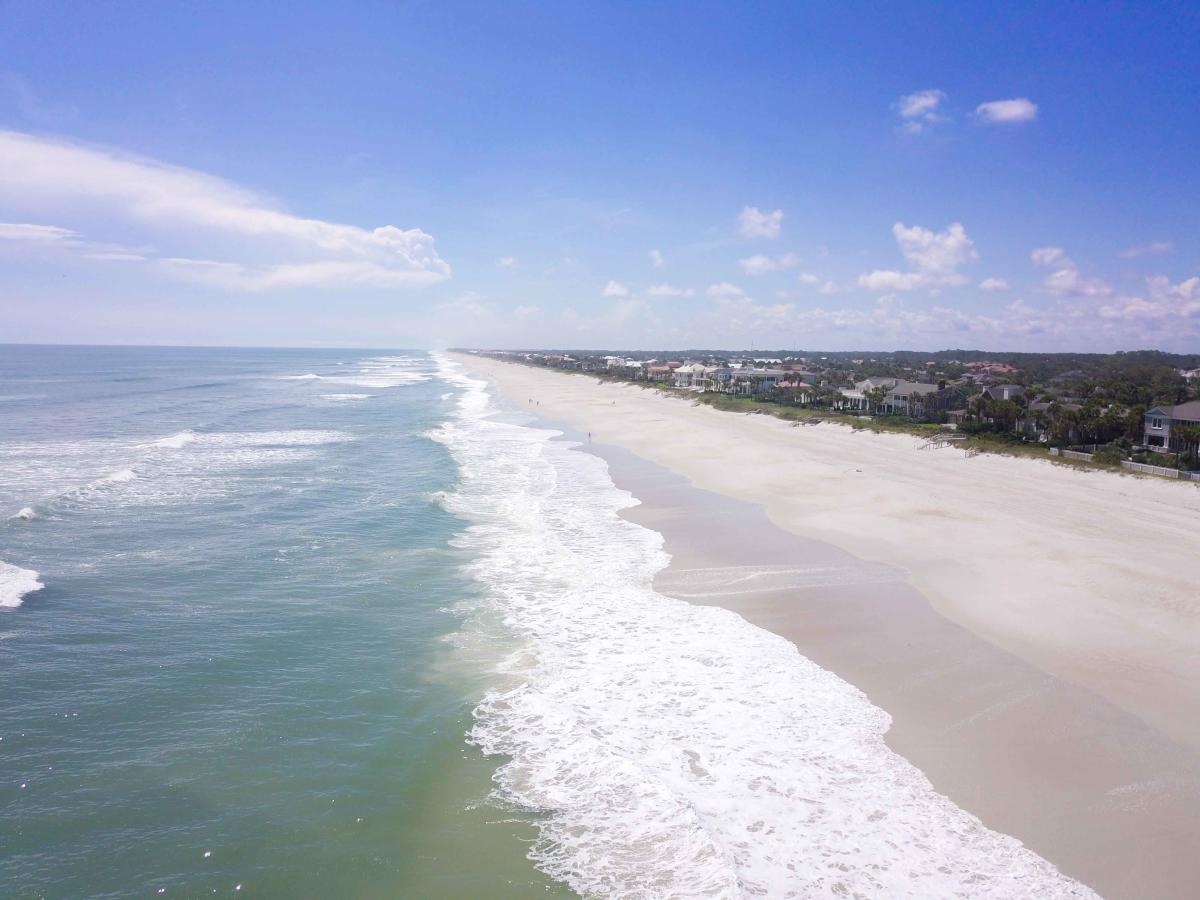
Ponte Vedra Beach is an upscale coastal community situated along Florida's northeast Atlantic shoreline, primarily within St. Johns County. The community has an estimated population in the low thirty-thousands and is widely recognized as one of the most affluent beach enclaves in the Jacksonville metropolitan area. It carries a refined, low-key resort atmosphere, defined by lush live-oak canopies, manicured landscaping, and a string of quietly elegant residential neighborhoods that back onto wide, sandy beaches. Ponte Vedra Beach is best known internationally for its championship golf pedigree and as the host community of one of the PGA Tour's most famous venues. It sits roughly twenty miles southeast of downtown Jacksonville, with the Atlantic Ocean to the east and the Intracoastal Waterway threading through its western edge.
The single biggest draw in the area is TPC Sawgrass, the celebrated golf club that is home to the Stadium Course and its iconic island-green 17th hole. Each spring the course hosts The Players Championship, which consistently draws the sport's top competitors and a large international audience. The club is located right in the heart of Ponte Vedra Beach, just a few minutes' drive from nearly any rental in the area, and it is a major reason visitors flock to the community in March and beyond.
Just to the south of Ponte Vedra Beach, the Guana Tolomato Matanzas National Estuarine Research Reserve protects more than 73,000 acres of coastal wetlands, dunes, and maritime forest along a stretch of barrier-island beach. It offers a network of hiking trails, paddling routes through tidal estuaries, and a long, uncrowded strand at its beach access. The reserve's main trailhead and environmental education center sit roughly fifteen to twenty minutes south of the community by car, making it an easy day trip for travelers interested in Florida's natural side.
A short drive farther south brings visitors to St. Augustine, the nation's oldest continuously occupied European-established settlement. Roughly thirty to forty minutes from Ponte Vedra Beach depending on traffic, the city features a Spanish colonial-era historic district, the Castillo de San Marcos, and the towering St. Augustine Lighthouse. For vacationers who want a change of pace from golf and beaches, it provides a rich layer of history, dining, and sightseeing within easy reach.
Ponte Vedra Beach makes a compelling base for short-term rentals thanks to the unusual combination of luxury-coastal character, year-round appeal, and proximity to a wide range of experiences. Visitors can spend mornings on the beach or at the reserve, afternoons on championship fairways, and evenings exploring the historic streets of St. Augustine, all while returning each night to a quiet, palm-shaded neighborhood with a genuinely residential feel.
Want to know if a property in Ponte Vedra Beach is a good investment?
Enter an address to get instant revenue potential and comps.