
Pensacola, Florida
Want to see how Pensacola compares to other top cities in Florida? Explore all city regulations in Florida. →
Pensacola, FL
Generally Investor Friendly
STR Regulations for Pensacola, Florida
Overview: Are Short-Term Rentals Allowed in Pensacola, FL?
Yes, short-term rentals (STRs) are explicitly allowed in Pensacola, FL. There is no cap on the number of properties an investor can own. Zoning restrictions apply, and STRs are defined as any overnight rental occupied for six months or less, including individually or collectively owned dwellings. Ensure compliance with state and county regulations to operate legally.
How to Start an STR Business in Pensacola
- Register with the Florida Department of Business and Professional Regulation (DBPR): Submit application, fees, and documentation.
- Verify Zoning Compliance: Confirm location meets requirements (e.g., proximity to arterial roads, 15,000 sq ft lot size).
- Obtain Vacation Rental License: Apply through DBPR; fees vary by license duration.
- Appoint a Responsible Agent: Ensure a licensed agent manages transient rentals per Florida law.
- Secure Insurance: Obtain Vacation Rental Insurance or Landlord Protection Insurance.
- Complete Required Inspections: No opening inspections, but Certificate of Balcony Inspection needed every 3 years.
- Set Up Tax Collection: Register with Escambia County Clerk for TDT; handle state sales tax registration.
Required Documents, Permits, Licenses, and Guidelines
- Vacation Rental License (DBPR):
- Application Fee: $50 (non-refundable for new/changed owner).
- License Fee:
- Half-year (≤6 months): $90 (single unit).
- Full-year: $170 (single unit).
- Discounts available for additional units.
- Duration: Typically 1 year; renew annually.
- Compliance with Escambia County Zoning Ordinance:
- STR sites must be within 0.5 miles of a collector/arterial road.
- Minimum lot size: 15,000 sq ft.
- Aesthetics must harmonize with surrounding area.
- No excessive noise/traffic/nuisances.
- Responsible Agent Authorization: Documented authorization (e.g., contract) to licensed agent.
- Certificate of Balcony Inspection: Filed every 3 years (applies to non-common railings/stairwells/balconies).
- Insurance: Vacation Rental/Landlord Protection Insurance required.
- Zoning Compliance: Verify STRs meet state Division of Hotels and Restaurants standards (Florida Administrative Code).
- Tourist Development Tax (TDT) Registration: Register with Escambia County Clerk of Courts Finance Department.
Specific Regulations
- Zoning:
- Location: Must be within 0.5 miles of a collector/arterial roadway.
- Lot Size: Minimum 15,000 square feet.
- Aesthetics: Interior displays visible externally must harmonize with neighborhood character.
- Nuisances: Operation must not generate excessive noise, traffic, or other hazards.
- Occupancy Limits:
- Calculation: 2 individuals per bedroom + 2 additional individuals per property.
- Maximum: Up to 12 people per property (excluding children under 6).
- Property Types: ADUs, duplexes, and multifamily homes allowed as STRs, subject to compliance.
- Business Entity Operation: Allowed (e.g., LLC, Corporation); no specific restrictions.
Tax Information
- TDT (Escambia County):
- Levy: 4% on STR income (per Escambia County Ordinances).
- Registration: Required with Escambia County Clerk of Courts Finance Department.
- Remittance: Monthly collection from guests; submit completed TDT return.
- State Sales Tax:
- Hosts must register with Florida Dept. of Revenue and remit applicable sales tax.
- TDT (State):
- Levy: Up to 6% authorized by Florida Statutes (in addition to local 4%).
- Hosts collect and remit to proper authorities.
Contact Information
- Escambia County Clerk of Courts Finance Department (TDT):
- Address: 190 W Government Street, Pensacola, FL 32502.
- Mailing Address: P.O. Box 333, Pensacola, FL 32591-0333.
- Phone: (850) 595-4310.
- Email: tdt@escambiaclerk.com.
- Registration Form: TDT Property Registration Form (PDF).
- Multiple Property Reporting: TDT Unit Reporting Spreadsheet (XLS).
- Pensacola City Hall:
- Phone: (850) 436-5555.
- Florida Department of Business and Professional Regulation (DBPR - Hotels & Restaurants):
- Phone: (850) 487-1395.
- Website: DBPR Intentions (Vacation Rental Licensing).
Links to Source Pages
- Complete Guide To Get A Vacation Rental License in Pensacola, FL (Oct 2024) (VacationRentalLicense.com).
- Short-Term Rental Regulation Pensacola, FL (April 2025) (GetChalet.com).
- Tourist Development Tax (TDT) - Escambia County Clerk (EscambiaClerk.com).
- Escambia County Land Development Code (LDC) (MyEscambia.com).
- DBPR Hotel & Restaurant Division - Licensure Intentions (MyFloridaLicense.com).
What do Airbnb hosts actually earn in Pensacola?
Pensacola hosts earn a median $48,683/year with $290 ADR and 67% occupancy.
Top performers pull in $74,977+ per year.
See the full Pensacola market breakdownNext step
Found a property in Pensacola?
Paste any address and get estimated revenue, cash-on-cash return, and comparable STR performance in under 5 minutes. 3 free analyses per day.
Free brief
Get the free Pensacola STR Investment Brief
Revenue data, top neighborhoods, seasonal trends, and the key regulations for Pensacola, Florida in one email.
Pensacola
Market Saturation Score
Photos of Pensacola


Overview of Pensacola
Pensacola is a coastal city in Escambia County, in the westernmost reach of the Florida Panhandle, with a city population of roughly 55,000 residents and a broader metro area approaching half a million. Long associated with military aviation and sugar-white Gulf beaches, it carries a relaxed, salt-air character shaped by its naval heritage, Victorian-era downtown, and a string of barrier-island communities that draw summer crowds from across the South. The city is best known as home to Naval Air Station Pensacola and as the gateway to Pensacola Beach and the Gulf Islands National Seashore. It sits about 60 miles east of Mobile, Alabama, roughly 220 miles southeast of New Orleans, and around 350 miles west of Jacksonville, giving it a strategic position for travelers driving along the Gulf Coast.
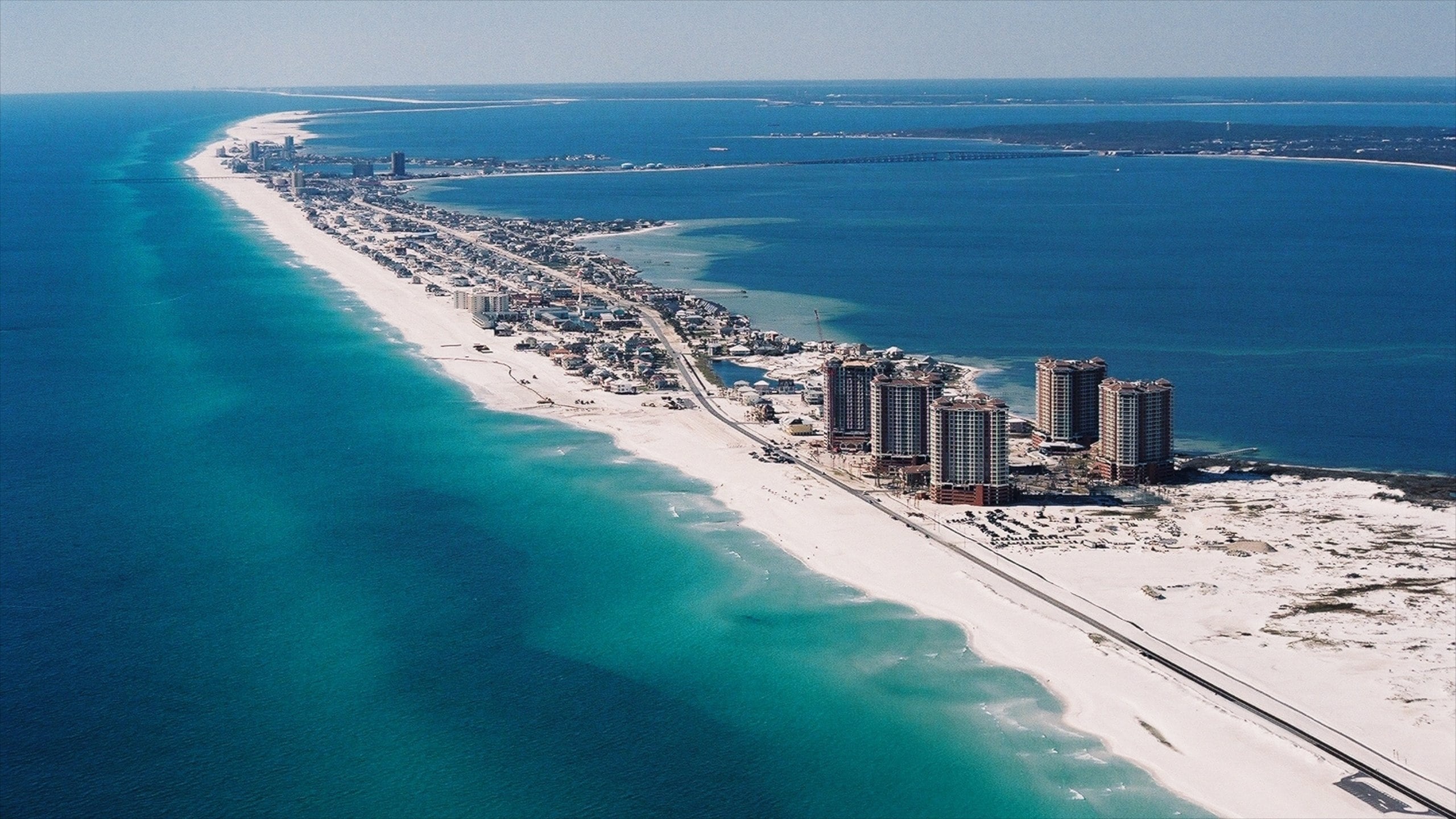
A short drive south of downtown, across the bay and onto Santa Rosa Island, lies Pensacola Beach, where the Gulf of Mexico meets some of the whitest quartz sand in the continental United States. The island is a centerpiece of the Gulf Islands National Seashore, a protected stretch of shoreline and sound-side habitat that also encompasses the historic Fort Pickens, a 19th-century brick fortification at the western tip of the island. Together, the beach and seashore offer swimming, paddling, hiking, and camping roughly 15 to 30 minutes from the city center, depending on traffic crossing the bridge.
Just a few miles north of the beach, back on the mainland, sits Naval Air Station Pensacola, where the National Naval Aviation Museum draws visitors with one of the largest collections of historic military aircraft in the world. The museum is free to enter and includes more than 150 restored planes, many displayed in soaring hangars, plus flight simulators and an IMAX theater. It is approximately 15 minutes from downtown and is widely considered a must-see for first-time visitors, especially during the summer Blue Angels practice sessions and the annual Pensacola Beach air show.
A few miles west of the city, Big Lagoon State Park offers a quieter, nature-oriented counterpoint to the busier beach scene, with more than 700 acres of pine flatwoods, salt marsh, and bayou frontage along the Intracoastal Waterway. The park provides paddling trails, camping, and a short boardwalk trail through coastal habitats typical of the northern Gulf, and it sits about 20 minutes from downtown. To the east, Perdido Key and the communities along Perdido Bay extend the recreational corridor toward the Alabama border and the boundary with Gulf State Park.
Downtown Pensacola itself anchors the experience with its compact historic core, including Seville Square and the surrounding blocks of the Pensacola Historic District, where brick streets, museums, and a working waterfront meet a growing restaurant scene. Together, these nearby beaches, parks, museums, and historic streets give Pensacola a layered appeal that reaches well beyond a single season, and that variety, combined with year-round mild winters and a steady military and family-leisure visitor base, makes the city a particularly resilient setting for short-term rental owners looking to capture both summer beach demand and the quieter shoulder seasons.
Want to know if a property in Pensacola is a good investment?
Enter an address to get instant revenue potential and comps.