
Cape Coral, Florida
Want to see how Cape Coral compares to other top cities in Florida? Explore all city regulations in Florida. →
Cape Coral, FL
Generally Investor Friendly
STR Regulations for Cape Coral, Florida
Comprehensive Guide to Short-Term Rentals in Cape Coral, FL
Overview: Are Short-Term Rentals Allowed in Cape Coral, FL?
Short-term rentals are allowed in Cape Coral, FL, but they are subject to specific regulations at the city, county, and state levels. The city requires registration of residential rental properties (including short-term rentals) through its Code Compliance Division, and operators must also comply with state licensing requirements and county tax obligations. While Florida state law prohibits local governments from completely banning short-term rentals or regulating the length of stays, Cape Coral has implemented registration requirements and compliance measures.
What do Airbnb hosts actually earn in Cape Coral?
Cape Coral hosts earn a median $32,920/year with $257 ADR and 62% occupancy.
Top performers pull in $51,784+ per year.
See the full Cape Coral market breakdownHow to Start a Short-Term Rental Business in Cape Coral
Starting a short-term rental business in Cape Coral involves several key steps:
1. State-Level Requirements
- Register with Florida Department of Revenue: Obtain a sales tax certificate for collecting state sales tax on lodging accommodations
- Obtain DBPR License: Secure vacation rental licensing through the Florida Department of Business and Professional Regulation (unless you're running a hosted rental where you remain on-site)
- Understand Tax Obligations: Register for and collect applicable lodging taxes from guests
2. City-Level Requirements
- Complete Cape Coral Rental Property Registration: Register your property with the city's Code Compliance Division
- Pay Registration Fee: Submit the one-time $35 registration fee
- Maintain Compliance: Adhere to city ordinances and respond to code compliance issues
3. County-Level Requirements
- Register for Lee County Tourist Development Tax: Collect and remit tourist development taxes on stays of less than 184 nights
- File Monthly Returns: Submit tax returns to Lee County Tax Collector
Required Documents, Permits, Licenses, and Guidelines
City of Cape Coral Requirements
- Rental Property Registration Application: Required for all residential structures with four units or fewer that are leased or rented
- One-time Registration Fee: $35
- Contact for Registration: Carol Rall, Customer Service Supervisor - crall@capecoral.gov, (239) 574-0624
State of Florida Requirements
- Sales Tax Certificate: From Florida Department of Revenue for collecting state sales tax
- DBPR Vacation Rental License: From Florida Department of Business and Professional Regulation (not required for hosted rentals)
- Local Business Tax Receipt: May be required by local authorities
Lee County Requirements
- Tourist Development Tax Registration: Register with Lee County Tax Collector
- Monthly Tax Returns: File and remit tourist development taxes collected from guests
Exempt Properties
The following properties are exempt from Cape Coral rental property registration:
- Rental properties owned by federal, state, or local housing programs
- HUD-owned properties
- Hotels and motels
- Community residential facilities licensed and inspected by the state of Florida that do not include owner-occupied units
Specific Regulations for Short-Term Rentals
City-Level Regulations (Cape Coral)
- Registration Requirement: All residential structures with four units or fewer that are leased or rented must be registered
- Registration Fee: One-time fee of $35
- Enforcement: Failure to register results in code enforcement procedures and violations of city ordinance
- Property Maintenance: Must adhere to Rental Property Maintenance Guidelines
- Zoning Compliance: Properties must comply with zoning requirements for rental use
County-Level Regulations (Lee County)
- Tourist Development Tax: Required on stays of less than 184 nights
- Tax Collection: Operators must collect this tax from guests
- Filing Requirements: Monthly returns must be filed with the Lee County Tax Collector
State-Level Regulations (Florida)
- Sales Tax: State sales tax applies to all transient rental accommodations (rentals of six months or less)
- Local Option Taxes: Additional discretionary sales surtax may apply in certain counties
- Marketplace Collection: STR marketplaces like Airbnb and Vrbo are required to collect and remit state-administered lodging taxes
- Licensing: DBPR regulates vacation rentals (excluding hosted rentals where owner remains on-site)
- Local Authority Limits: State law prevents local governments from banning STRs entirely or regulating stay length, but allows regulations for controlling negative effects
Minimum Stay Requirements
Based on community discussions, there appear to be enforcement discussions around minimum stay requirements, though specific current minimum stay rules should be verified directly with city authorities as these requirements can change.
Contact Information for Local Authorities
Cape Coral Code Compliance Division
- Primary Contact: Carol Rall, Customer Service Supervisor
- Email: crall@capecoral.gov
- Phone: (239) 574-0624
- Website: www.capecoral.gov/department/community_development/code_compliance_division/rental_property_registration.php
Florida Department of Business and Professional Regulation (DBPR)
- Website: www.myfloridalicense.com/DBPR/hotels-restaurants/licensing/licensing-guides/
- Emergency Information: www.myfloridalicense.com/emergency
Lee County Tax Collector
- Tourist Development Tax Information: www.leeclerk.org/departments/inspector-general/tourist-development-tax
Florida Department of Revenue
- Sales Tax Information: floridarevenue.com/taxes/taxesfees/Pages/sales_tax.aspx
- Transient Rental Brochure: floridarevenue.com/Forms_library/current/brochure/gt800034.pdf
Source Pages and Additional Resources
- Cape Coral Rental Property Registration: www.capecoral.gov/department/community_development/code_compliance_division/rental_property_registration.php
- Cape Coral City Codes and Ordinances: www.municode.com/library/fl/cape_coral/codes/code_of_ordinances
- Florida State Statutes: www.leg.state.fl.us/Statutes/
- DBPR Vacation Rental Licensing: www.myfloridalicense.com/DBPR/hotels-restaurants/licensing/licensing-guides/
- Lee County Tourist Development Tax: www.leeclerk.org/departments/inspector-general/tourist-development-tax
- Florida Sales Tax Information: floridarevenue.com/taxes/taxesfees/Pages/sales_tax.aspx
- Avalara Florida STR Guide: www.avalara.com/mylodgetax/en/resources/vacation-rental-tax-guides/florida.html
Important Compliance Notes
- Dual Registration: Properties must register with both the city and state authorities
- Tax Collection Responsibility: Operators are responsible for collecting and remitting applicable taxes, even if using marketplace platforms
- Enforcement Actions: Cape Coral has demonstrated active enforcement, with reported fines exceeding $30,000 for violations
- Regular Updates: Regulations can change frequently; operators should regularly check for updates from all relevant authorities
- Professional Advice: Consider consulting with legal and tax professionals familiar with Florida STR regulations
This guide provides a comprehensive overview based on available information, but operators should verify current requirements with official sources as regulations may change.
Next step
Found a property in Cape Coral?
Paste any address and get estimated revenue, cash-on-cash return, and comparable STR performance in under 5 minutes. 3 free analyses per day.
Free brief
Get the free Cape Coral STR Investment Brief
Revenue data, top neighborhoods, seasonal trends, and the key regulations for Cape Coral, Florida in one email.
Cape Coral
Market Saturation Score
Photos of Cape Coral


Overview of Cape Coral
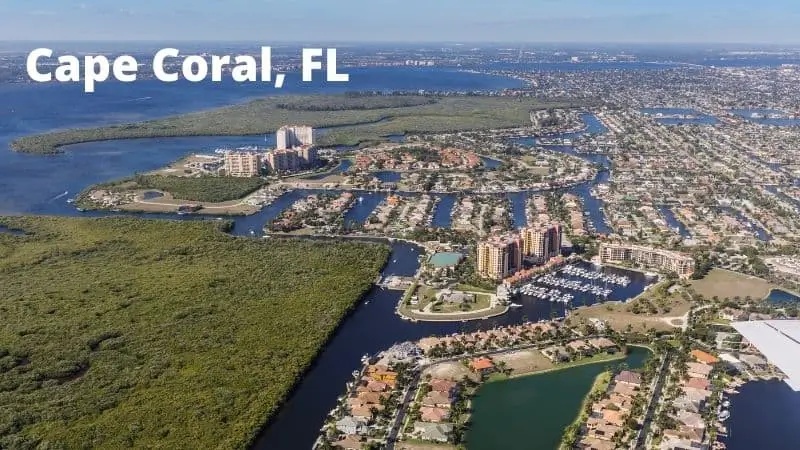
Cape Coral sits in Lee County on Florida's southwestern Gulf Coast, a sprawling city built around more than 400 miles of navigable canals that have earned it the nickname "Waterfront Wonderland." With a population of approximately 200,000, it ranks among the larger municipalities in Florida, though it feels distinctly suburban, with palm-lined residential streets, boating cul-de-sacs, and a relaxed, sun-and-water rhythm defining daily life. The city serves as a gateway to the barrier islands and nature preserves of the Lee Island Coast and lies directly across the Caloosahatchee River from Fort Myers. The larger metro areas of Tampa and Miami sit roughly 130 and 150 miles to the north and southeast, respectively.
A short drive west brings visitors to Sanibel Island, reached via the causeway from Fort Myers in roughly 30 to 40 minutes. Sanibel is celebrated for its shelling beaches, the J.N. "Ding" Darling National Wildlife Refuge, and a slow, bicycling-friendly village atmosphere that contrasts with the busier mainland.
On the opposite side of the city, the small fishing village of Matlacha and the larger Pine Island lie about 20 to 30 minutes northwest of Cape Coral. Pine Island is the largest island on Florida's Gulf Coast, and Matlacha in particular has a colorful, bohemian feel, with clapboard cottages converted into galleries, seafood shacks, and small studios that draw day-trippers seeking a quieter, more local experience than the beaches offer.
Closer to home, the Four Mile Cove Ecological Preserve protects a stretch of mangrove and salt marsh along Cape Coral's eastern edge. A paved walking trail, a raised boardwalk, and kayak launches let visitors explore the brackish wetlands and spot wading birds, all without leaving the city limits.
Together, Cape Coral's blend of canal-side residential charm, easy access to barrier-island beaches and wildlife refuges, and proximity to Fort Myers make it a flexible base for short-term rental guests. Travelers can spend mornings kayaking through mangroves, afternoons shelling on Sanibel, and evenings dining in a fresh-caught fish house, all within a short drive of their rental, a mix of convenience and variety that keeps the city appealing year-round.
Want to know if a property in Cape Coral is a good investment?
Enter an address to get instant revenue potential and comps.