
Watertown, Connecticut
Want to see how Watertown compares to other top cities in Connecticut? Explore all city regulations in Connecticut. →
Watertown, CT
Generally Investor Friendly
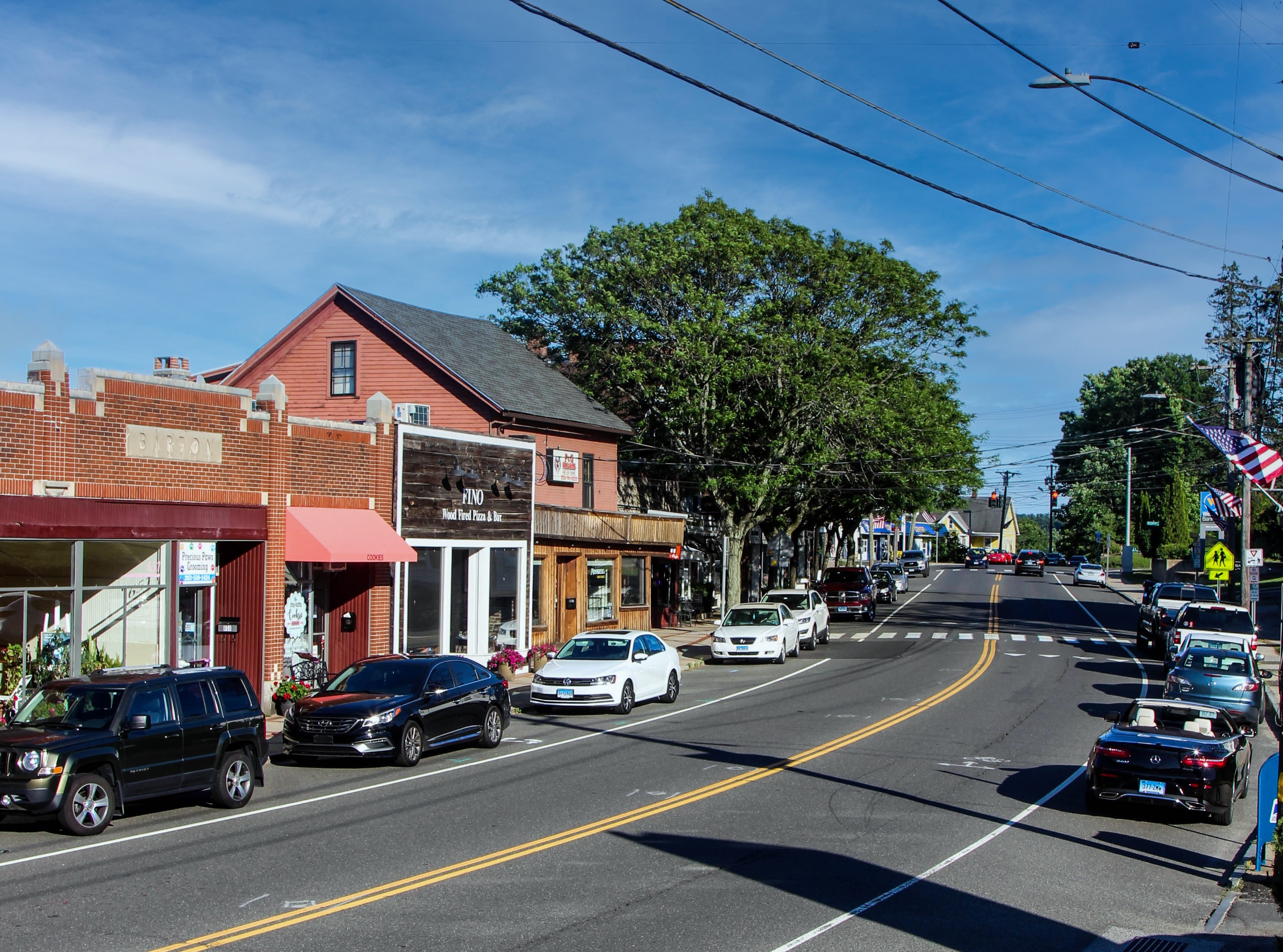
STR Regulations for Watertown, Connecticut
This guide synthesizes the Town of Watertown’s Zoning Regulations adopted 12/04/2024 (effective 12/30/2024), plus relevant state-level guidance, to help investors understand the feasibility, requirements, and steps to legally operate a short-term rental in Watertown, CT. Where the Town code does not specify STR terms, we note Connecticut’s baseline rules.
1) Quick Answer: Are Short-Term Rentals Allowed in Watertown, CT?
- Explicit answer: Watertown does not enumerate “short-term rentals” as a defined use in its zoning tables. However, two closely analogous lodging categories are provided:
- Bed & breakfast accommodations: listed as an accessory use across all residential districts (ZP), and as a principal or accessory use in several business districts, subject to conditions and a Zoning Permit (and sometimes Planning & Zoning Commission approval).
- Renting of rooms (without individual cooking facilities) in an owner-occupied dwelling: permitted as an accessory use in residential districts without any zoning approvals.
- Investor implication: To operate a traditional STR (whole-unit or rooms offered to transient guests), Watertown’s pathway is currently through the “bed & breakfast” category in residential districts and the “room rental” allowance where applicable. “Vacation rentals” (short-term rentals) are not explicitly defined or listed as a permitted use. Operate only where clearly permitted by use tables and approvals.
- Due diligence: Confirm with the Zoning Enforcement Officer (ZEO) or Administrator of Land Use and Building Services whether your model complies as a B&B or falls outside permitted lodging uses. State guidance (Conn. Gen. Stat. §§ 19a-112a, 7-148(c)(7)(H)(xiv), 7-148(c)(7)(H)(xv)) also applies.
References: Watertown Zoning Regulations – Section 1.3 Accessory Uses; Section 2.2 Principal Uses; Section 5.19 Bed & Breakfast; Section 8 Procedures.
What do Airbnb hosts actually earn in Watertown?
Watertown hosts earn a median $33,081/year with $198 ADR and 64% occupancy.
Top performers pull in $45,368+ per year.
See the full Watertown market breakdown2) How to Start an STR Business in Watertown
- Step 1 – Confirm your property’s zoning district.
- Use the Town’s Zoning Map to identify the district (e.g., R-90, R-70, R-30, R-20, R-12.5, R-10, R-G residential; B-D, B-C, B-SC, B-G1, B-G2, B-L, B-MG, B-O business; IG-20, IG-80, IR-80, IR-200 industrial).
- Then consult the permitted-use tables in the zoning regulations for that district and the “Accessory Uses” section.
- Step 2 – Fit your use into a permitted category.
- If renting rooms in an owner-occupied dwelling (no individual cooking), you may operate as an accessory use without any zoning approval in residential districts.
- If offering bed & breakfast accommodations in residential districts, you will likely need a Zoning Permit (ZP). In some business districts, bed & breakfast accommodations may require Planning & Zoning Commission approvals (SP or S).
- If your concept is a “whole-home” STR without owner-occupancy, you must verify whether this is treated as B&B lodging or prohibited. This is not clearly addressed in the regulations and requires confirmation with the ZEO.
- Step 3 – Determine approvals and submittals.
- Allowed (A): No zoning approvals required.
- Zoning Permit (ZP): Application to the Land Use Department (staff-level).
- Site Plan (S): Planning & Zoning Commission approval (PZC).
- Special Permit (SP): PZC approval, typically with public hearing.
- Zone Change (ZC): Map change to another district/overlay.
- Step 4 – Prepare submittals.
- Zoning Permit applications typically require a plot plan and basic documentation. Site Plans and Special Permits require more detailed plans and compliance narratives.
- Step 5 – Compliance across overlays.
- If the site lies within Aquifer Protection Overlay Zone (APOZ) or Flood Management Overlay Zone, additional standards may apply (see Special Districts).
- Step 6 – Other non-zoning requirements.
- Consider state fire safety, health, and safety codes for lodging, and any state-level STR registration and tax obligations (see Section 4).
References: Watertown Zoning Regulations – Quick Start Guide; Sections 1–3 Use Tables; Section 4 Special Districts; Section 8 Procedures.
3) Required Documents, Permits, Licenses, and Guidelines
- Zoning documentation (typical):
- Completed application form(s) for ZP/S/SP as applicable.
- Plot plan (ZP) or Site Plan (S/SP) prepared to scale, with lot lines, principal and accessory structures, setbacks, parking, driveway, and any overlay constraints.
- Owner’s authorization (if applicant is not the owner).
- Statement of use describing how the lodging complies with B&B or room-rental provisions.
- Photos of the property/exterior for context (recommended).
- Compliance narratives for overlays (e.g., APOZ spill protection if applicable).
- Approvals/permits by use pathway:
- Allowed “room rentals” in owner-occupied dwellings: no zoning approvals.
- Bed & breakfast in residential districts: ZP (ZEO review; plot plan may be required).
- Bed & breakfast in certain business districts: may require SP and/or S from PZC; confirm district-specific limits and design standards (especially B-O Village District design standards).
- Non-zoning considerations:
- State lodging, health, and safety compliance (depends on nature and scale of operation).
- Connecticut sales, rooms, and any transient occupancy taxes, and any state registration requirements for lodging operators (state-level, not enumerated in Town code).
- Overlay-specific documentation (if applicable):
- APOZ: If storing/contaminating materials, indoor plumbing/liquid handling, large wastewater flows, or public parking areas, submit Special Permit materials and a spill/containment plan.
- Flood Management Overlay Zone: Follow floodplain development requirements.
References: Watertown Zoning Regulations – Sections 1.3, 2.2, 5.19, 8 Procedures; Section 4 Special Districts.
4) Specific Regulations for Short-Term Rentals (Watertown and CT)
- Watertown zoning does not define “short-term rentals” or “vacation rentals” as a use. STR operators should align to the closest permitted lodging categories:
- Bed & Breakfast (B&B) accommodations (Section 5.19):
- Accessory use across all residential districts with a Zoning Permit (ZP).
- Appears in several business districts under “HOSPITALITY-RELATED” principal uses; may require Site Plan or Special Permit and size/area constraints in certain districts.
- Standards include compliance with Section 5.19 and general performance standards (parking, signage, stormwater, etc.).
- Renting of rooms (without individual cooking) in owner-occupied dwellings:
- Allowed as an accessory use across all residential districts with no zoning approvals required.
- Not intended for commercial-scale STRs; use for limited occupancy and owner presence.
- Village District design standards (B-O):
- B-O is a designated Village District; substantial changes require a Special Permit and must comply with Section 7.5 design standards.
- Bed & Breakfast (B&B) accommodations (Section 5.19):
- CT state-level provisions that apply in the absence of explicit STR rules:
- Conn. Gen. Stat. § 19a-112a: Local health districts may regulate transient lodging, including B&Bs and similar lodging.
- Conn. Gen. Stat. § 7-148(c)(7)(H)(xiv): Municipal authority to regulate transient rentals in any district where lodging is not a permitted use.
- Conn. Gen. Stat. § 7-148(c)(7)(H)(xv): Municipal authority to regulate transient rentals (e.g., safety, occupancy, registration) even where lodging is permitted.
- Special Districts overlays to consider:
- APOZ (Aquifer Protection Overlay Zone): Additional controls on wastewater discharge, storage/use of contaminants, underground tanks, and public parking; may require Special Permit plus spill/containment plan.
- Flood Management Overlay Zone: Federal/state floodplain development standards apply.
References: Watertown Zoning Regulations – Sections 1.3, 2.2, 5.19, 2.5.I, 4.1; Section 7.5 Village District Design Standards; State of Connecticut licensing and taxation guidance.
5) Contacts for Local Authority
- Administrator of Land Use and Building Services
- Role: Land use permitting, zoning compliance questions, zoning permit administration.
- Email: Not specified in source materials.
- Phone: Not specified in source materials.
- Website: www.watertownct.org/Departments/Planning%20&%20Zoning/
- Zoning Enforcement Officer (ZEO)
- Role: Zoning Permit review and enforcement for accessory uses (e.g., B&B), interpretation of use tables, zoning compliance.
- Email/Phone: Not specified in source materials.
- Planning & Zoning Commission (PZC)
- Role: Site Plans, Special Permits, zone changes, Village District design review.
- Email/Phone: Not specified in source materials.
- Zoning Map
- Use this to confirm district and potential overlays.
- Link: www.watertownct.org/Departments/Planning%20&%20Zoning/Regulations%20&%20Plan/Zoning%20Map.pdf
References: Watertown Zoning Regulations – Quick Start Guide; Zoning Map.
6) Source Pages and Quick Links
- Town of Watertown Zoning Regulations (Adopted 12/04/2024; Effective 12/30/2024): www.watertownct.org/Departments/Planning%20&%20Zoning/Watertown%20Zoning%20Regulations-%20Adopted%2012-04-2024%20Effective%2012-30-24.pdf
- Zoning Map: www.watertownct.org/Departments/Planning%20&%20Zoning/Regulations%20&%20Plan/Zoning%20Map.pdf
- Planning & Zoning Department landing page (contacts, forms, general guidance): www.watertownct.org/Departments/Planning%20&%20Zoning/
- Connecticut Department of Consumer Protection (licensing information for lodging, B&B, transient rentals, and taxes): portal.ct.gov/DCP
Notes for investors:
- This guide is based solely on the provided materials. Before acquiring or operating an STR in Watertown, confirm use classification and approvals with the Administrator of Land Use and Building Services or ZEO, especially if your model differs from a traditional B&B.
- If no Town-specific STR regulations apply in your district, Connecticut statutes still govern lodging operations, safety, and taxation.
Next step
Found a property in Watertown?
Paste any address and get estimated revenue, cash-on-cash return, and comparable STR performance in under 5 minutes. 3 free analyses per day.
Free brief
Get the free Watertown STR Investment Brief
Revenue data, top neighborhoods, seasonal trends, and the key regulations for Watertown, Connecticut in one email.
Watertown
Market Saturation Score
Photos of Watertown

Overview of Watertown
Watertown is a small town in Litchfield County, in the western part of Connecticut, with a population of roughly 22,000 residents. It sits within the rolling hills and river valleys of the state's northwest corner, where suburban convenience meets classic New England countryside. Known for its quiet residential neighborhoods, historic village centers, and a strong sense of community, Watertown is a gateway to the broader Litchfield Hills region, an area popular for its small-town charm, antique shopping, and outdoor recreation. The town lies just north of Waterbury and approximately 30 miles southwest of Hartford, making it a convenient base for travelers exploring northwestern Connecticut.
Just outside the town center, Black Rock State Park offers a scenic outdoor escape with its forested hills, a small lake for swimming and fishing, miles of hiking trails, and a family-friendly campground. Located only a few minutes from the heart of Watertown, the park is a popular draw for visitors seeking an easy, affordable way to experience Connecticut's natural beauty during warmer months and a quiet place for leaf-peeping in autumn.
A short drive south brings guests to downtown Waterbury, where the Palace Theater anchors a revitalized arts and entertainment district. This restored historic theater hosts concerts, comedy shows, and Broadway-style productions, while surrounding blocks feature restaurants, breweries, and the Mattatuck Museum, which focuses on the art and history of the Naugatuck Valley. Together, these venues make Waterbury a popular evening destination for Watertown visitors looking for a livelier night out.
For travelers interested in heritage and railroad history, the Railroad Museum of New England in nearby Thomaston operates scenic excursion trains along the Naugatuck River, with rides running seasonally through the surrounding valley. The museum preserves a collection of historic locomotives and rail cars, offering both a nostalgic ride and a hands-on look at the region's industrial past, all within about a fifteen-minute drive from Watertown.
Watertown's appeal as a short-term rental market lies in its balance of small-town tranquility and easy access to some of northwestern Connecticut's most rewarding destinations. Guests can spend mornings hiking or swimming at a nearby state park, afternoons exploring the cultural offerings of Waterbury or riding heritage rail lines through the valley, and evenings returning to a quieter, residential setting. Its proximity to Hartford, the Litchfield Hills, and a network of well-known New England attractions makes it a comfortable and flexible home base for both weekend getaways and longer seasonal stays.
Want to know if a property in Watertown is a good investment?
Enter an address to get instant revenue potential and comps.