
Wallingford, Connecticut
Want to see how Wallingford compares to other top cities in Connecticut? Explore all city regulations in Connecticut. →
Wallingford, CT
Challenging To Investors
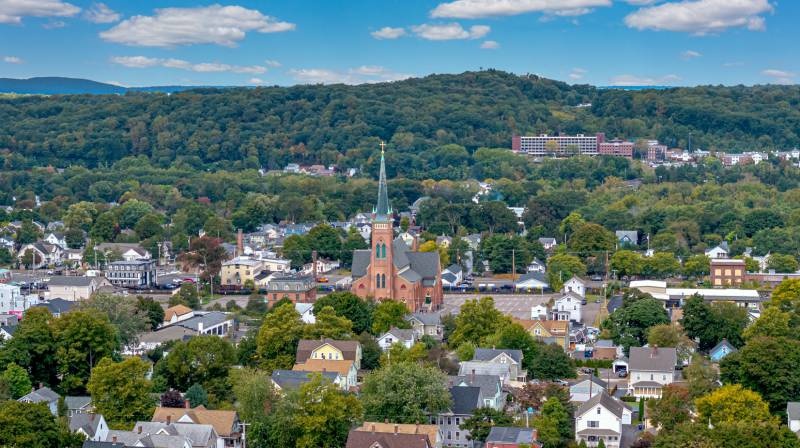
STR Regulations for Wallingford, Connecticut
Overview: Are Short-Term Rentals Allowed in Wallingford, Connecticut?
EXPLICIT ANSWER: Based on the current Zoning Regulations document provided, there are no specific standalone regulations for "short-term rentals" as a distinct use category in Wallingford, Connecticut. However, STR activities would likely be regulated under existing use classifications such as "Bed and Breakfast Inn," "Hotel or Motel," or "Rooming House" depending on the specific nature and scale of the operation.
The current Wallingford Zoning Regulations (effective date with amendments through November 19, 2022) do not contain explicit "short-term rental" or "vacation rental" provisions. Investors must navigate the existing framework of hospitality and lodging definitions to determine the appropriate regulatory pathway for their STR business model.
What do Airbnb hosts actually earn in Wallingford?
Wallingford hosts earn a median $26,826/year with $124 ADR and 74% occupancy.
Top performers pull in $31,159+ per year.
See the full Wallingford market breakdownHow to Start a Short-Term Rental Business in Wallingford
1. Determine Your Classification
Based on the zoning definitions provided, your STR operation could fall into several categories:
Bed and Breakfast Inn: If you operate a residential home where rooms are rented to overnight guests for periods not exceeding one week, with meals served to guests, this would be the most likely classification for a smaller-scale STR operation.
Hotel or Motel: If your operation accommodates more than five persons (excluding employees), this classification would apply, treating your property as temporary occupancy for transients.
Rooming House: If you rent rooms to 3-5 persons while occupying part of the premises as your permanent residence, this classification may apply.
2. Zoning Compliance Process
- Verify Zoning District: Confirm your property is in a zoning district that permits your intended use
- Contact Planning & Zoning Commission: Submit preliminary inquiry about your proposed use
- Site Plan Review: If required, prepare and submit site plan application
- Special Permit Application: If your use requires special permit approval
- Building Department Consultation: Verify building code compliance requirements
3. Operational Considerations
- Length of Stay Limitations: Bed and Breakfast Inns are limited to one-week maximum stays
- Owner Occupancy Requirements: May apply depending on classification
- Meal Service Requirements: Bed and Breakfast operations must serve meals to overnight guests
- Capacity Limitations: Hotel/Motel operations have specific occupancy thresholds
Required Documents, Permits, Licenses, and Guidelines
Municipal Requirements
- Zoning Permit: Required before commencement of new structure, addition, or change of use
- Building Permit: For any structural modifications or improvements
- Certificate of Zoning Compliance: Verifies use compliance with zoning regulations
- Certificate of Occupancy: Required before occupancy for new or changed uses
- Site Plan Approval: May be required for parking, access, or site modifications
Application Documentation
- Completed application forms
- Site plans showing property boundaries, structures, and parking areas
- Building plans and specifications if modifications proposed
- Proof of ownership or lease agreement
- Operational plan describing the intended use and guest management
- Parking and traffic circulation plans
- Compliance with setback, coverage, and height requirements
State-Level Requirements
- Connecticut Department of Consumer Protection lodging licenses (if applicable)
- Health Department permits for food service operations
- Fire marshal approval for occupancy and safety compliance
- Connecticut sales tax registration for transient lodging
Specific Regulations for Short-Term Rentals
City-Level Regulations (Wallingford)
The Wallingford Zoning Regulations provide the primary regulatory framework:
Permitted Use Status: STR activities must conform to existing use classifications within the applicable zoning district. The specific zoning district your property is located in will determine whether your intended use is permitted by right, requires a special permit, or is prohibited.
Bed and Breakfast Inn Requirements:
- Must be operated in a residential home
- Owner or innkeeper must occupy the premises
- Maximum stay period of one week
- Meals must be served to overnight guests
- Must comply with residential character requirements
Hotel/Motel Requirements:
- Designed primarily for temporary occupancy
- Accommodates more than five persons (excluding employees)
- May include food service and public assembly areas
- Subject to commercial use district requirements
County-Level Regulations
New Haven County does not appear to have specific STR regulations beyond state-level requirements. County-level oversight would primarily involve building codes, health regulations, and public safety standards.
State-Level Regulations (Connecticut)
Connecticut has increasingly implemented regulations for short-term rentals:
Transient Occupancy Tax: STR operators must collect and remit Connecticut's 15% transient occupancy tax on rentals of fewer than 30 days.
Registration Requirements: Many Connecticut municipalities require registration of STR properties, though Wallingford's specific requirements are not detailed in the provided documents.
Safety and Building Standards: Properties must meet all applicable Connecticut Building Code and Fire Safety Code requirements for the occupancy classification.
Zoning Compliance: STR uses must comply with local zoning regulations, which may include residential character requirements, density limitations, and compatibility standards.
Federal Considerations
- IRS reporting requirements for rental income
- ADA compliance for accessibility (if applicable)
- Fair Housing Act compliance for advertising and guest policies
- Local housing and building codes enforcement
Contact Information for Local Authority
Wallingford Planning & Zoning Commission
Address: Town Hall, 45 South Elm Street, Wallingford, CT 06492 Phone: (203) 294-2010 Email: planningandzoning@wallingfordct.gov Website: www.wallingfordct.gov/departments/planning-and-zoning
Building Department
Address: Town Hall, 45 South Elm Street, Wallingford, CT 06492 Phone: (203) 294-2030 Email: buildingdepartment@wallingfordct.gov
Zoning Board of Appeals
Address: Town Hall, 45 South Elm Street, Wallingford, CT 06492 Phone: (203) 294-2010 Purpose: Handles variance requests and special exception applications for zoning relief
Fire Marshal's Office
Address: Town Hall, 45 South Elm Street, Wallingford, CT 06492 Phone: (203) 294-2050 Purpose: Fire safety inspections and occupancy permits
Town Clerk's Office
Address: Town Hall, 45 South Elm Street, Wallingford, CT 06492 Phone: (203) 294-2020 Purpose: Business licensing and document recording
Key Zoning Districts and Permitted Uses
Based on the Wallingford Zoning Regulations, the following districts may be relevant for STR operations:
Residential Districts (R-18, R-15, R-11, R-6):
- Bed and Breakfast operations may be permitted as home occupations or accessory uses
- Hotel/Motel operations typically not permitted in residential districts
Limited Business Districts (CLB, YLB):
- May accommodate hotel/motel uses with appropriate permits
- Commercial character requirements apply
Commercial Districts (CA-40, CA-12, CB-40, CB-12):
- Hotel/motel operations typically permitted
- Commercial parking and access requirements apply
Multi-Family Districts (RM-40, RM-11, RM-6):
- May accommodate transitional or extended-stay arrangements
- Density and parking requirements apply
Compliance Checklist for STR Investors
Pre-Development Phase
- [ ] Verify zoning district and permitted uses
- [ ] Confirm property compliance with setback, coverage, and height requirements
- [ ] Assess parking needs and site access requirements
- [ ] Review building code requirements for intended occupancy
- [ ] Consult with Planning & Zoning Commission staff
Development Phase
- [ ] Submit required applications and plans
- [ ] Obtain necessary permits before construction or modification
- [ ] Complete all required inspections
- [ ] Obtain Certificate of Occupancy before operation
Operational Phase
- [ ] Register with appropriate state and local authorities
- [ ] Establish transient occupancy tax collection procedures
- [ ] Develop and implement guest management policies
- [ ] Maintain compliance with all permit conditions
- [ ] Keep records for tax and regulatory reporting
Risk Mitigation and Compliance Tips
-
Proactive Consultation: Engage with Planning & Zoning Commission early in your planning process to avoid costly compliance issues
-
Documentation Maintenance: Keep detailed records of all permits, inspections, and communications with regulatory authorities
-
Neighborhood Compatibility: Design operations to maintain compatibility with surrounding residential or commercial uses
-
Professional Assistance: Consider engaging local legal counsel or zoning consultants familiar with Wallingford regulations
-
Insurance Considerations: Ensure adequate liability and property insurance coverage for commercial operations
Important Notes for Investors
- The absence of specific STR regulations does not mean operations are unregulated
- Existing use classifications (Bed and Breakfast, Hotel/Motel) provide the regulatory framework
- Zoning compliance must be achieved before commencing operations
- Building code and life safety requirements apply regardless of regulatory classification
- State and federal tax obligations apply to all rental income
- Municipal fees and inspection requirements may apply
This guide reflects the current regulatory environment as of the provided documentation. Investors should verify current regulations and requirements with local authorities before proceeding with any STR investment or operation.
Next step
Found a property in Wallingford?
Paste any address and get estimated revenue, cash-on-cash return, and comparable STR performance in under 5 minutes. 3 free analyses per day.
Free brief
Get the free Wallingford STR Investment Brief
Revenue data, top neighborhoods, seasonal trends, and the key regulations for Wallingford, Connecticut in one email.
Wallingford
Market Saturation Score
Photos of Wallingford


Overview of Wallingford
Wallingford is a town of roughly 45,000 residents in New Haven County, Connecticut, set in the gently rolling landscape of south-central Connecticut. The town has a classic New England feel, with a historic downtown centered around a traditional town green, established neighborhoods, and a backdrop of wooded hills and farmland. It is well positioned as a gateway to both the Connecticut shoreline and the river-valley attractions of Middlesex County, sitting about fifteen miles north of New Haven along Interstate 91 and roughly midway between New Haven and Hartford.
One of the most popular natural attractions within a short drive of Wallingford is Sleeping Giant State Park, located in neighboring Hamden about ten to fifteen minutes south of town. The park is named for the distinctive profile of its ridges, which local legend attributes to an enchanted Native American chief, and it offers more than 1,500 acres of hiking trails, picnic areas, and scenic overlooks. Visitors can climb to the top of the Sleeping Giant for sweeping views of Long Island Sound and the Quinnipiac River valley, making it a year-round draw for casual walkers and serious hikers alike.
A bit to the northwest in Southington, about twenty minutes from Wallingford, Mount Southington is a small but family-friendly ski area that draws winter visitors with downhill trails and snow tubing slopes. In the warmer months the same property operates as a tree-top adventure course and zipline, turning the hill into a four-season outdoor recreation destination convenient to Wallingford guests seeking an active day out.
Just to the south in Middlefield, the Lyman Orchards farm complex offers a more relaxed agritourism experience within roughly a ten-minute drive. The orchards and on-site farm market, pie bakery, and 18-hole championship golf course make Lyman a popular stop for families and a reminder of the agricultural heritage that still surrounds the Wallingford area.
Wallingford's location makes it a particularly strategic base for short-term rentals. Travelers can reach the cultural offerings of New Haven, including Yale University and the city's renowned restaurants and museums, in roughly twenty minutes, while the Connecticut coast at Hammonasset Beach State Park or the river towns of Essex and Chester are accessible within forty-five minutes to an hour. Combined with the town's own walkable downtown, its variety of dining options, and the easy access to both I-91 and I-691, Wallingford offers visitors a quieter, more residential alternative to staying directly in New Haven or Hartford, with the surrounding natural and recreational attractions providing plenty of reasons to extend a stay.
Want to know if a property in Wallingford is a good investment?
Enter an address to get instant revenue potential and comps.