
Rocky Hill, Connecticut
Want to see how Rocky Hill compares to other top cities in Connecticut? Explore all city regulations in Connecticut. →
Rocky Hill, CT
Generally Investor Friendly
STR Regulations for Rocky Hill, Connecticut
Overview: Are short-term rentals allowed in Rocky Hill, CT?
- Short-term rentals appear permitted in Rocky Hill, CT, subject to the same state landlord–tenant rules that govern all residential tenancies and to local zoning and building requirements. There is no indication of a city-wide ban on short-term rentals in the materials provided.
- A real-world case reported in Rocky Hill in 2025 underscores a key legal point: Connecticut law treats any occupant who stays more than 30 days as a tenant, triggering full landlord–tenant protections and eviction procedures. This has major implications for operational risk in short-term rental models.
Notes on sources and limitations
- The attached materials include general Connecticut landlord–tenant guidance from the Judicial Branch, the Rocky Hill Housing Authority FAQ, and a local news report on a Rocky Hill Airbnb dispute. None of these sources contain a town-specific short-term rental ordinance, registration program, or zoning restriction for Rocky Hill. As such, investors must verify municipal rules directly with local authorities.
How to start a short-term rental business in Rocky Hill, CT
- Confirm zoning and use eligibility
- Verify with the Town Planning & Zoning Office that short-term rental use (often treated as “transient lodging” or a rental use) is allowed on your specific parcel and zone. There is no zoning or ordinance detail in the provided sources, so a zoning determination is essential before listing.
- If you intend to operate multiple units, confirm whether any cap or special permit applies.
- Align with building, housing, and fire safety codes
- At a minimum, the property must comply with state habitability and safety standards that apply to all residential rentals, including:
- Functional locks on doors, safe fire exits, working smoke detectors, and safe stairways, porches, floors, ceilings, and walls.
- Two electrical outlets in each room (per the state guidance provided).
- Working plumbing, heat, and hot water, plus safe electrical wiring and equipment.
- Discuss occupancy limits and fire code compliance with the Building Department/Fire Marshal. Connecticut commonly limits occupancy for sleeping to two persons per bedroom, plus one, unless local code specifies otherwise; confirm for your specific unit.
- Set up landlord–tenant documentation and house rules
- Use a short-term lease or licensing agreement with explicit duration and rules (quiet hours, occupancy, parking, pets, smoking, etc.). Although a written lease is not strictly required, it is strongly advisable for short-term arrangements to reduce disputes.
- For stays exceeding 30 days, you must follow Connecticut’s landlord–tenant law, including formal eviction procedures if needed (see “Connecticut landlord–tenant basics,” below).
- Taxes and compliance
- Expect lodging taxes to apply to short-term accommodations. Because the provided sources do not include the Connecticut Department of Revenue Services (DRS) guidance specifically, investors should confirm the tax rate and registration requirements with DRS or the Town Tax Collector before beginning operations.
- Tenant screening and enforcement
- Screen guests, set clear house rules, and enforce them consistently. Document issues and communications to support swift resolution if a guest overstays or violates terms.
- Housing assistance/rental program considerations
- Do not rent to voucher holders through the Rocky Hill Housing Authority; the authority does not process Section 8/Housing Choice Vouchers and primarily administers elderly/disabled waitlists. For voucher holders, use HUD’s Housing Choice Voucher Program resources to locate opportunities across Connecticut and avoid misaligning your STR business with subsidized housing programs.
What do Airbnb hosts actually earn in Rocky Hill?
Rocky Hill hosts earn a median $31,740/year with $164 ADR and 67% occupancy.
Top performers pull in $61,495+ per year.
See the full Rocky Hill market breakdownRequired documents, permits, licenses, and guidelines
City/town (Rocky Hill)
- Zoning compliance: Written confirmation from the Planning & Zoning Office or zoning permit for transient lodging use, if applicable.
- Building/housing code compliance: Certificate of Occupancy or similar municipal approval may be required. Confirm habitability, smoke detectors, egress, locks, electrical outlets, and safety equipment.
- Fire Marshal approval: As applicable to transient occupancy configurations.
State (Connecticut)
- Tax registration: Register with the Connecticut Department of Revenue Services for any applicable lodging or sales taxes.
- Landlord–tenant compliance: Comply with the “Rights and Responsibilities of Landlords and Tenants in Connecticut” (Judicial Branch), including habitability, rent handling, eviction law, and security deposit rules if a guest becomes a tenant.
Platform requirements
- Listings on platforms like Airbnb, VRBO, or direct channels must include local taxes (if any) and, in many cases, a municipal STR registration number if Rocky Hill requires one. Confirm current platform policies.
Specific regulations: Rocky Hill, county, and state
Rocky Hill-specific
- No city-specific short-term rental ordinance details are provided in the source set. The matter appears governed by general zoning and building codes, without a published registration requirement in the provided materials.
- Fair Rent Commission: Rocky Hill has a Fair Rent Commission listed in state guidance, but that body is for subsidized or regulated housing complaints, not short-term rentals.
County (Hartford County)
- No county-level short-term rental regulations are referenced in the provided sources.
State (Connecticut)
- Landlord–tenant basics:
- Formal eviction is required after any occupancy beyond 30 days. Landlords must serve a Notice to Quit and then file a summary process eviction case if the occupant does not leave. Courts provide simplified forms and housing specialists to mediate.
- Security deposits: Up to two months’ rent for most tenants (one month for tenants 62+), held in escrow with interest. Deposits must be returned within 30 days after move-out, with an itemized list for any deductions.
- Habitability and safety: Landlords must provide working heat (min. 65°F when landlord supplies heat), hot and cold water, plumbing, safe electrical systems, locks, and fire exits; smoke detectors must be functional. Tenants must keep units clean and not create nuisances.
- Utility rules: If utilities are landlord-provided, the landlord must restore them promptly; tenants have remedies if not, including withholding and deducting costs after two business days without service, and relocation until service is restored.
- Anti-discrimination: Connecticut prohibits discrimination based on protected classes, including race, creed, color, national origin, ancestry, sex, marital status, age, lawful source of income, familial status, disability, and sexual orientation. Complaints go to the Commission on Human Rights and Opportunities (CHRO).
Operational risk highlighted by a Rocky Hill case
- The 2025 Inside Investigator report from Rocky Hill describes a host’s attempt to remove an Airbnb guest after approximately one month. Because the guest had been in continuous occupancy for more than 30 days, Connecticut law required a formal eviction process, during which the guest remained a legal resident and could not be removed without a court order. The case shows the importance of setting stay limits and enforcing them, and of being prepared to go through summary process if a guest exceeds 30 days.
Contact information for local authority in charge of STRs (Rocky Hill)
Because no city-specific short-term rental regulator is identified in the provided sources, investors should start with the municipal offices below to confirm zoning, building, and any registration requirements:
-
Rocky Hill Town Hall (General municipal contact)
- Address: 761 Old Main St, Rocky Hill, CT 06067
- Phone: (860) 258-2700
- Note: Request introduction to Building Department, Zoning Enforcement, and Fire Marshal for STR review.
-
Rocky Hill Housing Authority (Not directly regulating STRs; included for context)
- Website: rhcthousing.org/
- Services: Primarily elderly/disabled public housing waitlists; does not process Section 8/Housing Choice Vouchers.
-
State-level resources (for compliance and housing law)
- Judicial Branch housing guidance: Statewide booklets and forms for landlord–tenant law and eviction summary process; available at court service centers and online at www.jud.ct.gov.
- CHRO (anti-discrimination): (860) 541-3400; Capitol Region Office: 999 Asylum Avenue, Second Floor, Hartford, CT 06105.
For taxes and any lodging tax registration, consult the Connecticut Department of Revenue Services (DRS) online or by phone. DRS contact details are not included in the provided sources and should be obtained directly from DRS.
Links to source pages
- Inside Investigator: “Rocky Hill AirBnb fight escalates into eviction battle” — insideinvestigator.org/airbnb-eviction-rocky-hill/
- State of Connecticut Judicial Branch: “Rights and Responsibilities of Landlords and Tenants in Connecticut” — portal.ct.gov/-/media/departments-and-agencies/dph/dph/environmental_health/lead/pdf/tenant-rights-pdf.pdf
- Rocky Hill Housing Authority: Frequently Asked Questions — rhcthousing.org/faq-frequently-asked-questions/
Disclaimer
- This guide is based exclusively on the provided materials. Because city-specific STR regulations are not detailed in those materials, investors must verify zoning, permitting, and tax obligations with the Town of Rocky Hill and the Connecticut Department of Revenue Services prior to operating a short-term rental.
Next step
Found a property in Rocky Hill?
Paste any address and get estimated revenue, cash-on-cash return, and comparable STR performance in under 5 minutes. 3 free analyses per day.
Free brief
Get the free Rocky Hill STR Investment Brief
Revenue data, top neighborhoods, seasonal trends, and the key regulations for Rocky Hill, Connecticut in one email.
Rocky Hill
Market Saturation Score
Photos of Rocky Hill


Overview of Rocky Hill
Rocky Hill is a small suburban town in Hartford County, Connecticut, situated along the west bank of the Connecticut River. With a population of approximately 20,000, it has a quiet, residential character that contrasts with the busier state capital just up the road. The town is best known as home to one of New England's most unusual natural attractions and as a convenient base for exploring the greater Hartford area. It sits roughly ten miles south of downtown Hartford, making it an easy drive for travelers heading to cultural and historic sites in central Connecticut.
One of the most distinctive draws in the region is Dinosaur State Park, located right in Rocky Hill. The park preserves a large trackway of Early Jurassic dinosaur footprints discovered in 1966 during excavation work for a state building. The on-site exhibit center displays many of the original tracks beneath a geodesic dome, and the surrounding grounds include nature trails and an arboretum with plants from the dinosaur era. It is a popular stop for families, school groups, and paleontology enthusiasts, and it is the rare place in the Northeast where visitors can stand beside real dinosaur traces.
A short drive north brings visitors to downtown Hartford, where a dense cluster of cultural institutions awaits. The Wadsworth Atheneum Museum of Art holds the distinction of being the oldest public art museum in the United States, with a deep collection of European and American works. Nearby, the Mark Twain House preserves the home where Samuel Clemens wrote several of his most famous works, and the Connecticut Science Center offers hands-on exhibits for families along the riverfront.
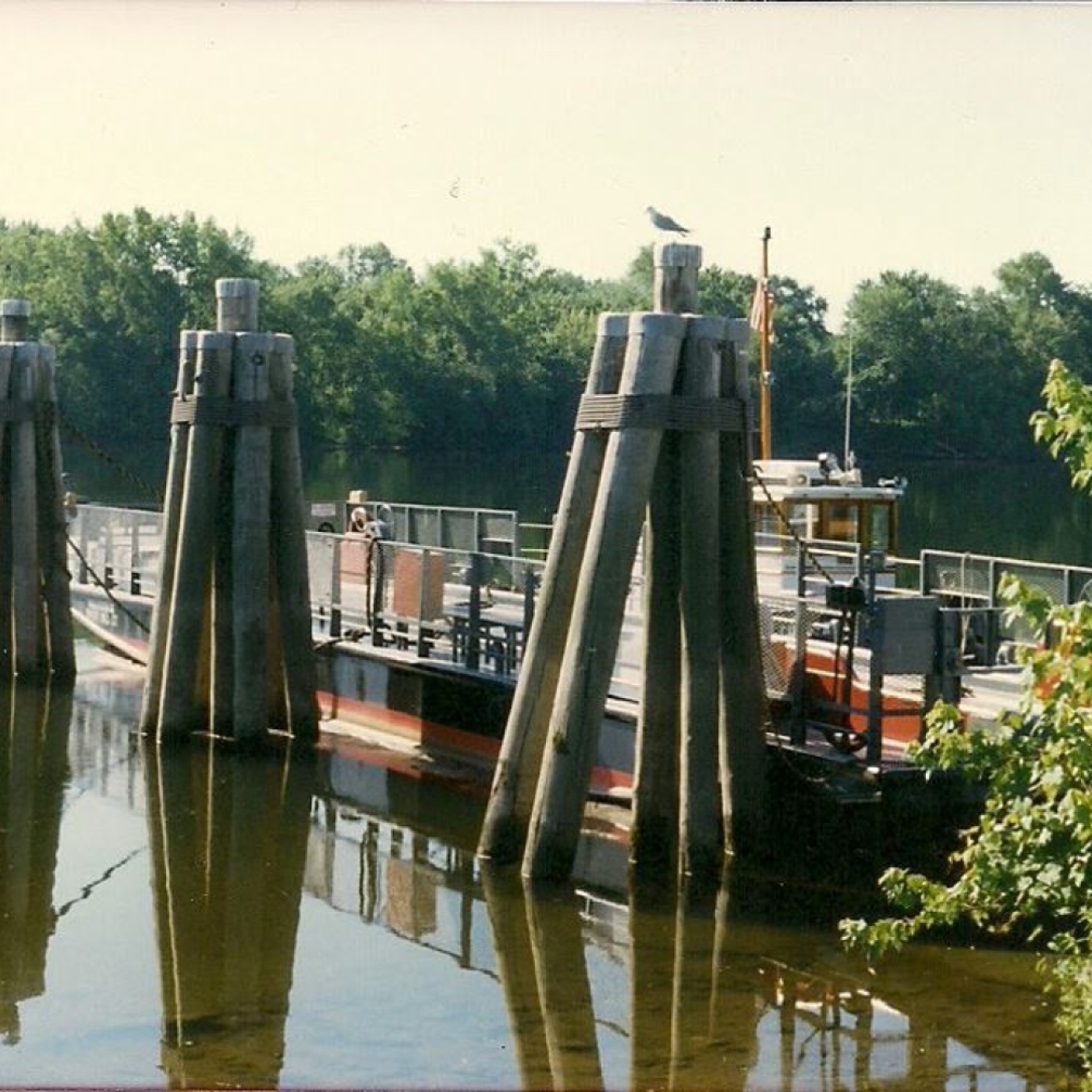
Outdoor lovers will find plenty to do along the Connecticut River itself. The historic ferry between Rocky Hill and Glastonbury has carried travelers across the water for generations and is a beloved seasonal attraction, while the town's riverfront greenways and parks offer walking paths with views of the water. To the north, the historic town of Wethersfield — one of the oldest settlements in Connecticut — features a preserved colonial-era Main Street and a chain of historic house museums worth exploring.
Rocky Hill combines the calm of a small Connecticut town with quick access to the cultural and natural offerings of central New England. Its position between the Connecticut River and Hartford, anchored by a genuinely one-of-a-kind attraction in Dinosaur State Park, makes it a versatile base for short-term-rental guests. Visitors who stay here can spend a morning walking among dinosaur tracks, an afternoon in a Hartford museum, and an evening watching the light change over the river — all without ever leaving the immediate area.
Want to know if a property in Rocky Hill is a good investment?
Enter an address to get instant revenue potential and comps.