
New Haven, Connecticut
Want to see how New Haven compares to other top cities in Connecticut? Explore all city regulations in Connecticut. →
New Haven, CT
Generally Investor Friendly

STR Regulations for New Haven, Connecticut
Overview: Are STRs allowed in New Haven, CT?
- Yes—Connecticut allows short-term rentals, and the provided sources indicate no city-level prohibition or ban in New Haven.
- New Haven operates under a “permissive zoning” model where activities not expressly prohibited are permitted. That means STRs are generally allowed unless a specific zoning or neighborhood rule says otherwise.
- The main regulatory layer in New Haven relevant to rentals is its Residential Rental Business License program administered by the Livable City Initiative (LCI). This program applies to 2–3 unit non-owner-occupied properties and to properties with 4+ units. Single-family homes (including STRs in single-family homes) are exempt from this licensing requirement.
- Your property’s zoning district and whether it is owner-occupied will determine specific requirements, particularly for multi-unit properties. Always verify zoning with the City Plan Department before listing.
Important caveat: the sources do not provide a city-specific STR ordinance for New Haven (unlike East Haven, which has a dedicated ordinance with a residency requirement). Treat this guide as compliance-focused but not a substitute for direct confirmation with New Haven authorities.
What do Airbnb hosts actually earn in New Haven?
New Haven hosts earn a median $32,534/year with $208 ADR and 61% occupancy.
Top performers pull in $48,277+ per year.
See the full New Haven market breakdownHow to Start a Short-Term Rental Business in New Haven
- Verify zoning and permitted use
- Confirm with the City Plan Department that STR use is allowed on your parcel.
- In many municipalities, STRs are treated as lodging uses; some zones limit or conditionally allow them. In New Haven, ensure your district permits transient occupancy.
- Determine licensing triggers
- If your STR property is a single-family home, it is exempt from New Haven’s Residential Rental Business License (RRL).
- If your property is 2–3 units and non-owner-occupied, it likely requires a Residential Rental Business License.
- Properties with 4 or more units require the license regardless of owner occupancy.
- Apply for the Residential Rental Business License (if required)
- Use the city’s online portal (Veoci) to submit the application and required documents.
- An inspection will be scheduled; you must correct any violations to obtain the license.
- Meet safety and habitability standards
- Ensure working smoke and CO alarms, fire extinguishers, emergency egress, and compliance with the city’s housing code.
- Maintain the property per city standards (trash, parking, occupancy limits) to avoid enforcement actions.
- Register for Connecticut taxes and remit the Room Occupancy Tax
- Register with the Connecticut Department of Revenue Services (DRS) for the 15% Room Occupancy Tax applicable to rentals of 30 days or fewer.
- Major platforms (e.g., Airbnb/VRBO) often collect and remit this tax on bookings they process; direct bookings are your responsibility.
- Establish local management/contact
- While not explicitly required for STRs in the New Haven sources, designate a local contact to respond to issues promptly (a common requirement in many Connecticut towns).
- Maintain ongoing compliance
- Keep the license current (if required), update any property changes, and monitor city regulations. Follow noise, parking, and trash rules to prevent complaints and revocation.
Required Documents, Permits, Licenses, and Guidelines
Connecticut state level
- DRS tax registration for the Connecticut Room Occupancy Tax (15% for most STRs; applies to 30 days or fewer).
- Income tax filings and record-keeping for rental income and deductions.
City of New Haven (if licensing applies)
- Proof of ownership (deed or property tax statement).
- Completed Residential Rental Business License application via the Veoci portal.
- Safety/housing code compliance documentation (inspections).
- Floor plans and unit details (to support inspections and occupancy limits).
- Owner/operator identification and reliable contact information.
- Consent/Waiver Form (if applicable).
- Landlord Inspection Checklist.
Fees (per the city’s Residential Rental Business License program)
- First 2 units: $225.00
- Each additional unit: $60.00
- Single-family homes are exempt from licensing fees.
Additional operational records (recommended)
- Guest agreements/house rules
- Cleaning and maintenance logs
- Tax records and remittance confirmations
- Communications with neighbors and authorities
Link to the city’s application and related forms:
- Residential Rental Business License Application (Veoci portal): veoci.com/v/p/218532/workflow/njdnhae36uxc
Specific Regulations Affecting STRs: New Haven, County (New Haven County), and State
New Haven city
- No dedicated STR ordinance is provided in the sources. STRs appear to be governed under zoning, the housing code, and the Residential Rental Business License program.
- Licensing program scope:
- 2–3 unit non-owner-occupied properties: license required.
- 4+ unit properties: license required regardless of owner occupancy.
- Single-family homes: exempt (this includes STRs in single-family homes).
- Licensing program purpose and enforcement: protect safety, health, and welfare; identify deficiencies; prevent overcrowding; improve property values; consistent code enforcement.
- Effective date and consistency: operate under the current LCI program and city housing code as of the dates indicated in the sources; regulations may evolve—monitor city communications.
County (New Haven County)
- The sources emphasize Connecticut’s municipal (city/town) approach to STR regulation. County-level rules are not specified; municipal zoning and licensing control.
State of Connecticut
- Room Occupancy Tax: 15% for most short-term accommodations; 11% for bed and breakfasts (applies to rentals of 30 days or fewer).
- State delegates STR regulatory authority largely to municipalities; no uniform statewide licensing or operating standard.
- Tax collection: major platforms generally collect/remit state taxes; you must register with DRS and ensure compliance for direct bookings.
Example of nearby municipality for contrast (not New Haven, for regional context)
- East Haven (different town) recently approved an STR ordinance (effective Jan. 1, 2026) that includes a residency requirement (≥183 days/year), 150-day cap, and minimum interval between rentals, illustrating how municipalities may tailor rules. This is not New Haven’s rule; it’s provided as a regional reference point only.
Local Authority Contacts (Phone, Email, Website)
City of New Haven – Livable City Initiative (LCI) – Residential Rental Business License Program
- Phone: (203) 946-2966
- Email: NHRBLP@newhavenct.gov
- Program page: www.newhavenct.gov/government/departments-divisions/livable-city-initiative/housing-code-enforcement/residential-rental-licensing-program
Connecticut Department of Revenue Services (DRS)
- Room Occupancy Tax registration and filing
- Website: portal.ct.gov/drs
Key Source Links (as available in the provided content)
- New Haven Residential Rental Licensing Program: www.newhavenct.gov/government/departments-divisions/livable-city-initiative/housing-code-enforcement/residential-rental-licensing-program
- New Haven RRL Application (Veoci portal): veoci.com/v/p/218532/workflow/njdnhae36uxc
- Connecticut short-term rental overview (state context): www.checkmaterentals.com/blog/connecticut-short-term-rental-laws
- CT Insider statewide STR survey and municipal approach: www.ctinsider.com/news/article/ct-short-term-rentals-regulations-airbnb-vrbo-20229937.php
- East Haven STR ordinance (for regional context; not New Haven): www.nhregister.com/news/article/east-haven-short-term-rental-ordinance-approved-20254544.php
- Connecticut DRS: portal.ct.gov/drs
Actionable steps for investors
- Confirm your zoning and use case with the City Plan Department.
- Apply for the New Haven Residential Rental Business License if your property is 2–3 units (non-owner-occupied) or 4+ units; single-family STRs are exempt.
- Register with CT DRS and set up tax collection/remittance for stays ≤30 days.
- Implement and document safety compliance, occupancy limits, parking, and neighborhood standards.
- Maintain a local management plan and keep your license and records up-to-date to avoid penalties.
Next step
Found a property in New Haven?
Paste any address and get estimated revenue, cash-on-cash return, and comparable STR performance in under 5 minutes. 3 free analyses per day.
Free brief
Get the free New Haven STR Investment Brief
Revenue data, top neighborhoods, seasonal trends, and the key regulations for New Haven, Connecticut in one email.
New Haven
Market Saturation Score
Photos of New Haven

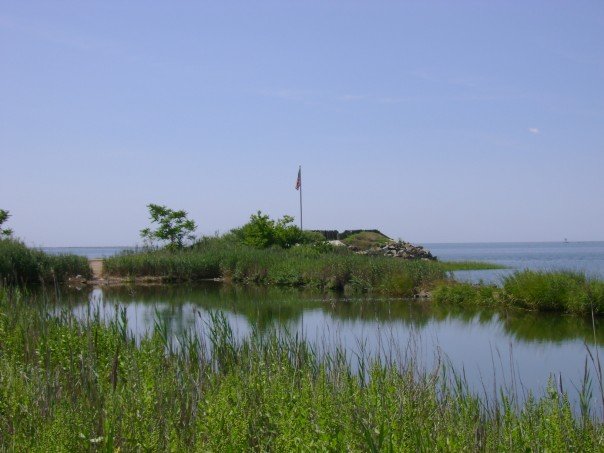

Overview of New Haven
New Haven, Connecticut sits in New Haven County along the shores of Long Island Sound and is home to approximately 130,000 residents. It serves as a cultural and educational anchor for southern New England, best known globally for Yale University and its distinctive coal-fired apizza tradition. The city lies roughly 80 miles northeast of New York City and about 40 miles southwest of Hartford, giving it a youthful, walkable, and intellectually curious character shaped by tens of thousands of students, longtime Italian and Puerto Rican neighborhoods, and a working waterfront.
The crown jewel of New Haven is the Yale University campus, a walkable collection of Gothic, Georgian, and modernist architecture in the heart of downtown. Within just a few blocks, visitors can experience the Yale University Art Gallery, the oldest college art museum in the Western Hemisphere, and the Beinecke Rare Book and Manuscript Library, a striking marble cube housing rare manuscripts including a Gutenberg Bible. Yale's museums and the steady flow of prospective students, parents, and academic conference attendees sustain year-round demand in the surrounding neighborhoods.
Just north of the city, Sleeping Giant State Park offers more than 1,500 acres of forested ridgeline in Hamden, about a 15-minute drive from downtown. Hikers climb through a series of traprock peaks that resemble a reclining figure, rewarded with sweeping views of Long Island Sound and the Quinnipiac River valley. Closer to the coast, Hammonasset Beach State Park in Madison stretches along roughly two miles of Long Island Sound shoreline about 20 miles east of New Haven, making it Connecticut's largest beach park and a popular summer escape for both residents and visitors.
Back in town, the historic Wooster Square neighborhood anchors New Haven's enduring reputation as a pizza destination. Brick-lined streets, a small leafy park, and the brick exteriors of long-running apizza institutions give the district its character, and food travelers often queue at Frank Pepe Pizzeria Napoletana, widely credited with popularizing the white clam pie, alongside nearby Sally's Apizza. The neighborhood's blend of historic Italian-American roots, walkability, and concentrated culinary tourism makes it a natural focal point for guests exploring the city on foot.
New Haven's appeal as a short-term rental base comes from the way its core ingredients stack: a walkable downtown anchored by one of the world's most-visited universities, two very different state parks within a half-hour drive, a working waterfront, and a food scene with strong name recognition beyond the region. Travel demand here is unusually well distributed across the calendar, blending college visits, medical and business travel, summer beachgoers, and weekend food and culture trips from New York and Boston, which together support stable occupancy and a wide range of guest profiles for hosts.
Want to know if a property in New Haven is a good investment?
Enter an address to get instant revenue potential and comps.