
Steamboat Springs, Colorado
Want to see how Steamboat Springs compares to other top cities in Colorado? Explore all city regulations in Colorado. →
Steamboat Springs, CO
Challenging To Investors
STR Regulations for Steamboat Springs, Colorado
Overview: Are Short-Term Rentals Allowed in Steamboat Springs?
YES, short-term rentals are allowed in Steamboat Springs, Colorado, but with significant restrictions and requirements. As of June 2022, the city has implemented a comprehensive licensing program with zoning limitations that govern where and how STRs can operate. The city has established three distinct zones with varying restrictions: Zone A (unlimited permits), Zone B (restricted with specific caps), and Zone C (prohibited for new permits). All STR operators must obtain proper licensing before advertising or operating, regardless of zone classification.
What do Airbnb hosts actually earn in Steamboat Springs?
Steamboat Springs hosts earn a median $41,705/year with $427 ADR and 49% occupancy.
Top performers pull in $66,923+ per year.
See the full Steamboat Springs market breakdownHow to Start a Short-Term Rental Business in Steamboat Springs
Starting an STR business in Steamboat Springs requires a methodical approach due to the complex regulatory environment. The process begins with determining your property's zone classification using the city's Interactive Map, as this directly impacts your ability to obtain a license. Zone A properties offer the greatest opportunity with unlimited permits, while Zone B properties face specific caps, and Zone C properties are prohibited for new operations.
Step 1: Property Research and Zone Verification Before purchasing or committing to an STR property, verify the zoning classification through the City's Interactive Map. Select the Zoning Districts layer to determine if your property falls within Zone A (green), Zone B (yellow), or Zone C (red). Zone A properties include Downtown Steamboat Springs, the Steamboat Springs Ski Resort area, and Wildhorse Meadows—all areas with strong tourist demand and unlimited STR permits.
Step 2: Determine Your Registration Category Steamboat Springs offers four distinct registration pathways:
- New STR Registration: For properties that did not receive bookings between June 15, 2021, and June 15, 2022
- Legal Nonconforming Registration: For existing lawful STRs operating before regulations
- Hosted STR License: For renting a single guestroom in your primary residence
- Temporary STR Permit: For occasional rental of your primary residence (maximum twice annually)
Step 3: Application Process All license applications must be submitted through the CityView online portal, with first-time users required to create an account. Applications must be approved before any advertising or operation begins. The licensing process requires comprehensive documentation and compliance verification.
Step 4: Compliance Setup Upon license approval, operators must implement all operational requirements, including designated local responsible party assignments, occupancy limit displays, parking arrangements, and complaint response protocols.
Required Documents, Permits, Licenses, and Guidelines
Primary Licensing Requirements:
- STR License (mandatory for all STR types)
- Property ownership verification (deed or title documentation)
- Local responsible party designation with 24/7 contact information
- Proof of zoning compliance for the specific STR type
Legal Nonconforming Registration Specific Documents:
- Property owner signature
- Proof of ownership
- Documentation of bookings prior to June 15, 2022
- Sales tax remittance proof for the qualifying period
- Completed legal nonconforming registration form
Hosted STR License Requirements:
- Proof of primary residence occupancy
- Documentation of single guestroom rental
- Proof that separate structures are within 400 square feet of primary residence
- Guest stay limitation documentation (30 days or less)
Temporary STR Permit Requirements:
- Primary residence verification
- Commitment to host maximum twice annually
- Documentation of combined rental periods under 30 consecutive days
Operational Compliance Documents:
- Visible STR license display within premises
- 24-hour responsible party contact information signage
- Maximum occupancy and parking limitation notices
- Local restriction notices regarding trash, camping, and noise
Financial Compliance:
- Municipal tax registration and remittance
- State sales tax collection and remittance
- 9% STR tax effective November 8, 2022
Specific Regulations: City, County, and State Requirements
City of Steamboat Springs Regulations
Zoning Restrictions (STR Overlay Zone):
Zone A (Green - Unlimited):
- No limit on STR permits issued
- Includes Downtown Steamboat Springs, Ski Resort area, Wildhorse Meadows
- Standard licensing requirements apply
- Strongest investment potential due to unlimited permits
Zone B (Yellow - Restricted):
- Six subzones with specific caps:
- Subzone B1: 5 permits maximum
- Subzone B2: 20 permits maximum
- Subzone B3: 18 permits maximum
- Subzone B4: 17 permits maximum
- Subzone B5: 12 permits maximum
- Subzone B6: 10 permits maximum
- Includes Sunlight Drive Area, Rolling Stone Ranch Golf Course Area, areas south of Walton Creek Road
- Lottery system for available permits
- "Use it or lose it" requirement for lottery-issued licenses
Zone C (Red - Prohibited):
- New STR permits prohibited
- Existing VHR permit holders and legal nonconforming properties exempt
- Hosted and temporary STRs permitted
Operational Requirements:
- Occupancy Limits: Maximum 1 person per 150 square feet of net floor area (minimum 2, maximum 16 occupants)
- Outdoor Activities: Limited to twice the number of permitted occupants
- Parking Requirements: Minimum spaces per Community Development Code; maximum 6 vehicles overnight; all-weather surface required; no public right-of-way parking
- Local Responsible Party: Mandatory designation with complaint response within 1 hour (6 AM-10 PM) or 30 minutes (10 PM-6 AM)
- Visible Displays: License, responsible party contact, occupancy limits, parking rules, local restrictions
Licensing Timeline:
- Licenses valid for one year from issuance
- Annual renewal required
- No grandfather clause for licensing requirements
- Legal nonconforming properties subject to abandonment if no bookings within 12 months
Routt County Regulations
The provided content focuses primarily on city-level regulations. County-level STR regulations may exist but are not detailed in the provided sources. Investors should verify county requirements with Routt County planning and zoning authorities.
Colorado State Regulations
Short-Term Rental Tax Requirements: Colorado requires STR operators to collect and remit state sales tax and applicable local taxes. The city has implemented an additional 9% STR tax approved by voters in November 2022. State tax obligations include:
- Colorado state sales tax (2.9% minimum)
- Routt County sales tax
- Municipal taxes
- STR-specific 9% tax for Steamboat Springs
Nonresident Tax Filing: Colorado requires nonresidents earning income from Colorado sources to file state tax returns, which may apply to out-of-state STR operators.
Contact Information for Local STR Authorities
Primary Contact - Planning & Community Development Department:
- Address: 115 10th Street, Steamboat Springs, CO 80487
- Phone: 970-879-2060
- Hours: Monday-Thursday 7:30 AM - 5:30 PM; Friday 7:30 AM - 11:30 AM
Short-Term Rental Specific Contacts:
-
Paula Ross, Short-Term Rental Technician
- Email: pross@steamboatsprings.net
- Phone: 970-871-8278
-
Staci Hines, Short-Term Rental Compliance Officer
- Email: shines@steamboatsprings.net
- Phone: 970-871-8231
Online Resources:
- CityView Portal: https://cityview.steamboatsprings.net/portal
- STR Webpage: https://steamboatsprings.net/1319/Short-Term-Rentals
- Interactive Map: https://maps.steamboatsprings.net/interactivemap/
- Municipal Code: http://library.municode.com/index.aspx?clientId=10098
Platform Resources:
- Airbnb STR Guide: https://www.airbnb.ca/help/article/3335
Source Links and References
Primary Municipal Sources:
- Short-Term Rentals Main Page
- STR Rules & Regulations
- STR Licensing Information
- Legal Nonconforming Registration
- STR FAQ
- STR Enforcement & Complaints
- STR Data & Reports
- STR Lotteries
Legal and Regulatory Documents:
Third-Party Resources:
Enforcement and Compliance: As of August 2024, the city reported 2,342 licensed STR properties, with 84% in green zones. Enforcement activities have resulted in 17 court cases, 7 two-year rental bans, and $82,250 in fines collected. The city maintains a hotline for STR-related complaints, with noise (53%) and parking (26%) being the most common violations.
Investment Considerations: The regulatory environment in Steamboat Springs favors properties in Zone A locations, particularly those near the ski resort and downtown areas. The complex licensing system, combined with zoning restrictions and high demand, creates both opportunities and challenges for STR investors. Success requires thorough pre-purchase due diligence, complete regulatory compliance, and ongoing monitoring of municipal code changes.
Next step
Found a property in Steamboat Springs?
Paste any address and get estimated revenue, cash-on-cash return, and comparable STR performance in under 5 minutes. 3 free analyses per day.
Free brief
Get the free Steamboat Springs STR Investment Brief
Revenue data, top neighborhoods, seasonal trends, and the key regulations for Steamboat Springs, Colorado in one email.
Steamboat Springs
Market Saturation Score
Photos of Steamboat Springs


Overview of Steamboat Springs
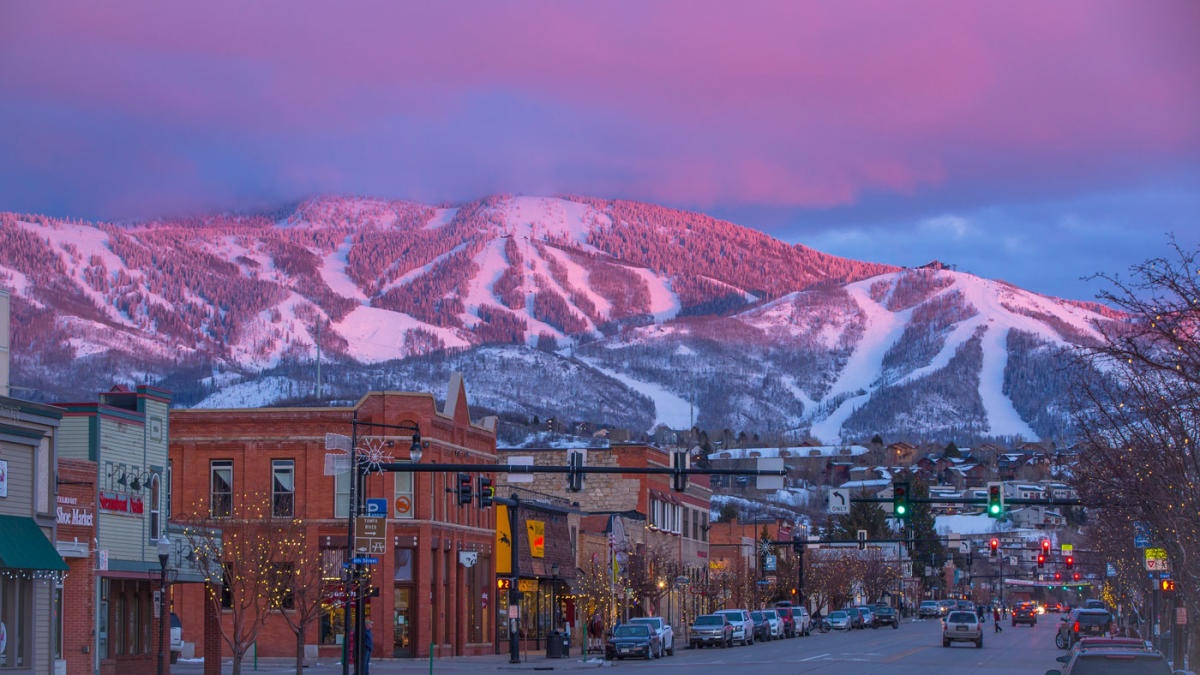
Steamboat Springs is a mountain resort city in northwestern Colorado, serving as the county seat of Routt County. With a population of roughly 13,000, it carries the easygoing character of an old ranching community that has grown into one of the West's most recognizable ski destinations. The town is best known for Steamboat Ski Resort, set on Mount Werner, and for the deep, light "Champagne Powder" snowfall that gave the area its reputation among skiers. It lies approximately 160 miles northwest of Denver, a drive of about three hours through the Yampa Valley, and functions as a gateway to the surrounding Routt National Forest and the high-country wilderness of the Park Range.
Just a few miles east of the downtown core, Fish Creek Falls drops roughly 280 feet through a narrow granite canyon, drawing hikers, photographers, and ice climbers across the seasons. The main overlook is reached by a short paved path from the parking area, and a longer trail continues upstream for those who want a longer outing. The trailhead sits only about ten minutes from the center of Steamboat Springs, making it one of the most convenient natural attractions for visitors staying in town.
Roughly seven miles north of downtown, Strawberry Park Hot Springs offers a wilder alternative to the more developed bathing facilities. Set along a forested creek, the natural rock pools are kept at soothing temperatures by the geothermal activity that gave the whole valley its name, and they remain a favorite after-ski or after-hike stop for travelers. The road in is unpaved for the final stretch and is typically easier to manage in a four-wheel-drive vehicle in winter, a detail rental hosts often share with guests.
Closer in, Old Town Hot Springs occupies a central location on the edge of the historic downtown, with multiple pools, water slides, and climbing walls fed by the same natural mineral source. It is walkable from most of the lodging and restaurant clusters and stays open year-round, making it a dependable option for families and casual visitors who do not want to drive. Together with the Yampa River, which threads through town and supports tubing, fly-fishing, and a popular riverside trail, the hot springs give Steamboat Springs a strong base of warm-weather activities to balance its winter identity.
For short-term rental operators, the appeal of Steamboat Springs is the way its four-season rhythm fills the calendar: powder days from November through early spring, a lively summer scene of hiking, mountain biking, rafting, and rodeos, and a quieter shoulder season that suits longer stays. The combination of a genuine small-town setting, easy access to the Yampa Valley's outdoor playground, and a well-established resort infrastructure makes the city a natural fit for guests who want mountain character without sacrificing amenities.
Want to know if a property in Steamboat Springs is a good investment?
Enter an address to get instant revenue potential and comps.